



Pair Painted Pier Tables
Pair painted pier tables are matched wall console furnishings that bring balanced symmetry to a room, valued for their decorative painted surfaces and architectural presence.
Pair Painted Pier Tables
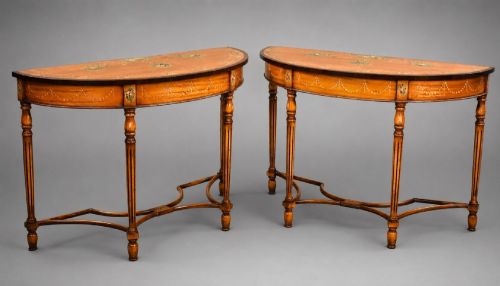
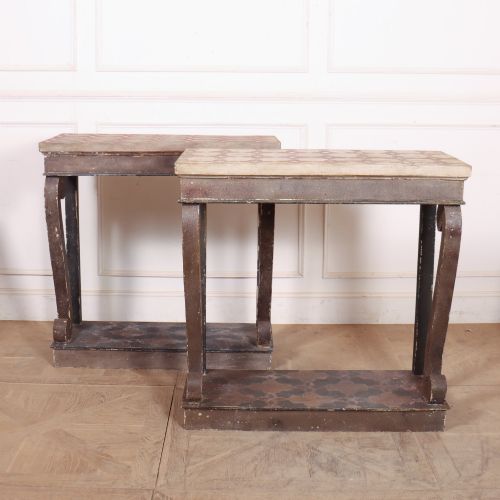
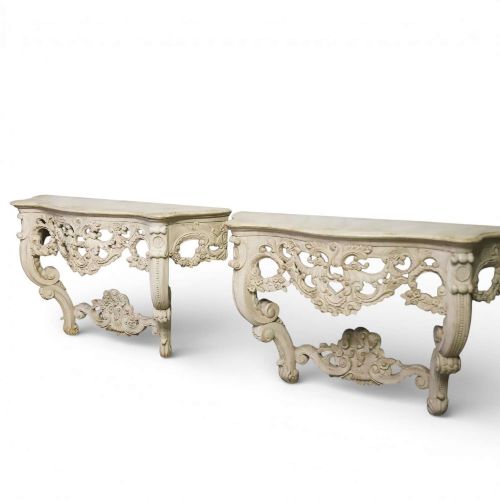
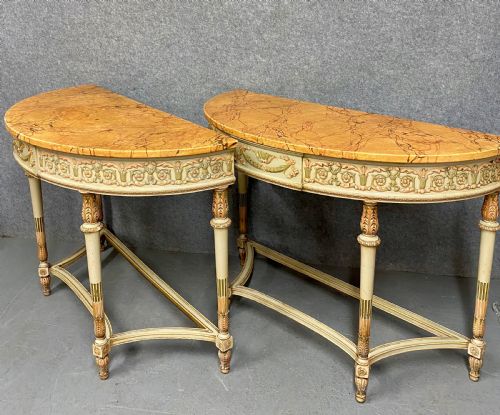
Pair painted pier tables are matched console tables designed to sit flush against a wall, frequently between windows or beneath mirrors. When searching for pair painted pier tables, buyers encounter console tables originating from the nineteenth and early twentieth centuries, spanning periods from the 1870s through the 1930s.
The forms encompass demi-lune shapes and wall-mounted consoles executed in styles such as Sheraton Revival, Neoclassical, French Rococo Revival, Spanish Colonial, Grand Regency, English Regency, and Gustavian. These pieces originate from diverse European traditions, including English, French, Italian, Spanish, and Swedish workshops.
Makers utilised painted wood and timber as the primary structural carcase, frequently enhancing the visual scheme with satinwood veneers, gesso ornamentation, and carved details. Many examples integrate stone surfaces, specifically featuring specimen marble tops that provide durability and textural contrast against the painted woodwork.
Factors Distinguishing Quality
Quality in these console tables rests upon the crispness of the hand-carving within the wood and gesso layers, alongside the precision of the joinery connecting the legs and top. Superior examples display refined proportions and hand-painted artistry that remains intact across both matched halves of the pair.
The choice of materials significantly influences the standing of a piece, particularly where cabinetmakers selected high-grade satinwood timber or fitted genuine specimen marble tops rather than simpler wood surfaces. Consistency between the two tables comprising the pair determines whether they function as a unified decorative statement.
Listings for these console tables span the nineteenth and early twentieth centuries, incorporating materials such as painted wood, gesso, satinwood, and marble.
The Pair Painted Pier Tables Glossary
- Pier table
- A console table designed specifically to stand against the wall pier between two windows. These tables typically support mirrors placed above them.
- Demi-lune
- A half-moon shape characteristic of many console and pier table tops. This curved profile allows the furniture to project minimally into a hallway or reception room.
- Gesso
- A plaster-like mixture applied to wood surfaces to create a smooth ground for painting and low-relief carving. Artisans build up this compound before applying decorative finishes.
- Satinwood
- A durable tropical timber known for its yellowish-gold sheen and fine grain. Cabinetmakers during the Sheraton Revival period utilised this wood for high-status decorative furniture.
Pair Painted Pier Tables: Frequently Asked Questions
Where should I place pair painted pier tables?
These matched console tables suit placement along prominent wall spaces in entrance halls, living rooms, or dining rooms. They often anchor a room when positioned beneath large mirrors or artwork.
Because they arrive as a matched pair, arranging them symmetrically on either side of a fireplace or doorway creates a balanced architectural focal point.
How do I care for painted wooden surfaces?
Maintenance involves gentle dusting with a soft, dry cloth to prevent particulate accumulation on the painted and gessoed details. Avoid harsh chemical cleaners or excessive moisture that might compromise the antique finish.
Keep the tables away from direct heat sources and strong sunlight to protect the painted pigments and underlying timber from fading or cracking over time.
What is the difference between a console table and a pier table?
While the terms often overlap in historic furniture, pier tables historically stood against the solid wall space between windows. Console tables generally refer to wall-mounted or bracket-supported tables with similar decorative functions.
Both forms serve primarily decorative and display purposes rather than heavy everyday utility.
How can I identify Sheraton Revival style?
Sheraton Revival furniture draws inspiration from late eighteenth-century neoclassical designs, featuring clean lines, tapered legs, and refined decorative painting. Satinwood surfaces and delicate floral motifs frequently appear on pieces from this revival period.
These tables exhibit lighter proportions compared to heavier Victorian or Rococo Revival alternatives.