





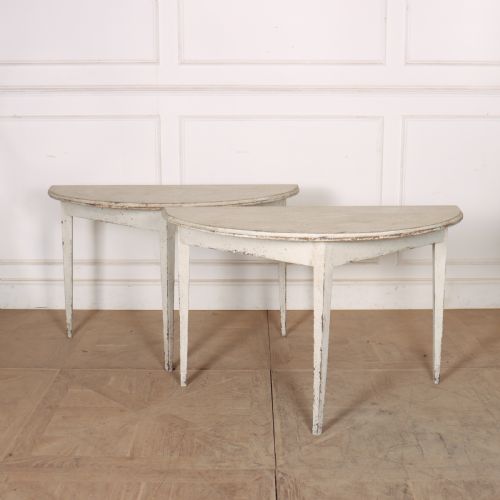


Gustavian Console Table
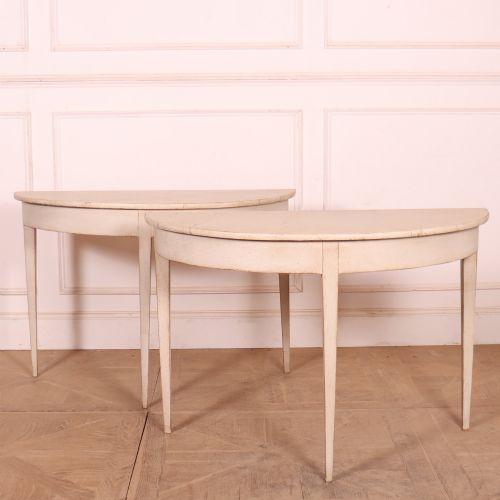
These gustavian console table examples bring restrained Swedish neoclassical elegance to an interior, offering slender proportions and pale painted surfaces.
Gustavian Console Table
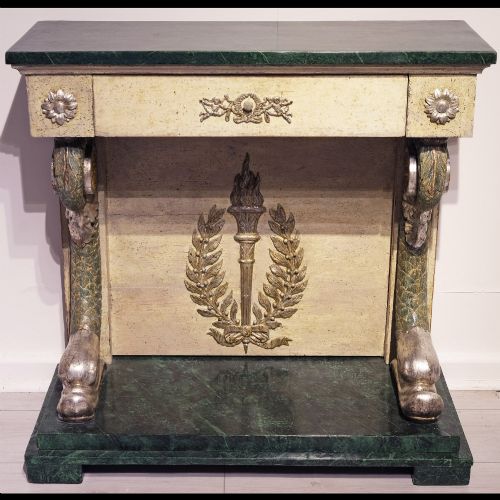
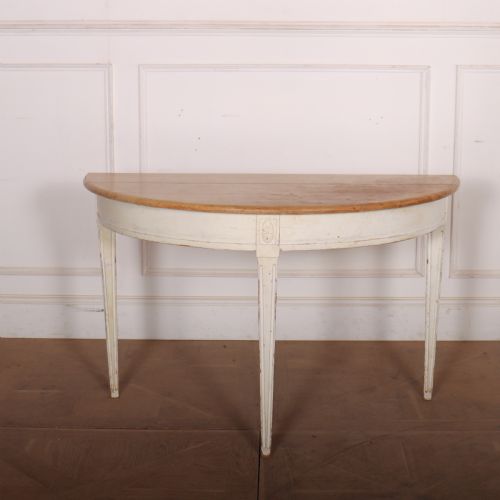
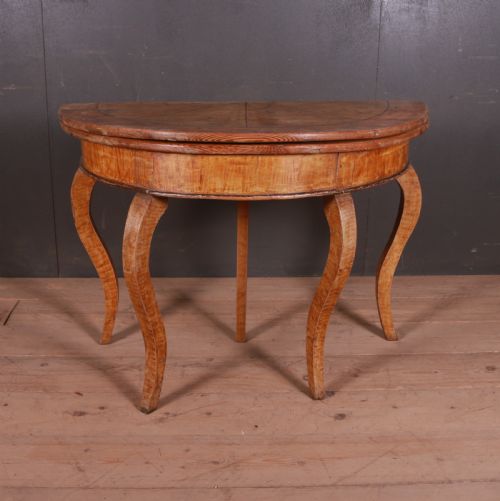
A gustavian console table is a form of side table originating in Sweden during the late eighteenth and early nineteenth centuries, often designed to stand flat against a wall. The pieces appearing here span the late eighteenth century, the nineteenth century, and around eighteen ninety to nineteen hundred, encompassing console tables, side tables, writing tables, and lamp tables.
Most examples adopt the quintessential Swedish interpretation of neoclassical design, including demi-lune formats and paired configurations. They reflect a lighter palette and simpler geometry than their continental counterparts, suiting both period rooms and modern spaces.
How They Were Made
Carpenters constructed these tables primarily from pine and other native woods, applying layered paint finishes to achieve the characteristic pale surface. Gilt, gesso, and giltwood embellishments frequently accent the carved mouldings and structural details.
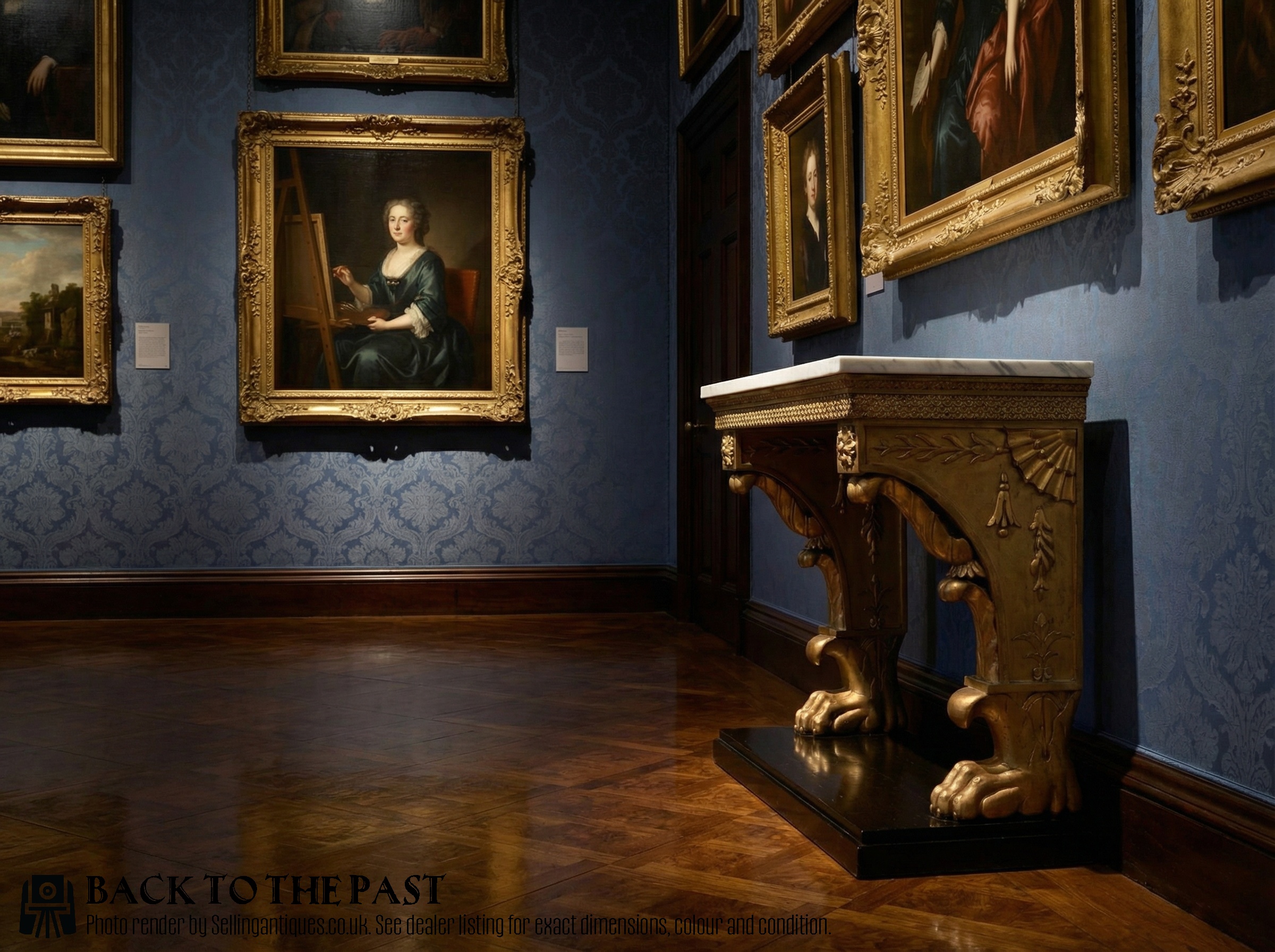
Many of the finest recorded pieces integrate marble tops, contrasting the cool stone against the painted timber frames.
Gustavian Console Table Retail Price Guide 2026
Typical asking prices for gustavian console table among the pieces listed under this phrase on Sellingantiques today, from the lower quarter to the upper quarter. They describe what is for sale here now, not the wider market.
Materials across this selection range from simple pine and painted wood to marble, gesso, and giltwood.
What Varies in Quality
Quality reveals itself in the crispness of the carved ornament and the depth of the painted or gilded finish. The presence of original marble tops and documented attribution to master craftsmen like Jonas Frisk elevate the standing of a piece considerably.
Simpler secondary woods and later repainting place certain tables at a more utilitarian end of the spectrum, whereas sophisticated neoclassical proportions and period surfaces mark out the superior examples.
Jonas Frisk
The Gustavian Console Table Glossary
- Gustavian
- The Swedish neoclassical style spanning the late eighteenth and early nineteenth centuries, characterised by restrained classical motifs and pale painted finishes.
- Demi-lune
- A half-moon shape used for table tops and frames, designed to sit flush against a wall.
- Gesso
- A plaster-based material applied to wood surfaces to provide a smooth base for gilding and painting.
- Giltwood
- Wood that has been coated with thin gold leaf or gold powder, adding luminous detail to carved elements.
Gustavian Console Table: Frequently Asked Questions
What is a gustavian console table?
A gustavian console table is a neoclassical Swedish side table made from painted wood, pine, or giltwood, often featuring a marble top and semi-circular or rectangular form.
These tables were originally built in the eighteenth and nineteenth centuries to furnish formal Swedish interiors against drawing room walls.
How were these tables used?
Historically, these tables stood against drawing room walls to display decorative objects, clocks, or lamps, sometimes serving as writing or side tables.
In modern rooms, they function well in hallways or living spaces where shallow depths are required.
How do I date a console table?
Dating relies on stylistic markers such as the transition from late eighteenth-century neoclassical restraint to nineteenth-century Swedish Empire forms.
Examining the underlying pine construction and the composition of the paint or gesso layers also aids in determining the period.
Are marble tops original?
Many fine nineteenth-century and late eighteenth-century examples feature inset marble tops designed specifically for the wooden frames.
Original stones generally show period wear and fit the timber rebates precisely without modern adhesives.