
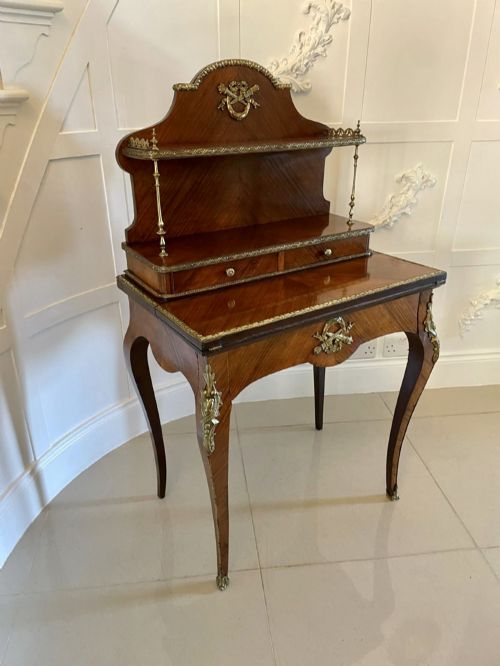
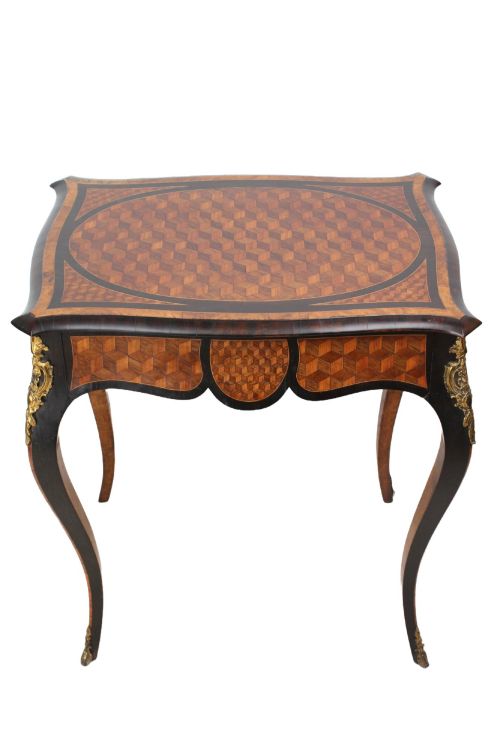
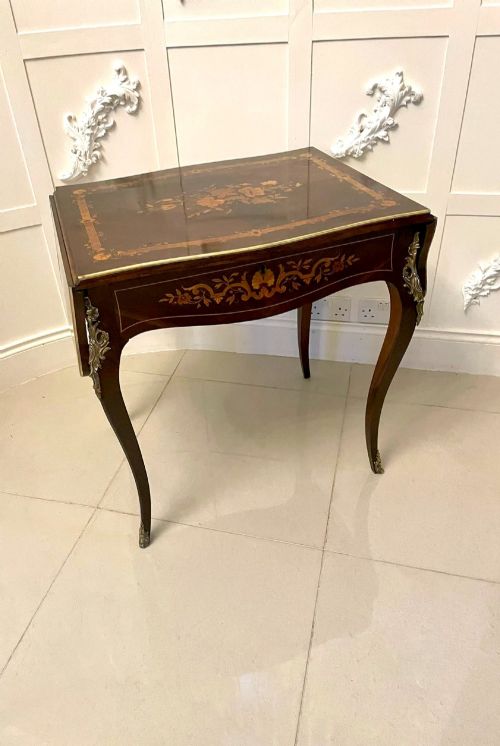
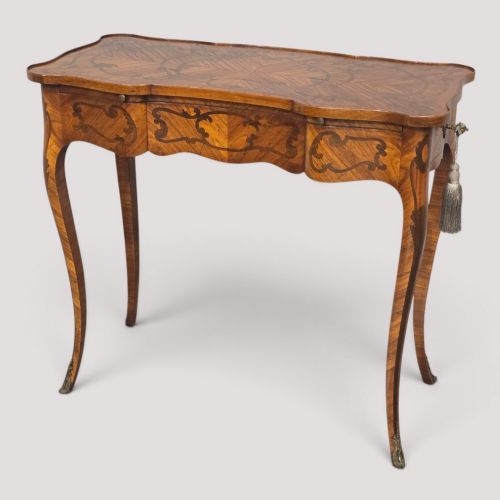

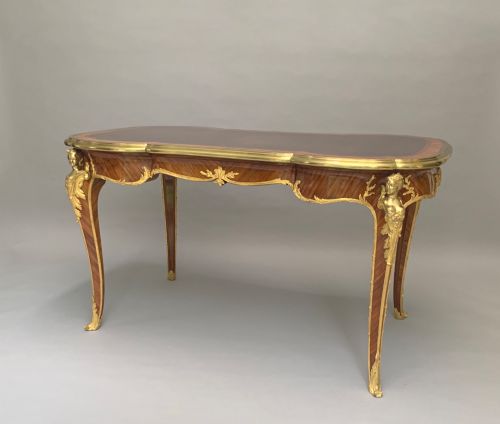
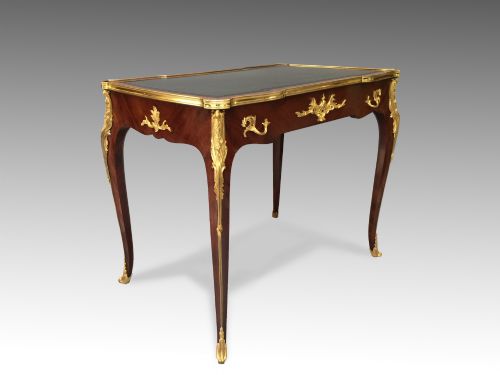
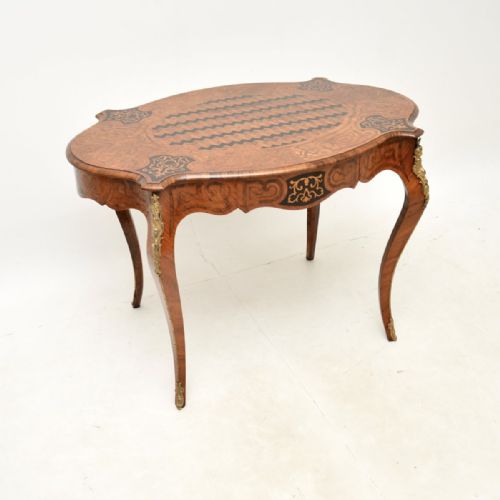
French Louis XV Desk
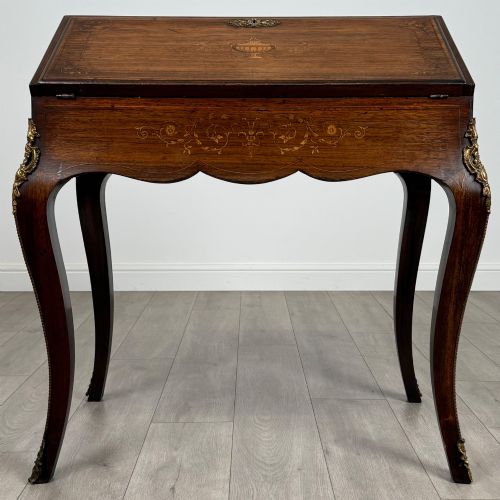
When you examine a french louis xv desk, you find the curving lines and delicate mounts that define mid-eighteenth-century Parisian elegance reinterpreted across the nineteenth century.
French Louis XV Desk
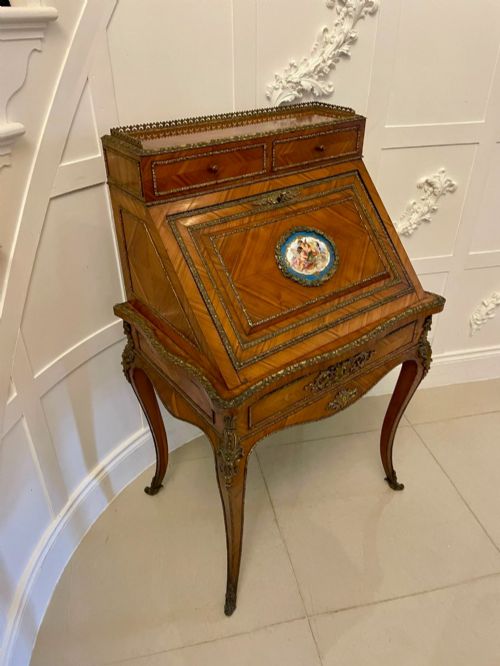
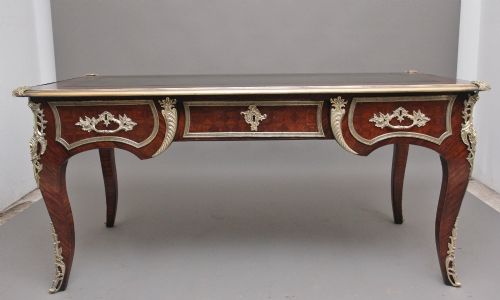
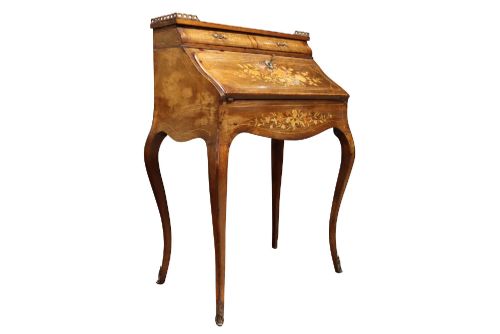
A french louis xv desk encompasses several distinct writing forms, including the bureau plat, the writing table, and the smaller bureau de dame or bonheur-du-jour.
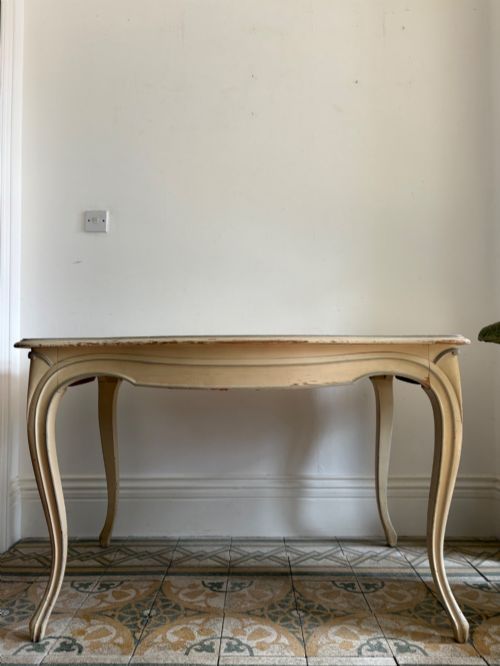
Most examples found in trade belong to the nineteenth-century revival periods, echoing the flowing cabriole legs and serpentine outlines of the original Rococo movement.
These pieces served as fashionable writing furniture for salons and boudoirs, constructed with freestanding capabilities designed to occupy the centre of a room rather than sit against a wall.
Materials and construction
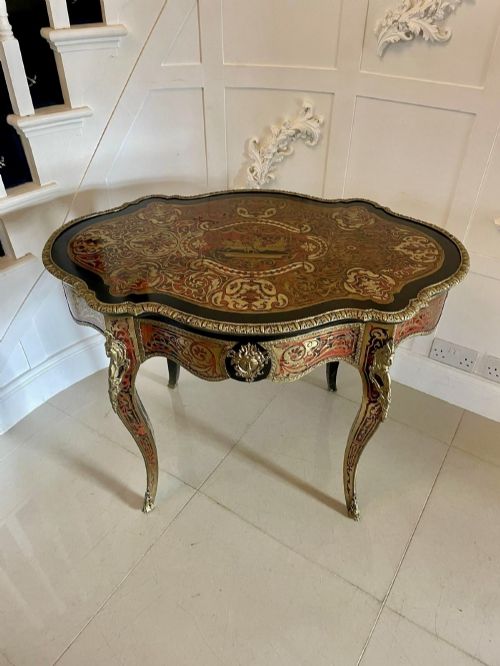
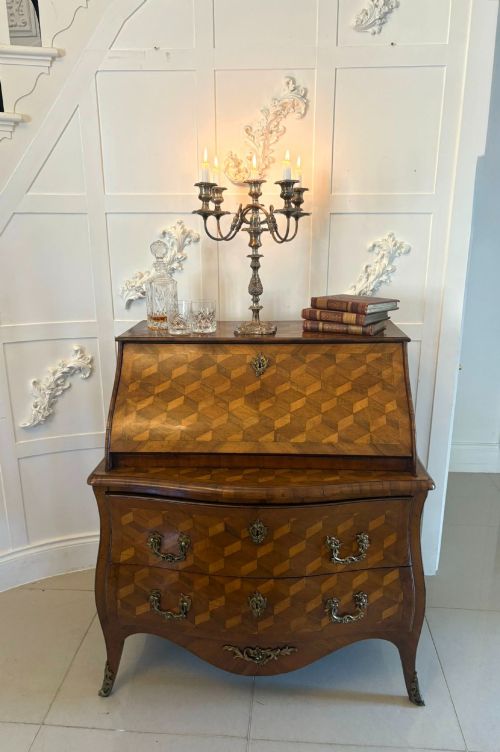
Cabinetmakers built these desks using foundational carcases of oak or walnut, applied with elaborate veneers of kingwood, rosewood, and tulipwood arranged in geometric parquetry or floral marquetry patterns.
Gilt bronze or ormolu mounts were cast and chased to accentuate the vulnerable corners, apron rails, and sabots of the cabriole legs, protecting the timber while enhancing the sculptural outline.
Several desks conceal secret compartments behind sliding panels, designed to guard private correspondence from curious Victorian houseguests.
Evaluating craftsmanship
The distinction between ordinary production and the work of master makers rests on the crispness of the ormolu chasing and the precision of the veneer work.
JAS Shoolbred·Achille Brocot·Francois Linke·Edwards and Roberts·Paul Sormani·CH Jeanselme and Co·Durand·Alphonse Tahan
The French Louis XV Desk Glossary
- Bureau plat
- A flat-topped writing desk, typically freestanding with multiple drawers in the frieze. This form sits away from the wall to display finished veneer work on all four sides.
- Ormolu
- Gilt bronze mounts applied to furniture for decoration and protection. The technique involves a mercury-gilding process that produces a deep, lasting metallic lustre.
- Marquetry
- Decorative patterns formed by fitting together thin slices of various coloured woods into the surface. Artisans use contrasting grains to create pictorial or floral designs.
- Cabriole leg
- A furniture leg featuring a double curve, bowing outward at the knee and tapering inward at the ankle. This shape mimics animal limbs and forms a central feature of the Rococo style.
- Parquetry
- Geometric wood inlay arranged in repetitive patterns such as cubes, lozenges, or chequers. It creates texture across flat surfaces without pictorial imagery.
French Louis XV Desk: Frequently Asked Questions
Are these desks from the eighteenth century?
The majority of pieces available date from nineteenth-century revivals rather than the original reign of Louis XV. Makers in Paris and London frequently copied these eighteenth-century designs.
Nineteenth-century adaptations often combine original Rococo aesthetic principles with the heavier timber framing typical of later Victorian workshops.
What is a bonheur-du-jour?
A bonheur-du-jour is a small, light lady's writing desk featuring a cabinet or pigeonholes mounted upon the rear of the main writing surface. This compact form gained popularity during the mid-eighteenth century and returned during nineteenth-century revivals.
They function as both decorative display furniture and practical writing spaces for correspondence.
How should I care for the leather top?
The leather inset requires gentle cleaning with a damp cloth and occasional treatment with specialist leather dressing to prevent drying and cracking. Avoid using harsh chemical solvents or excessive water near the surrounding wood veneers.
Many period desks retain their original gold-tooled leather, which benefits from minimal interference and careful maintenance.