
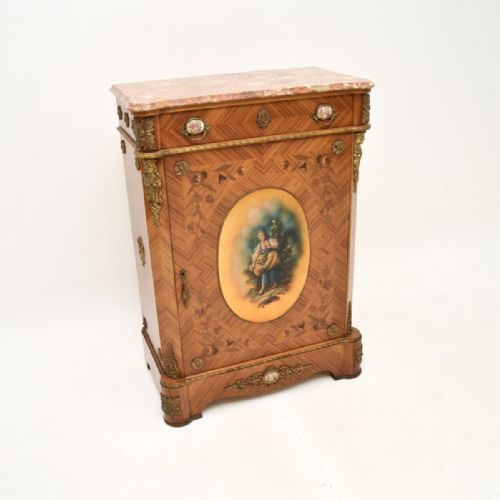


French Kingwood Side Cabinet
When choosing a french kingwood side cabinet, collectors select pieces defined by rich veneers and classical revival proportions.
French Kingwood Side Cabinet
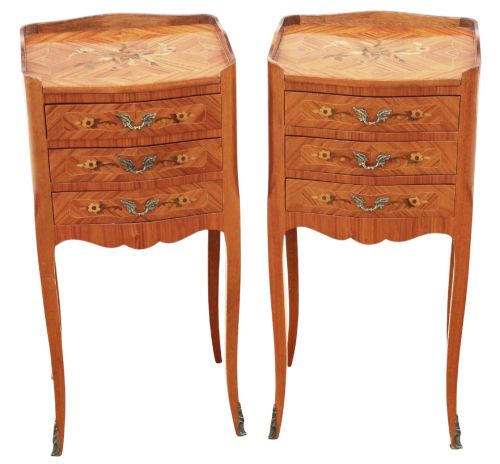
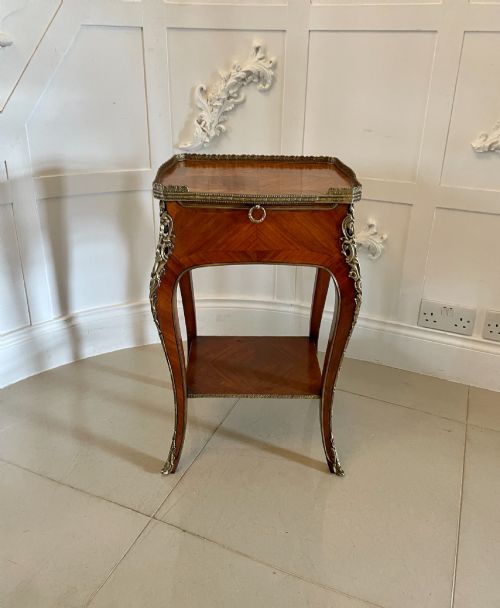
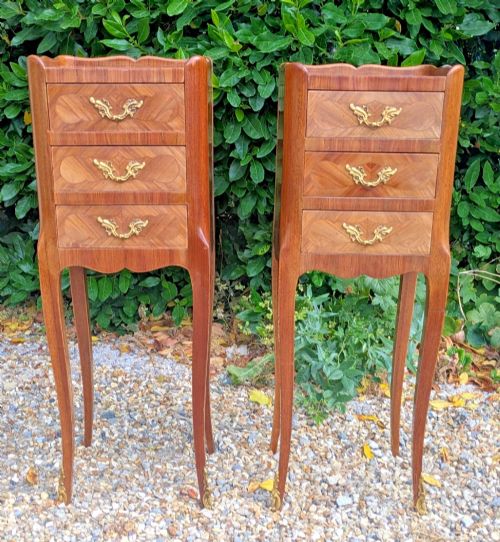
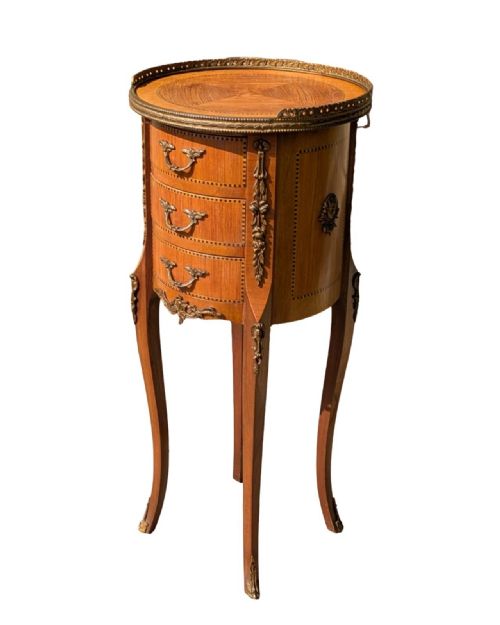
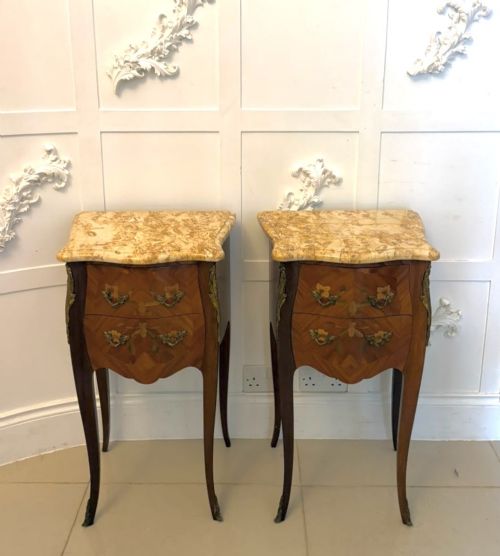
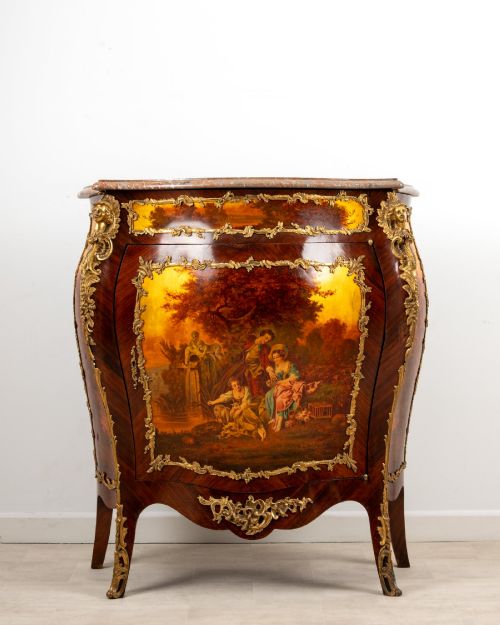
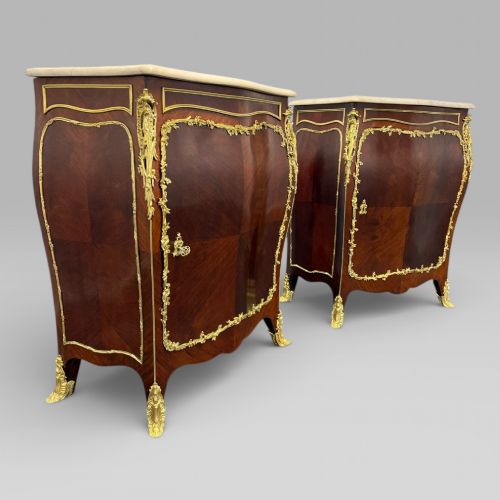
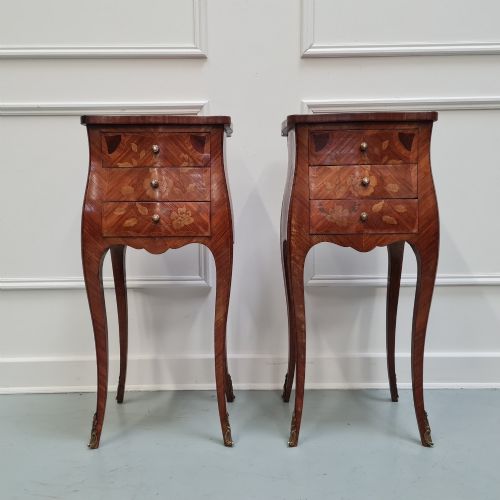
A french kingwood side cabinet typically presents as a bedside table, commode, or small pier cabinet originating from the nineteenth or early twentieth century. These furnishings reflect revivalist tastes, particularly Louis XV and Louis XVI styles, incorporating serpentine fronts and compact proportions suitable for intimate rooms.
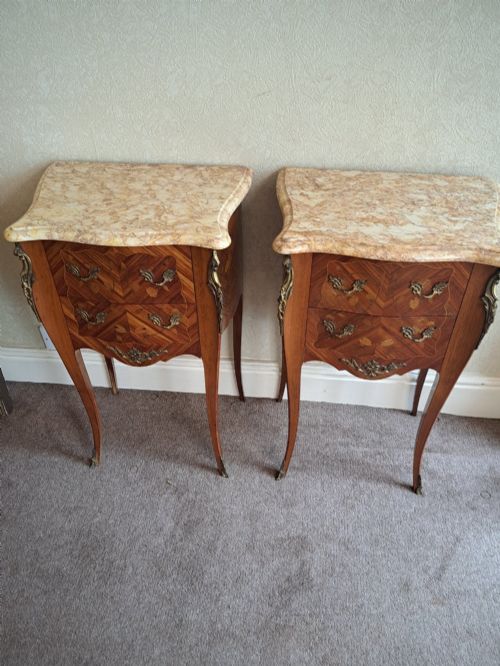
The inventory demonstrates a strong representation of matched pairs alongside freestanding single cabinets. Common configurations include marble tops paired with floral marquetry or parquetry surfaces, reflecting French cabinet-making traditions adapted for both period and vintage interiors.
How They Were Made
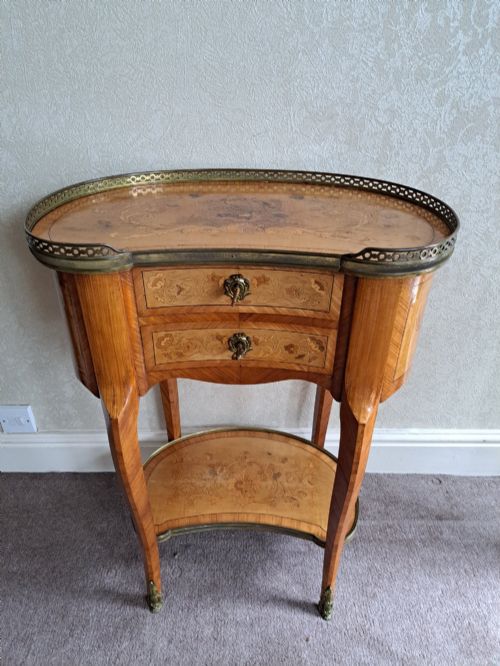
Construction relies heavily on dense tropical hardwoods overlaid with contrasting veneers arranged in geometric parquetry or intricate floral marquetry patterns. Carcase frames incorporate oak or pine internals beneath the decorative kingwood outer skins.
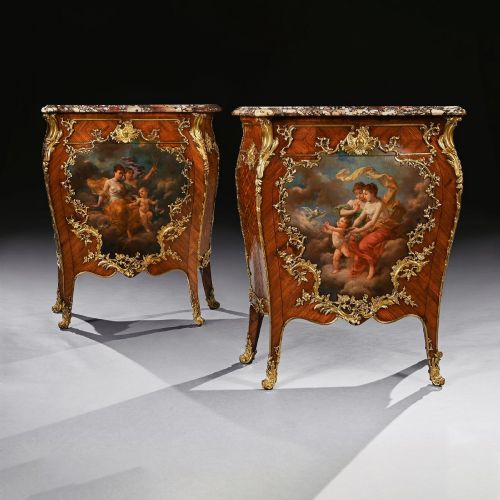
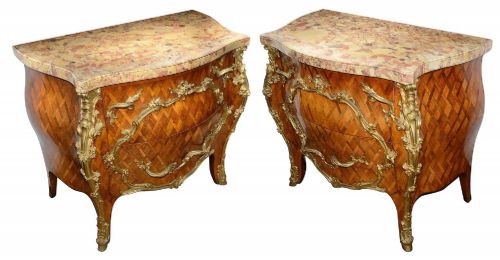
Metal enrichment forms a defining element, utilising cast ormolu and gilt bronze mounts secured along corners, feet, and aprons. Upper surfaces frequently employ inset slabs of veined marble, shaped and polished to match the underlying wooden carcase contours.
Several diminutive bedside cabinets hide secret drawers designed for midnight treasures.
What Varies in Quality
Differentiation across the range depends on the crispness of the bronze or ormolu mounts and the complexity of the wood inlay. Superior examples display hand-chased metalwork and precise botanical marquetry without lifting or shrinkage along the veneer joints.
The thickness and selection of the marble top also dictate grade, where heavier slabs with complex natural figuring and polished bevelled edges distinguish finer workshop output from simpler commercial production.
E. Kahn·Maison Millet·G. Durand
The French Kingwood Side Cabinet Glossary
- Kingwood
- A dense, heavily figured Brazilian hardwood prized for its deep brown tones and distinct violet streaks. It was widely utilised by European cabinet-makers for decorative veneer work.
- Ormolu
- Gilt bronze mounted onto furniture carcases for decorative effect. The technique involves applying a gold amalgam to bronze before firing.
- Marquetry
- Inlay work using various coloured wood veneers to form pictorial or floral designs. Artisans carefully cut and fit each piece into a paper or wooden template.
- Vernis Martin
- A simulated Japanese lacquer developed in France during the eighteenth century. It employs multiple layers of resin varnish to achieve a glossy, translucent finish.
- Commode
- A low chest of drawers or cabinet designed for domestic storage. Nineteenth-century revival versions frequently feature marble tops and shaped aprons.
French Kingwood Side Cabinet: Frequently Asked Questions
How do I care for marble tops?
Marble surfaces require regular dusting with a soft cloth and immediate cleaning of liquid spills to prevent staining. Avoid acidic cleaners that etch the polished stone.
Applying a neutral stone wax periodically helps protect the finish from moisture rings and daily wear.
Are these cabinets purely decorative?
While prized for their aesthetic impact, these pieces offer functional storage through internal shelving and drawer compartments. Their compact dimensions suit modern bedside use or hallway placement.
Original locks and hinged doors remain operational on many surviving examples from the nineteenth century.
What is parquetry?
Parquetry involves arranging small geometric wood veneers into repeating patterns such as cubes or chequers. It creates a textured, decorative surface distinct from floral marquetry.
Cabinet-makers utilised contrasting timber species to enhance the optical depth of these geometric layouts.