


Marquetry Two Door Cabinet
A marquetry two door cabinet brings warmth and intricate pattern into a room through contrasting timbers.
Marquetry Two Door Cabinet
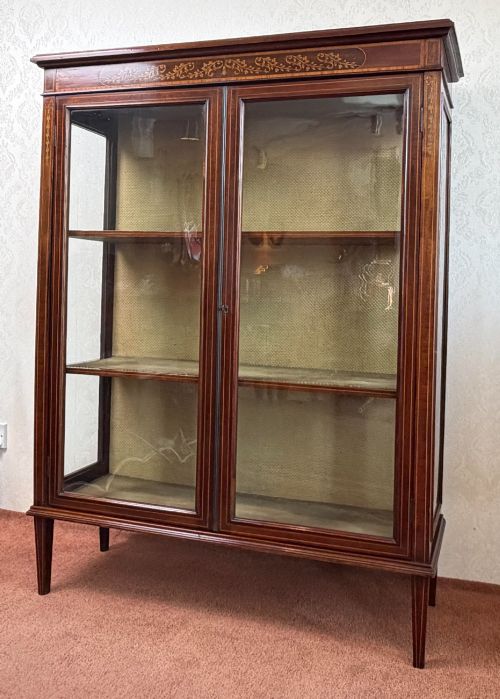
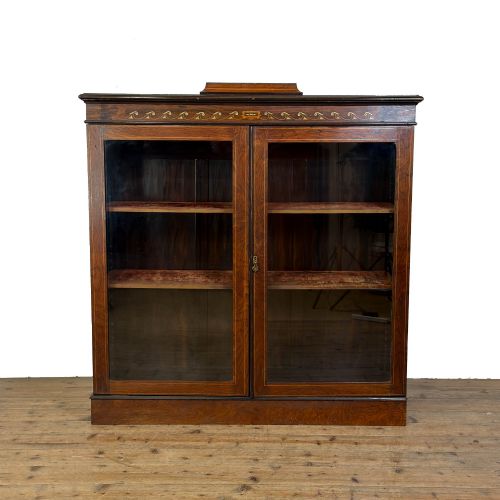
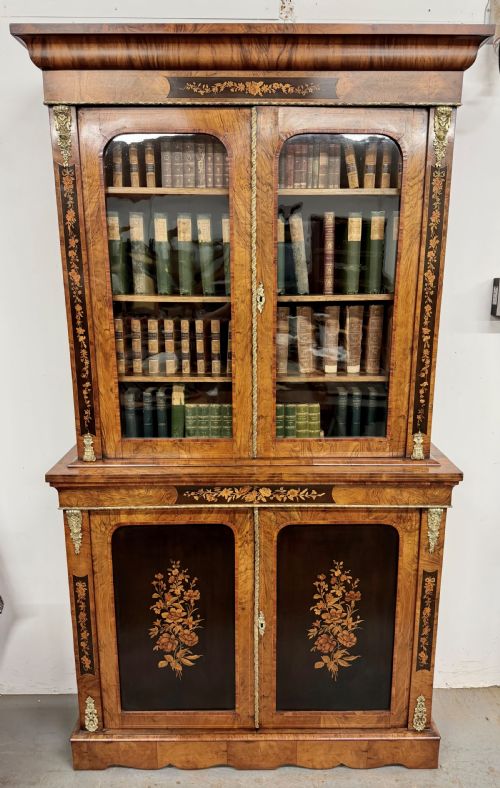
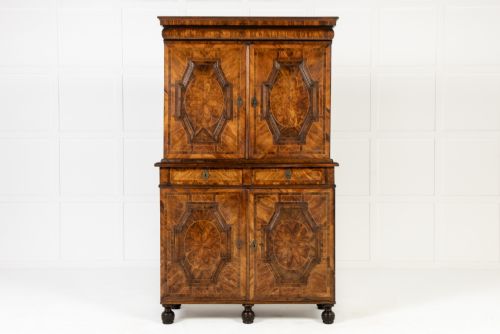
A marquetry two door cabinet is a storage piece decorated with fitted wood veneers forming pictorial or geometric designs. These pieces appear most frequently in Victorian, Edwardian, and nineteenth-century French iterations, often taking the form of side cabinets, display cases, or glazed bookcases.
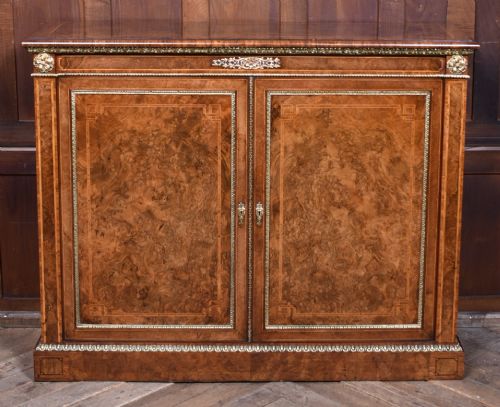
The materials recorded in these pieces include mahogany, walnut, burr walnut, satinwood, and rosewood, sometimes accented with brass or ormolu mounts. Cabinets span from compact pier cabinets to larger drawing-room display pieces with glazed doors.
Earlier examples stretch back to the seventeenth century and the Georgian period, whilst later revivals channel Sheraton and French Louis styles. The primary function remains the display or storage of valued possessions behind symmetrical double doors.
How they were made
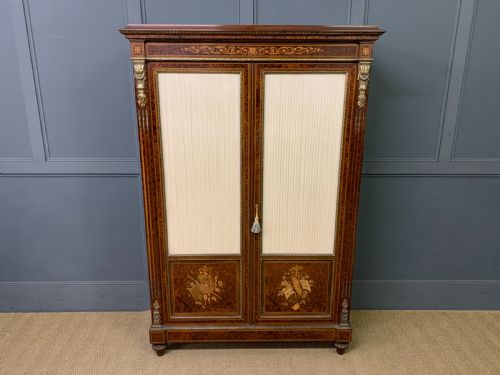
Cabinet makers constructed these pieces using solid timber frames overlaid with fine veneers of walnut, mahogany, or satinwood. Craftsmen cut contrasting wood slices by hand to assemble intricate marquetry patterns across the door panels.
Makers applied brass stringing, glass panes, and cast ormolu mounts to finish the exterior surfaces. Polishing with traditional shellac built up a gloss that highlighted the natural grain and colour variations in the timber.
Some nineteenth-century makers used intricate wood marquetry to hide tiny secret compartments behind the main cabinet doors.
What varies in quality
The refinement of the veneer work separates standard production from exceptional examples. Dense burr walnut and carefully selected satinwood provide a richer visual depth than plain timbers.
The precision of the joinery and the weight of the bronze or ormolu mounts indicate the skill of the original workshop. Finer cabinets feature more complex floral or scroll marquetry that flows seamlessly across the door frames.
Whytock and Reid of Edinburgh
The Marquetry Two Door Cabinet Glossary
- Marquetry
- The art of applying small pieces of wood veneer to a structure to form decorative patterns or pictures. This technique defines the visual character of these cabinets.
- Burr walnut
- A wood harvested from walnut tree growths that produces swirling, highly figured grain patterns. Cabinet makers prized this timber for high-status furniture fronts.
- Ormolu
- Gilded bronze ornamentation applied to furniture corners, feet, and friezes. It adds a metallic contrast to the timber surface.
- Pier cabinet
- A low cabinet designed to stand against the wall space between windows. These pieces often incorporate glass doors for displaying ornaments.
- Satinwood
- A durable tropical hardwood with a lustrous yellowish sheen. It served as a pale contrasting veneer in neoclassical and revival furniture.
Marquetry Two Door Cabinet: Frequently Asked Questions
What is a marquetry two door cabinet used for?
These cabinets served primarily in drawing rooms and reception spaces to store books, linens, or glassware while displaying decorative objects on top or behind glass doors.
Their decorative surfaces ensured they functioned as statement furniture pieces as much as practical storage units.
How do I identify a Victorian marquetry cabinet?
Victorian examples often employ figured walnut with floral marquetry panels, frequent glass door panels, and turned or carved supports.
Comparing the timber species and decorative motifs against known nineteenth-century design patterns helps confirm the period.
Where should I place this cabinet in a home?
A side cabinet suits a dining room or hallway where the top surface can hold lamps or decorative items without blocking foot traffic.
Glass-fronted display versions work well in studies or living areas to protect books and collections from dust.
How do I care for antique wood veneer?
Keep wooden cabinets away from direct sunlight and strong heat sources to prevent the delicate veneers from drying out and lifting.
Dust gently with a soft dry cloth and avoid modern liquid polishes that can damage the historic polish surface.