

French Inlay Occasional Table
When you search for a French inlay occasional table, you are looking at small decorative furnishings that bring continental refinement and surface interest into a room.
French Inlay Occasional Table
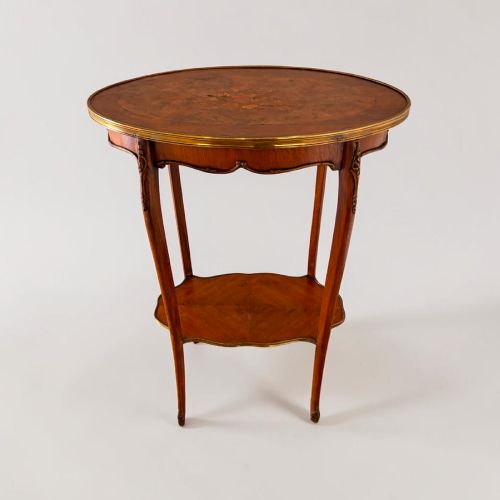
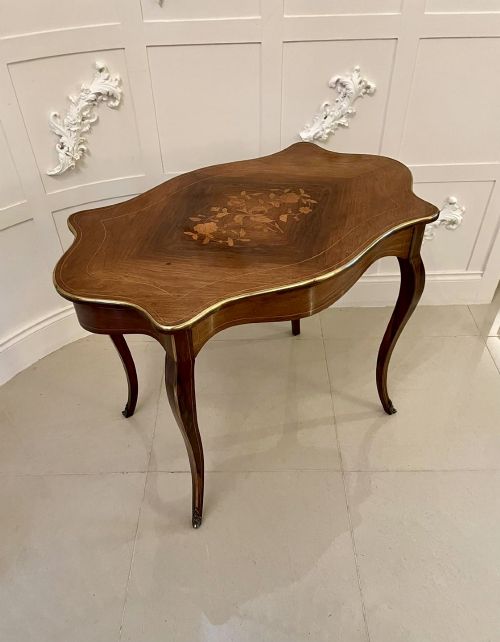
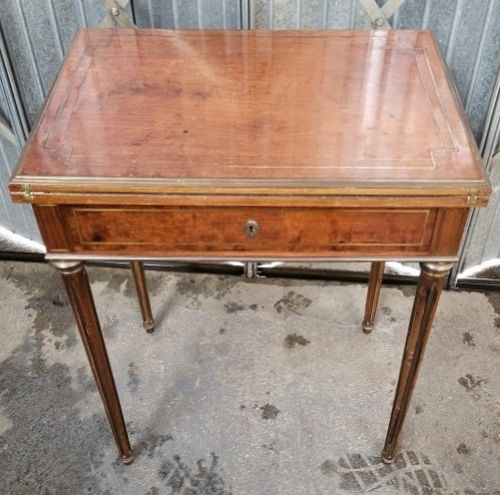
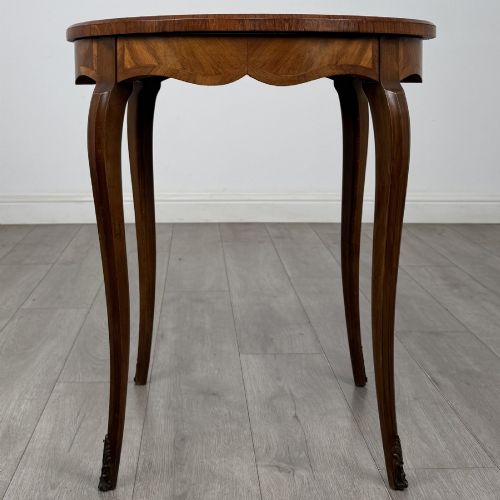
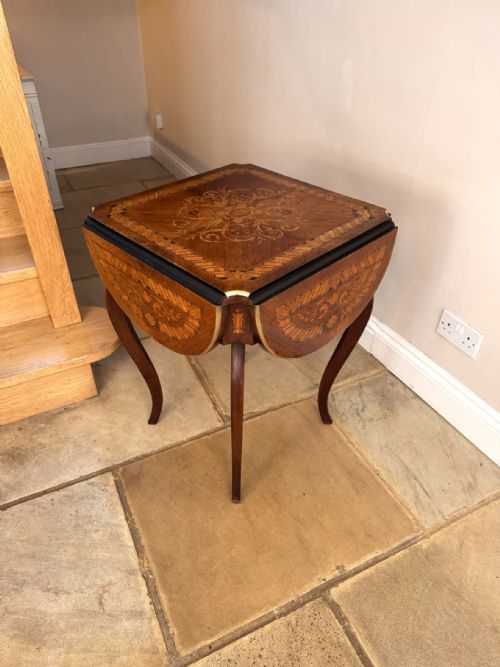
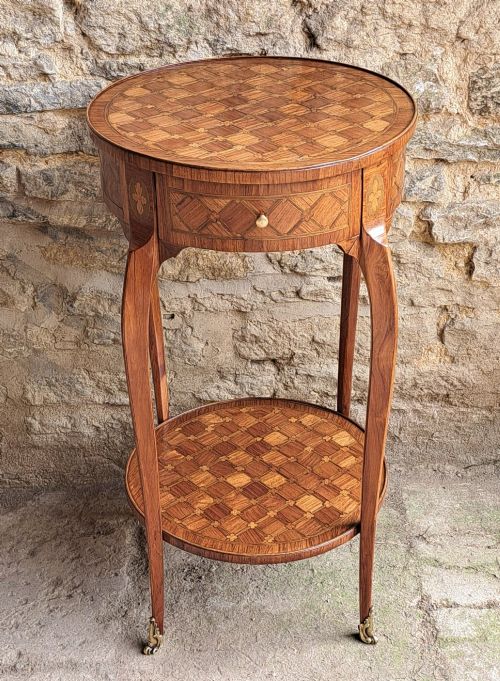
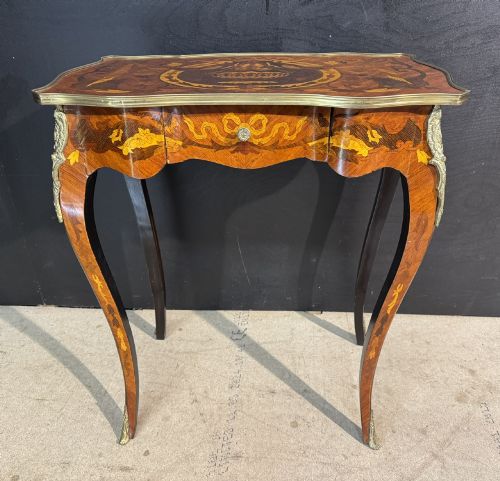
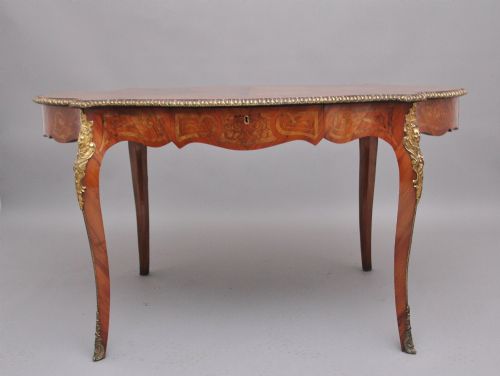
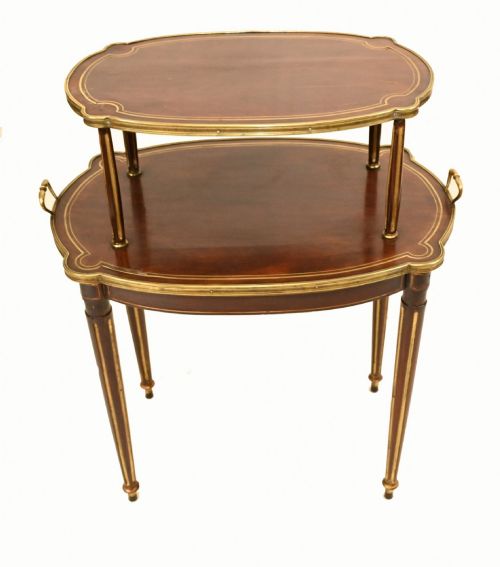
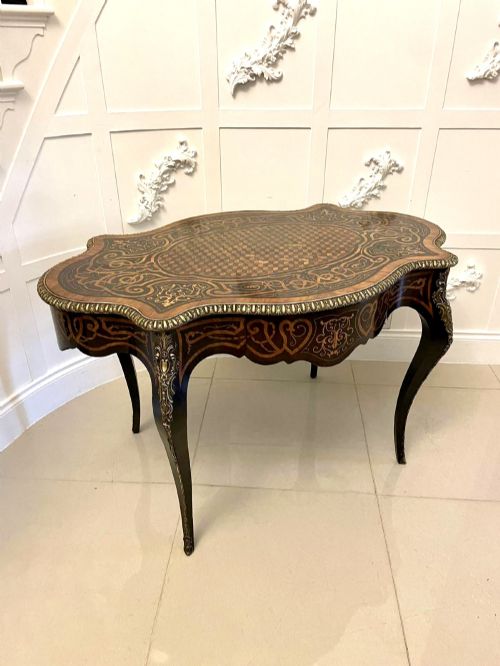
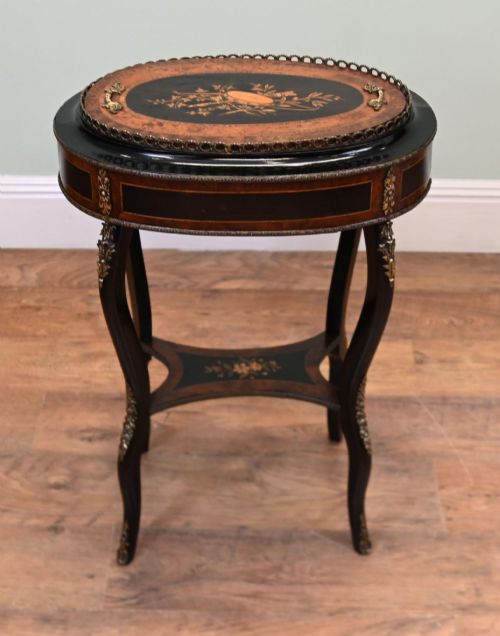
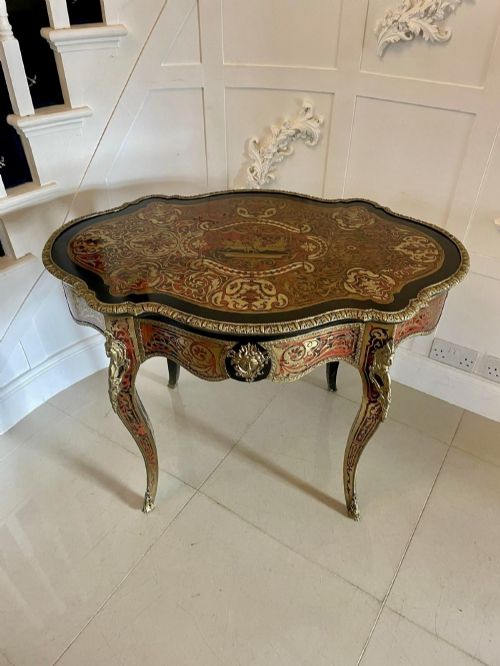
A French inlay occasional table encompasses a variety of compact forms designed for utility and display, from the nineteenth-century centre table and sewing table to the two-tier etagere and bedside cabinet. These pieces frequently appear in revival styles such as Louis XV and Napoleon III, reflecting historical continental design traditions.
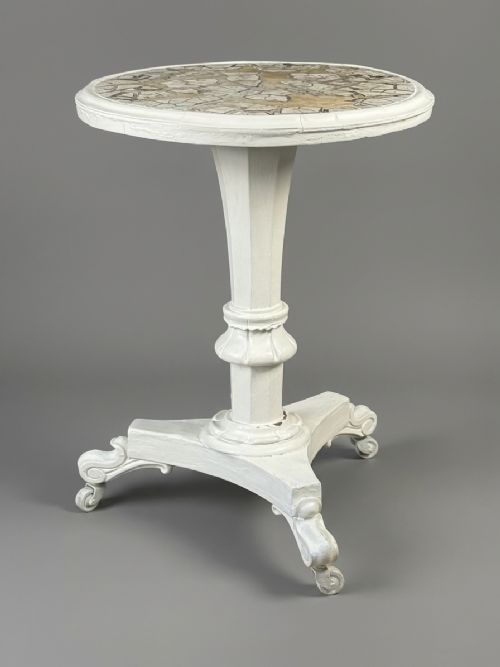
The selection on this page shows pieces originating primarily from the nineteenth and early twentieth centuries. Side tables, lamp tables, and coffee tables dominate the forms, often retaining their original freestanding proportions and decorative mounts.
Makers and workshops of the period utilised woods like kingwood, walnut, and rosewood as grounds for intricate surface decoration. Buyers encounter both provincial interpretations and pieces bearing the distinct signatures of London retailers who imported French furniture.
Materials and construction
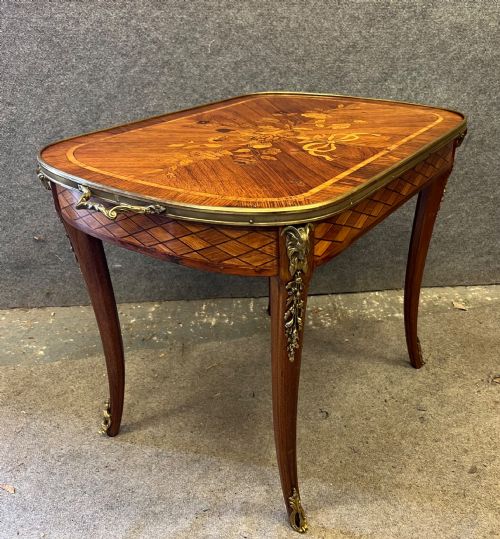
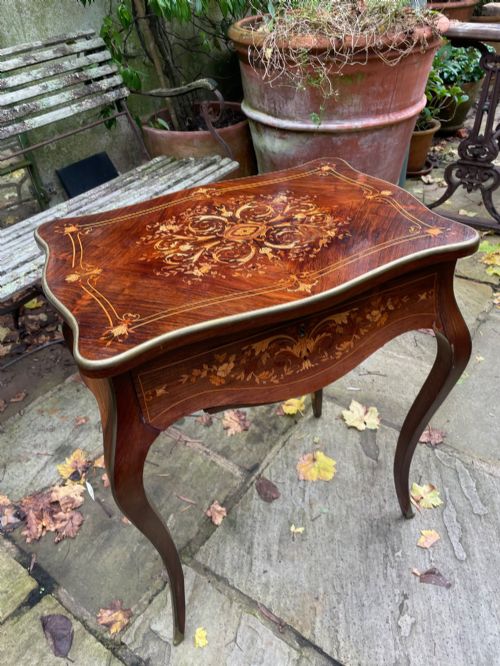
Cabinet makers constructed the carcass using native and exotic timbers, applying fine veneers of kingwood, walnut, and amboyna to the visible surfaces. Marquetry and parquetry patterns were hand-cut and pieced together before being glued to the solid wood foundations.
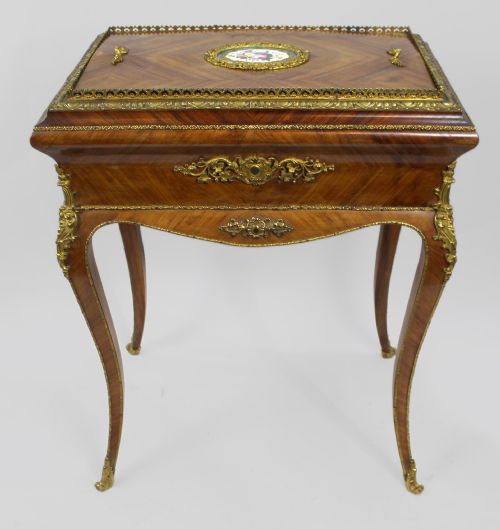
Ormolu mounts, cast in bronze and gilt, were fastened at the corners and legs to accentuate the contours of the Louis XV and sixteenth styles. Brass stringing and occasional porcelain plaques were integrated directly into the veneered tops and friezes.
French Inlay Occasional Table Retail Price Guide 2026
Typical asking prices for french inlay occasional table among the pieces listed under this phrase on Sellingantiques today, from the lower quarter to the upper quarter. They describe what is for sale here now, not the wider market.
The listings on this page span the nineteenth and early twentieth centuries, featuring walnut, kingwood, and rosewood veneers decorated with brass and ormolu.
Quality and execution
The distinction between ordinary and exceptional examples lies in the precision of the veneer work and the depth of the timber selection. Burr walnut and figured kingwood display lively natural grain patterns that require careful matching across curved surfaces.
Finishing details such as the weight and chasing of the ormolu mounts indicate the standard of the workshop. Superior pieces maintain crispness in the floral marquetry and stability in the underlying frame without excessive secondary restoration.
JAS Shoolbred·Edwards & Roberts
The French Inlay Occasional Table Glossary
- Marquetry
- A technique where pieces of coloured wood veneer are assembled to create pictorial or decorative surface patterns. It differs from parquetry through its use of curved and figurative motifs.
- Parquetry
- Geometric wood inlay arranged in repetitive patterns such as cubes, lozenges, or squares. It provides a structured texture across tabletops and shelves.
- Ormolu
- Gilded bronze mounts applied to the edges and feet of furniture. The process involves treating the metal with an amalgam of gold and mercury.
- Etagere
- A set of open shelves supported by slender columns designed for display. These tiered pieces often incorporate inlaid tops and mirrored panels.
- Jardiniere
- A decorative stand or container integrated into a table top designed to hold plants. Examples in these listings combine timber frames with metal liners.
French Inlay Occasional Table: Frequently Asked Questions
What is a french inlay occasional table used for?
These tables served specific domestic functions in nineteenth-century drawing rooms and boudoirs, holding lamps, writing materials, or sewing implements. Today they function as bedside surfaces, lamp stands, or decorative accents in a sitting room.
Their compact scale allows them to fit easily beside seating or in hallways while providing a polished wooden surface for small objects.
How do I identify the period of an occasional table?
Dating relies on observing the combination of timber, construction methods, and stylistic revival influences. Nineteenth-century pieces often display hand-cut marquetry and heavier carcase timbers beneath the veneer.
Later twentieth-century reproductions tend to show more uniform machine-cut stringing and different secondary woods inside drawers or beneath tabletops.
Are these tables sturdy enough for daily use?
Most antique occasional tables were built as light functional furniture rather than heavy utilitarian pieces. Their joints and frames require considerate handling rather than heavy loads.
Placing them away from direct heat sources and sudden humidity changes preserves the stability of the veneer and the underlying timber frame.
What is the difference between marquetry and parquetry?
Marquetry uses varied wood veneers to form flowing pictorial scenes, floral sprays, or elaborate scrolls across a panel. It relies on artistic composition and varied timber colours.
Parquetry constructs geometric grids and repeating patterns using precise polygonal pieces of wood. Both techniques frequently appear together on nineteenth-century French tables.