




Marquetry Drop Flap Table
A marquetry drop flap table brings intricate wood inlay and folding leaves together into a functional piece of furniture.
Marquetry Drop Flap Table
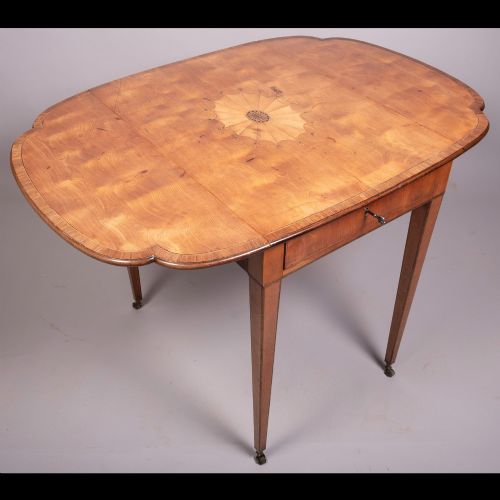
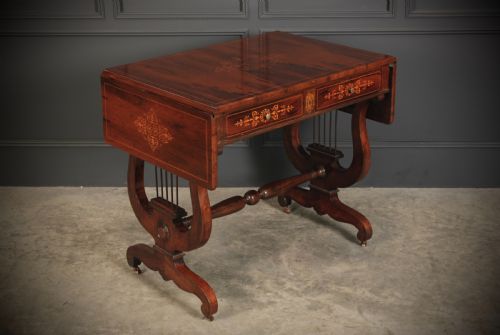
A marquetry drop flap table combines decorative patterned veneer with hinged leaves that extend the surface when needed. These items appear across several historic periods, including the Georgian era, Victorian times, and the Edwardian period.
The pieces listed on this page include Pembroke tables, side tables, occasional tables, and sofa tables. Most examples feature inlaid marquetry work alongside timber structures of satinwood, rosewood, walnut, and mahogany.
Buyers frequently encounter Edwardian rosewood versions and Georgian satinwood designs among the available selection. French Empire and Dutch styles also appear, bringing diverse regional aesthetics to the category.
How they were made
Cabinet makers utilised dense hardwoods such as rosewood, mahogany, and walnut to build the primary framework of each table. Contrasting timbers like satinwood, boxwood, and tulipwood were then cut into thin veneers for the decorative inlay.
Craftsmen applied marquetry techniques by fitting small pieces of coloured and grained wood together to form pictorial or geometric motifs. Brass hardware, including hinges for the drop flaps and castors on the legs, completed the construction.
Several tables manage to fold themselves into remarkably slim profiles, proving that Victorian furniture designers understood modern space-saving long before modern flats existed.
What varies in quality
The complexity and precision of the marquetry inlay dictate much of the visual standard across these tables. Finer examples display tightly fitted wood sections with sharp contrasts, whereas simpler items rely on more basic geometric patterns.
The choice of primary and secondary timbers also influences the overall execution, with figured satinwood and rosewood denoting higher status pieces. The stability of the drop leaf mechanism and the integration of brass fittings reflect the original maker's skill.
The Marquetry Drop Flap Table Glossary
- Marquetry
- Decorative wood inlay arranged in pictorial or geometric patterns across a surface. This technique uses contrasting veneers to create detailed ornamentation.
- Drop flap
- A hinged leaf attached to the main table top that lowers or rises to alter the surface area. It rests on folding brackets or swinging legs.
- Pembroke table
- A small rectangular table featuring two hinged drop leaves on opposite sides. These pieces often include one or two small drawers.
- Satinwood
- A durable tropical timber with a lustrous golden yellow appearance, frequently used in high-end cabinet making. It provides a bright contrast in marquetry designs.
- Sofa table
- A rectangular occasional table designed to stand in front of a sofa, typically featuring drop leaves at either end. These usually incorporate twin pedestals or trestle supports.
Marquetry Drop Flap Table: Frequently Asked Questions
What is a drop flap table?
A drop flap table is a piece of furniture with hinged side leaves that can be raised to increase surface space or lowered when room is limited.
These tables were designed for versatility in historic homes, allowing inhabitants to adapt their living areas for dining, writing, or display.
How do I care for marquetry?
Marquetry requires protection from direct sunlight and excessive moisture to prevent the delicate inlaid veneers from lifting or fading.
Regular dusting with a dry cloth and occasional application of appropriate furniture wax helps preserve the polished timber surface.
Where were these tables used?
These tables served various functions in drawing rooms, sitting rooms, and parlours as occasional, side, or Pembroke tables.
Their folding leaves made them easy to move against a wall when not in use or to position near seating for lamps and books.
How do I identify the period?
Periods are identified by examining the timber choices, structural forms, and stylistic traits associated with eras like the Georgian or Edwardian periods.
For instance, satinwood and strict symmetry often point towards earlier Georgian work, while darker rosewood with profuse inlay frequently suggests Edwardian or Victorian manufacturing.