


French Giltwood Pier Table
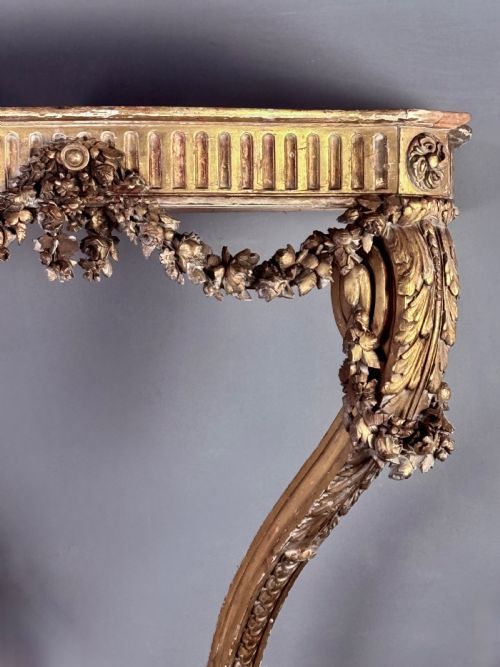
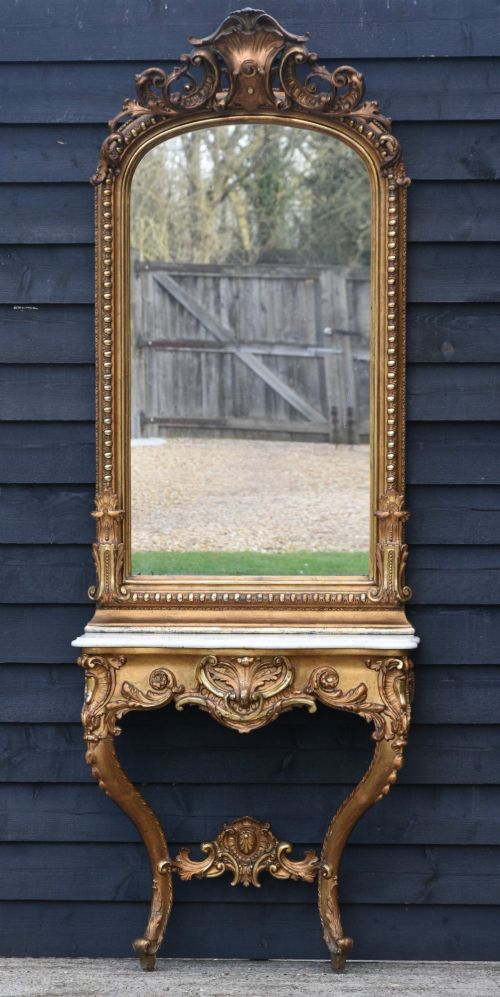
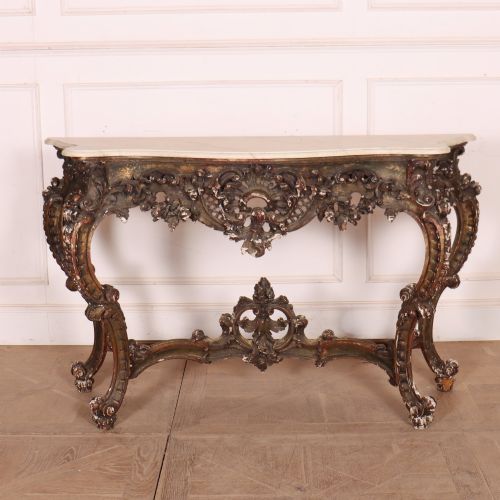
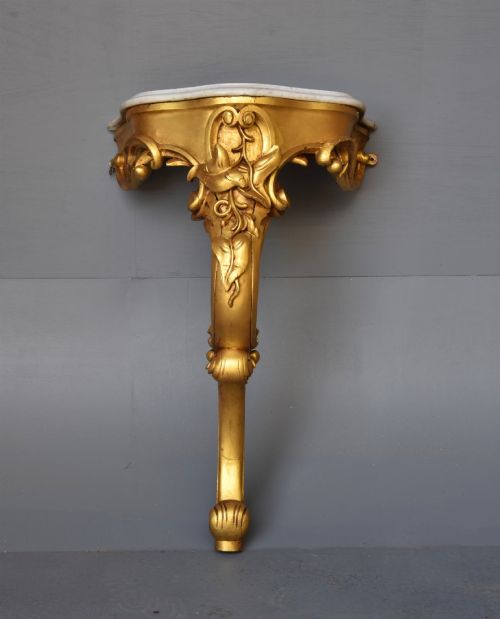
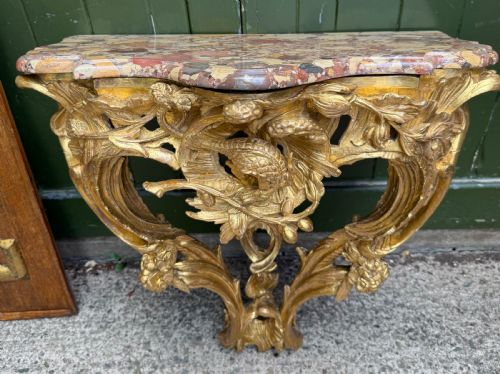
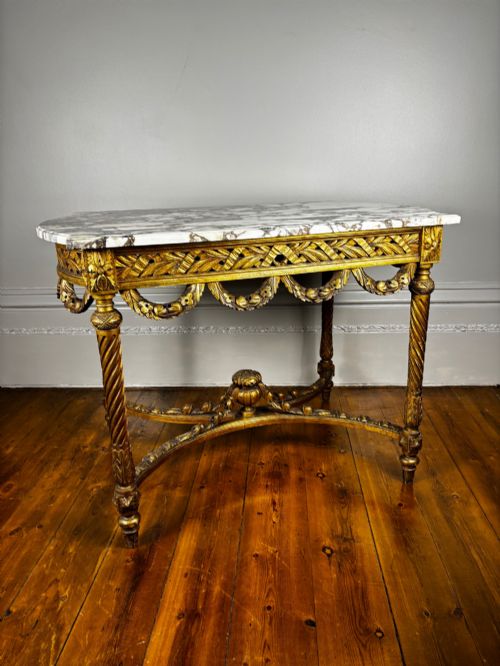
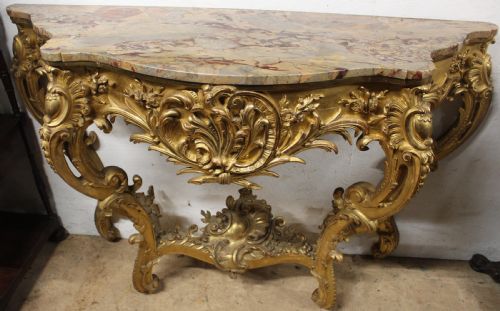
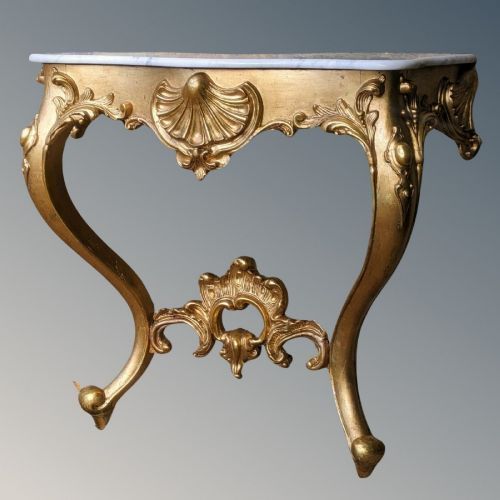
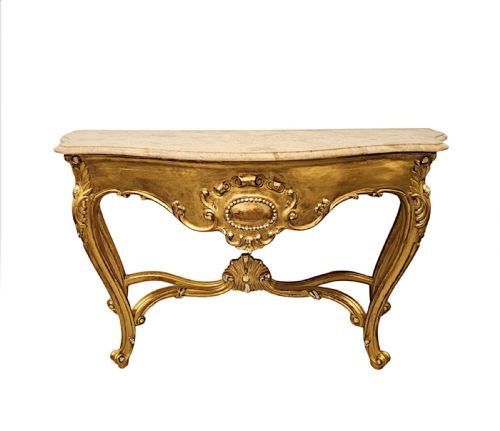
These french giltwood pier table pieces bring classical proportion and gilded warmth to an interior, designed historically to stand against a wall beneath a tall glass.
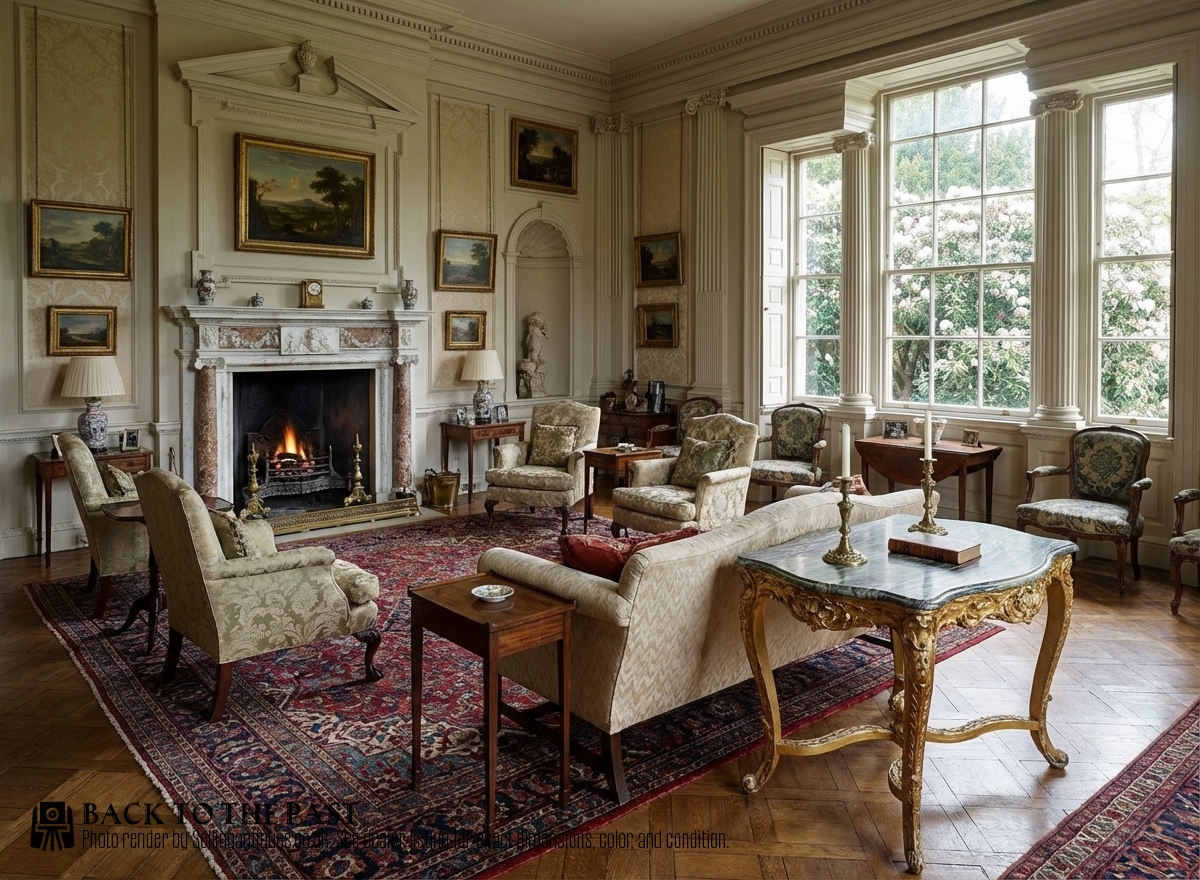
French Giltwood Pier Table
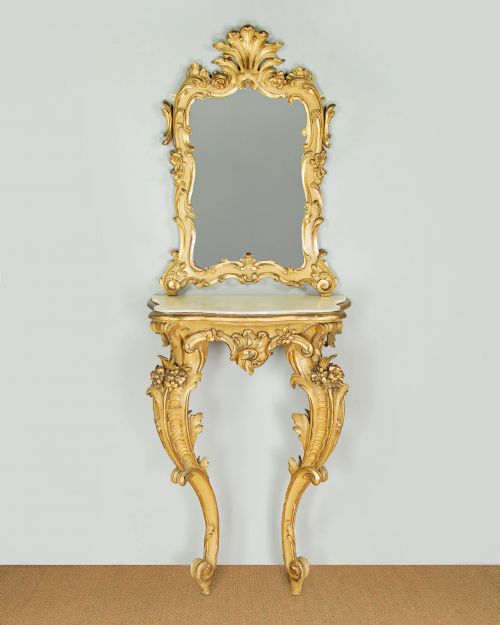
A french giltwood pier table is a console or side table designed to fit flush against the wall between windows, frequently encountered alongside matching pier mirrors or trumeau glasses.
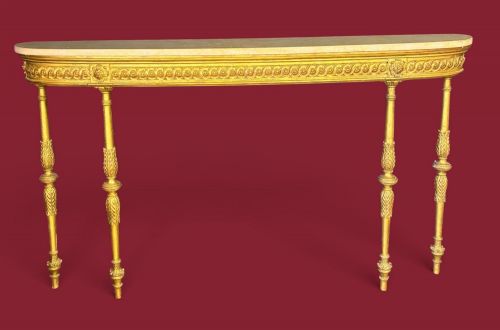
Most examples found here date from the nineteenth century, drawing heavily on earlier eighteenth century motifs such as French Rococo, Louis XV, and Louis XVI styles.
Forms range from small serpentine side tables to large console tables with matching mirror sets, often incorporating substantial marble slabs to their upper surfaces.
How they were made
Carved wooden foundations, often built from softer timbers, received layers of gesso before being finished with gold leaf or painted surfaces to achieve the characteristic metallic sheen.
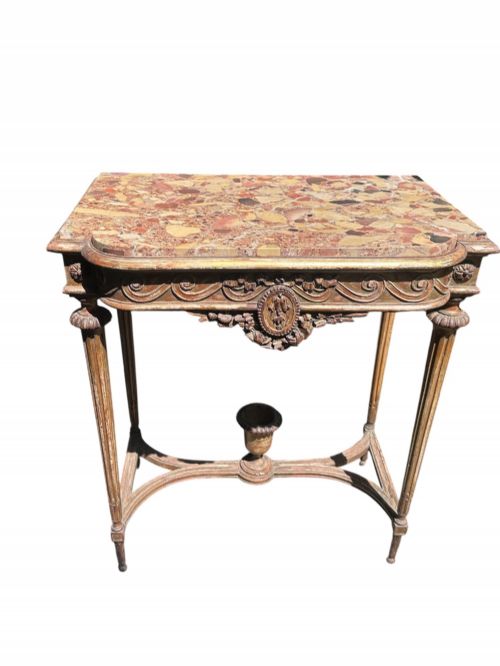
Heavy stone tops, including varieties of figured marble and Carrara, rested directly upon the wooden frames to provide a stable horizontal surface.
Glass plates were integrated into matching pier mirrors and console sets, reflecting light across the interior space of the room.
Many a nineteenth-century craftsman had to carve matching mirror frames entirely by eye, ensuring that left and right scrolls argued pleasantly rather than matching with mathematical boredom.
What varies in quality
The crispness and depth of the hand-carved ornament on the wooden frame separate masterwork examples from simpler commercial production.
The selection and weight of the marble top, particularly where specific coloured varieties like breche d’alep or Siena are employed, influence the standing of the piece.
The integrity of the original gilding and gesso layers underneath dictates how well the surface has survived the decades.
Felix Alfred Ternisien
The French Giltwood Pier Table Glossary
- Giltwood
- Wood that has been coated with thin sheets of gold leaf over a prepared gesso ground. This technique gives furniture a brilliant, reflective metallic finish.
- Pier Table
- A table designed specifically to stand against the wall space between two windows. They were frequently paired with tall mirrors.
- Serpentine
- A furniture outline characterised by a waving, double-curved front that bows outward in the centre and curves inward at the sides.
- Gesso
- A plaster-like mixture applied to wood frames to create a smooth surface for carving and gilding. It allows for sharp, intricate decorative detail.
- Trumeau
- A decorative wall mirror or panel framed in wood, designed to sit directly above a console table. It often incorporates painted scenes or carvings.
French Giltwood Pier Table: Frequently Asked Questions
What is a french giltwood pier table?
A french giltwood pier table is an ornamental console designed to stand against the wall between windows, typically featuring a carved and gilded wooden frame.
These tables frequently incorporate marble tops and were often paired with matching mirrors to reflect light in formal rooms.
How were these tables used originally?
Historically placed against the architectural pier wall between windows, they served as decorative display surfaces rather than for heavy daily use.
When combined with a matching mirror above, they created a unified decorative scheme that brightened darker urban townhouses and chateaux.
How do I style a pier table at home?
Position the table flat against a prominent wall, ideally beneath a tall mirror or artwork to maintain the traditional sense of vertical scale.
Keep the surface styling uncluttered to let the carved giltwood frame and the patterned marble top remain the visual focus of the room.
How can I tell the period style?
Look to the decorative vocabulary, where Rococo Revival pieces display asymmetrical C-scrolls and naturalistic foliage, while Louis XVI styles favour straight tapered legs and neoclassical symmetry.
Construction methods, tool marks on the timber, and the composition of the gesso underlayers also help distinguish nineteenth-century revivals from eighteenth-century originals.