

French Giltwood Chairs
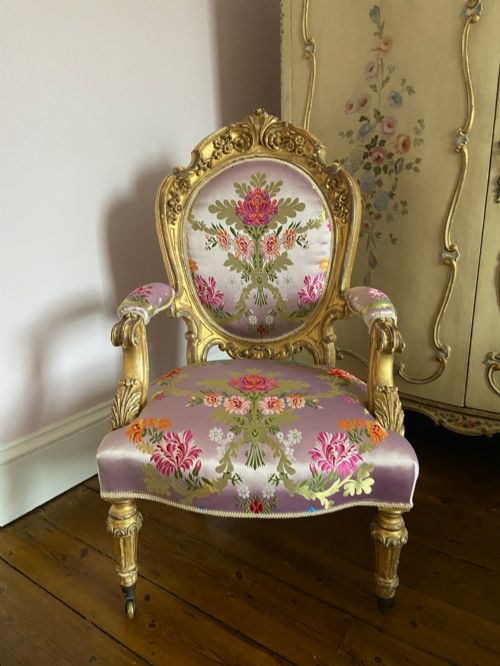
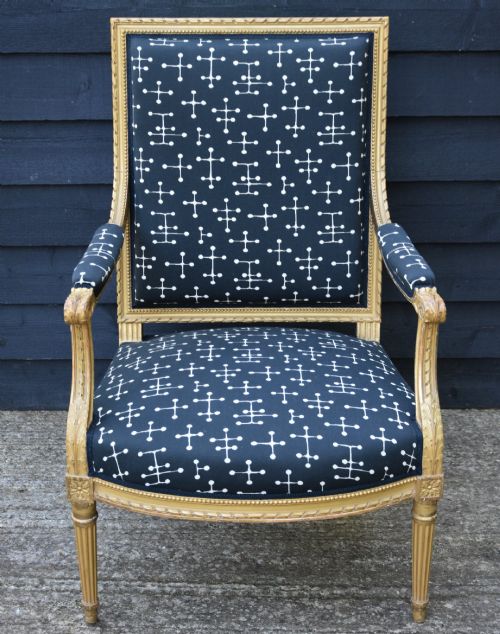
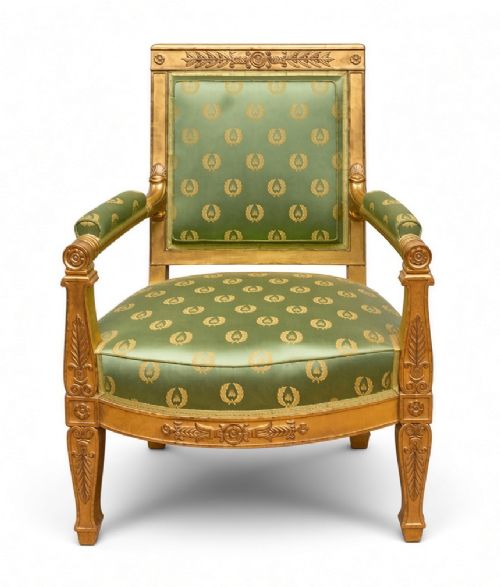
When choosing french giltwood chairs, you examine ornate seating finished in gold leaf, spanning the eighteenth to the twentieth centuries in salon and dining forms.
French Giltwood Chairs
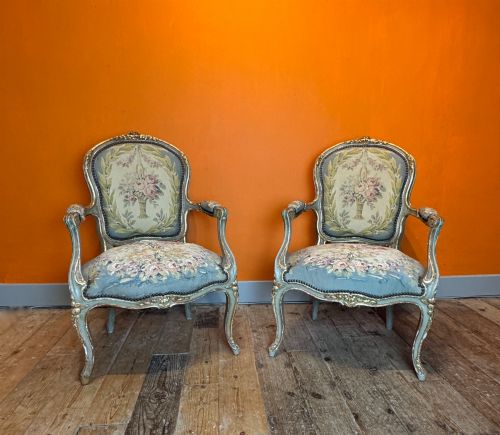
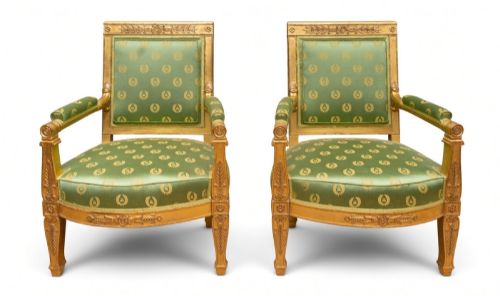
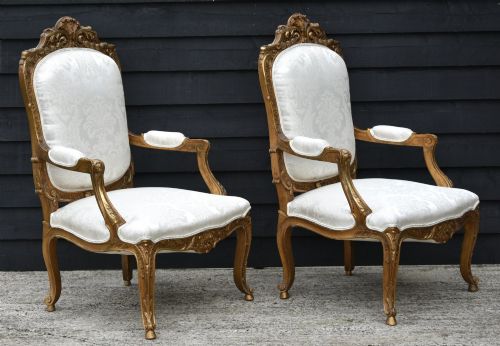
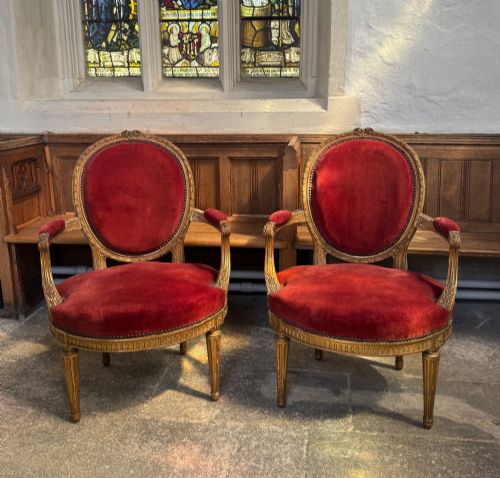
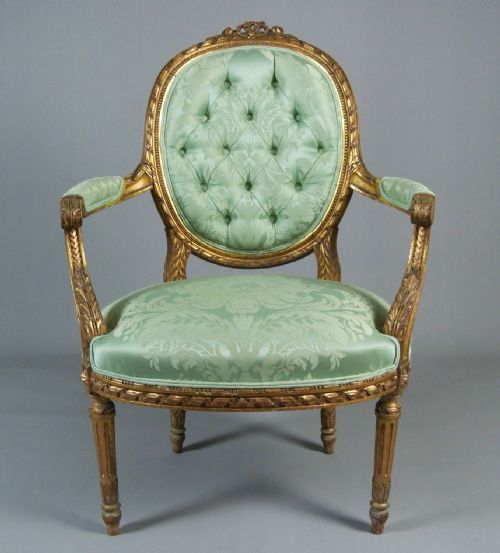
French giltwood chairs encompass open armchairs, bergères, side chairs, and salon suites originating from various historical periods including the eighteenth and nineteenth centuries. Buyers frequently encounter revival pieces from the later nineteenth and early twentieth centuries, particularly in Louis XVI and Louis XV styles.
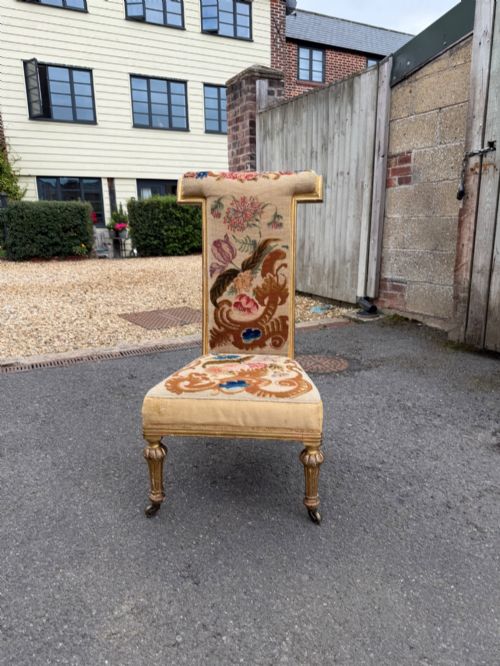
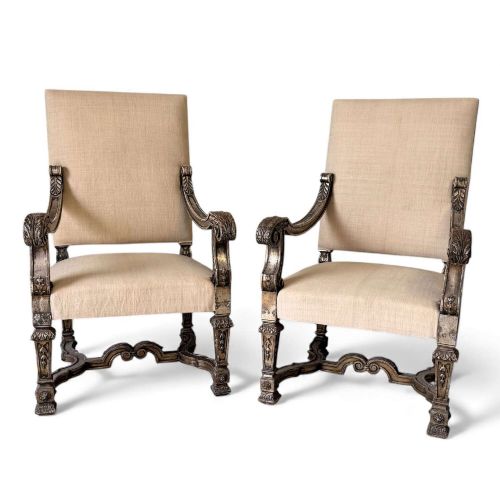
The selection ranges from single occasional chairs and pairs to large dining sets and salon suites with matching sofas. Forms include fireside armchairs, nursing chairs, and throne chairs, reflecting diverse domestic uses from formal drawing rooms to private chambers.
How they were made
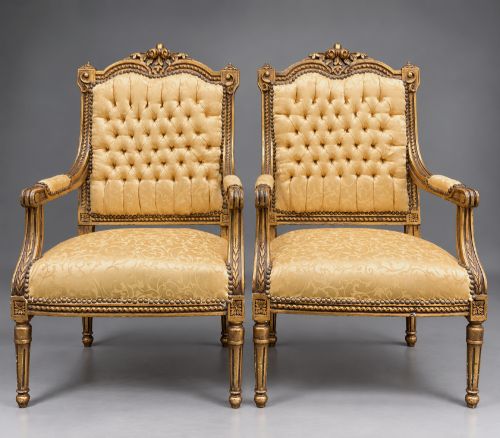
Carved timber frames, predominantly beech or other strong woods, form the structural foundation of these chairs. Artisans applied thin layers of gold leaf or gilt finish over prepared surfaces, often combining carved ornamentation with structural joinery.
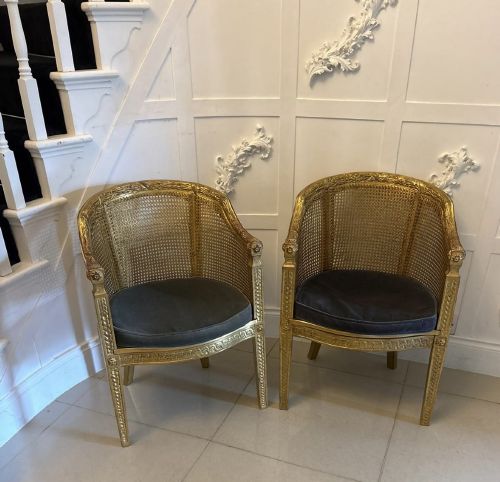
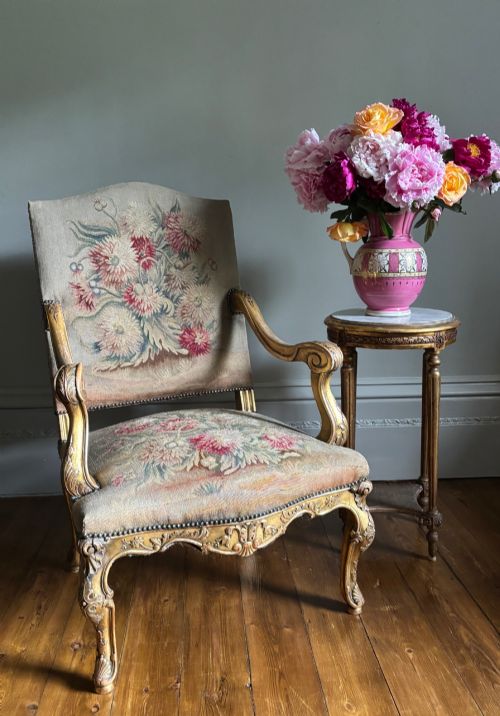
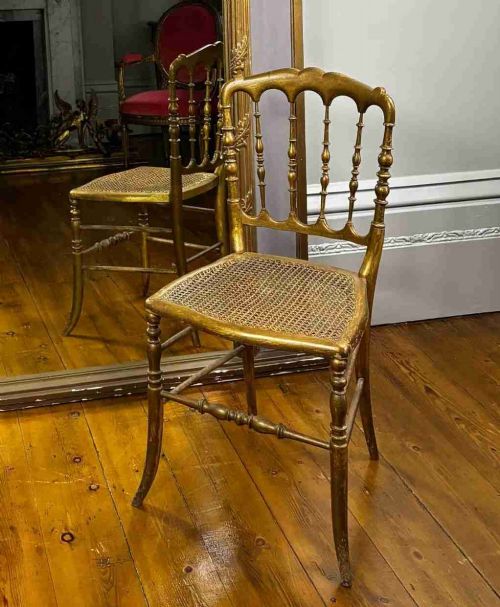
Upholstery materials recorded in the evidence include silk, velvet, tapestry, and cane seats. Traditional textile applications complete the formal appearance of these gilded frames.
Listings feature beech and timber frames finished in giltwood, paired with silk, velvet, and tapestry upholstery across multiple centuries.
What varies in quality
The crispness and depth of the wood carving distinguish different tiers of production, separating briskly formed decoration from deeply undercut, highly detailed artistry. Workshops of notable renown applied superior sculptural execution to their frames.
The integrity of the gilding and the quality of the underlying preparation layers affect the visual depth of the finish. Furthermore, the selection of original or period-appropriate textiles such as silk and tapestry alters the character of the seating.
Jacob-Desmalter·Thomas Chippendale·Blaise Maucuy·Holland and Sons
The French Giltwood Chairs Glossary
- Giltwood
- Wood that has been coated with gold leaf or a gilt finish. This surface treatment provides the characteristic metallic sheen seen on these frames.
- Fauteuil
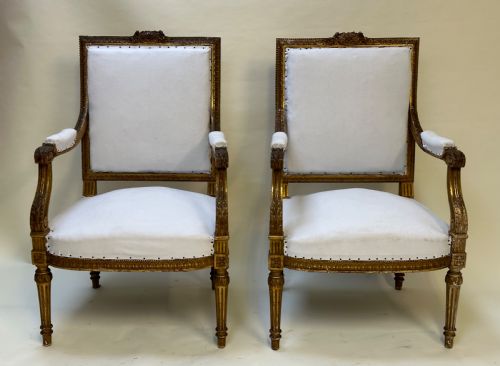
- An open-arm armchair with upholstered back and seat and exposed wooden arms. This form is central to French seating design.
- Bergère
- An enclosed upholstered armchair with sides filled in with upholstery or cane. These pieces offer deep, comfortable seating proportions.
- Caned
- Woven cane panel work utilised for seats or backs. This technique introduces lighter textural elements to wooden chair frames.
- Regence
- A transitional stylistic period bridging seventeenth-century baroque and eighteenth-century rococo designs. It is characterised by fluid carved ornamentation.
French Giltwood Chairs: Frequently Asked Questions
How do I identify Louis XVI style chairs?
Louis XVI style chairs typically feature straight fluted legs, geometric lines, and round or oval medallions on the backrests. These design elements distinguish them from earlier curved rococo forms.
The woodwork often displays classical motifs such as ribands, acanthus leaves, and beaded mouldings. Examining the geometry of the frame helps determine the specific design influence.
Were these chairs used in dining rooms?
While many giltwood chairs functioned as salon or occasional seating, larger dining sets appear in the records. These larger groupings provided formal seating around dining tables in grand interiors.
Dining chairs of this finish balanced decorative gilding with structural durability for regular use. Sets often included numerous matching chairs alongside armchairs.
How do I care for antique giltwood?
Antique giltwood requires gentle maintenance to protect the delicate gold leaf surface from abrasion and moisture. Dusting should be performed with a soft, dry cloth without chemical polishes.
Placing the chairs away from direct sunlight and fluctuating humidity prevents timber movement beneath the gilt layer. Preserving the original surface finish maintains the historic character of the piece.