


Gilt Hall Chairs
These gilt hall chairs bring gold leaf, paint and carved timber to entryways, spanning the seventeenth century to the early twentieth.
Gilt Hall Chairs
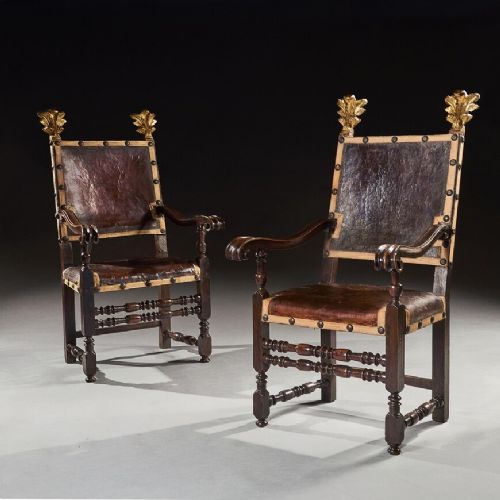
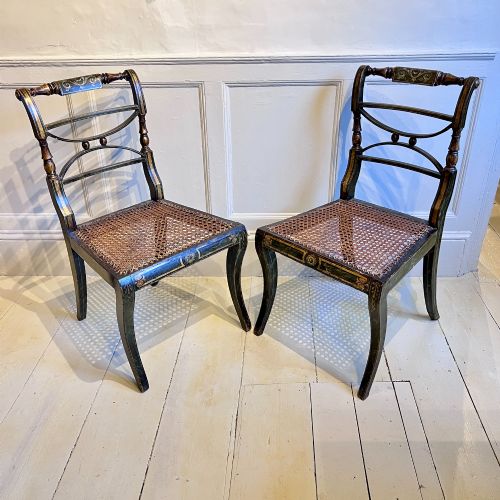
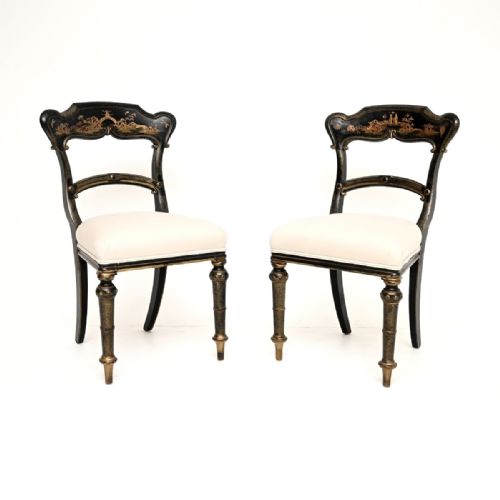
When you search for gilt hall chairs, you encounter seating built for grand entryways and reception spaces, designed primarily to impress visitors rather than for long periods of lounging. The pieces on this page span several centuries, including seventeenth-century Italian Baroque armchairs, eighteenth-century Dutch lacquered examples, Regency painted and cane-seated side chairs, and nineteenth-century Victorian Gothic designs. You will also meet occasional chairs, armchairs and side chairs that share the common thread of gold leaf, parcel-gilt or painted decoration.
The Regency period and the nineteenth century dominate the examples found here, often appearing as pairs. These range from ebonised frames with gilt highlights to simulated bamboo and papier-mâché constructions. Whether you encounter a walnut George I style piece or a French Napoleon III design, each object serves as a decorative statement piece rooted in historical revival styles.
Materials and construction
Makers utilised timber substrates such as walnut, beechwood and ordinary wood, often shaping them through carving or turning. Structural elements were then enhanced with gold leaf, giltwood, paint or ebonising to create the desired metallic sheen. Surface ornamentation frequently involved lacquering and japanning, reflecting Asian artistic influences popular in European furniture production.
Seating surfaces varied according to the period and function of the chair. Artisans incorporated cane weaving, leather upholstery, fabric coverings and solid wooden seats into the frames. Additional detailing included brass elements and papier-mâché bases, demonstrating the diverse techniques employed across different centuries.
Some nineteenth-century makers experimented with papier-mâché for hall seating, proving that even paper pulp could aspire to look like solid gilded timber.
Assessing quality and execution
The distinction between ordinary and superior pieces rests on the execution of the surface decoration and the crispness of the carved details. Chairs featuring genuine gold leaf and skilled parcel-gilt application display a depth of light reflection that flat painted substitutes cannot match. Furthermore, the finesse of the underlying woodwork, whether in a heavy Italian Baroque armchair or a lighter Regency side chair, dictates the overall integrity of the object.
Historical consistency also plays a role in how these items are judged. Pieces retaining their original gilt decoration and authentic upholstery materials, such as early leather or period cane, hold greater interest than those subjected to heavy modern repainting. The harmony between the structural form and the decorative scheme separates standard utilitarian seating from masterworks intended for display.
The Gilt Hall Chairs Glossary
- Giltwood
- Timber that has been coated with gold leaf or a thin layer of gold paint. This technique provides the rich metallic appearance characteristic of formal seating.
- Parcel-Gilt
- Decoration where only specific carved details, edges or ornaments are highlighted with gold leaf while the rest of the wood remains painted or polished. It creates contrast against a dark timber or painted ground.
- Japanning
- European imitation of East Asian lacquerware, created by applying layers of varnish and heat-curing them before adding painted or gilded designs. It appears frequently on eighteenth-century furniture.
- Sgabello
- A type of Renaissance wooden chair featuring a box-like base or solid trestle supports rather than four legs, often adorned with carved and parcel-gilt details. These early forms served as rigid, formal seating in grand halls.
- Savonarola
- A folding chair constructed from multiple intersecting wooden slats that form a rhythmic, X-shaped frame, usually topped by a carved wooden backrest. This Italian Renaissance design offers both portability and architectural presence.
Gilt Hall Chairs: Frequently Asked Questions
Where were these chairs placed?
These seats stood in grand entrances, hallways and reception rooms where visitors waited before being received. They signaled status and taste to guests upon arrival.
Because they were meant for brief waiting rather than hours of relaxation, their designs prioritised visual impact and upright posture over deep comfort.
How do I clean gilt surfaces?
Giltwood and gold leaf require gentle dusting with a soft, dry cloth to prevent abrasion. Moisture and chemical cleaners can strip the delicate metallic layers.
Professional restoration is recommended for significant buildup or damage, as aggressive wiping can permanently remove the historic finish.
Can I use them daily?
Most of these historic pieces function well for occasional seating, but fragile elements like cane seats or delicate gilded frames demand careful handling. Placing them in low-traffic areas preserves their structural integrity.
Heavier hardwood examples, such as seventeenth-century walnut armchairs, offer more robust daily use than delicate papier-mâché or lacquered side chairs.
How do I date a piece?
Dating relies on identifying stylistic markers, such as Regency curves, Victorian Gothic tracery or Italian Baroque carving, combined with wood analysis. Construction methods and joinery also reveal the era of manufacture.
Comparing the decorative motifs against documented periods helps establish a reliable timeline for each specific chair.