


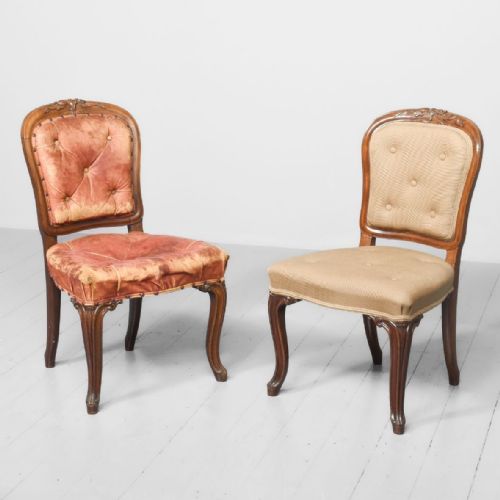


Tufted Seat Side Chairs
Tufted seat side chairs bring together period timber frames and deeply buttoned upholstery, offering both practical seating and traditional character.
Tufted Seat Side Chairs
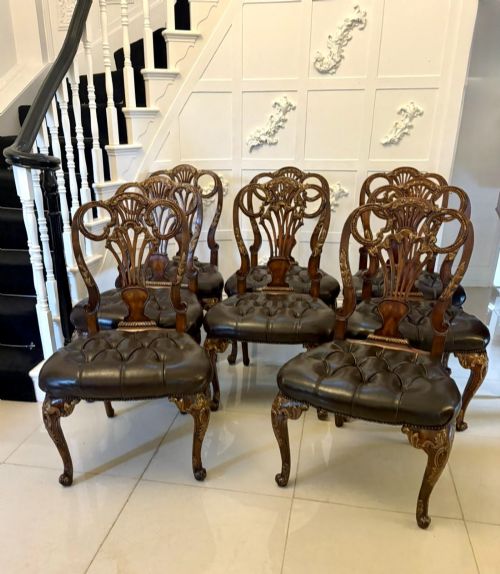
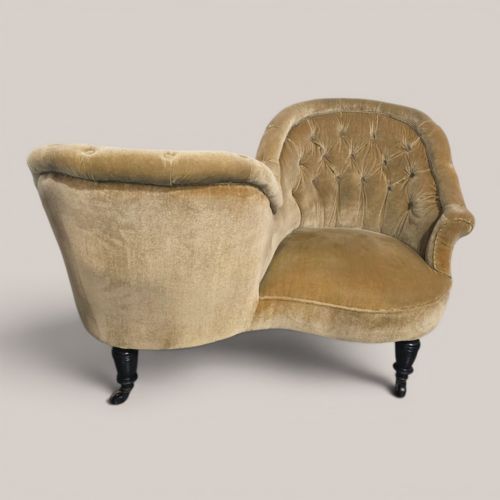
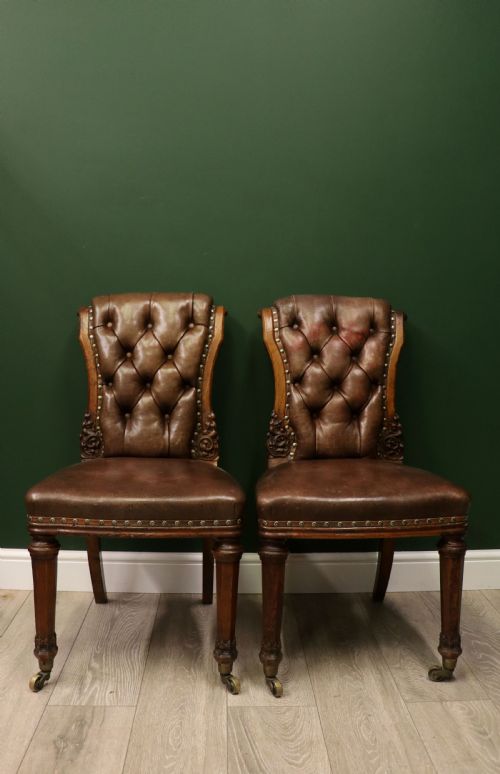
Tufted seat side chairs span the Regency, Victorian, and Edwardian periods, appearing in forms such as balloon back dining chairs, salon seats, and library chairs. These pieces combine exposed timber frames in walnut, rosewood, oak, and mahogany with buttoned leather, velvet, or fabric upholstery.
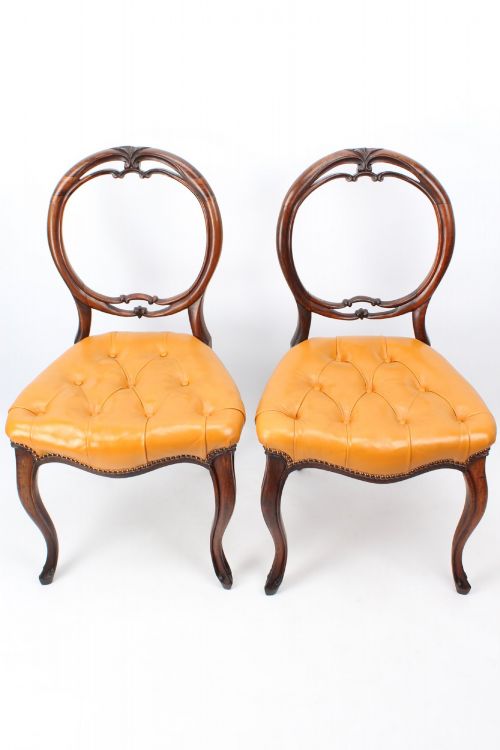
The version most commonly met on this page is the Victorian button back side chair, often utilising walnut or rosewood frames. Such chairs serve well in dining rooms, libraries, and bedrooms where compact seating with decorative upholstery is required.
Makers and workshops of the nineteenth century produced these chairs in single examples, pairs, and large matched sets. Their utility lies in the upright posture they encourage, making them suitable for placement beside a desk or around a dining table.
Materials and construction
Frames are constructed from dense hardwoods like walnut, mahogany, rosewood, and pollard oak, often shaped through carving, turning, or steam bending. Timber choice dictates the weight and colour of the frame, ranging from dark reddish mahogany to figured walnut.
Upholstery relies on traditional stuffing secured through deep buttoning, which holds the textile firmly to the internal padding. Leather, velvet, and tapestry textiles are fastened with neat pleats and tensioned across the seat and back.
Listings feature frames in walnut, rosewood, mahogany, and oak, paired with leather, velvet, and tapestry textiles.
Markers of quality
Quality rests in the crispness of the timber carving and the density of the frame timbers. Finer pieces demonstrate careful selection of figured walnut or rosewood, alongside robust joinery that keeps the structure rigid under daily use.
The execution of the buttoned upholstery separates standard workshop output from exceptional work. Even spacing in the tufting and the use of high-grade leather or heavy velvet indicate superior manufacture.
Blyth & Sons·Gillows
The Tufted Seat Side Chairs Glossary
- Button back
- A method of upholstery where stitches pull the fabric deep into the stuffing at regular intervals, creating a diamond pattern of tufts. This technique adds both resilience and decorative texture to the backrest.
- Balloon back
- A chair back shaped like a continuous, rounded loop resembling a balloon, popular during the Victorian era. It provides ergonomic support while displaying the grain of timbers like walnut and mahogany.
- Bergère
- An enclosed upholstered armchair with wooden framing exposed around the sides and back. These seats often utilise cane work or tight upholstery for a comfortable lounge experience.
- Pollard oak
- Oak timber taken from trees that have been pruned near the top to produce a dense, highly figured grain with clustered knots. Cabinet makers prized this wood for its distinctive mottled pattern.
- Castors
- Small wheel attachments fitted to the feet of heavy seating to aid movement across carpets and floors. They are typically cast from brass and mounted on ceramic or wooden sockets.
Tufted Seat Side Chairs: Frequently Asked Questions
What periods do these chairs come from?
The pieces span the Regency, William IV, Victorian, and Edwardian eras, with a strong representation of mid to late nineteenth-century examples.
Craftsmanship and timber choices evolved across these decades, shifting from Regency pollard oak to the rich walnut and rosewood favoured by Victorian cabinet makers.
How were tufted chairs used originally?
They served multiple domestic functions, from formal dining settings to quiet corners of libraries and bedrooms. Side chairs provided movable seating that could be arranged around a room as needed.
Upholstered button backs offered comfortable support for reading or conversation, making them fixtures in public rooms and private chambers alike.
How do I identify a Victorian example?
Victorian pieces often feature dense hardwoods like walnut or rosewood, combined with characteristic balloon backs or spoon-shaped frames. Deep buttoning and turned legs on castors are frequent indicators of this period.
Examining the construction methods underneath reveals hand-cut joinery and traditional webbing typical of nineteenth-century workshop production.
Are these chairs suitable for daily use?
Most of these pieces are structurally robust, built from solid hardwoods designed to withstand regular domestic seating. Many retain sturdy frames that support modern weight requirements.
Care should be taken with antique leather and textile upholstery, maintaining them with appropriate conditioning to preserve the historical fabric.