


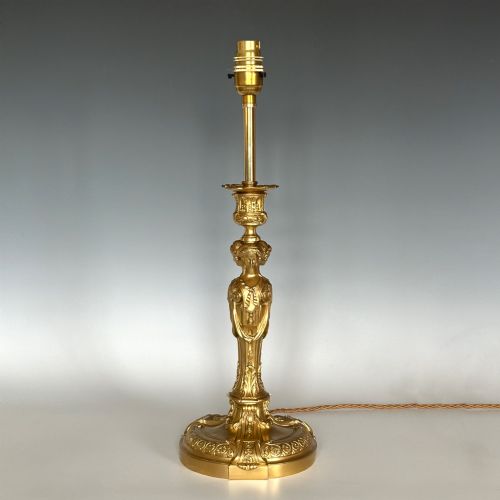
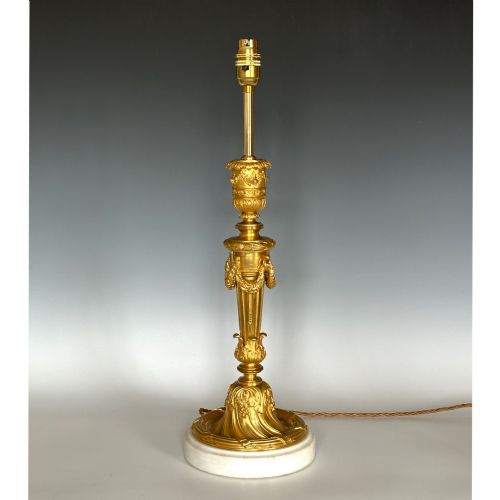
French Gilt Table Lights
French gilt table lights bring interior illumination through gilded bronze, brass and ormolu mounts paired with stone, porcelain and crystal.
French Gilt Table Lights
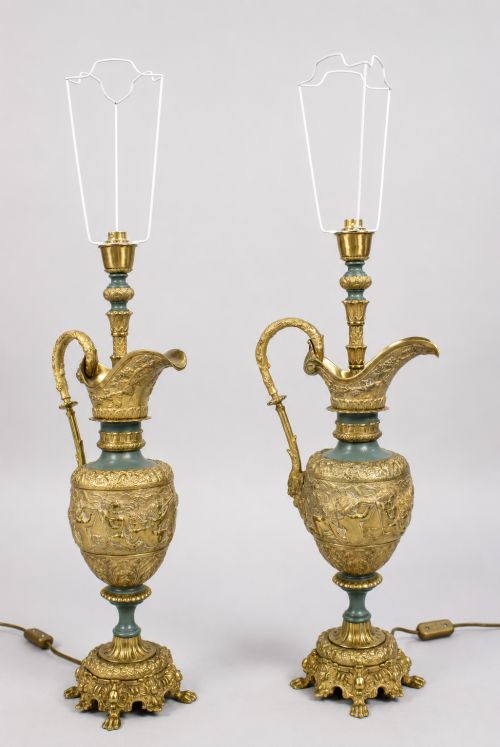
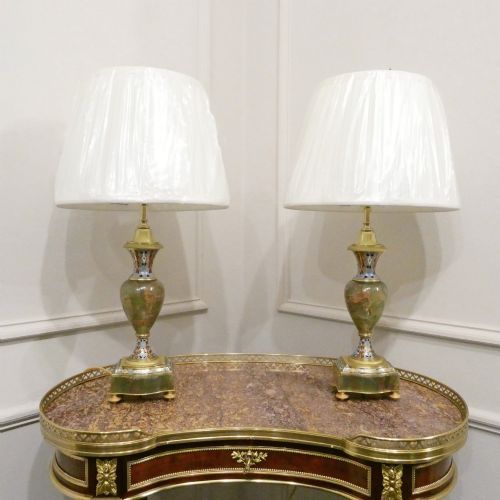
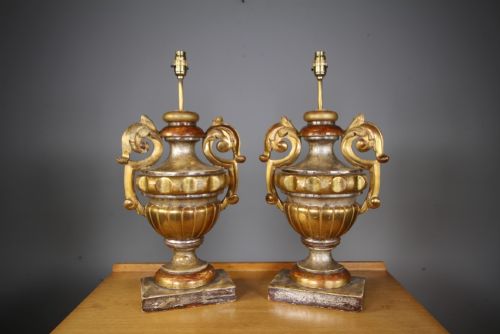
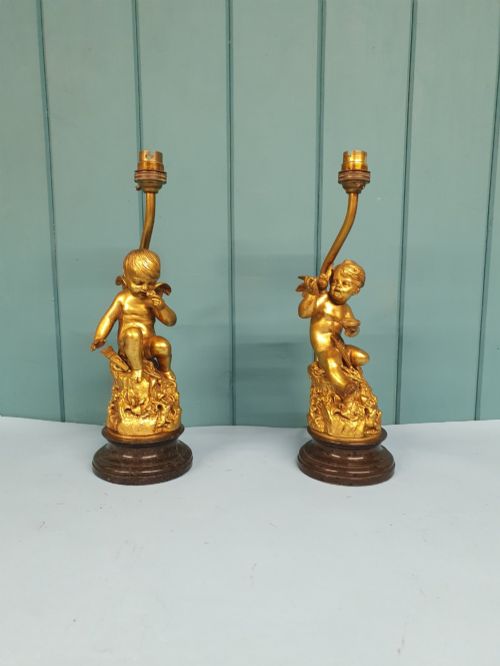
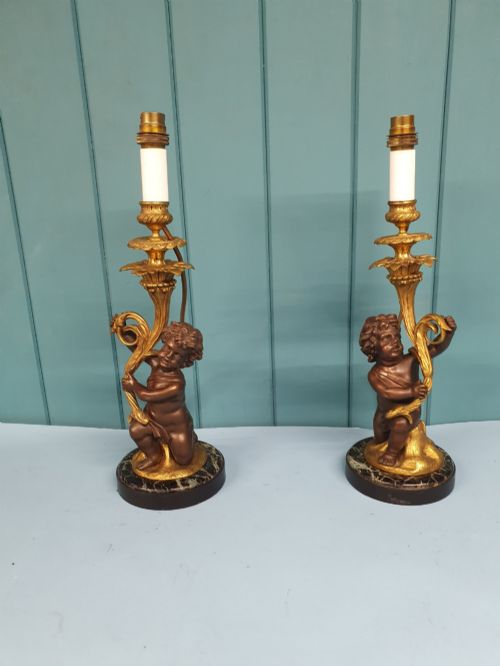
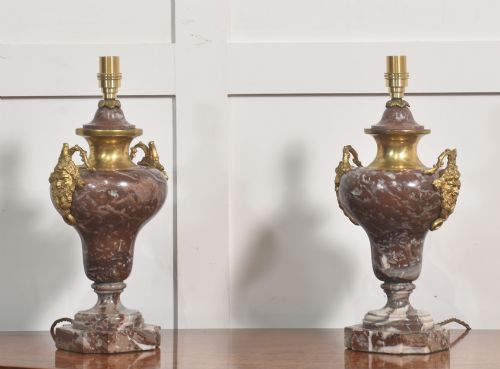
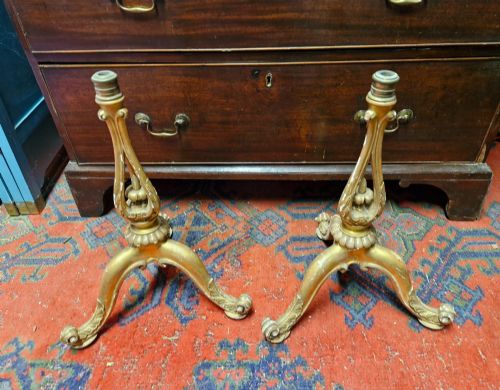
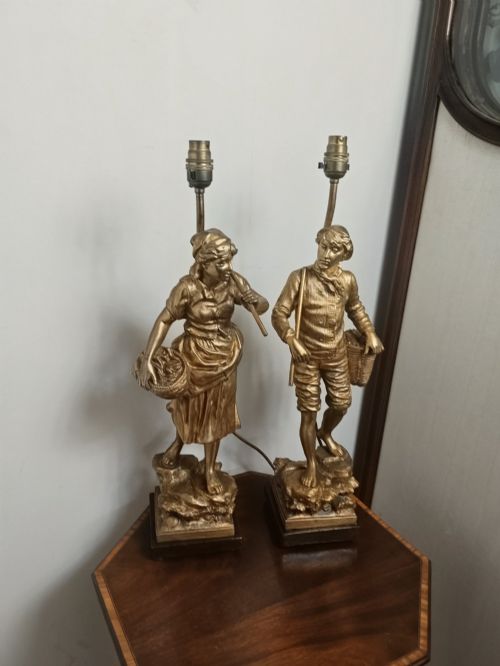
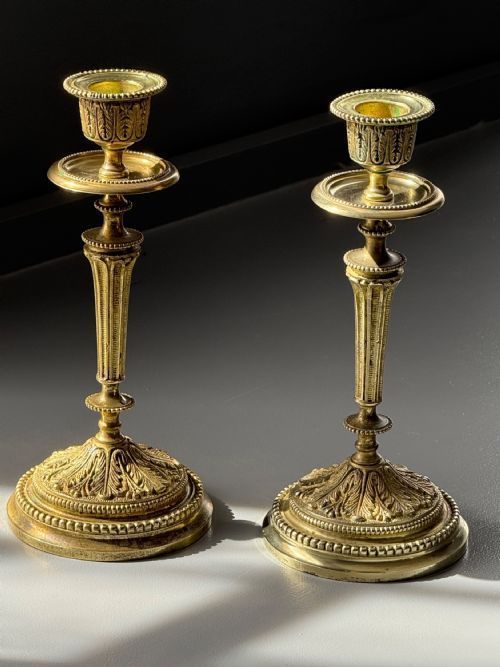
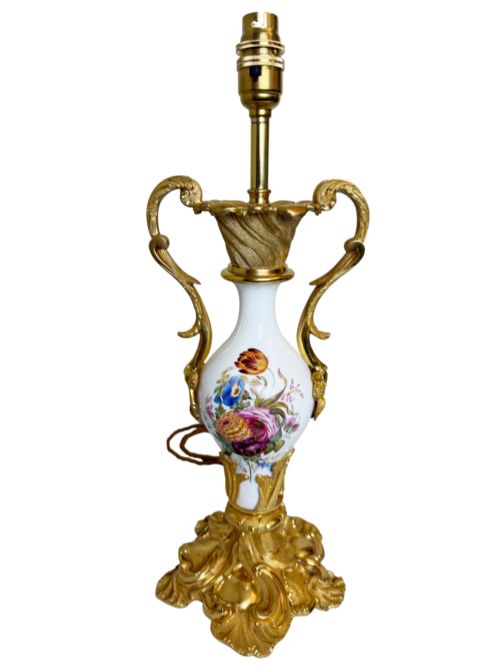
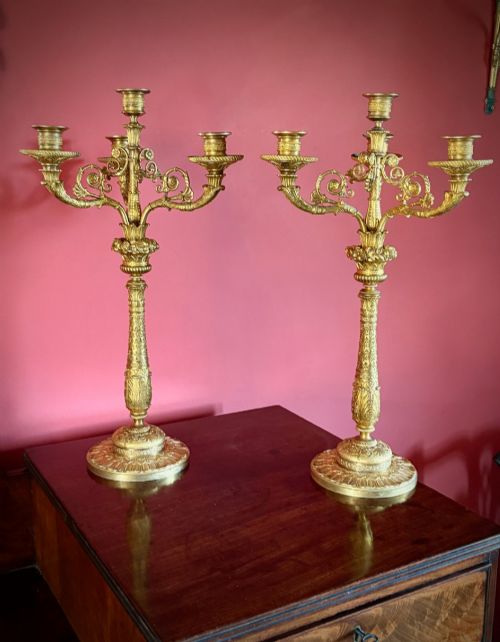
French gilt table lights encompass table lamps, candelabra and converted candlesticks dating from the nineteenth century into the early twentieth century. Buyers seeking french gilt table lights encounter pairs most frequently, often featuring classical columns, urns or figural motifs mounted on marble and onyx bases.
The selection ranges from compact boudoir designs to monumental candelabra fitted for electricity alongside traditional candle forms. Stylistic influences draw heavily on Rococo Revival, Louis XVI and Empire vocabularies, reflecting sustained historical revivals across the nineteenth century.
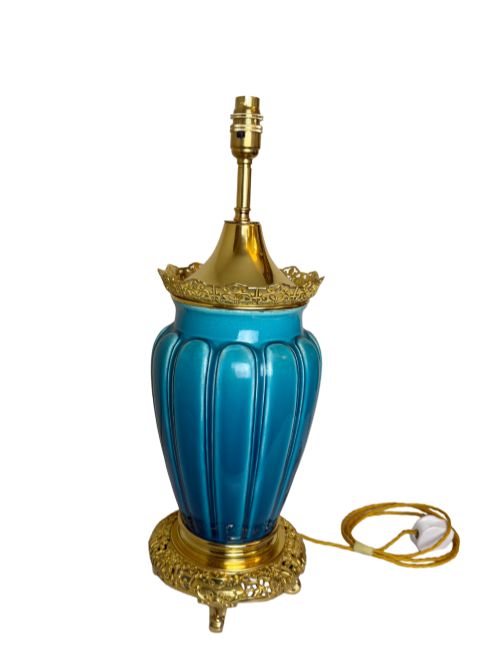
Many examples combine gilded metalwork with contrasting materials such as turquoise porcelain, cut glass or rouge marble. These decorative objects bridge functional lighting and sculptural display, designed originally for salons, boudoirs and formal dining rooms.
How they were made
Metal components rely on bronze, brass and gilt metal, frequently finished with mercury gilding or electrogilt applications to achieve a rich golden sheen. Ormolu mounts are cast, chased with fine detail, and assembled with threaded screws or pins.
Stone elements such as rouge marble, onyx and alabaster are turned on lathes or hand-carved, then polished to a smooth finish before receiving metal collars and feet. Porcelain bodies, including Sevres style pieces and Chinese vases, are drilled and fitted with metal mounts during conversion or manufacture.
Listings feature pieces spanning the 1850s to the 1930s, utilising gilt bronze, marble, porcelain and crystal.
What varies in quality
The crispness of the chasing on bronze and ormolu mounts separates standard production from superior examples, where hand-tooling defines hair, foliage and drapery. Weight and gauge of the metal also indicate standard, as heavier castings retain sharper detail and offer greater stability.
Integration of materials distinguishes the range, particularly the seamless alignment of stone plinths with cast metal mounts and the quality of the ceramic or crystal bodies chosen for the central column.
E Rousseau·Pierre Philippe Thomire
The French Gilt Table Lights Glossary
- Ormolu
- Gilt bronze produced by applying a mixture of gold and mercury to a bronze base, heated to drive off the mercury. This technique creates a durable golden surface seen on high-end French furnishings.
- Champleve
- An enamelling technique where troughs are dug into a metal surface and filled with vitreous enamel before firing. It appears frequently on nineteenth-century decorative bases.
- Cassolette
- A decorative vase or urn with a reversible lid that functions as a burner or a closed vessel. Many are mounted as decorative lamp bases.
- Retour d'Egypte
- A design style inspired by Napoleon's campaign in Egypt, incorporating motifs such as sphinxes, pharaohs and lion paw feet. It forms a distinct subcategory within nineteenth-century French metalwork.
- Candelabra
- Branching candle holders designed to hold multiple lights simultaneously. These often feature removable arms that convert the piece into a single-light candlestick or lamp.
French Gilt Table Lights: Frequently Asked Questions
Are these lamps originally electrified?
Most antique lighting from the nineteenth century was designed for candles or oil rather than electricity. Surviving pieces have been adapted for modern wiring at various points in their history.
Rewiring is standard practice for safe domestic use, and professional electricians can usually update internal components without altering the external antique mounts.
How do I identify Louis XVI style?
Louis XVI style pieces favour symmetry, straight lines and classical architectural elements derived from ancient Greece and Rome. Look for fluted columns, acanthus leaves, beaded borders and urn motifs.
This aesthetic contrasts with the curving, asymmetric forms of earlier Rococo designs, offering a more restrained and formal appearance.
What is the difference between ormolu and gilt brass?
Ormolu specifically denotes high-grade gilt bronze, where the gold is amalgamated with mercury and fired onto a bronze substrate. Gilt brass or gilt metal utilises a cheaper base alloy with alternative plating methods.
Ormolu displays a warmer, deeper golden hue and sharper chased detail due to the working properties of bronze compared to brass.
How should I clean gilded metal?
Dusting gently with a dry, soft microfibre cloth is the safest method for maintaining antique gilded surfaces. Avoid all commercial metal polishes, chemical cleaners and abrasive cloths, which strip away thin gold layers.
Moisture should be kept away from porous stone bases and fabric components during any routine maintenance.