



French Empire Candelabra Pair
A french empire candelabra pair brings monumental neoclassical presence to a mantel or console through striking contrasts of bright gilt and dark cast metal.
French Empire Candelabra Pair
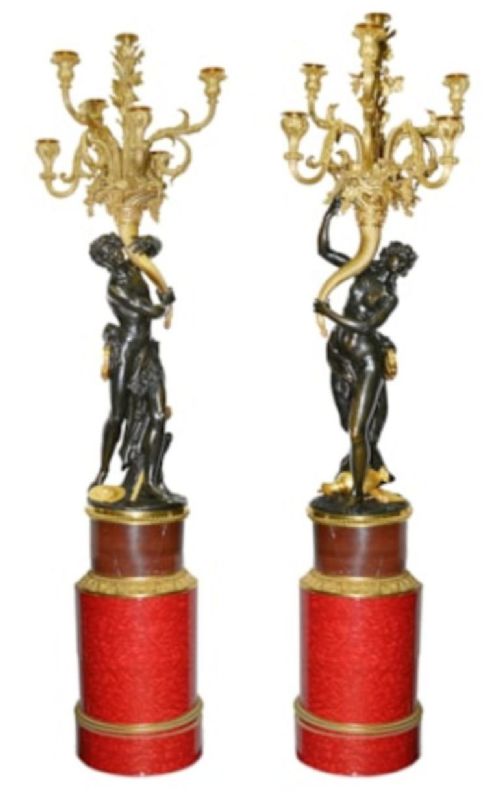
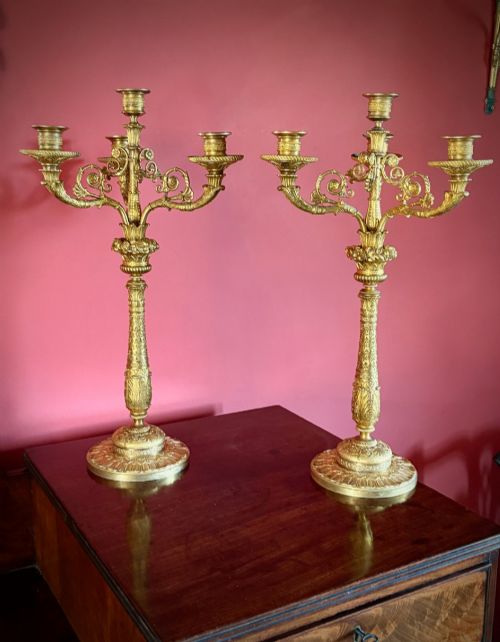
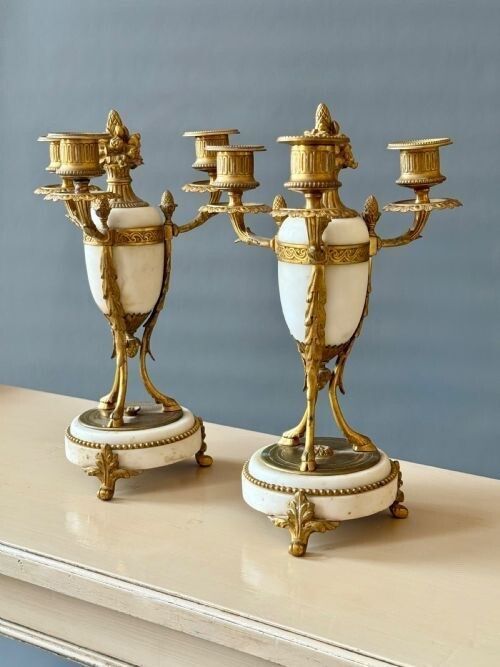
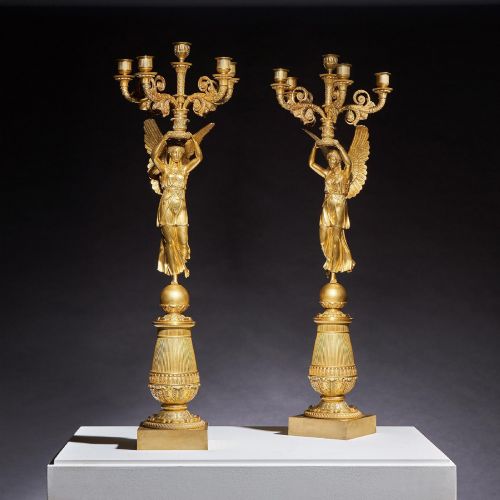
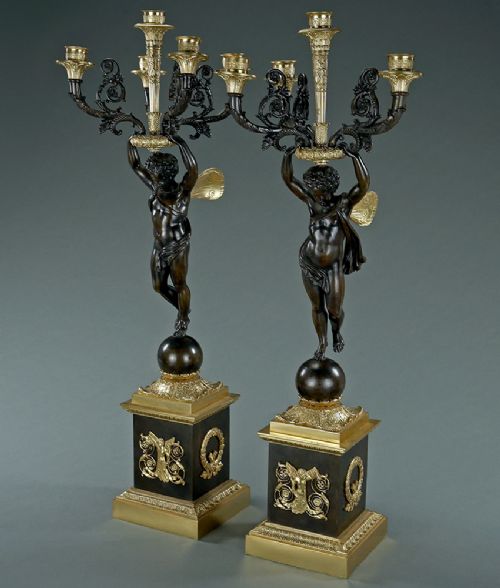
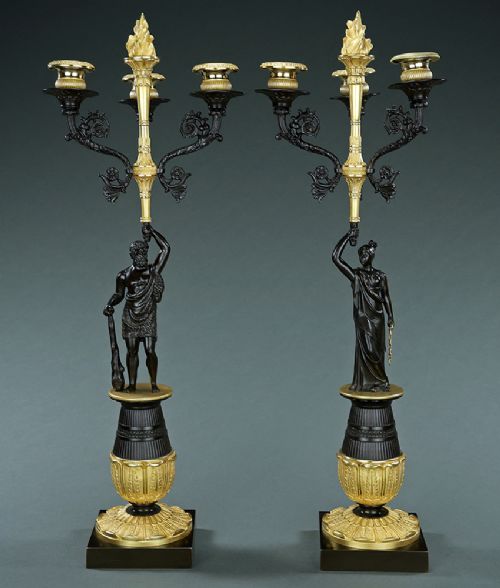
A french empire candelabra pair typically comprises matching multi-branch light fittings designed in the rigorous classical manner of early nineteenth-century France. The pieces combine architectural bases with sculptural figures derived from classical mythology, history, or allegory.
Most examples found in this selection date from the nineteenth century, spanning the strict Empire period through later revivals in the Louis XVI and Second Empire styles. Collectors frequently encounter pieces featuring classical maidens, cherubs, or mythological figures holding aloft multi-branched candle arms.
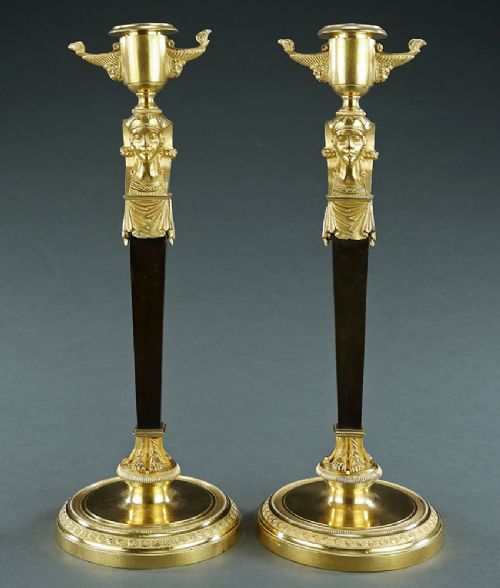
Beyond the standard candelabra form, related lighting objects appear in the inventory including wall sconces, candlesticks, and table lamps adapted from period figures. These items share the heavy reliance on cast bronze and symmetry that defines the category.
Sculptural Rigour and Finish
The weight and stability of the marble or slate bases, coupled with the structural integration of the cast arms, separate standard production pieces from works attributed to major bronze-founders of the period.
Object forms in the inventory extend from traditional multi-arm candelabra to wall sconces and figural torchères.
Pierre Philippe Thomire·Claude Galle·Rabiat
The French Empire Candelabra Pair Glossary
- Ormolu
- Gilt bronze produced by applying a mercury and gold amalgam to a bronze base and heating it until the mercury vaporised. This technique creates a durable, luminous golden finish characteristic of the period.
- Patinated bronze
- Bronze treated with chemical solutions to achieve a dark brown, black, or greenish surface colour. It provides a strong visual contrast against bright ormolu mountings.
- Candelabra
- A branched candlestick holding multiple lights. In this category, branches typically radiate from a central classical column or figural shaft.
- Retour d'Egypte
- A design style inspired by Napoleon's Egyptian campaign, incorporating pharaohs, sphinxes, and lotus motifs into decorative arts. This aesthetic heavily influences certain early nineteenth-century pieces.
- Chasing
- The manual finishing of cast metal using small punches and hammers to sharpen details and remove casting flaws. Master chisellers achieved hair and fabric textures through this laborious process.
French Empire Candelabra Pair: Frequently Asked Questions
How do I clean ormolu safely?
Gilt bronze requires gentle dusting with a soft brush and warm water mixed with mild soap. Avoir abrasive cleaners that strip the delicate gold layer.
Dry the metal thoroughly with a soft cloth to prevent spotting on the antique surface.
Were these originally wired for electricity?
Period lighting was strictly designed for wax candles rather than modern electrical wiring. Many surviving pairs have been adapted for lamps or table lights during subsequent decades.
Conversions often utilise existing central channels to preserve the original bronze structure without permanent alteration.
How can I distinguish original Empire from later revivals?
Early nineteenth-century pieces exhibit heavier bronze casting with deeper mercury gilding and hand-chased details. Revivals from later decades often display brighter, more uniform machine finishing.
Examining the construction joints and the wear on the base materials helps clarify the date of manufacture.