
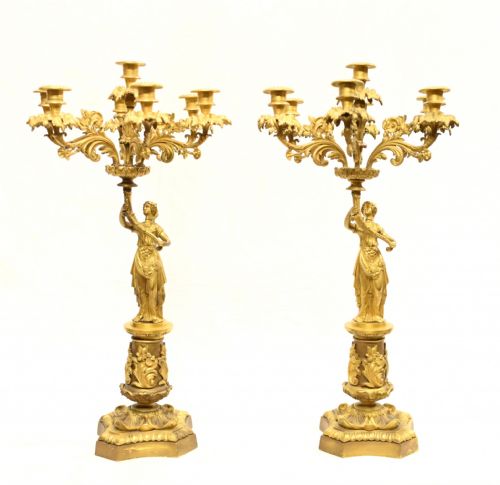


Gilt Bronze Candleholders
These gilt bronze candleholders bring warmth and rich metallic detail to a room, catching the light in a way few other decorative objects can.
Gilt Bronze Candleholders
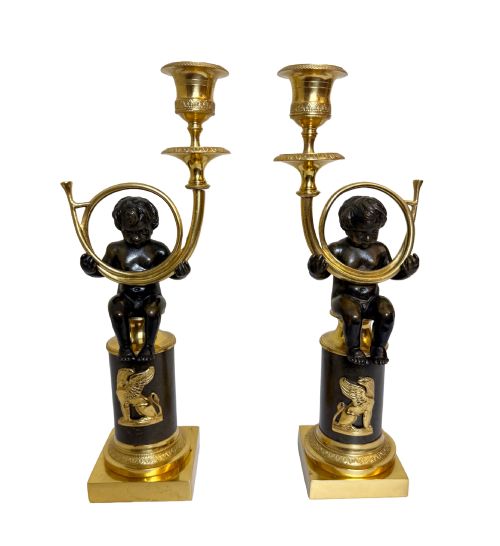
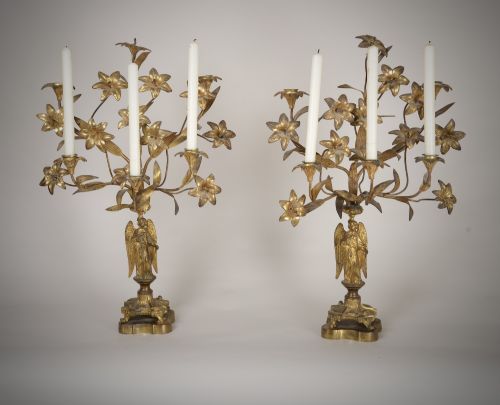
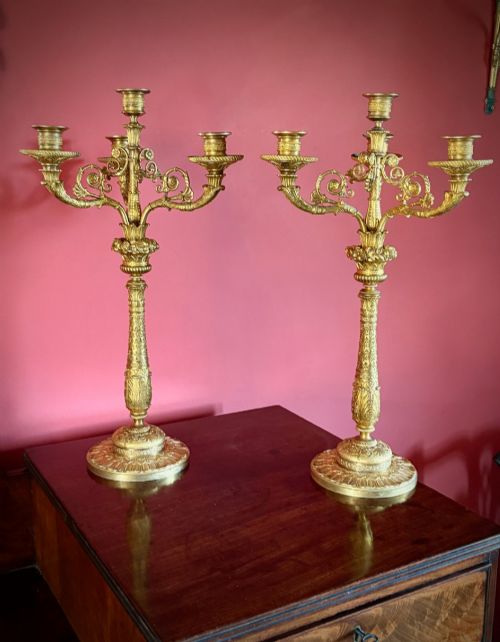
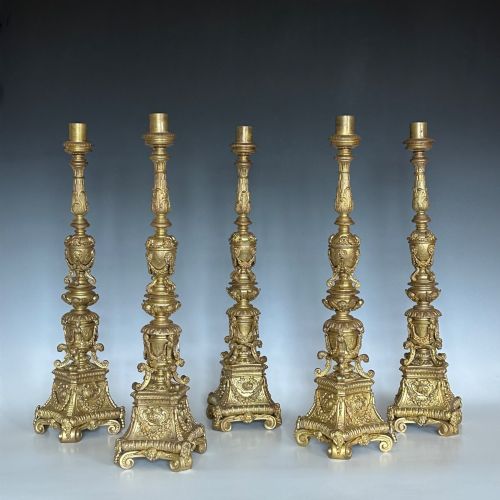
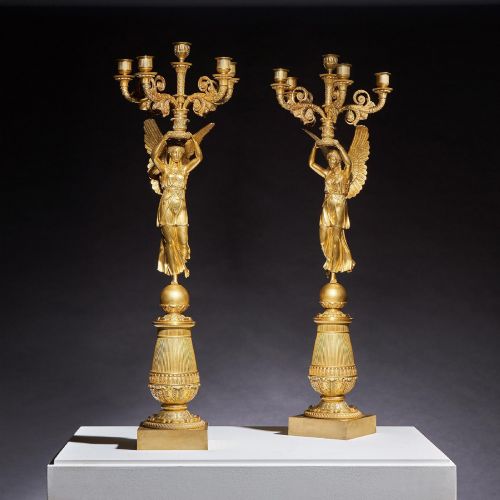
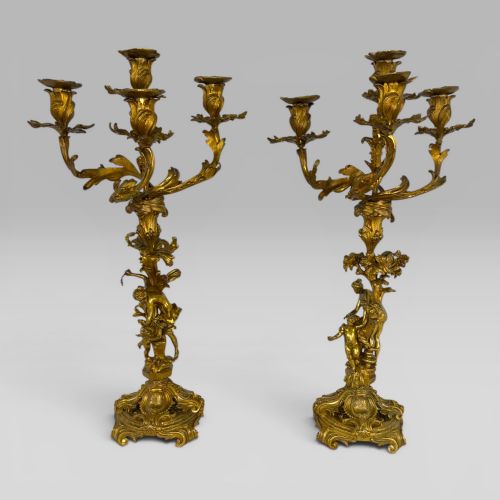
When searching for gilt bronze candleholders, you encounter a variety of forms designed to hold candles securely while adding sculptural presence to a room. The most common examples on this page are pairs of matched sticks and branch candelabra originating from French and English workshops.
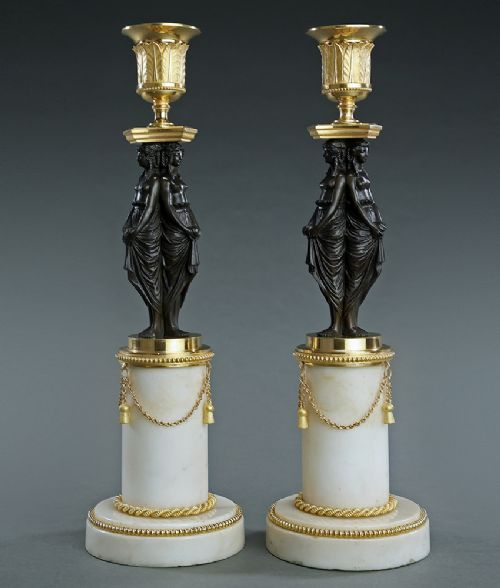
The inventory spans multiple periods, featuring 18th century Venetian examples alongside numerous 19th century interpretations. Styles range from French Empire and Louis XVI revivals to Rococo and Gothic designs, often incorporating figural elements such as cherubs and caryatids.
Beyond standard table candleholders, the selection includes wall sconces, multi-branch lights, and pieces mounted on marble or porcelain bases. These diverse forms reflect the shifting interior fashions of the Victorian era and earlier decades.
Materials and Technique
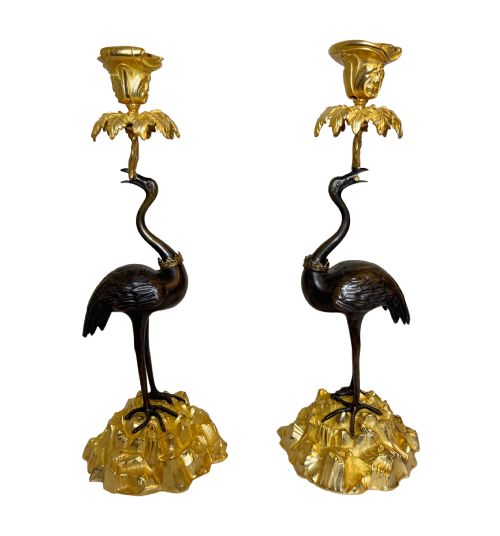
The creation of these pieces relies heavily on the use of bronze and brass, often enriched with fire gilding or ormolu to achieve a bright, reflective surface. Artisans frequently combined patinated dark bronze with polished gilt highlights to create strong visual contrast across the figures and scrolling arms.
Many items incorporate secondary materials such as white or coloured marble, porcelain birds and vases, and cloisonné enamel. These components were cast separately and joined with threaded pins or screws, demanding precise metalworking skills from the founders.
The inventory includes animal motifs such as storks, dolphins, and flamingos alongside traditional human figures.
Assessing Quality
The standard of a piece is primarily determined by the crispness of the chased surface work and the depth of the gilding. Superior examples retain their original fire gilding, showing a warm, dense lustre rather than a flat, modern paint finish.
Structural integrity also separates the finest items, particularly in multi-branch candelabra where arms must align symmetrically without looseness at the joints. The quality of the secondary materials, such as heavy turned marble bases or intact porcelain elements, further elevates a piece.
Attribution to known workshops or signatures stamped into the bronze adds historical weight, though unsigned pieces with exceptional sculptural modelling frequently match documented items in their execution.
Pierre Philippe Thomire·Rabiat·Claude Clodion
The Gilt Bronze Candleholders Glossary
- Ormolu
- A form of gilding that applies finely ground gold-mercury amalgams to a bronze base, creating a durable golden surface through heat treatment. This technique was widely practiced by French bronze-makers.
- Candelabra
- A branched candleholder designed to support multiple candles from a single base. These often feature removable nozzle inserts for easy cleaning.
- Patinated Bronze
- Metal treated with chemical solutions to produce a controlled dark or antique surface colour. It provides contrast against bright gilt elements.
- Caryatid
- A sculpted female figure serving as an architectural support or stem. They appear frequently on neoclassical and Empire period designs.
- Cloisonné
- An ancient technique for decorating metalwork objects with coloured glass paste placed within wire compartments. It appears on select 19th-century mounts.
Gilt Bronze Candleholders: Frequently Asked Questions
Were these originally for candles?
Yes, these objects were engineered specifically to hold wax candles safely during the pre-electric era. Many retain their original drip pans and socket inserts designed to catch melting wax.
While some owners choose to adapt them for electricity today, their primary historical function was lighting rooms before gas and oil lamps became widespread.
How do I spot a reproduction?
Examine the weight, casting seams, and the quality of the surface finish under magnification. Modern copies often show uniform machine grinding and lack the hand-chased details found on 19th-century metalwork.
Authentic pieces display natural wear patterns consistent with age and traditional assembly methods using threaded fasteners rather than modern welds.
Can I burn real candles in them?
You can burn candles in them provided the dimensions match the sockets and you monitor the flame closely. Ensure the candle sits firmly without leaning to prevent wax from spilling onto the gilt surface.
Using dripless candles or inserting fitted beeswax tapers helps protect the antique metal from potential heat damage or wax accumulation.