

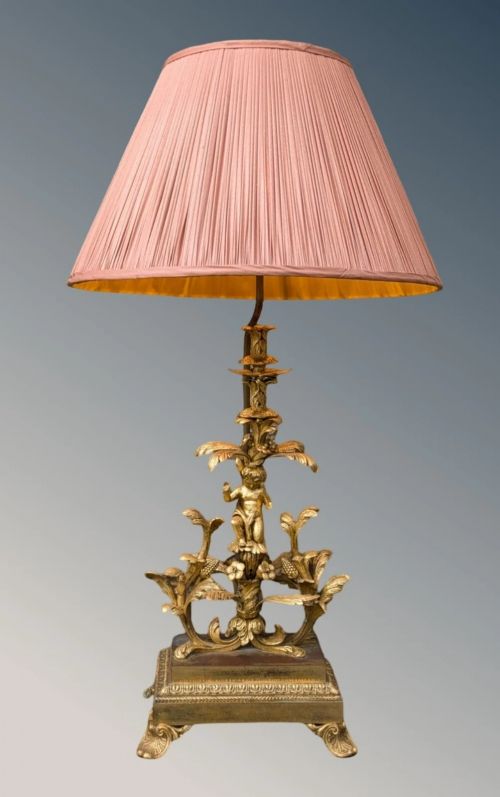


Classical Cherub Candelabra
Classical cherub candelabra bring French nineteenth-century bronze work and marble bases into a room, offering both illumination and sculptural presence.
Classical Cherub Candelabra
When you search for classical cherub candelabra, you find nineteenth-century French lighting and decorative metalwork that combine puttis figures with candle arms or lamp fittings. These pieces emerge from periods such as the Victorian era, nineteen-ten, and eighteen-eighty, reflecting revival aesthetics across French Rococo, Louis Sixteenth, and Second Empire styles.
The objects take forms ranging from paired candelabra and torchère lamps to clock garniture sets, wall sconces, and mantel clocks. On this page, you are most likely to meet nineteenth-century pairs mounted on marble or porphyry bases, integrating patinated bronze, gilt bronze, and ormolu.
Makers and workshops of the period produced these works primarily in France, utilising classical motifs alongside cherubic figures. The designs serve as functional lighting and ornamental centerpieces, maintaining the decorative vocabulary of earlier royal French courts.
What varies in quality
The choice and preparation of the supporting stone also distinguish pieces, with dense, finely veined marble or porphyry bases elevating the overall object. Additionally, the crispness of the ormolu gilding and the harmony between the clock movements and their garniture sets define the upper tier of the range.
Classical Cherub Candelabra Retail Price Guide 2026
Typical asking prices for classical cherub candelabra among the pieces listed under this phrase on Sellingantiques today, from the lower quarter to the upper quarter. They describe what is for sale here now, not the wider market.
Cherubs on these nineteenth-century pieces hold everything from candle sockets and torches to clock faces, working harder in bronze than they ever did in mythology.
H Luppens Paris
The Classical Cherub Candelabra Glossary
- Ormolu
- Gilded bronze, where finely ground gold is applied to a base metal using a mercury amalgamation technique or modern electroplating. This finish creates a warm, durable yellow sheen characteristic of luxury French metalwork.
- Garniture set
- A decorative matching group consisting of a central mantel clock flanked by paired side objects such as candelabra, urns, or vases. These sets were designed to sit symmetrically upon a fireplace mantel or console table.
- Torchere lamp
- A tall ornamental standard or lamp designed to hold lights aloft, frequently modeled as a classical figure bearing a torch or candle holder. In nineteenth-century French work, these often feature cherubs or puttis.
- Porphyry
- A very hard igneous rock with large crystal phenocrysts, typically deep purple or red in colour. It was prized in antiquity and later revived for high-status architectural bases and decorative mounts.
- Patinated bronze
- Bronze treated with chemical solutions to produce a controlled surface colour, most commonly dark brown or green. This finish contrasts against bright gilt bronze highlights on sculptural figures.
Classical Cherub Candelabra: Frequently Asked Questions
What is a clock garniture set?
A clock garniture set is a matching arrangement for a mantelpiece, consisting of a central clock accompanied by two matching side pieces like candelabra or vases.
These sets create a balanced, symmetrical display typical of nineteenth-century interiors, uniting timekeeping with decorative lighting or sculptural form.
How do you clean ormolu and bronze?
Ormolu and bronze require gentle dusting with a soft brush or dry cloth to protect the delicate gilding and patination. Avoid harsh metal polishes, which can strip away the historical surface finish and damage the underlying metalwork.
What is the difference between ormolu and gilt bronze?
Ormolu refers specifically to high-status historical gilded bronze work from the eighteenth and nineteenth centuries, often associated with French decorative arts. Gilt bronze is a broader descriptive term for any bronze object coated in gold leaf or gold wash.
Both terms describe the brilliant golden surface seen on classical cherub candelabra and clock sets.
Where were these pieces made?
The majority of these pieces originate from France, particularly workshops and makers operating in Paris during the nineteenth century. Parisian founders and horologists set the standard for Louis Sixteenth revival and Second Empire metalwork.
Their output was exported across Europe and beyond, satisfying a strong international demand for classical French interior decoration.