



Ornate Gilt Bronze Candleholder
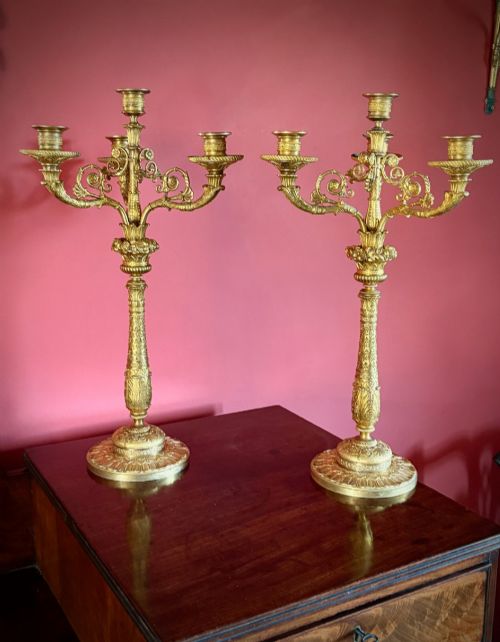
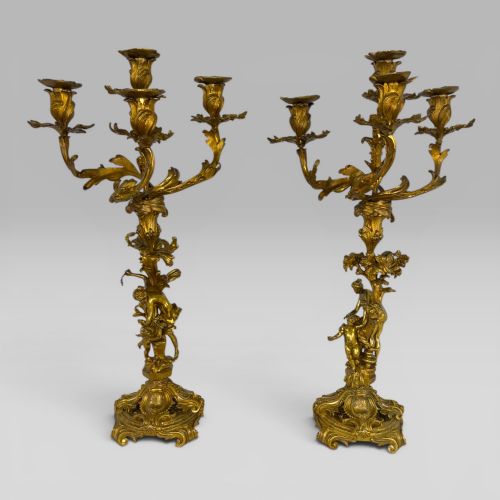
An ornate gilt bronze candleholder brings heavy French and Regency metalwork into a room, catching the light with centuries of accumulated glow.
Ornate Gilt Bronze Candleholder
An ornate gilt bronze candleholder embodies heavy metalwork designed to hold taper candles, spanning periods from the eighteenth century through the nineteenth century. These objects frequently arrive as matched pairs configured for multiple lights or single tapers, often combining materials like marble or porcelain alongside the metal framework.
The aesthetic leans heavily toward revival movements, notably French Rococo, Louis XVI Revival, and Neoclassical designs. Pieces range from grand candelabra with figural elements such as cherubs or storks to simpler classical candlesticks.
Grand Tour pieces also appear alongside Venetian and Victorian examples, showing the broad European reach of this decorative tradition. Buyers encounter items featuring cloisonné accents, porphyry bases, and patinated metal contrasts.
How they were made
The primary material foundation relies on cast bronze, ormolu, and gilded brass, often worked with intricate chased details. Craftsmen utilised fire gilding or gold leaf application to achieve the characteristic rich surface brilliance.
Many multi-part items integrate contrasting elements such as white marble or porphyry bases, anchored with iron internal bolts. Patinated metal details are frequently combined with polished ormolu highlights to create depth and visual texture.
Ornate Gilt Bronze Candleholder Retail Price Guide 2026
Typical asking prices for ornate gilt bronze candleholder among the pieces listed under this phrase on Sellingantiques today, from the lower quarter to the upper quarter. They describe what is for sale here now, not the wider market.
French Rococo revival and Louis XVI revival styles represent the dominant aesthetic influences across the recorded inventory.
What varies in quality
The crispness of the chasing separates superior castings from softer production, as sharper chisel work preserves the intricate flora and scrollwork of the Rococo and Neoclassical styles. Heavier bronze gauge and solid construction indicate better workshop standards compared to lighter brass alternatives.
The preservation of the original fire gilt or ormolu surface dictates visual appeal, with worn gilding altering the intended luminosity. The integration of high-grade base materials like marble, porphyry, or cloisonné sections elevates the ambition of the piece.
The Ornate Gilt Bronze Candleholder Glossary
- Ormolu
- Gilded bronze produced by applying a mercury and gold amalgam to a bronze object and heating it to drive off the mercury. This technique creates a durable, deep golden surface.
- Candelabra
- A branched candlestick holding multiple candles or lights from a central shaft. They frequently feature removable arms to allow conversion into single candlesticks.
- Chasing
- The manual tool work applied to the surface of cast metal after cooling to sharpen details and add texture. It defines the crispness of ornamentation on revival pieces.
- Grand Tour
- A traditional trip of Europe undertaken by upper-class young men in the eighteenth and nineteenth centuries. Souvenirs included portable bronzes and classical antiquities.
- Cloisonné
- An ancient technique for decorating metalwork objects with coloured material held in place by thin metal strips. It appears on select nineteenth-century French examples.
Ornate Gilt Bronze Candleholder: Frequently Asked Questions
What is an ormolu candleholder?
An ormolu candleholder is made from cast bronze treated with a mercury gilding process to impart a bright gold finish. This finish was widely used in eighteenth and nineteenth-century French workshops.
The metal underneath is typically heavy bronze or brass, shaped into elaborate Rococo or Neoclassical forms designed to reflect candlelight.
How do I clean gilt bronze?
Gilt bronze requires gentle dusting with a soft brush to protect the delicate gold surface from abrasion. Moisture and chemical cleaners should be avoided entirely.
Accumulated grime can sometimes be lifted with a dry microfibre cloth, but aggressive polishing removes the historic gilding layer.
What periods do these pieces span?
The available selection spans from the eighteenth century through the nineteenth century, including Regency and Victorian eras. Many pieces draw heavily on earlier French design movements.
Revival styles such as Louis XVI and Rococo dominate the nineteenth-century production seen on this page.
Are these items sold in pairs?
Many listings comprise matched pairs designed to sit symmetrically on a mantelpiece or sideboard. Single items also appear alongside larger multi-light candelabra.
Pairs often show identical casting details and matching marble or porphyry bases.