

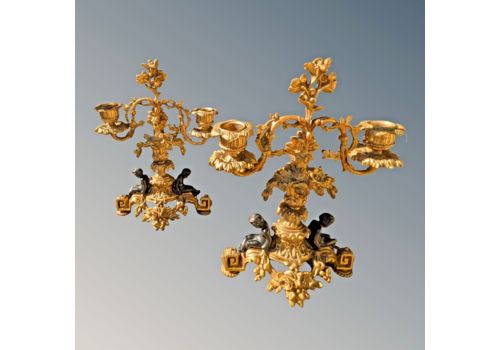


Second Empire Candelabra
These second empire candelabra are heavy bronze and ormolu lighting pieces designed to anchor a formal interior.
Second Empire Candelabra
When you search for second empire candelabra, you encounter substantial 19th-century French lighting pieces designed for formal interiors. The selection leans heavily toward pairs featuring figural motifs like cherubs alongside branch configurations.
Most examples date from the mid-19th century, specifically around the 1860s and 1870s, drawing upon French Empire and Rococo Revival styles. You will find wall sconces, table lamps, and candlesticks sitting alongside the standard multi-branch candelabra.
These items originate primarily from French workshops of the 19th century, utilising decorative themes that reflect grand interior aesthetics of the period. The presence of Sevres porcelain or marble components alongside metalwork adds to the variety within this category.
How they were made
Maker workshops built these pieces using a combination of cast gilt bronze, ormolu, and patinated bronze surfaces. This dual treatment of the metal created strong textural contrasts between the dark patinated figures and the bright gilded mounts.
Many designs integrate secondary materials such as marble bases, porcelain inserts, and glass elements to elevate the visual weight. Metal casting techniques allowed for intricate figural modeling, particularly visible in the cherubs and torchères.
Second Empire Candelabra Retail Price Guide 2026
Typical asking prices for second empire candelabra among the pieces listed under this phrase on Sellingantiques today, from the lower quarter to the upper quarter. They describe what is for sale here now, not the wider market.
Listings feature 19th-century French pieces incorporating gilt bronze, ormolu, patinated bronze, marble, and porcelain across candelabra, wall sconces, and table lamps.
What varies in quality
The integration of materials like Sevres porcelain or carved marble bases dictates the upper tier of the range. Weight, structural balance, and the complexity of the multi-branch configurations also separate standard production from exceptional studio work.
Auguste Cain·François Christophe Armand Toussaint
The Second Empire Candelabra Glossary
- Ormolu
- Gilt bronze produced by applying a finely ground high-carat gold-mercury amalgam to a bronze object. This technique creates a distinct, durable golden finish characteristic of French decorative metalwork.
- Patinated bronze
- Bronze treated with chemical solutions to alter its surface colour, typically resulting in dark brown or greenish tones. It provides visual contrast against bright gilded or ormolu mounts.
- Torchère
- A tall ornamental stand or candelabra designed to hold lights. In 19th-century French pieces, these often take the form of figural bronze torch-bearers.
- Sevres porcelain
- High-grade ceramic material produced by the French national porcelain works. It frequently appears as decorative inserts or columns within nineteenth-century metalwork.
Second Empire Candelabra: Frequently Asked Questions
How do I clean second empire candelabra?
Dust these bronze and ormolu pieces gently using a soft, dry brush to protect the delicate gilding and patination. Avoid chemical polishes entirely, as they strip away historical surface finishes and permanently damage the metalwork.
Take care around inserted elements like marble or porcelain during maintenance. Gentle handling preserves the integrity of the original assembly and keeps the decorative surfaces intact.
Were these electrified originally?
Nineteenth-century lighting pieces were originally manufactured to hold wax candles rather than electric bulbs. Conversion to electricity often happened later during the twentieth century to suit modern domestic requirements.
Inspect the wiring routes carefully to determine if alterations were made to the original bronze structure. Many collectors prefer examples where conversions remain reversible or minimal.
How do I tell Second Empire from Regency?
Second Empire pieces from the mid-nineteenth century tend to feature heavier figural ornamentation, exuberant cherubs, and dense ormolu casting. Regency designs generally display a more restrained classical geometry influenced by earlier English and French neoclassical styles.
Looking closely at the proportions and the boldness of the bronze work clarifies the period aesthetic. The presence of Sevres porcelain or distinct Rococo Revival flourishes points firmly toward the later nineteenth-century French output.
Where should I place these candelabra?
These substantial pieces demand a stable surface such as a heavy sideboard, mantlepiece, or console table capable of supporting significant bronze weight. Their decorative presence suits formal reception rooms or dining spaces designed with period symmetry.
Ensure they sit away from high-traffic household areas where accidental knocks might dislodge multi-branch arms or delicate marble bases. Proper placement highlights the contrast between the patinated figures and gilded mounts.