



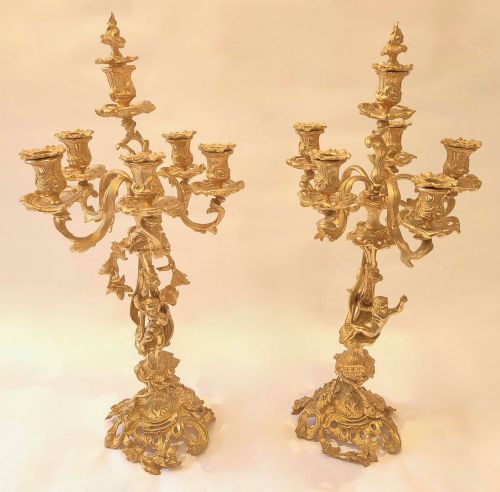


Cherub Table Candelabra
Cherub table candelabra bring sculptural lighting to a room, combining cast figures with multi-branch candleholders.
Cherub Table Candelabra
Cherub table candelabra form a distinct group of decorative lighting fixtures, predominantly originating from nineteenth-century France. These pieces typically manifest as pairs designed for placement on mantels, sideboards, or tables.
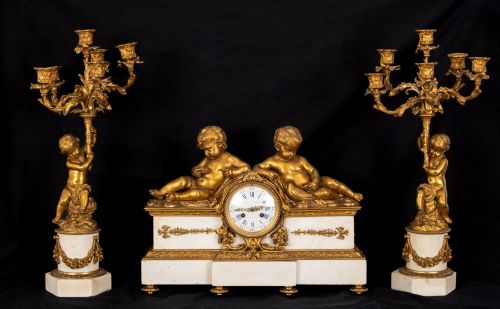
The objects frequently appear within clock garnitures, flanked alongside matching mantel clocks. Buyers encounter various configurations, from twin-light sticks to grander multi-arm arrangements supporting three or six lights.
Stylistic influences draw heavily on French Rococo Revival, Louis XVI style, and French Empire aesthetics. The core motif centres on putti or cherubic figures integrated directly into the metalwork or porcelain structures.
Evaluating the pieces
The integration of materials dictates the overall success of the object. Heavy, solid marble plinths combined with substantial bronze or ormolu mounts elevate a piece above those utilising lighter plated metals or simpler timber.
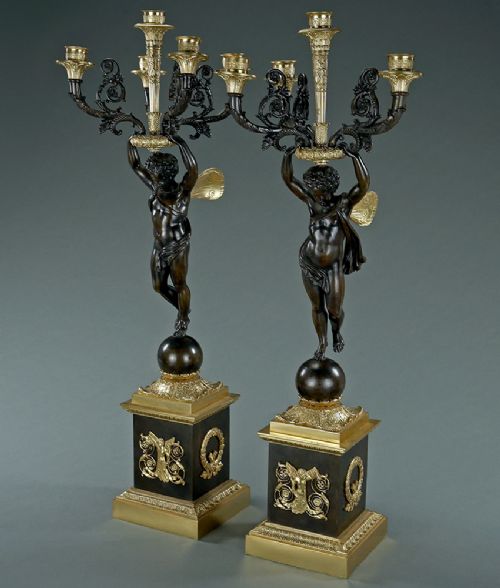
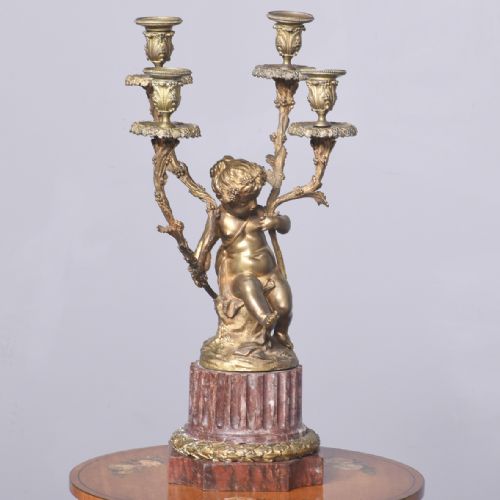
Several bronze putti figures double as candle holders while appearing to casually balance heavy multi-arm lighting branches.
Meissen·Elkington·Clodion
The Cherub Table Candelabra Glossary
- Ormolu
- Gilt bronze produced by applying a mercury and gold amalgam to cast bronze before heating. This technique creates a durable, luminous golden surface characteristic of fine nineteenth-century French work.
- Garniture
- A set of matching ornamental objects designed for display together, most commonly a central clock flanked by two matching candelabra or vases.
- Putto
- A plump, naked male child figure frequently depicted in classical art and architectural decoration. These figures form the central sculptural focus of the search phrase.
- Spelter
- A zinc alloy used as a cheaper alternative to bronze for metal casting. It is often painted or bronzed to imitate more expensive materials.
- Chasing
- The manual finishing of a cast metal object using hammers and punches to refine details and texture the surface. Fine chasing distinguishes high-grade metalwork from basic commercial production.
Cherub Table Candelabra: Frequently Asked Questions
How are cherub table candelabra cleaned?
Dusting with a soft, dry brush removes surface particles safely.
Moisture and harsh commercial cleaners damage delicate gilt surfaces and patinated finishes.
Are these candelabra wired for electricity?
Many examples retain their original candle-holding configurations without electrical modification.
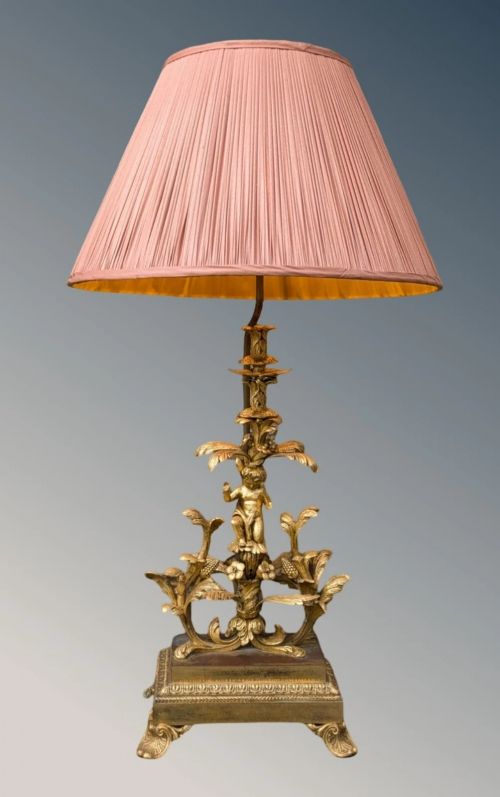
Some pieces have been converted into table lamps over time, altering their original function.
What periods do these pieces date from?
The vast majority originate from the nineteenth century, spanning Victorian and continental European eras.
Stylistic revivals of Louis XVI and Rococo forms remain common across this timeframe.
Do these pieces come as pairs?
Surviving examples frequently appear as matched pairs intended for symmetrical placement on furniture.
Single pieces and larger clock garniture sets also occur within the category.