


Gilded Bronze Candle Holders
Gilded bronze candle holders bring enduring warmth and French decorative polish to a room, ranging from single sticks to multi-armed candelabra.
Gilded Bronze Candle Holders
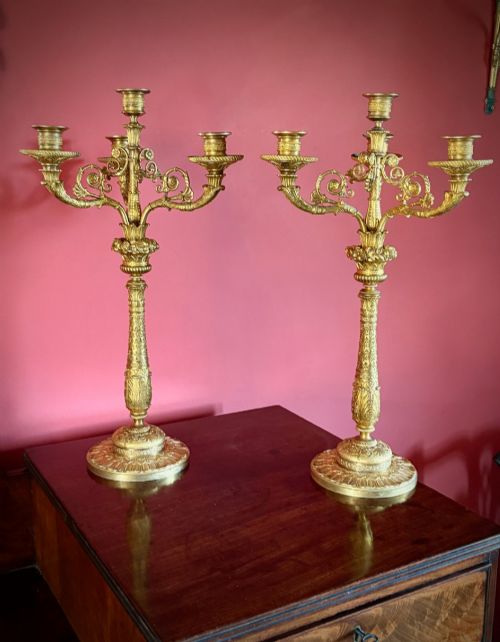
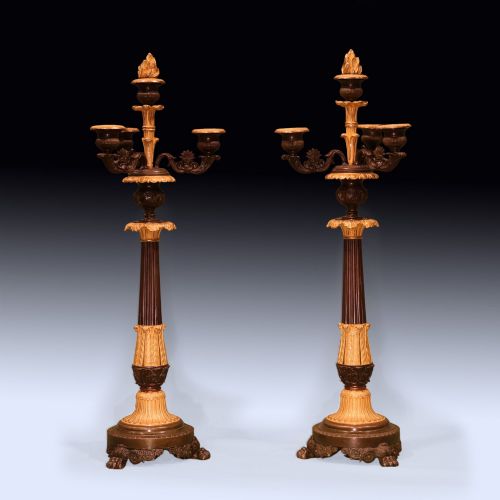
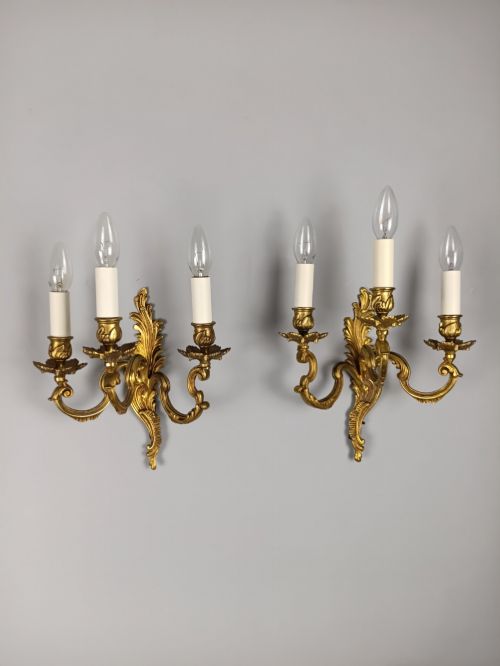
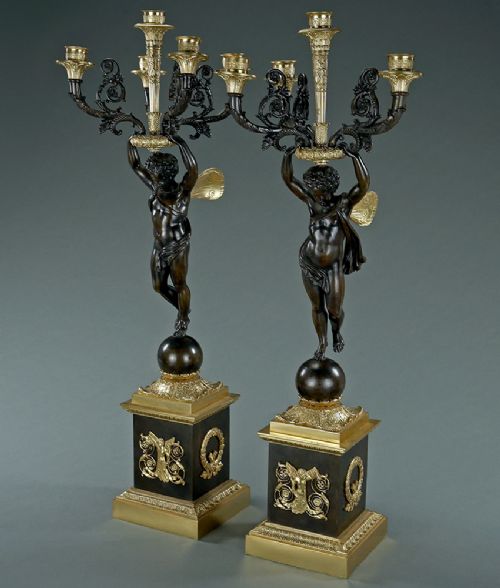
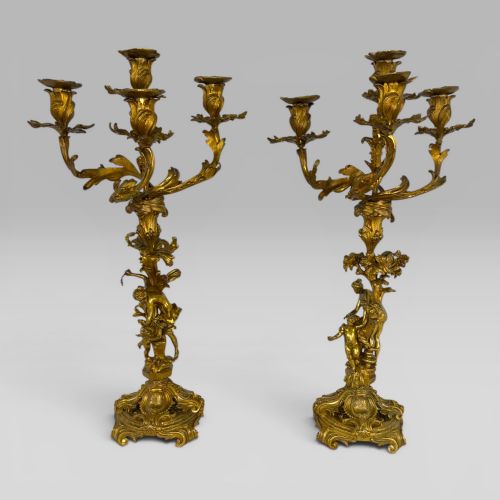
When searching for gilded bronze candle holders, buyers encounter a rich assortment of nineteenth-century French lighting, including candelabra, wall sconces, and chamber sticks. The selection is heavily weighted towards matched pairs dating from the mid to late nineteenth century, spanning Revival styles such as Rococo, Louis XVI, and Empire. Forms range from simple single-socket candlesticks to grand architectural candelabra with multiple branches.
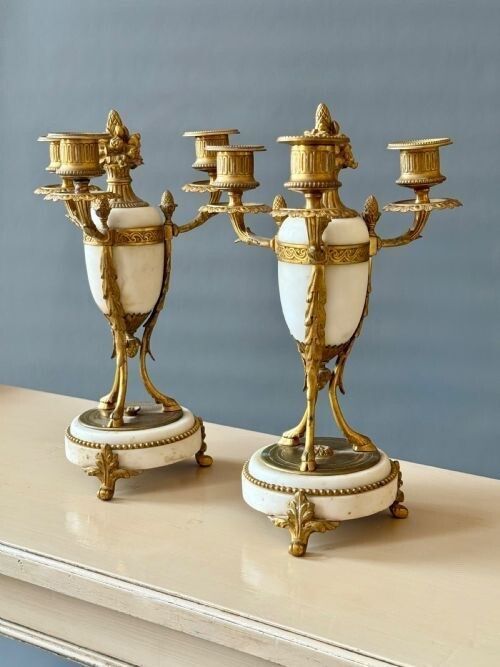
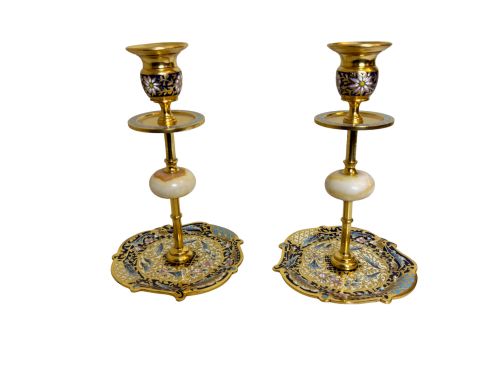
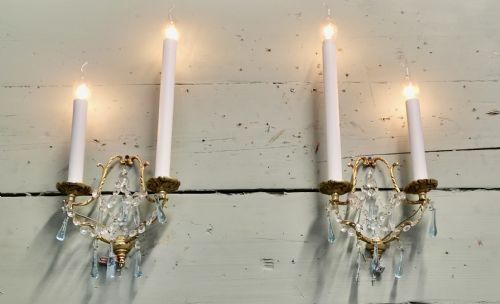
Beyond standard pairs, the inventory frequently includes mixed-media pieces that combine gilt bronze with white marble, onyx, glass, or enamel. Wall lights and sconces offer alternative ways to integrate these metalwork designs into domestic interiors. Pieces from the eighteenth century appear alongside Victorian interpretations and later Revival works, showing steady continuity in manufacture.
Materials and technique
The manufacture relies primarily on bronze, brass, and applied gold plating known as ormolu or gilt bronze. Founders cast the metal using traditional techniques before hand-chasing the surfaces to sharpen details and applying mercury gilt or electroplating to achieve the characteristic golden sheen. Patinated bronze often provides a dark contrast to the bright gilded highlights.
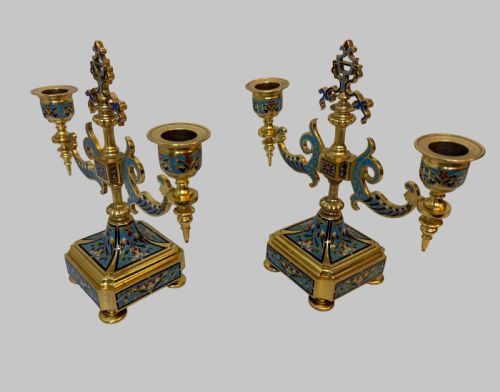
Many items incorporate secondary materials such as marble bases, champleve enamel, or porcelain figures. Stonework and glass elements are fitted directly into the metal armature, secured by internal pins and screws. The combination of cast components and applied ornament gives these objects their heavy, solid structure.
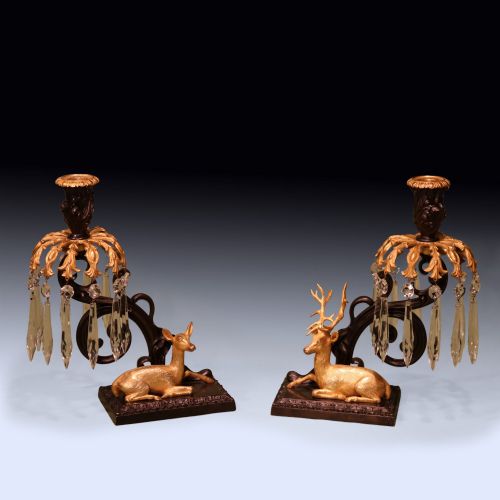
Several nineteenth-century pairs feature sculpted bronze dolphins and stags acting as the main support stems for candles.
Assessing quality
Quality rests upon the crispness of the metal chasing and the depth of the original gilding. Superior examples display sharply defined acanthus leaves, figures, or animal motifs without the softening typically caused by worn moulds or excessive cleaning. The weight of the cast bronze and the precision with which individual branches or nozzles screw together indicate the skill of the original workshop.
The integration of secondary materials further distinguishes the output. High-grade items utilise finely turned marble or dense onyx bases that sit flush with the metal mounts. Inferior items often show uneven gaps between components, poor alignment of candle arms, or thin plating that reveals the base brass underneath.
Meissen·Galle
The Gilded Bronze Candle Holders Glossary
- Ormolu
- Gilded bronze produced by applying a gold and mercury amalgam to a bronze base, heated to drive off the mercury. This technique creates a durable, warm golden finish characteristic of French decorative arts.
- Candelabra
- A branched candlestick designed to hold multiple candles at once. These multi-branch lighting devices often feature removable drip pans and central decorative finials.
- Champleve
- An enamelling technique where troughs or cells are hollowed out of the metal surface and filled with vitreous enamel powder before firing. It appears frequently on late nineteenth-century decorative items.
- Pricket
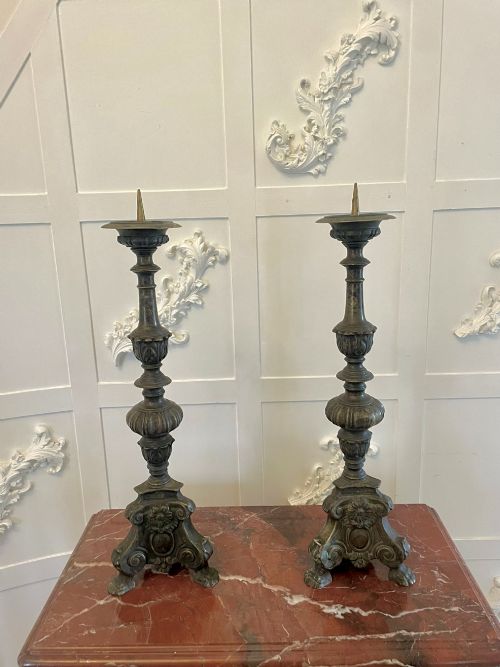
- A candlestick featuring a sharp central spike designed to impale the base of a candle rather than a socket that holds it from the sides. This form is common in ecclesiastical or heavy revival pieces.
- Patinated bronze
- Bronze treated with chemical solutions to produce a dark brown, green, or black surface colour. This dark finish provides contrast against bright ormolu mounts.
Gilded Bronze Candle Holders: Frequently Asked Questions
What is the difference between ormolu and gilt bronze?
Ormolu specifically refers to historical fire-gilding where a mercury and gold amalgam is bonded to bronze through intense heat. Gilt bronze is a broader term that also encompasses modern electroplated finishes and mercury-free gilding techniques.
While both terms describe gold-coloured bronze objects, collectors often use ormolu to denote eighteenth and nineteenth-century French work of superior chemical application and durability.
How do I identify a Louis XVI style candelabra?
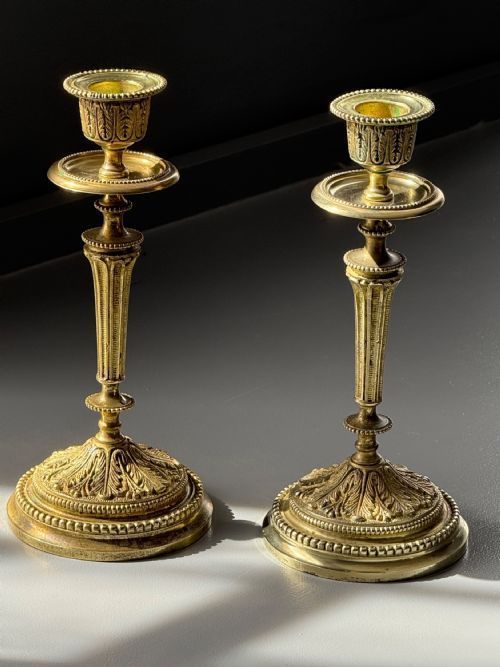
Louis XVI style pieces rely on classical symmetry, straight architectural lines, and restrained ornamentation derived from ancient Greece and Rome. Look for motifs such as fluted columns, bead-and-reel borders, laurel wreaths, and urn shapes.
This aesthetic contrasts sharply with the asymmetric curves and exuberant scrollwork of earlier Rococo designs found within the same period.
Were these candle holders electrified?
Most antique candle holders were manufactured exclusively for wax or tallow candles long before domestic electricity existed. Many surviving examples retain their original untouched sockets and drip pans.
Some pieces undergo later conversions for electric lighting by wiring through the central stem, though original uncompromised examples remain preferred by purists.
How should I clean gilded bronze?
Gilded bronze requires gentle maintenance using a soft dry cloth to remove accumulated dust and environmental grime. Aggressive metal polishes or abrasive cloths will strip away the thin gold layer and expose the base metal underneath.
Professional conservation cleaning is recommended for items with built-up tarnish or compromised patination.