






French Gilt Table Centrepiece
A french gilt table centrepiece commands the dining surface with the heavy gleam of cast metal and cut crystal.
French Gilt Table Centrepiece
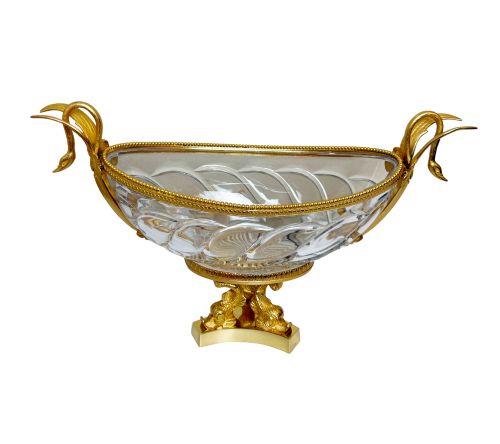
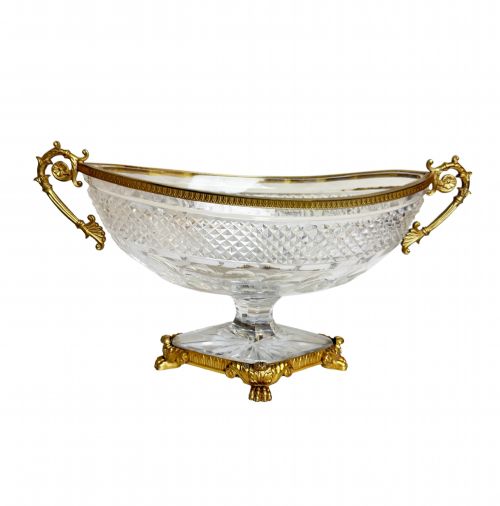
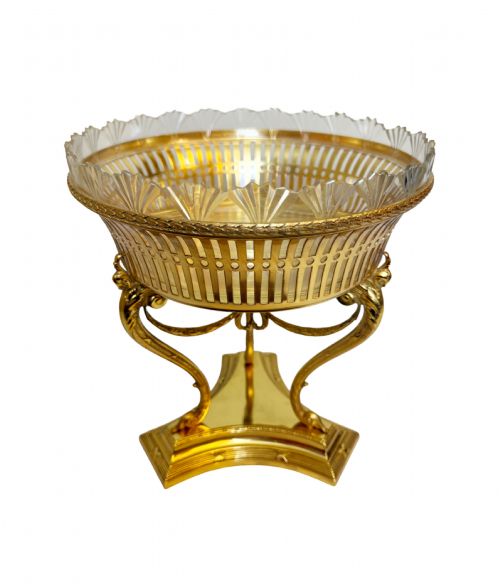
The most common version met on this page pairs cast bronze with glass inserts, crystal bowls, or porcelain elements. Makers drew upon French Empire, Rococo Revival, and Neoclassical styles to shape these ornate serving and display vessels.
Materials and construction
Foundry work relied on the casting of bronze and brass, which artisans then gilded using mercury techniques to achieve the deep ormolu finish seen on these pieces. Patinated bronze surfaces frequently contrast against this bright gilding to define the cast details.
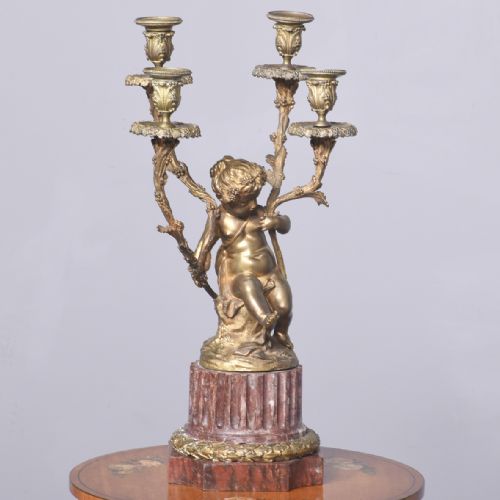
Casting combined with glass-cutting and porcelain manufacture, bringing together heavy crystal bowls, cut glass drops, marble bases, and Limoges enamel plaques within a single framework. Metal arms, cherubs, and mounts screw or peg securely together to support these delicate vessels.
French Gilt Table Centrepiece Retail Price Guide 2026
Typical asking prices for french gilt table centrepiece among the pieces listed under this phrase on Sellingantiques today, from the lower quarter to the upper quarter. They describe what is for sale here now, not the wider market.
Some nineteenth-century tablescapes demanded abolitionist compotes depicting Au Bon Sauvage alongside gilt cherubs.
Differentiating quality
Quality rests upon the crispness of the bronze chasing and the depth of the fire gilding across the surface. Sharp relief in figures, foliage, and cast mounts separates superior pieces from softer, more generalized castings.
The choice of secondary materials dictates the standard of the object, distinguishing heavy hand-cut crystal and fine porcelain inserts from simpler pressed glass and plain metal.
Pierre Philippe Thomire·Christofle Paris·Samson Porcelain
The French Gilt Table Centrepiece Glossary
- Ormolu
- Gilded bronze produced by applying a mercury-gold amalgam to a cast bronze base and heating it. This historic technique yields a rich, durable golden surface.
- Tazza
- A shallow saucer-shaped ornamental vessel raised on a stem and foot. It functions as a decorative centrepiece or comport for display.
- Patinated bronze
- Bronze that has been chemically treated to darken its surface. This dark finish creates contrast against bright gilt mounts.
- Candelabra
- A branched candlestick holder designed to carry multiple lights. Examples here often incorporate porcelain birds or figures within the bronze framework.
French Gilt Table Centrepiece: Frequently Asked Questions
What is a french gilt table centrepiece?
A french gilt table centrepiece is an ornate nineteenth-century decorative vessel, such as a tazza, epergne, or comport, designed to occupy the middle of a dining table.
These pieces combine gilded bronze and ormolu with crystal, glass, marble, or porcelain in styles ranging from Neoclassical to Rococo Revival.
How were these centrepieces used?
These items served as formal table decorations during nineteenth-century dining, often holding fruit, flowers, or sweetmeats.
Paired objects like candelabra were placed alongside them to illuminate the dining surface and complete a symmetrical tablescape.
How do I style a centrepiece at home?
Place a french gilt table centrepiece on a large dining table, mahogany sideboard, or console where its metallic finish and glass elements catch the light.
Keep the surrounding surface clear to let the cast bronze details and crystal inserts command attention without visual clutter.
How do I identify nineteenth-century styles?
Look to the decorative motifs and silhouettes, which reveal whether a piece follows the martial restraint of the Empire period or the flowing curves of Rococo Revival.
Materials also help date the work, as cut crystal drops, marble bases, and Sevres style porcelain point directly to Victorian and late nineteenth-century production.