



French Gilt Column Stand
A french gilt column stand brings neoclassical weight and gilded display space to a room, lifting busts, urns and lamps into prominence.
French Gilt Column Stand
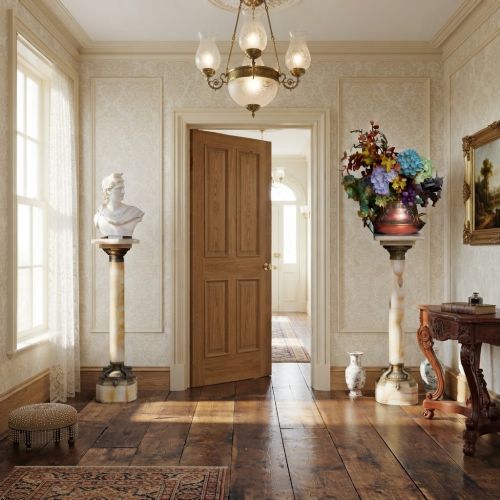
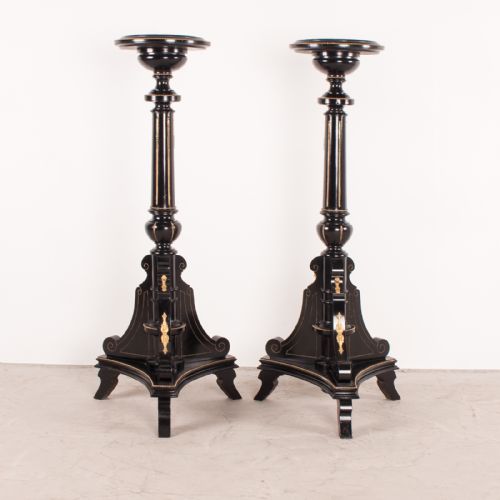
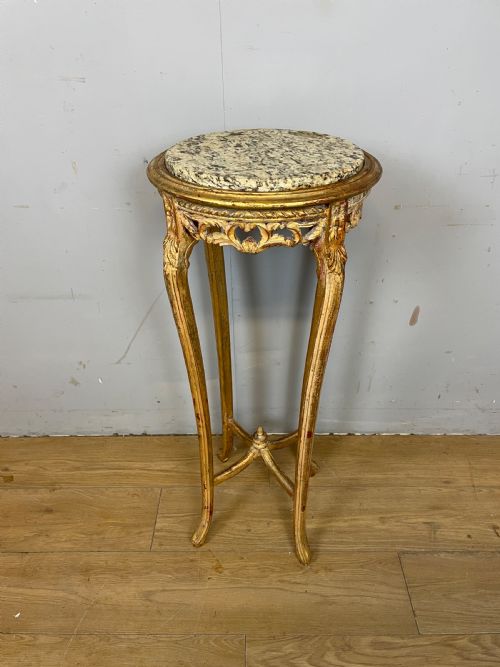
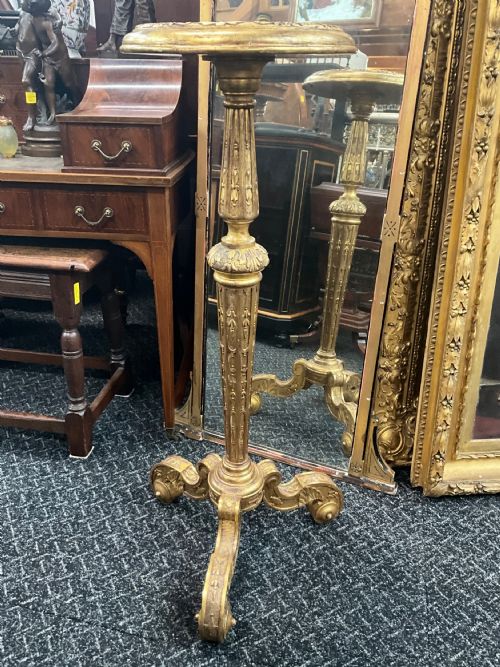
A french gilt column stand functions primarily as a pedestal, torchere or column designed to elevate decorative objects, lamps or plants. These pieces take the form of tall cylindrical columns, occasional tables and stands rooted in nineteenth-century French design.
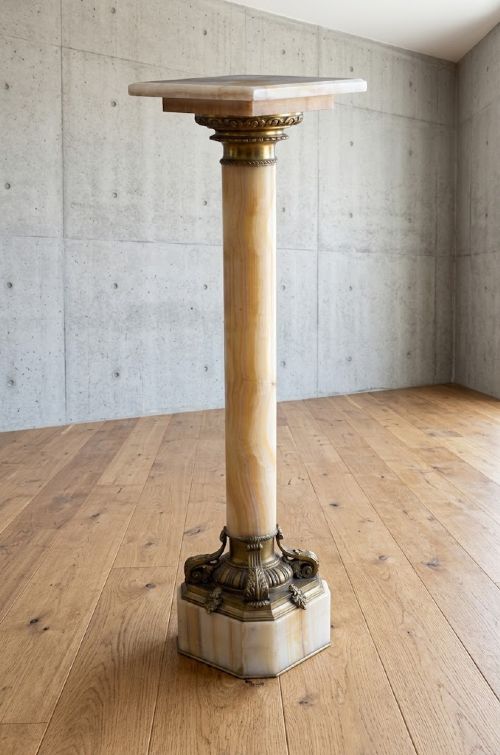
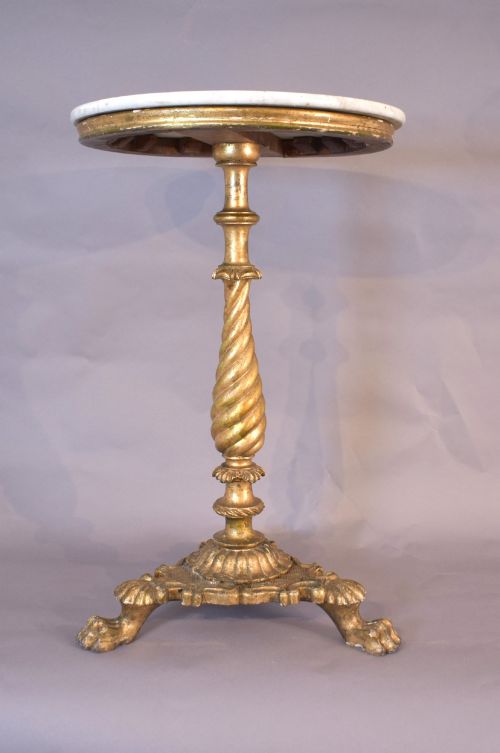
The version most commonly met on this page is the nineteenth-century onyx or marble column fitted with ormolu collars and mounts, alongside carved giltwood torcheres. Neoclassical, Louis XVI Revival and French Empire styles dominate the selection, bringing classical proportion and gilded surfaces together.
Materials and Techniques
Makers constructed these supports using solid woods such as walnut, mahogany and kingwood, often applying giltwood, gesso or ebonisation to the surfaces. Ormolu and gilt bronze mounts provide decorative contrast to the timber frames.
Stands frequently incorporate contrasting natural stone elements, pairing polished marble or onyx tops and shafts with cast metal collars. Parquetry and vernis martin lacquer appear on select occasional tables and display cabinets.
Assessing Quality in Gilt Stands
Quality rests in the crispness of the giltwood or gesso carving and the weight of the bronze or ormolu mounts. Fine examples display sharply cast metalwork and deeply carved timber rather than shallow surface ornament.
The selection of stone dictates the calibre of a column, with richly figured onyx and heavy marble tops marking superior execution. Structural integrity in the joints and the precise fit of metal collars to stone shafts distinguish finer atelier work from simpler production.
François Linke·Marguerite
The French Gilt Column Stand Glossary
- Ormolu
- Gilded bronze used for decorative mounts and furniture trim. It provides a bright metallic contrast to dark woods and stone shafts.
- Torchere
- A tall stand or candlestick originally designed to hold a light source. In nineteenth-century French interiors, these function mainly as pedestals for urns and sculptures.
- Gesso
- A plaster-based material applied to wood surfaces to create a smooth base for gilding. It allows for intricate relief moulding.
- Neoclassical
- A style drawing on classical Greek and Roman motifs such as columns, acanthus leaves and symmetry. It defines much of the nineteenth-century French cabinetmaking on this page.
French Gilt Column Stand: Frequently Asked Questions
What is a french gilt column stand used for?
These stands serve to elevate sculptures, marble busts, urns and table lamps above floor level. Their primary function is display, drawing the eye upward in a room.
They also operate as occasional tables or torcheres, combining architectural presence with a functional surface for decorative objects.
How do I identify a neoclassical style stand?
Neoclassical stands feature strict geometric proportions, fluted columns and classical motifs like acanthus leaves or egg-and-dart moulding. They draw directly on ancient Greek and Roman architecture.
Look for symmetry, bronze or ormolu collars, and architectural column shafts in marble or onyx.
What is the difference between ormolu and gilt bronze?
Ormolu refers specifically to high-fineness gold applied to a bronze object using a mercury amalgam technique, common in eighteenth and nineteenth-century French work. Gilt bronze is a broader term for any bronze object with a gold surface layer.
Both provide a durable, warm metallic finish that resists tarnishing over decades of display.
Where should I place a torchere in a room?
Torcheres suit corners, flanking doorways, or standing beside large pieces of furniture where vertical height balances the layout. They provide an architectural accent in empty spaces.
Ensure the floor is level so that heavy marble and onyx columns remain stable.