
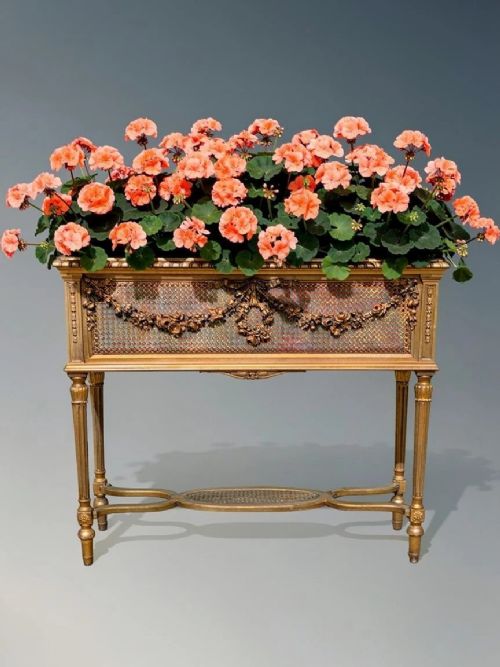


French Neoclassical Plant Table
These French neoclassical plant tables bring architectural poise and refined surface work into a room through carved timber, marble, and gilt metal.
French Neoclassical Plant Table
A french neoclassical plant table serves as an elevated platform for horticulture or decorative objects, drawing on classical vocabulary such as fluted columns and strict symmetry. The selection spans the nineteenth century up through the nineteen-twenties, incorporating revival aesthetics like Louis XVI and Etruscan motifs alongside Empire influences.
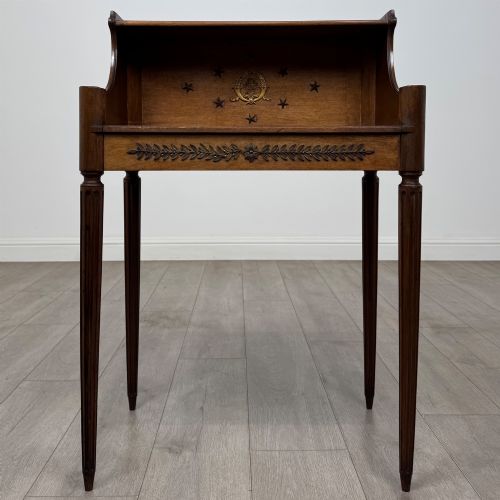
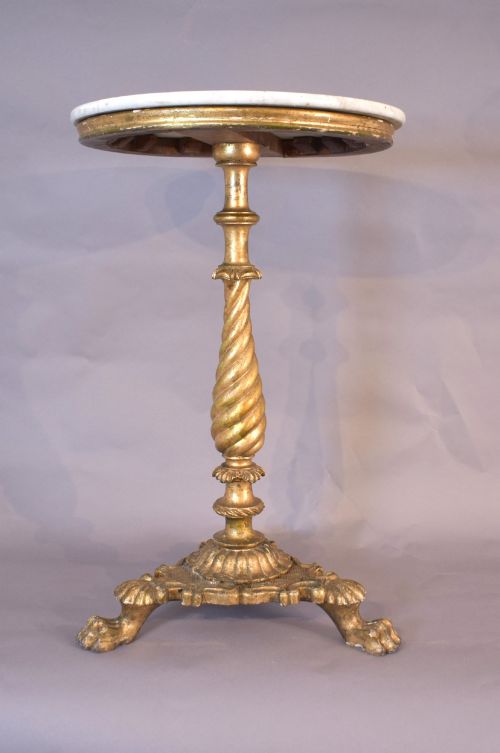
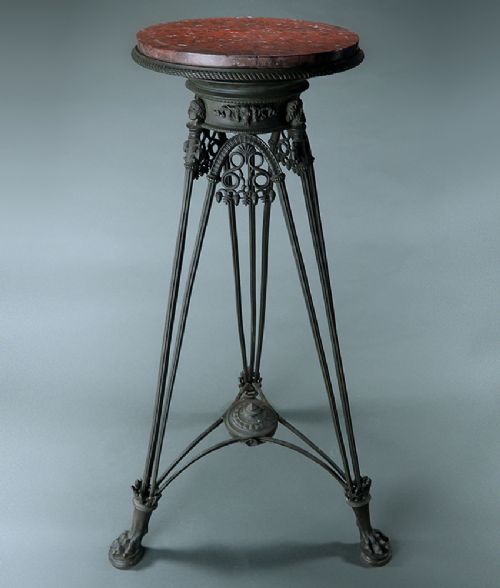
Forms range from circular marble-topped guéridons and tripod tables to multi-tiered planters incorporating canework and side tables with drawers. Many examples integrate inset marble tops or onyx surfaces supported by brass, mahogany, or giltwood frameworks.
Origins cluster around the nineteenth century and the early twentieth century, taking the shape of plant stands, pedestals, and occasional tables. These pieces function equally well holding jardinières or acting as compact display surfaces in smaller reception rooms.
Materials and Construction
Construction relies heavily on dense timbers such as mahogany and ebony paired with structural hardwoods, frequently finished with giltwood or painted surfaces. Cabinetmakers utilised traditional joinery to support heavy stone elements without losing delicate proportions.
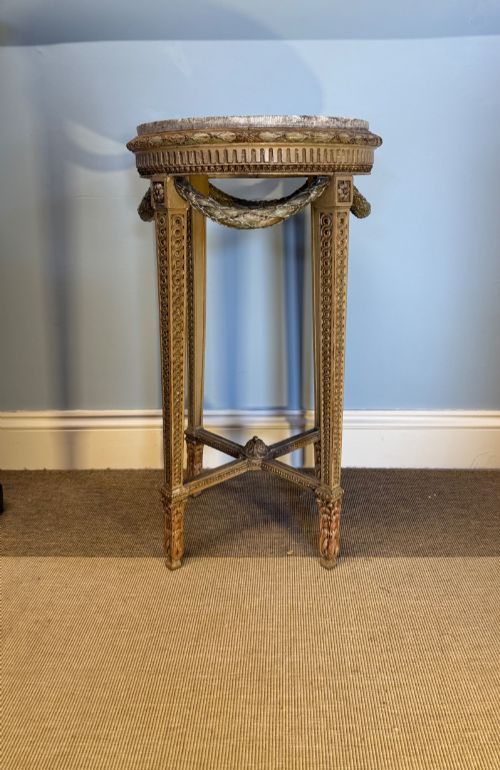
Surface adornment incorporates cast or chased ormolu mounts, brass details, and decorative flower mouldings applied to columns and aprons. Insets of white or coloured marble and onyx provide durable, polished display surfaces atop carved wooden frames, while cane work appears on lower tiers and planters.
Object forms include guéridon tables, plant stands, pedestals, and bedside cabinets executed in French Empire and Louis XVI revival styles.
Judging Quality
Quality reveals itself in the crispness of the carving on the giltwood or mahogany structure and the weight and finish of the ormolu mounts. Finer examples display hand-chased bronze details and tightly fitted marble or onyx tops that sit flush within the surrounding timber frame.
The sophistication of the historical revival reference also dictates standing, with pieces echoing specific cabinet-making traditions carrying greater visual authority. Sound structural integrity in the slender tripod legs and column supports ensures the piece handles the weight of stone and planted containers safely.
The French Neoclassical Plant Table Glossary
- Guéridon
- A small circular table on a central pillar or tripod base. Originating in the seventeenth century, these pieces evolved to serve varied display and occasional functions.
- Ormolu
- Gilded bronze mounted onto furniture or decorative objects. The technique involves applying a gold amalgam to bronze through heat, creating a durable golden finish.
- Jardiniere
- An ornamental stand or container designed to hold growing plants or flowers. They often incorporate waterproof liners or cane baskets within decorative wooden or metal frames.
- Etruscan Revival
- A nineteenth-century design style drawing on ancient Greek and Roman motifs. It favors geometric patterns, classical urns, and strict architectural lines.
French Neoclassical Plant Table: Frequently Asked Questions
What is a french neoclassical plant table?
A french neoclassical plant table is an ornamental stand or small table designed to hold plants or decorative objects, utilising classical architectural motifs. These pieces date primarily from the nineteenth and early twentieth centuries.
They combine materials such as mahogany, marble, giltwood, and ormolu to create formal display furniture that echoes ancient Greek and Roman design principles.
How were these tables used originally?
These tables functioned primarily as decorative stands for potted plants, flowers, or small sculptural objects within grand interiors. Their elevated surfaces protected delicate flooring and brought greenery to eye level in reception rooms.
Over time, many adapted to serve as general occasional tables, wine tables, or bedside cabinets while retaining their classical silhouette.
Where should I place a plant table?
Place a plant table in a well-lit corner, beside seating, or in an entryway where its architectural silhouette can be appreciated from multiple angles. Ensure the surface material is protected from moisture if used for actual potted plants.
Pairing them with period mirrors or urns enhances their classical proportions within a modern interior scheme.
How do I identify the period?
Dating relies on examining the timber species, the casting quality of the ormolu mounts, and the specific revival style referenced, such as Louis XVI or Empire. Nineteenth-century pieces often feature hand-carved details and denser hardwoods.
Later Edwardian and early twentieth-century examples may incorporate machine-turned elements or lighter secondary woods while maintaining traditional silhouettes.