
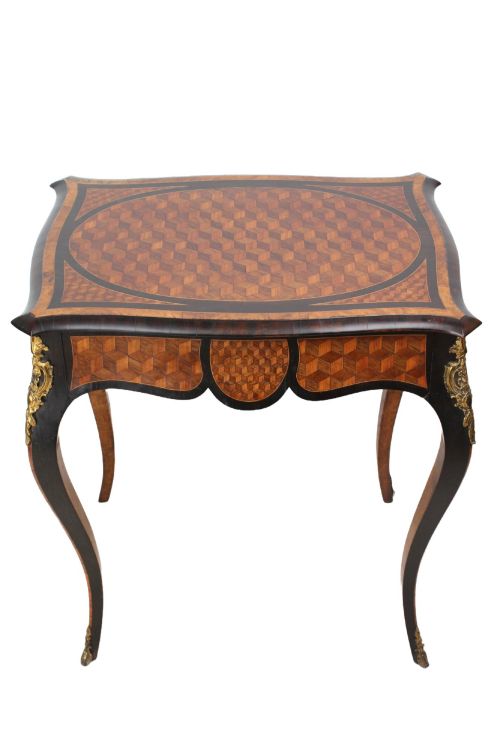
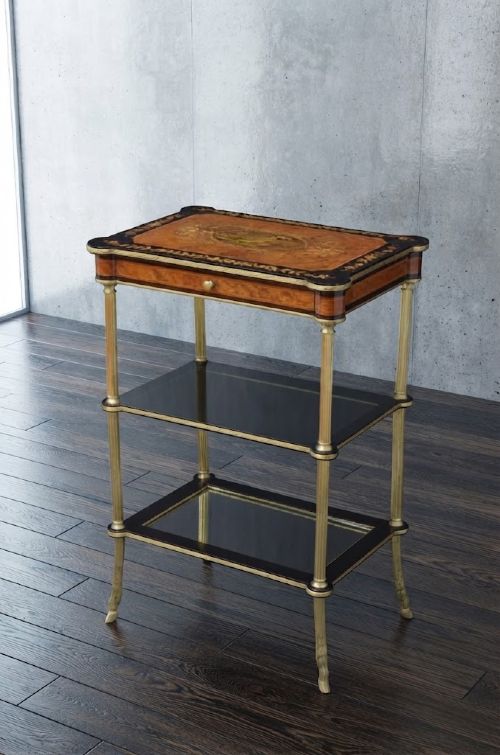
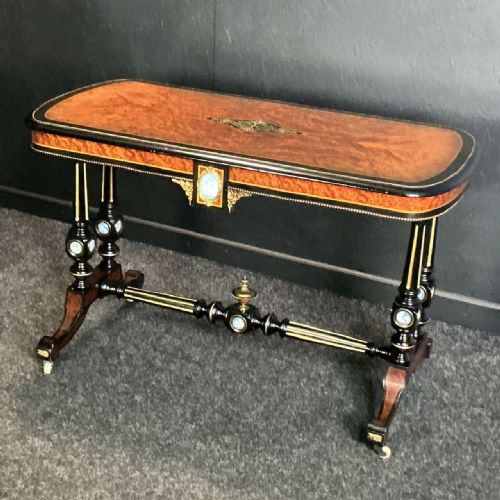
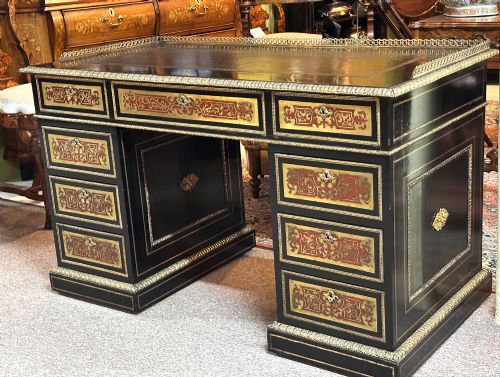


French Ebonised Furniture
French ebonised furniture brings dark elegance and rich ornamentation into a room through contrasting brass, tortoiseshell and ormolu mounts.
French Ebonised Furniture
French ebonised furniture encompasses a striking range of dark-finished wooden items designed for display, writing and storage across formal interiors. When searching for French ebonised furniture, buyers most commonly encounter nineteenth-century pieces reflecting Napoleon III and Victorian French Revival aesthetics.
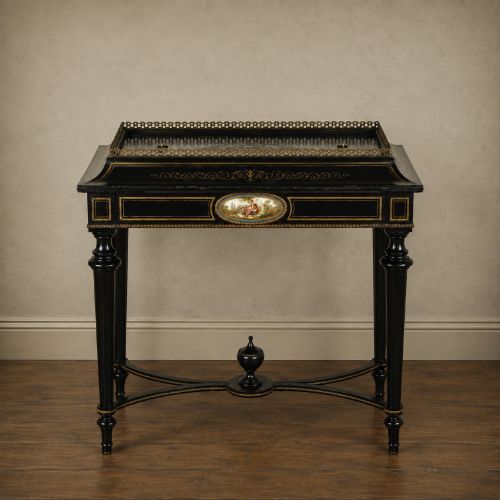
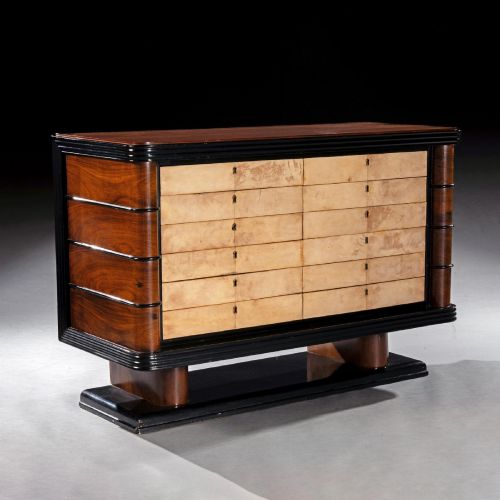
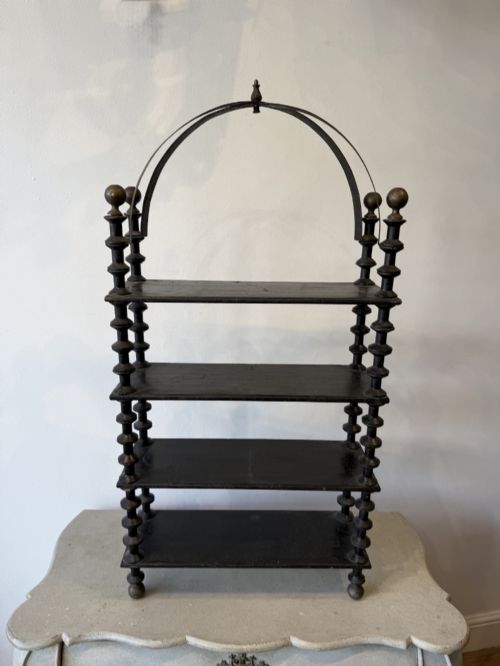
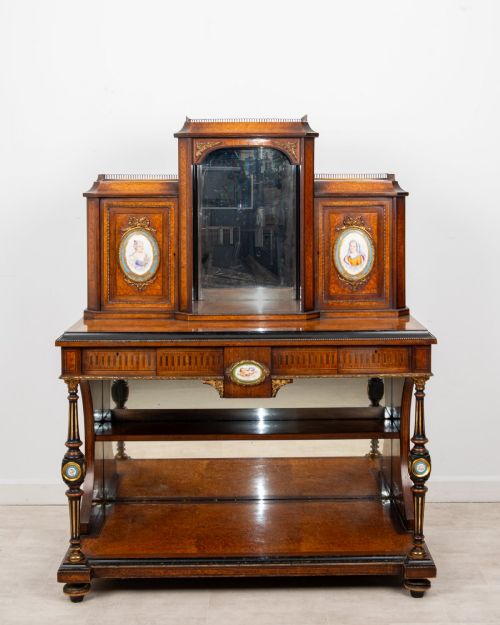
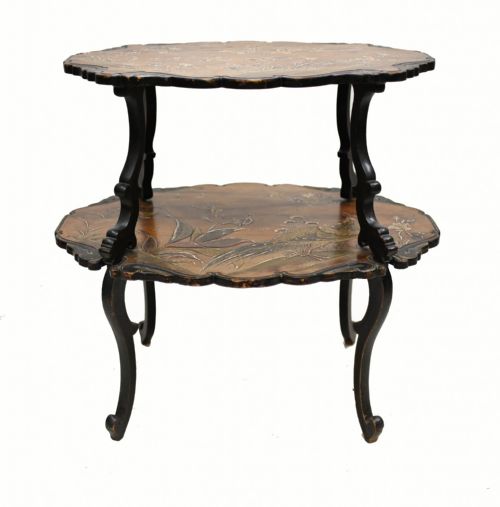
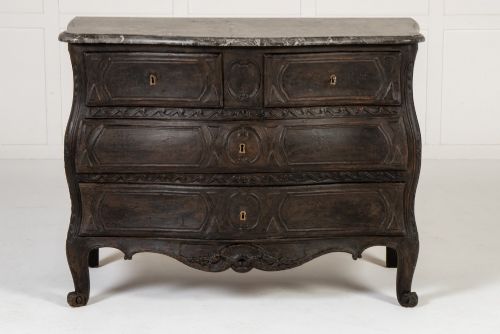
The category spans diverse functional forms, from multi-tiered étagères and pier cabinets with glass doors to writing desks, centre tables and commodes. These items frequently incorporate contrasting timber veneers, porcelain plaques or metallic inlays to catch the light against the deep black surface.
How they were made
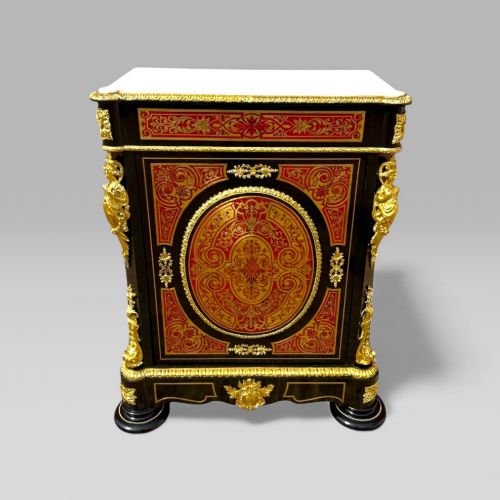
Craftsmen achieved the signature dark finish by staining or painting wood to imitate ebony, often pairing the blackened surfaces with intricate brass and tortoiseshell Boulle work or parquetry inlay. Ormolu mounts and gilt-metal details were then cast and applied to highlight structural corners and door frames.
Many of the finest examples integrate contrasting secondary timbers such as amboyna, walnut and palisander alongside ceramic plaques and marble tops. Joinery methods relied on sturdy carcases built to support heavy stone surfaces and elaborate decorative hardware.
Materials documented in the listings include ebonised wood, brass, ormolu, glass, tortoiseshell, porcelain, marble and walnut.
What varies in quality
The distinction between standard production pieces and exceptional work rests on the precision of the brass inlay and the crispness of the ormolu mounts. Finer workshops employed thicker tortoiseshell and more complex engraved brass patterns that demand meticulous hand-fitting.
Quality also reveals itself in the selection of secondary woods and the integration of decorative elements like hand-painted porcelain plaques or pietra dura panels. Heavier marble slabs and more complex cabinetry structures, such as bombe commodes or multi-tiered étagères, indicate higher ambition in the original manufacture.
JAS Shoolbred·Edward’s And Robert’s·Maison Millet·Paul Sormani·Trussant & Cie
The French Ebonised Furniture Glossary
- Ebonised
- Wood finished with a dark stain or paint to replicate the appearance of costly solid ebony. It provides a uniform dark background that accentuates metal mounts and inlaid panels.
- Boulle work
- Marquetry technique combining tortoiseshell and engraved brass, named after the famous cabinetmaker André-Charles Boulle. The contrasting materials are cut together to create intricate symmetrical patterns.
- Ormolu
- Gilded bronze mounts applied to furniture for decorative effect. These metal ornaments protect vulnerable corners and enhance the visual richness of the piece.
- Étagère
- Open shelving unit with multiple tiers supported by slender columns. It was designed for displaying small ornaments, porcelain and decorative objects.
- Pier cabinet
- Narrow cabinet built to stand against the wall space between windows. These pieces often feature glazed doors and elaborate marquetry.
French Ebonised Furniture: Frequently Asked Questions
How do I care for ebonised surfaces?
Dust surfaces regularly with a soft, dry cloth to prevent the accumulation of particles that can dull the dark finish. Avoid using harsh chemical polishes or placing the furniture in direct sunlight.
Keep pieces away from sudden temperature fluctuations to protect delicate wood veneers, brass inlays and tortoiseshell elements from warping or lifting.
What materials are used alongside the black finish?
These items frequently incorporate contrasting brass, tortoiseshell, ormolu and marble. Secondary timbers like walnut, amboyna and palisander also appear beneath or alongside the dark surface.
Many examples feature painted porcelain plaques, glass doors or mirrored tiers to add reflectivity and colour contrast to the heavy black framework.
Where should I place a pier cabinet?
A pier cabinet is traditionally suited for placement against narrow wall spaces between windows or in reception rooms. Their glazed doors and shelved interiors allow for the secure display of small decorative objects.
Because these cabinets often include marble tops and reflective ormolu mounts, positioning them near natural light sources helps highlight the detailed brass work.