



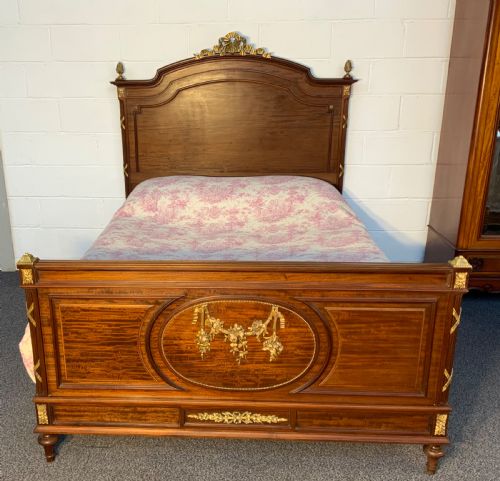

French Carved Walnut Bedstead
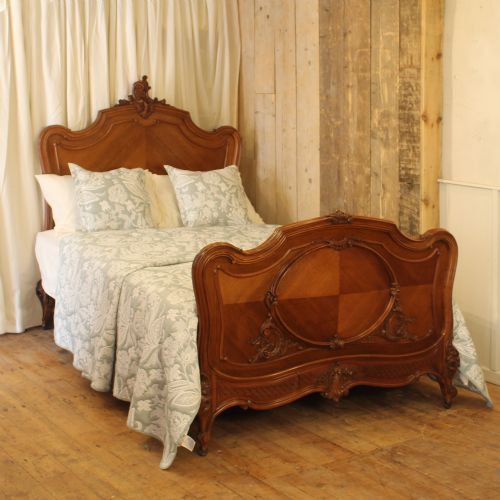
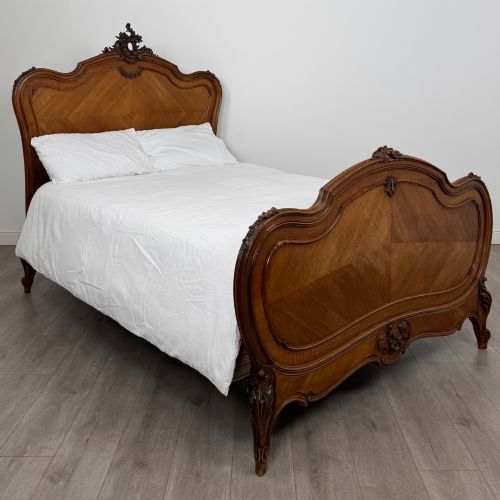
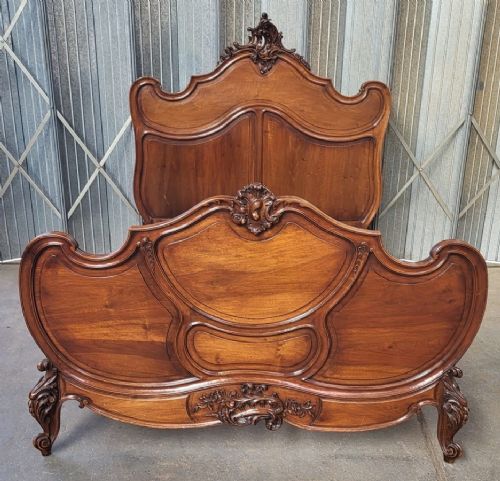
A french carved walnut bedstead brings architectural warmth to a bedroom through deep grain and robust carving.
French Carved Walnut Bedstead
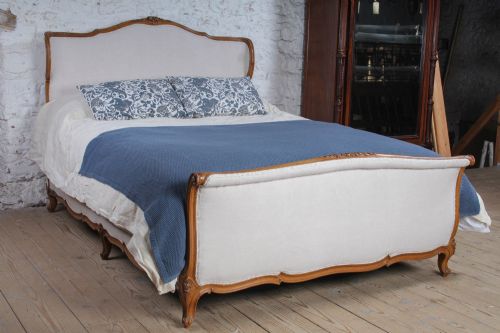
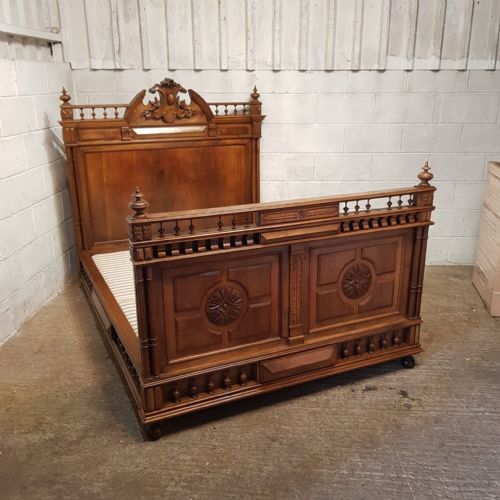
A french carved walnut bedstead is a substantial sleeping frame shaped by continental cabinetmakers during the nineteenth and early twentieth centuries. These pieces appear most frequently in double and king sizes, designed to anchor a principal bedroom with presence.
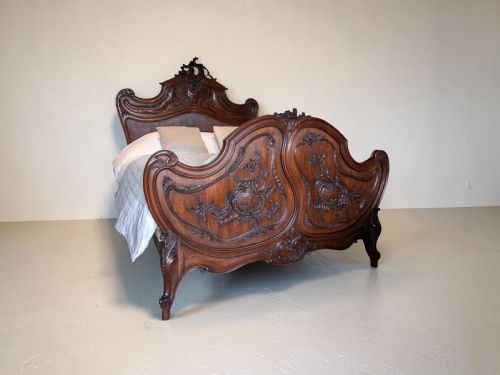
The aesthetic draws heavily on historical revivals, with French Louis XV and Louis XVI styles dominating the surviving examples. Makers also utilised French Chateau and Renaissance revival motifs to adorn the timber headboards and footboards.
Most examples retain their original timber construction, though occasional variants incorporate giltwood, brass detailing, or parcel gilt accents. Forms range from traditional panelled bedsteads to daybeds and expansive emperor size frames.
Judgements of quality
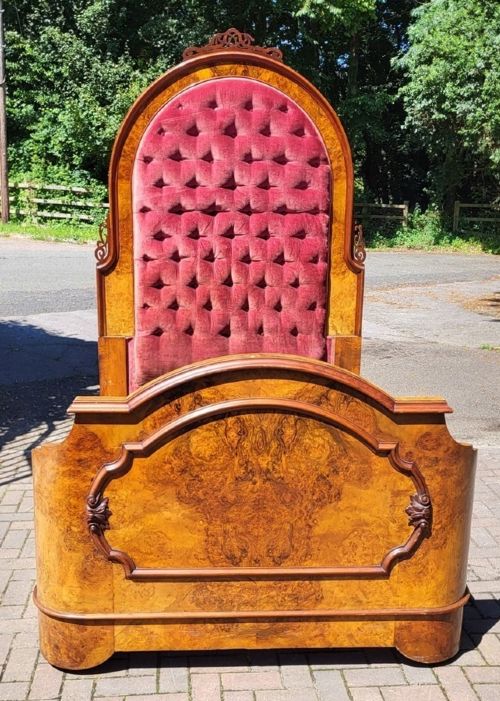
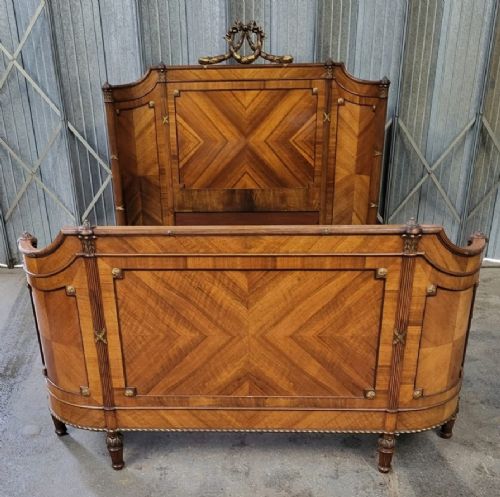
Quality rests in the depth and execution of the carving, where hand-chiselled foliage and scrolls demonstrate superior artisan skill over mechanical duplication. The choice between plain walnut, burr walnut, and quarter veneered surfaces alters the visual weight of the frame.
Proportion and scale distinguish finer frames from utilitarian pieces, particularly in how the stylistic vocabulary of the Louis XV or Renaissance revival periods is proportioned across the headboard and footboard.
Several matched sets pair the grand carved bedstead directly with its original bedside cabinets for a unified sleeping chamber.
Louis Majorelle
The French Carved Walnut Bedstead Glossary
- Bedstead
- A framework of a bed supporting the mattress and springs. Historic frames often require specific mattress sizing to fit internal dimensions.
- Burr walnut
- Timber taken from a growth on a walnut tree, yielding swirling grain patterns. This material was selected for prominent display panels on luxury beds.
- Giltwood
- Wood that has been treated with gold leaf or gilt paint. It highlights specific carved details on decorative frames.
- Quarter veneered
- Slices of walnut veneer arranged symmetrically to create geometric patterns on a panel. This technique maximises the visual impact of figured timber.
- Louis XV style
- A design movement characterised by asymmetrical curves, cabriole motifs, and naturalistic scrollwork. It remains the most prevalent aesthetic for these beds.
French Carved Walnut Bedstead: Frequently Asked Questions
Will a historic french bed fit a modern mattress?
Many nineteenth and early twentieth century frames vary slightly from standard modern metric dimensions. Buyers often need bespoke mattress adjustments or custom slatted bases to ensure a proper fit.
Measuring the internal rails carefully before purchasing avoids installation issues with standard spring or foam mattresses.
How should I care for walnut wood furniture?
Walnut benefits from occasional treatment with appropriate beeswax or furniture polish to nourish the grain and maintain a soft sheen. Avoid placing the bedstead near direct heat sources or strong sunlight to prevent timber splitting.
Regular dusting with a dry lint-free cloth preserves the hand-carved details without damaging the antique finish.
Are these beds easy to dismantle and move?
Most antique wooden bedsteads utilise standard side rail bolts or drop-in brackets that allow the headboard, footboard, and rails to separate completely. This modular construction facilitates transport and installation in rooms with difficult access.
Enlisting professional antique movers ensures the heavy timber components and carved joints remain undamaged during transit.
How do I identify a Louis XV style bed?
Louis XV revival pieces feature characteristic serpentine curves, C-scrolls, and floral carvings modelled on eighteenth-century court furniture. The legs often sweep outward in subtle cabriole forms rather than standing straight.
This aesthetic prioritises fluid lines and asymmetry over the geometric rigour seen in later neoclassical revivals.