



French Carved Double Bed
A french carved double bed brings continental scale and deep timber moulding to a bedroom, offering a substantial focal point rooted in nineteenth and early twentieth-century design.
French Carved Double Bed
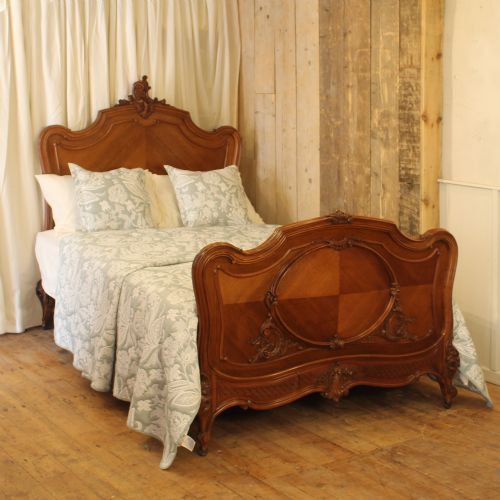
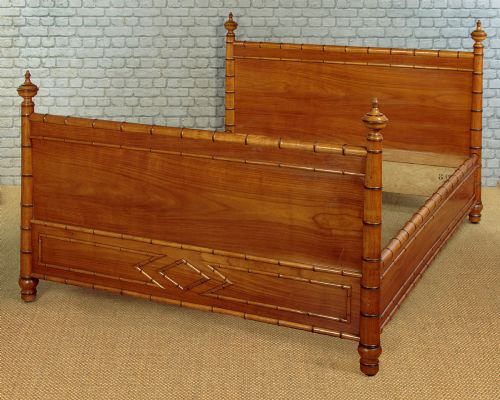
When searching for a french carved double bed, you encounter substantial timber frames spanning the nineteenth century through to the 1930s, constructed predominantly in walnut, oak, and mahogany. These pieces range from restrained provincial forms to ornate revival styles, reflecting the diverse domestic tastes of their periods.
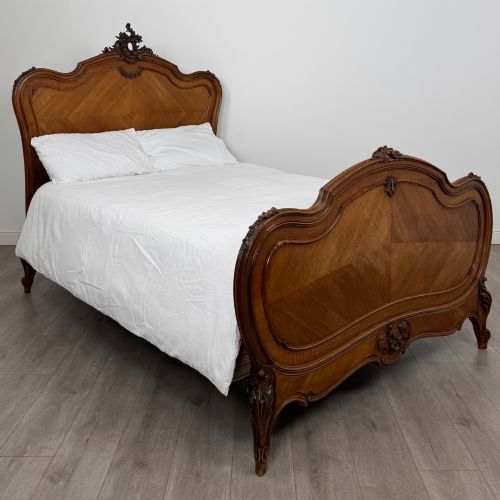
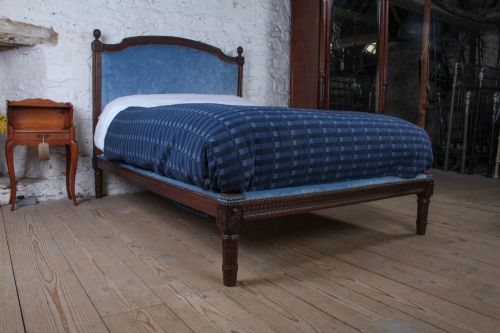
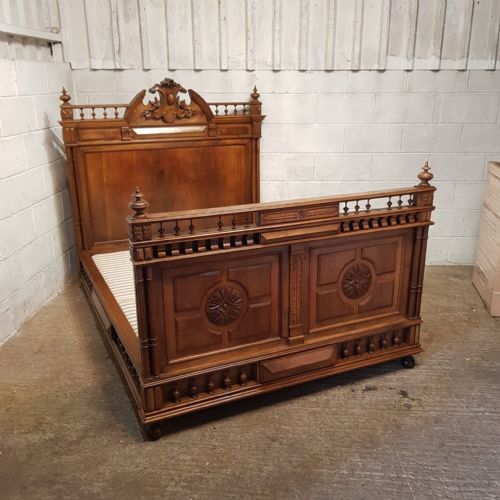
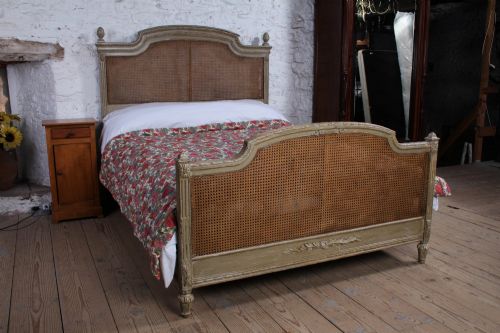
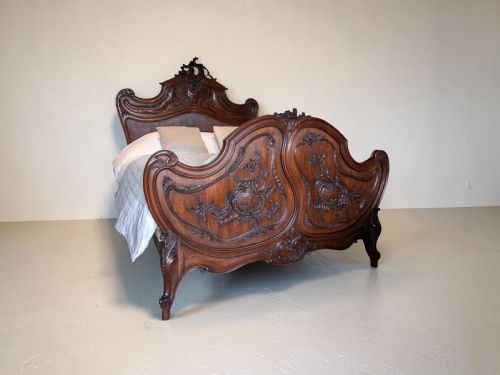
The version you are most likely to meet on this page is walnut or oak, carrying the distinct hallmarks of Louis XV, Louis XVI, or Breton styling. Many examples incorporate carved floral motifs, scrolls, or caning panels within the headboard and low-end footboard structures.
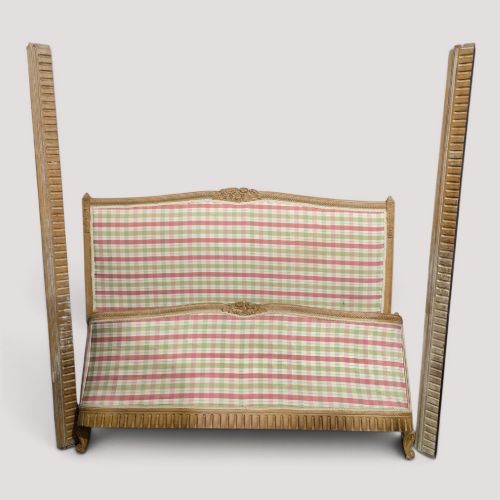
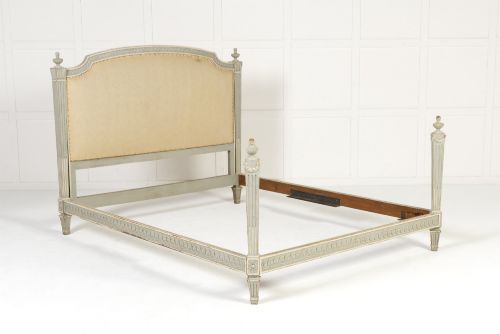
Beyond standard double proportions, the selection frequently includes pieces adapted to modern sizing or built with generous dimensions akin to king and emperor scales. These frames unite sturdy woodwork with decorative flourishes like parcel gilding, paint, and upholstery.
How they were made
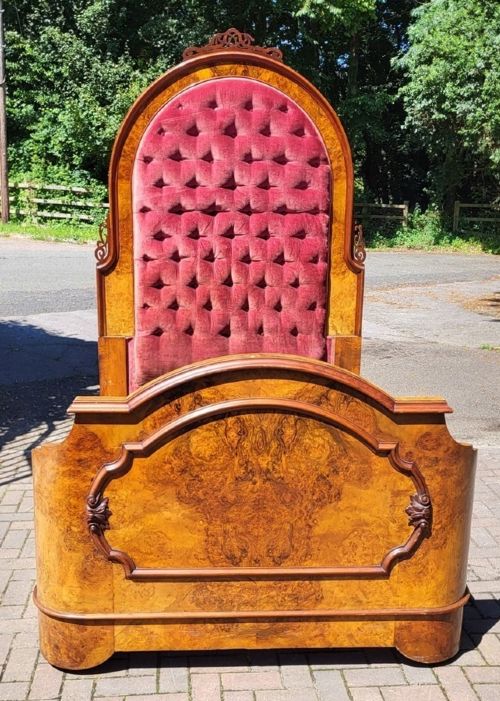
Cabinetmakers constructed these frames using dense hardwoods like walnut, oak, and mahogany, often enhanced by burr veneers and fine parquetry. Timber was selected for its grain pattern, providing a solid foundation for deep hand-carving.
Surface treatments varied from polished natural wood and limed finishes to applied paint and parcel gilt highlights. Caning and button-backed upholstery were integrated into frames using traditional webbing and stitching techniques.
Several pieces are designated specifically as marriage beds, carrying heavy traditional carvings meant to bless a new household.
What varies in quality
The distinction between ordinary and exceptional frames lies in the depth and crispness of the hand-carving rather than the mere presence of decoration. Superior examples display intricate, undercut foliage and harmonious proportions across the headboard and rails.
Choice of timber heavily dictates the piece's character, with figured plum pudding mahogany, burr walnut, and richly patinated golden oak standing apart from plain painted pine or standard softwoods. Original hardware and intact structural joinery further separate superior survivals from later alterations.
The French Carved Double Bed Glossary
- Caning
- A woven lattice pattern utilising split rattan or cane, frequently found inset into headboards and footboards for an airy aesthetic. This technique lightens the visual weight of heavy hardwood frames.
- Parquetry
- Geometric wood mosaic work used for decorative veneer surfaces, creating intricate patterns across panels. It showcases the precise joinery skills of the period cabinetmaker.
- Parcel gilt
- The practice of applying thin gold leaf selectively to specific carved highlights or raised mouldings. This technique accentuates the architectural details of the woodwork against a painted or polished ground.
- Burr walnut
- Timber taken from the gnarled growths of a walnut tree, producing swirling, highly decorative grain patterns. It was favoured for high-status furniture fronts and headboards.
- Louis XVI Style
- A neoclassical design movement characterised by straight lines, symmetry, and classical motifs such as fluting and ribbon twists. It provides a more restrained geometric contrast to earlier curved styles.
French Carved Double Bed: Frequently Asked Questions
How do I fit a modern mattress?
Many antique frames feature non-standard interior dimensions that differ from current sizing conventions. Independent slat systems or custom bases are often added to support contemporary mattresses safely within the antique side rails.
Measuring the internal width and length precisely ensures proper alignment before introducing a new mattress to the frame.
Are these beds easy to assemble?
Most frames utilise traditional bed bolts or metal bed-irons that connect the headboard, footboard, and side rails securely. Assembling them typically requires two people and simple spanners to tighten the internal fittings.
Care must be taken not to over-tighten historical hardware into older timber threads.
How do I care for the wood?
Regular dusting with a soft, dry cloth prevents particulate accumulation on intricate carvings and mouldings. Periodic application of quality beeswax feeds the dry hardwood and preserves the natural patina without leaving synthetic residues.
Direct sunlight and extreme humidity fluctuations should be avoided to prevent timber splitting.
How do I identify the style?
Styles are recognised through specific ornamental vocabularies, such as the asymmetry and C-scrolls of Rococo or the straight fluted columns of Neoclassical designs. Examining the motifs on the crest rail and footboard reveals the primary design influence.
Local provincial interpretations often blend these formal court styles with simpler regional carpentry.