
French Bureau Table
When you look for a french bureau table, you are seeking a writing surface shaped by continental cabinet-making traditions from the nineteenth century onwards.
French Bureau Table
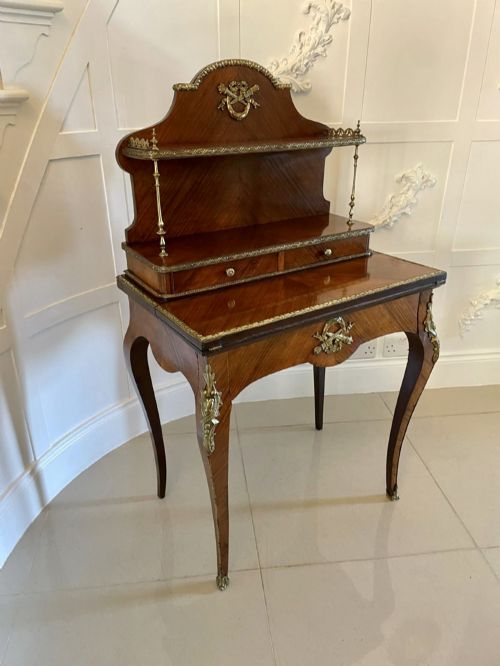
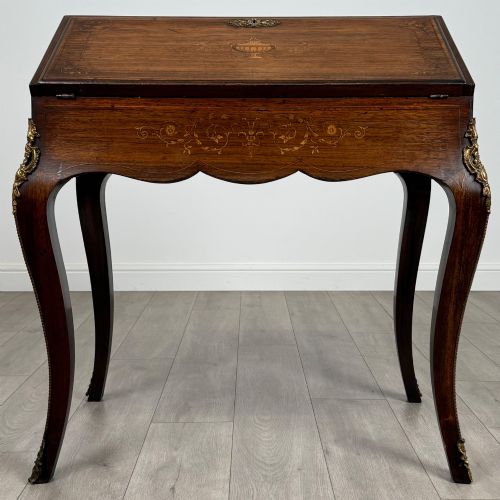
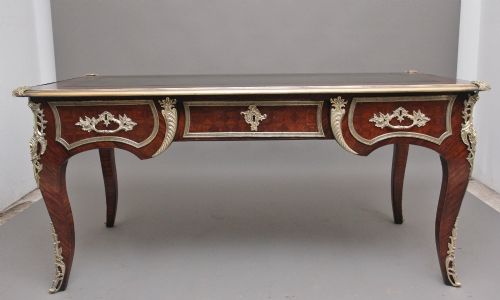
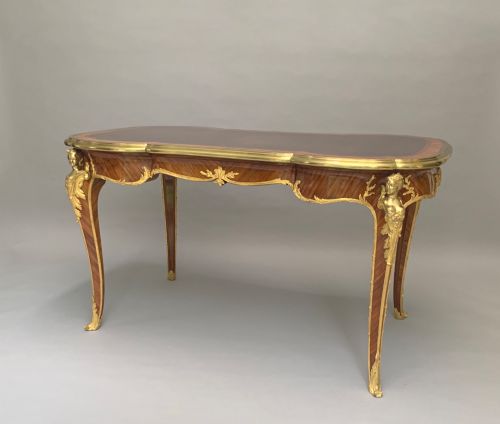
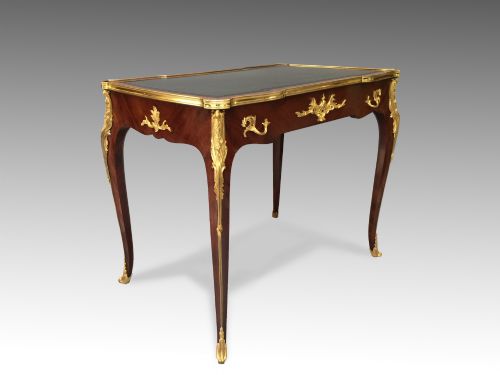
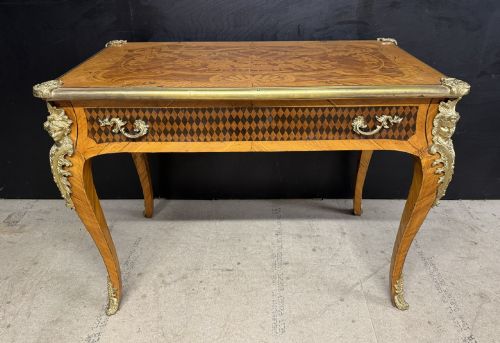
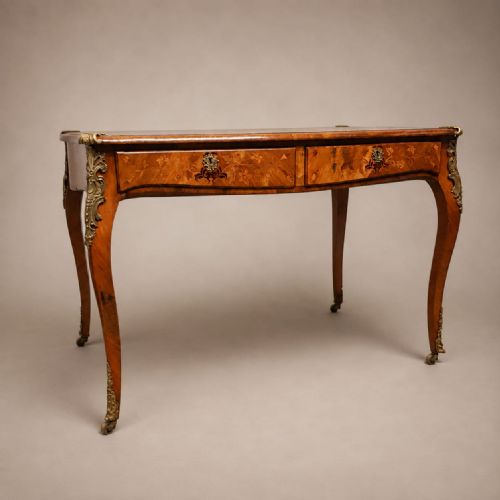
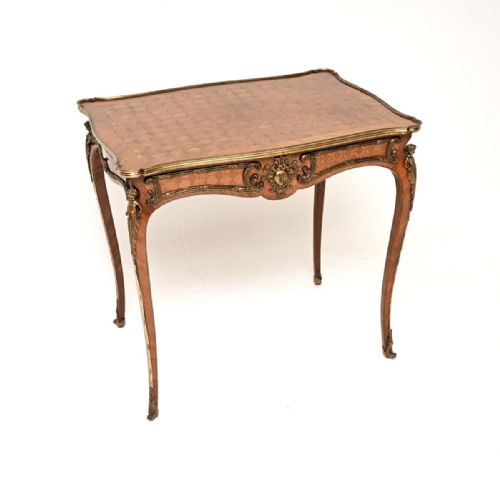
A french bureau table encompasses writing desks, bureau plats, and writing tables created across the nineteenth and early twentieth centuries. These pieces function as freestanding library tables or writing desks, originating largely from French workshops and embracing revivals of earlier court styles.
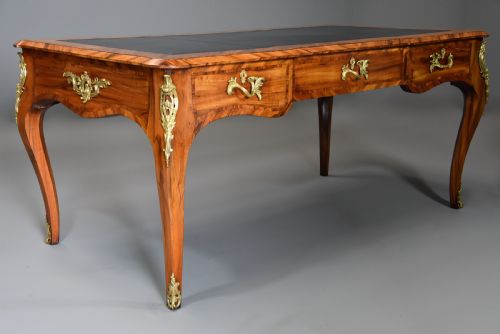
The most common examples on this page follow the Louis XV and Louis XVI revivals, alongside Napoleon III and Victorian interpretations. They range from compact bureau de dame forms to wide bureau plat tables designed for central room placement.
Makers and cabinet-makers working in Paris and provincial centres adapted traditional forms using exotic timbers and gilt metal mounts. Buyers encounter pieces intended for intimate correspondence as well as grander library furniture.
How they were made
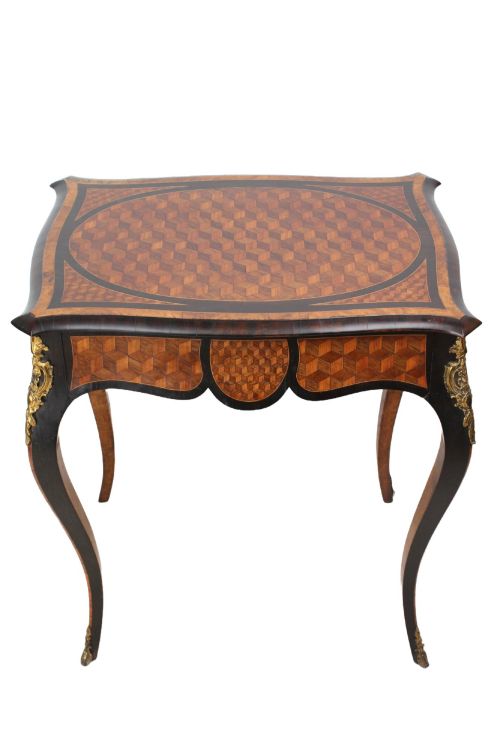
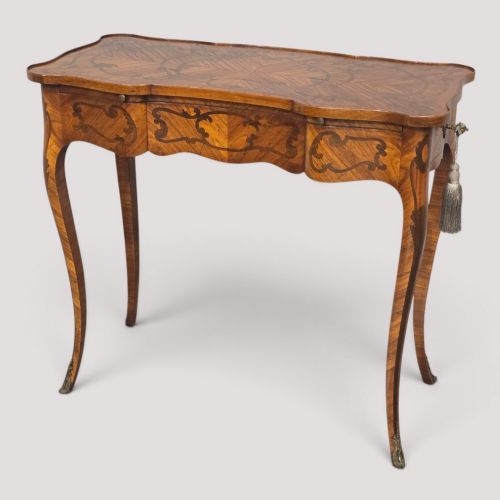
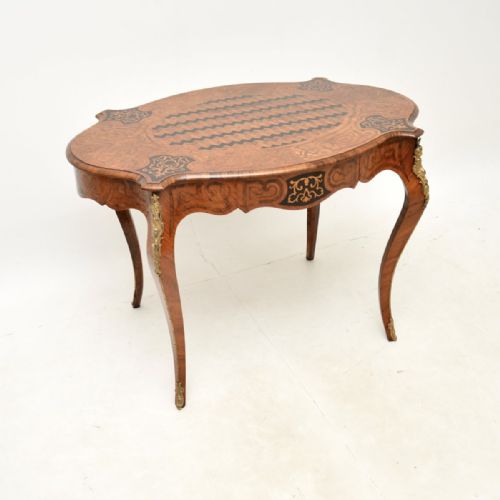
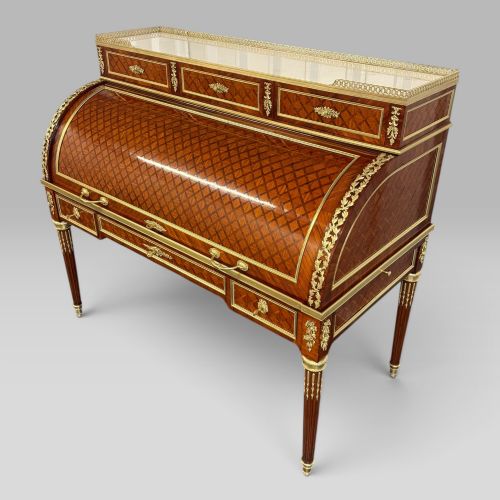
Cabinet-makers constructed carcass frames from timbers such as mahogany, walnut, or oak, before applying decorative veneers of kingwood, rosewood, and amboyna. Surfaces frequently display intricate marquetry or geometric parquetry patterns arranged across the top and drawer fronts.
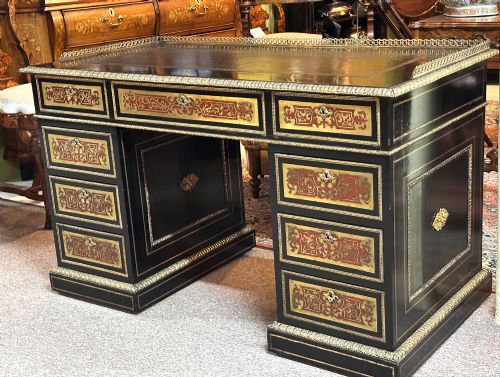
Ornamentation relied heavily on cast ormolu and gilt bronze mounts, which framed drawer edges and decorated cabriole legs. Brass inlay and boulle work appeared alongside inset panels of tooled leather on the writing surfaces.
What varies in quality
The standard of a piece depends heavily on the crispness of the ormolu casting and the precision of the underlying veneer work. Master workshops employed heavy, finely chased gilt bronze mounts rather than lightweight stamped brass, whilst timber grain was selected with deliberate care for symmetry and tone.
Construction methods also separate standard production from master craftsmanship, visible in the dovetailing of drawers and the integration of internal compartments. Pieces signed by prominent cabinet-makers demonstrate superior execution in every visible joint and decorative detail.
François Linke·Paul Sormani·Edwards and Roberts·Alphonse Tahan·JAS Shoolbred
The French Bureau Table Glossary
- Bureau plat
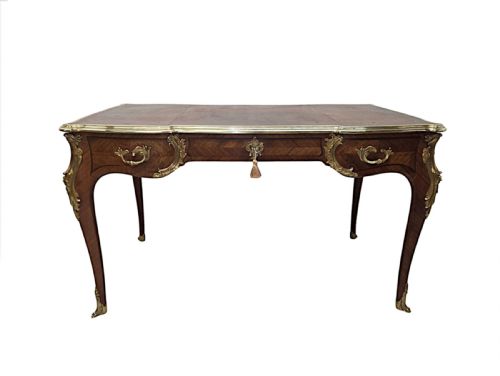
- A freestanding writing table fitted with one or more drawers across the frieze. These pieces were designed to stand away from walls in the centre of a room.
- Ormolu
- Gilded bronze used for decorative mounts and furniture trimming. The technique involves applying a gold amalgam to a bronze base and firing it.
- Marquetry
- The art of applying decorative veneer pieces to a structure to form picture designs. Cabinet-makers used contrasting timbers to create floral or abstract patterns.
- Parquetry
- Geometric wood inlay forming repeating patterns such as cubes or chequers. This technique appears frequently on nineteenth-century table tops.
- Bonheur du jour
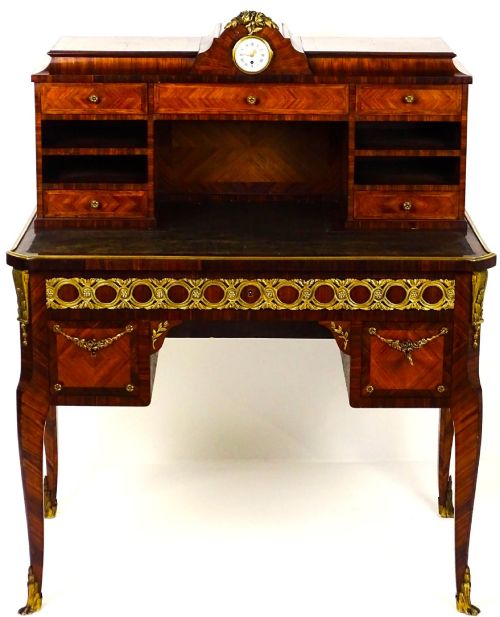
- A small ladies writing desk featuring a small superstructure with shelves or drawers above the main writing surface. These pieces gained popularity during the eighteenth century and remained favoured in later revivals.
French Bureau Table: Frequently Asked Questions
What is a bureau plat?
A bureau plat is a flat-topped writing table featuring drawers beneath the surface. It is designed to sit in the middle of a room rather than against a wall.
These tables often feature leather writing inserts and elaborate metal mounts along the frieze and legs.
How do I identify a bureau de dame?
A bureau de dame is a smaller ladies writing desk, often incorporating a raised superstructure with compartments for stationery. They were built for intimate domestic spaces.
Many examples from the nineteenth century adopt Louis XV or Louis XVI revival styles with delicate marquetry.
Where were these desks made?
The majority of these pieces originated in French workshops, particularly in Paris. Major cabinet-makers and retailers produced them for both domestic and international markets.
British makers also produced similar forms inspired by French cabinet-making traditions.
What woods were used?
Cabinet-makers utilised exotic and native hardwoods including kingwood, rosewood, walnut, mahogany, and amboyna. These timbers provided rich natural colours and distinct grain patterns.
Veneers were cut thin and arranged to create symmetrical geometric or floral designs across the furniture.