



French Bronze Mantel Piece
A french bronze mantel piece brings heavy nineteenth-century presence to a room, combining cast metal with marble, enamel and porcelain.
French Bronze Mantel Piece
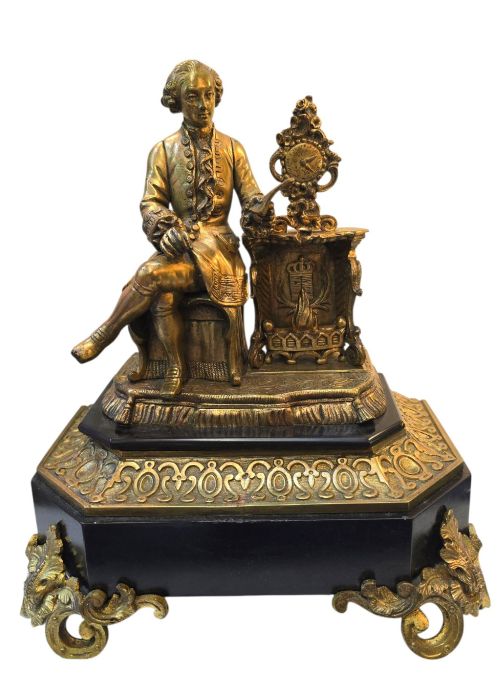
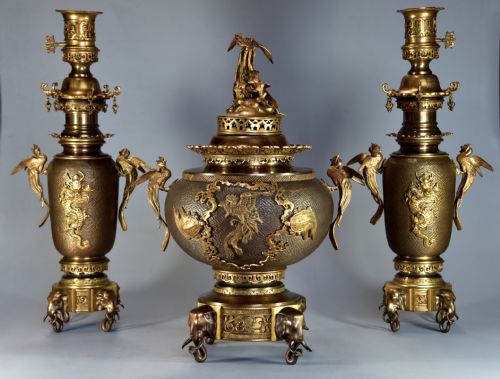
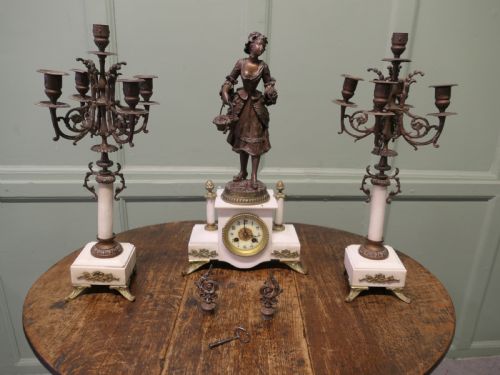
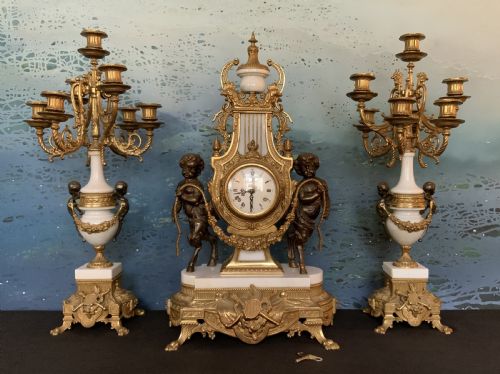
When you search for a french bronze mantel piece, you encounter clock garnitures, standalone sculptures, candlesticks and incense burner sets originating from nineteenth-century France. The most common form on this page is the three-piece clock set, which pairs a central mantel clock with matching side candelabras, urns or figurines. These decorative objects span revival styles including Louis XVI, French Rococo, Empire and Art Deco.
The materials paired with the metal define the category, with white, rouge, onyx and grey breccia marble frequently forming the structural bases and clock bodies. Porcelain elements from Paris and Sevres appear mounted in metal frames, alongside cloisonne enamel and glass details. Pieces range from figural bronzes depicting literary subjects and soldiers to architectural clock cases with ormolu mounts.
How they were made
Foundries utilised traditional lost-wax or sand-casting techniques to shape the bronze, followed by hand-chasing to refine the surface details of the metal. Gilt bronze and ormolu received a layer of gold amalgam or chemical gilding, contrasting with patinated bronze surfaces that showed darker tones. Marble bases were sawn, turned and polished to fit the metal mounts precisely.
Makers integrated mechanical clock movements into cast cases alongside enamel dials and glass bezels. Porcelain panels and cloisonne enamel sections were fired separately before being fitted into bronze and brass housings. Spelter also appears as a substitute metal in certain figural pieces, finished with patination to mimic bronze.
A charging bull sculpture in bronze brings unexpected momentum to a quiet line-up of stately mantel clocks and symmetrical candelabras.
What varies in quality
The crispness of the bronze casting and the depth of the subsequent hand-chasing determine the clarity of ornamentation and figure work. Superior sets display sharp relief in acanthus leaves, figures and architectural motifs, whereas lesser examples show softer, blurred contours from worn moulds. The weight and selection of the marble or porcelain components further separate standard production from finer workshop output.
The integration of the garniture components also dictates overall merit, as top-tier pieces maintain strict stylistic and material harmony across the central clock and its matching side pieces. Movement quality within the clocks, signed dials, and the retention of original fire gilding or patination elevate an object's standing.
Pierre-Augustin Caron de Beaumarchais·Isadore Bonheur·Jules Dalou·Susse Freres·Ferdinand Berthoud·Japy Freres
The French Bronze Mantel Piece Glossary
- Garniture
- A set of matching decorative objects designed to be displayed together on a mantelpiece or sideboard. A typical clock garniture includes a centre clock flanked by two matching candelabras, urns or vases.
- Ormolu
- Finely chopped high-karat gold applied to a bronze base using a mercury amalgamation technique. This historic process creates a durable, warm metallic lustre characteristic of luxury French decorative arts.
- Cloisonne
- An ancient technique for decorating metalwork objects using vitreous enamel held within raised metal wires. These colourful enamel panels appear frequently on nineteenth-century clock dials and cases.
- Spelter
- A zinc alloy frequently used as a cheaper alternative to bronze for figural sculptures and candlesticks. It is softer than bronze and generally finished with a metallic paint or patination to simulate heavier metal.
French Bronze Mantel Piece: Frequently Asked Questions
What is a clock garniture?
A clock garniture is a matched set consisting of a central mantel clock and accompanying side pieces such as candelabras or urns. These sets were designed to create a balanced decorative display on a fireplace mantel.
Manufacturers produced them in various materials including bronze, marble, porcelain and ormolu during the nineteenth and early twentieth centuries.
How do I identify the period?
Dating relies on the stylistic revival movements, material combinations, and maker signatures found on the clock movements or bronze bases. Nineteenth-century pieces often incorporate Louis XVI or Rococo revival motifs alongside specific marble types.
Later pieces from the early twentieth century shift into Art Deco geometries and alternative metallic finishes like silver plating.
What is the difference between bronze and spelter?
Bronze is a heavy, durable copper alloy that accepts fine chasing and retains deep patination or gilding over centuries. Spelter is a softer zinc alloy used to manufacture more affordable figural pieces and candlesticks.
Objects cast in spelter are lighter in weight and tend to show more surface wear on exposed high points.
How do I care for marble and bronze?
Cleaning requires only a soft, dry cloth to remove dust from the bronze surfaces and marble bases without disturbing the patination or gilding. Moisture and chemical polishes should be avoided entirely to prevent damage to the historic metal finishes.
Mechanical clock movements require professional servicing by a horologist to maintain proper function.