



French Bronze Equestrian Statue
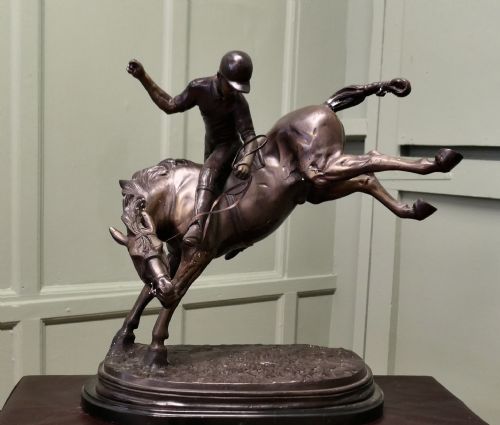
A french bronze equestrian statue brings the movement and power of horse and rider into a room, forged in metal during the nineteenth and twentieth centuries.

French Bronze Equestrian Statue
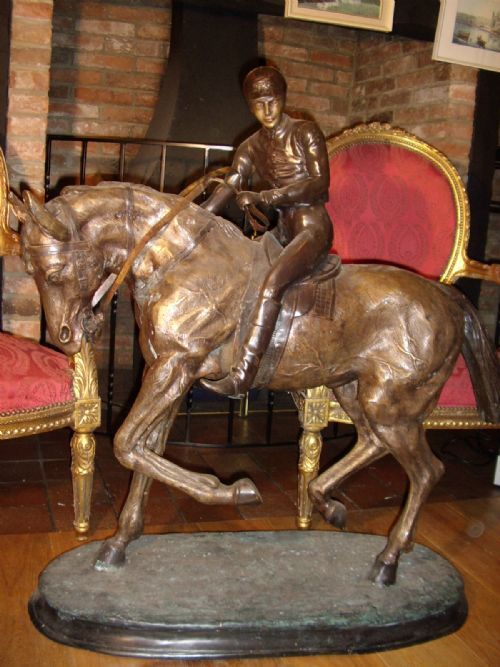
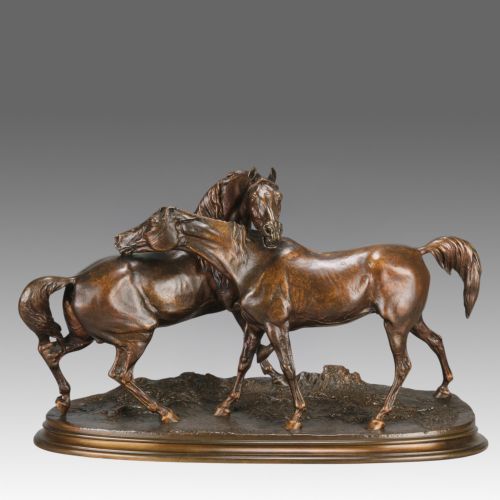
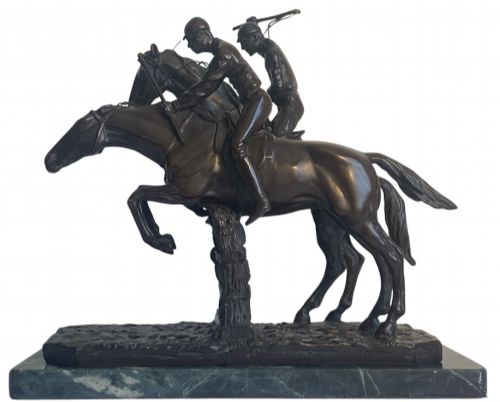
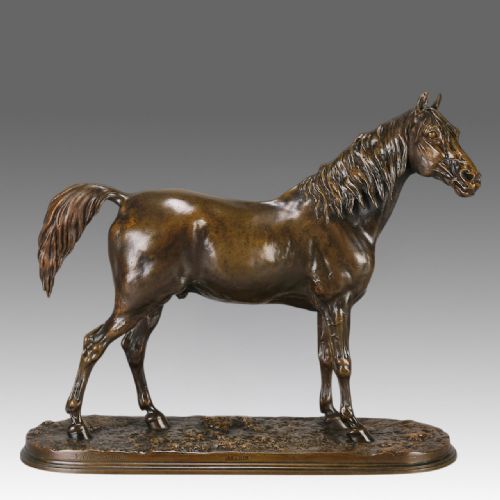
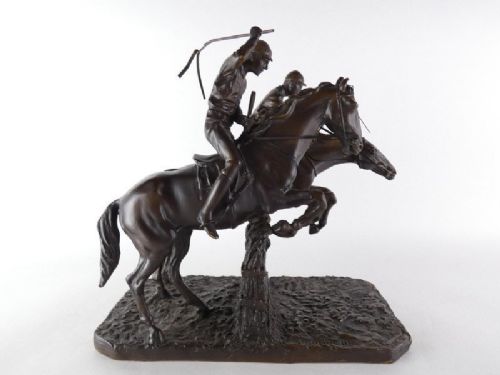
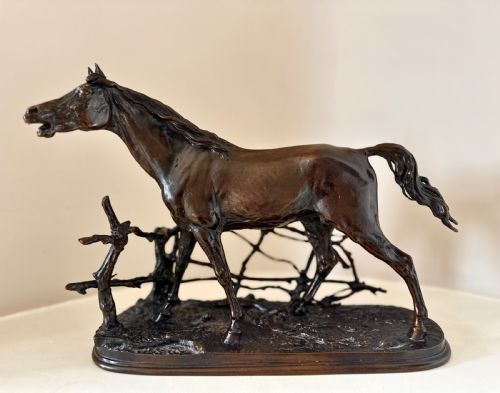
A french bronze equestrian statue captures horses and riders in dynamic motion, ranging from racing thoroughbreds and hunting scenes to historical figures on horseback. The pieces on this page frequently emerge from the nineteenth century, reflecting the detailed observation of the French Animalier school alongside Neoclassical and Empire styles.
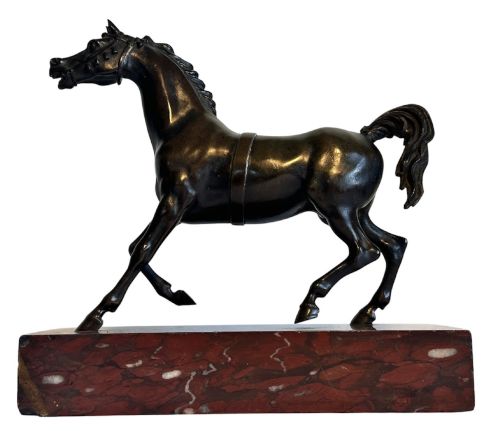
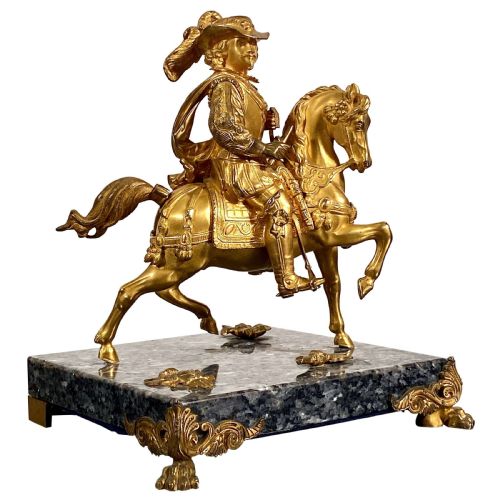
Makers often mounted these metal figures on bases of marble, such as sienna or green marble, or incorporated them into functional objects like mantel clocks. Subjects span from iconic leaders like Napoleon to Arab stallions and racing scenes, modelled with careful attention to the anatomy of the animal.
How they were made
Foundries produced these works using traditional metal casting techniques, capturing fine details in the muscle and mane of the horse. The resulting metal forms received various finishes, including patinated bronze, gilt bronze, and ormolu.
Many of the heavier compositions are anchored to stone plinths, combining metalwork with polished marble bases to support the weight of the sculpture.
What varies in quality
The quality of the patination and the density of the chosen base material, such as finely figured marble, also distinguish standard commercial editions from more ambitious foundry productions.
Pierre Jules Mene·Isidore Jules Bonheur·Alfred Dubucand·Charles Crozatier·Pierre Lenordez·Paul Joseph Gayrard
The French Bronze Equestrian Statue Glossary
- Animalier
- A nineteenth-century artistic movement dedicated to the realistic portrayal of animals, particularly horses, dogs, and wildlife. Sculptors in this tradition studied live subjects closely to render natural movement.
- Patina
- The surface coloration and sheen developed on bronze over time or applied chemically by the foundry. This finish enhances the depth of the metal and highlights fine details.
- Ormolu
- Gilt bronze mounted or applied as an ornament, popular in decorative arts and clockmaking. The technique involves applying finely ground gold to a bronze base.
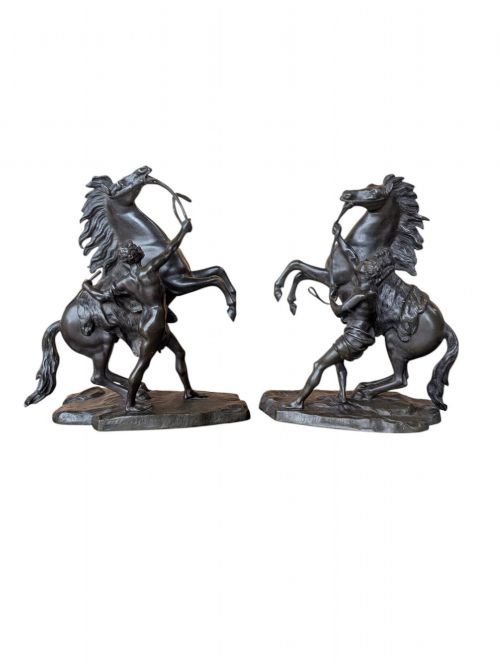
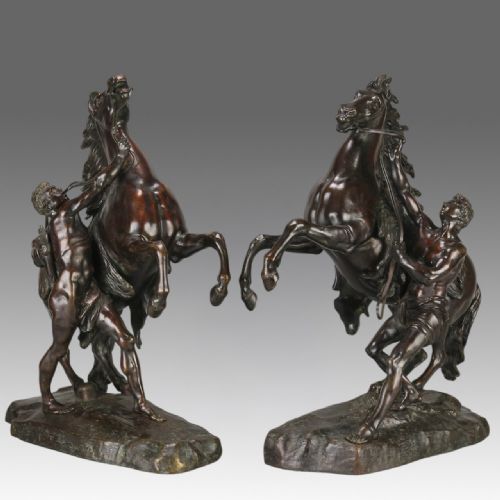
- Marly Horses
- Large sculptural groups depicting rearing horses restrained by grooms, originally carved by Guillaume Coustou for the Château de Marly. Cast bronze reductions of these famous monuments became popular in the nineteenth century.
French Bronze Equestrian Statue: Frequently Asked Questions
How do I identify a nineteenth-century casting?
Examine the weight, the depth of the metal work, and the characteristics of the patina. Nineteenth-century pieces often display hand-chased surface details that soften the raw cast.
Look closely at the underside and the mounting screws for signs of age, as older constructions use specific joinery methods distinct from modern reproductions.
Where should I place a heavy marble-based statue?
Position the piece on a sturdy, level surface such as a heavy sideboard, desk, or dedicated console table. Because these sculptures combine dense metal with solid marble bases, they require strong support.
Keep them away from direct heat sources and strong sunlight to protect the patination and the polished stone.
How do I clean a bronze sculpture safely?
Dust the surface regularly with a soft, dry cloth or a gentle brush to prevent particle buildup. Avoid using water, household cleaners, or polishes, which can strip the original patina.
Professional conservation care is recommended if the metal requires deeper cleaning or restoration.