
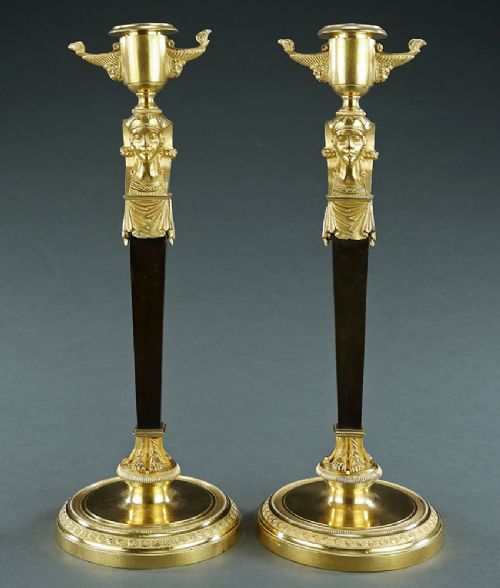
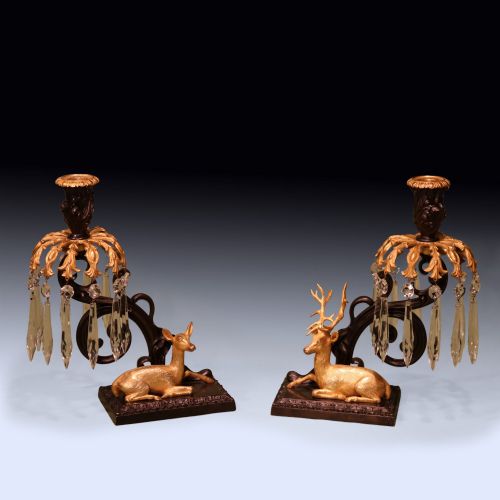
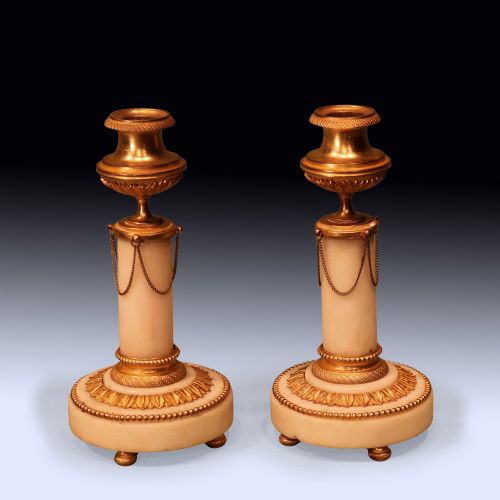
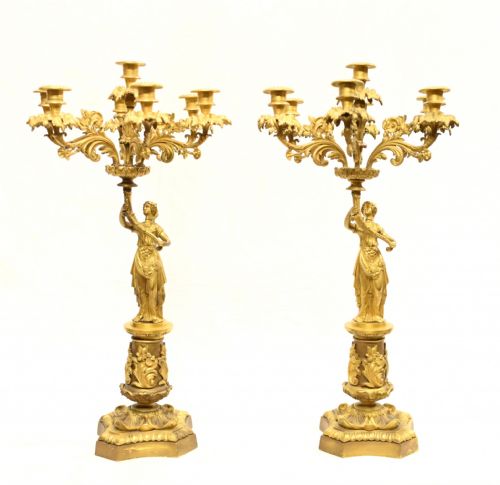
French 19th Century Candlesticks
French 19th century candlesticks combine cast metals and stone bases to bring sculptural weight and warm candlelight to a room.
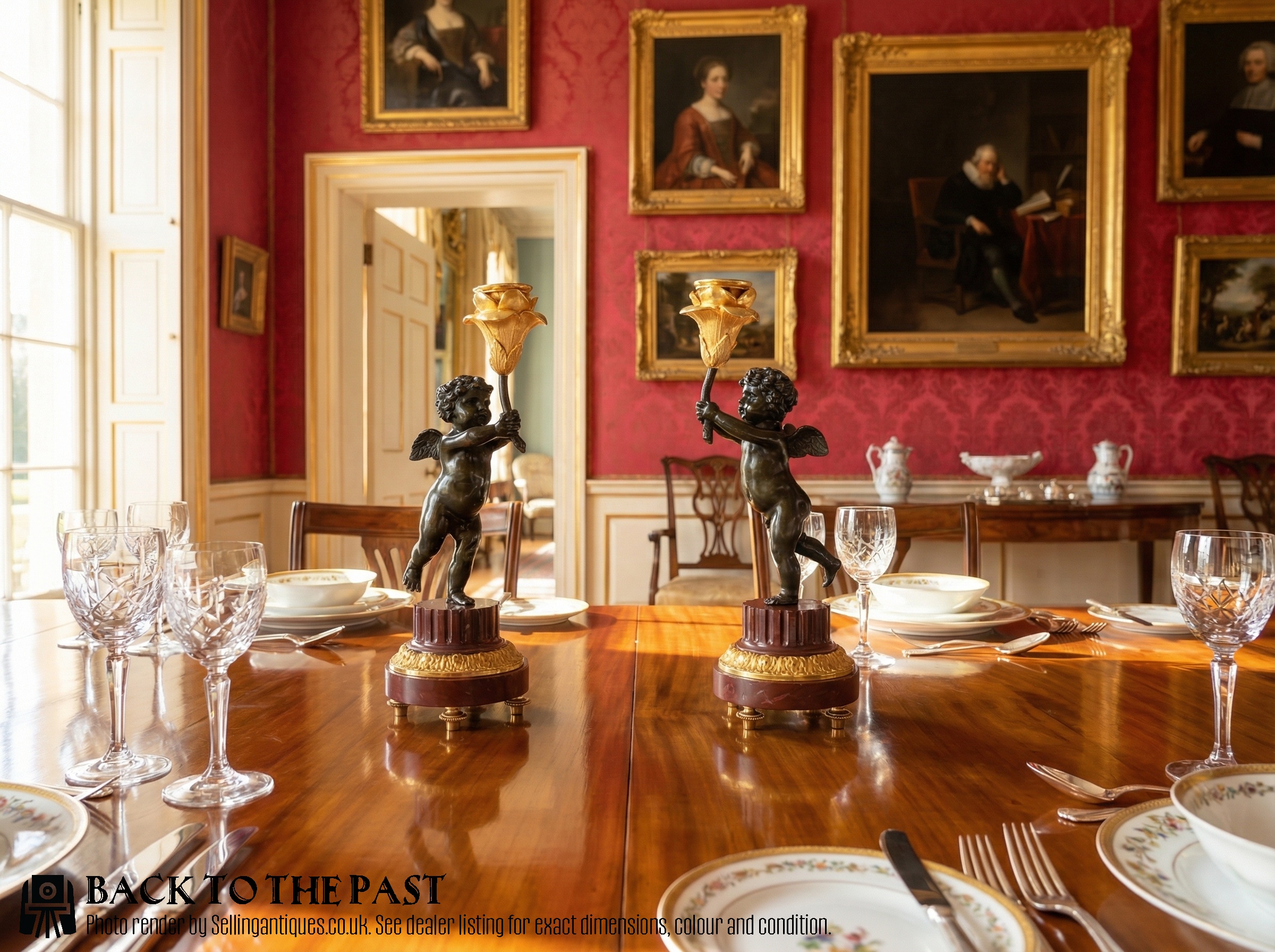
French 19th Century Candlesticks
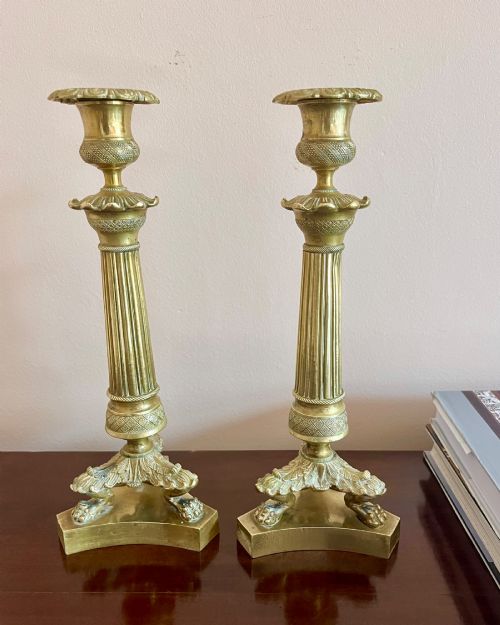
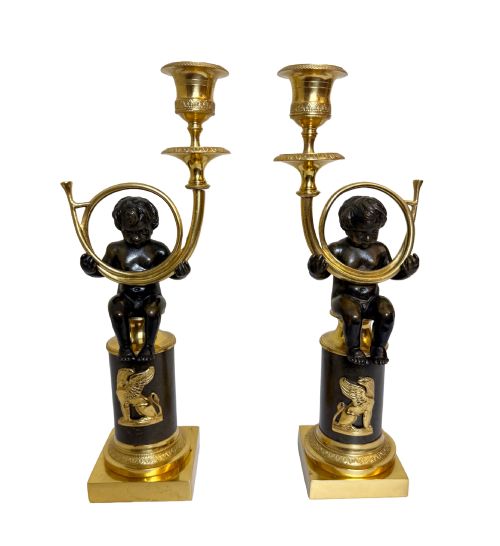
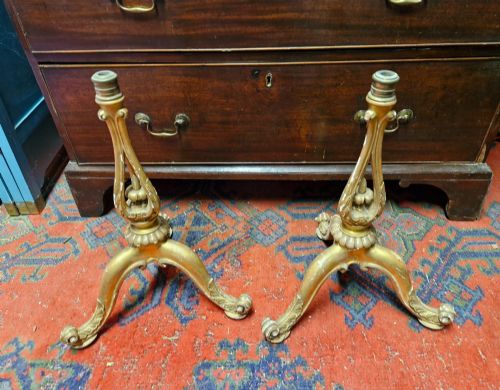
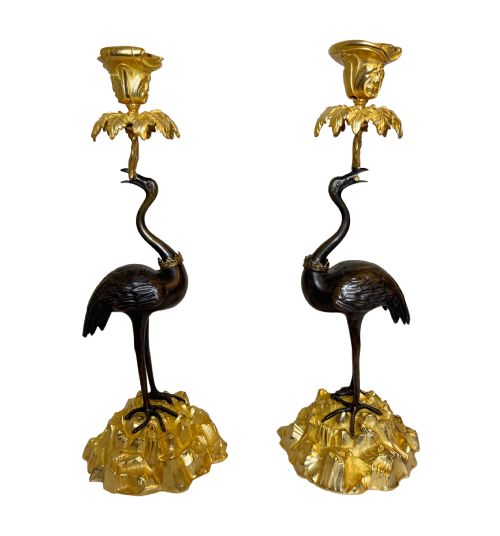
French 19th century candlesticks encompass functional lighting and decorative objects produced in various styles across the 1800s. Buyers encounter pairs fashioned as classical columns, figural groups, or structural candelabra designed for mantelpieces and tables.
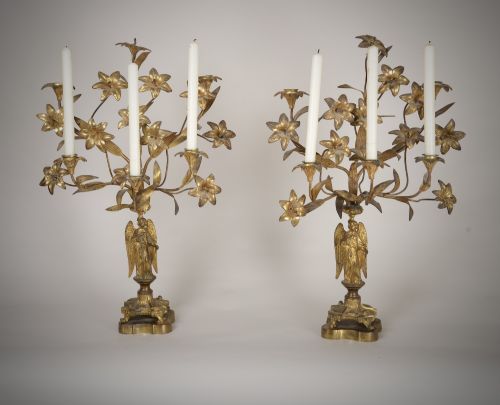
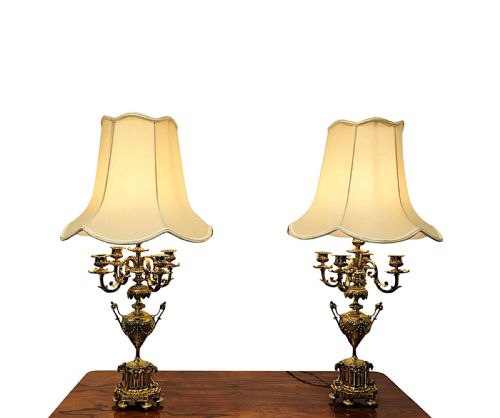
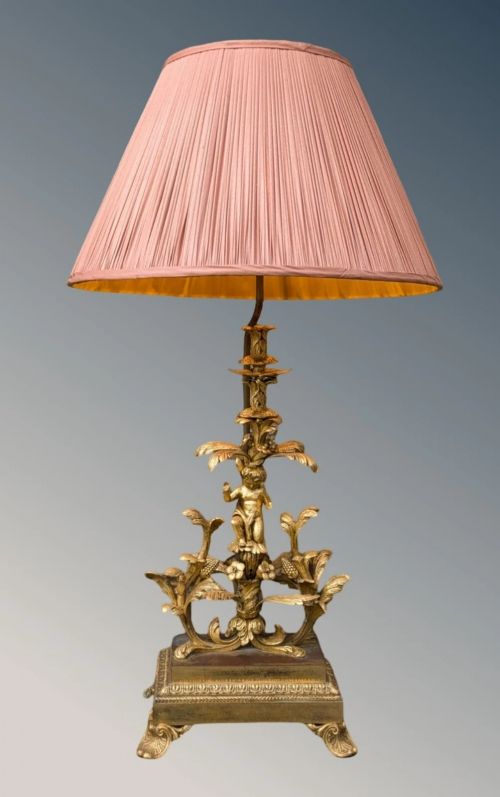
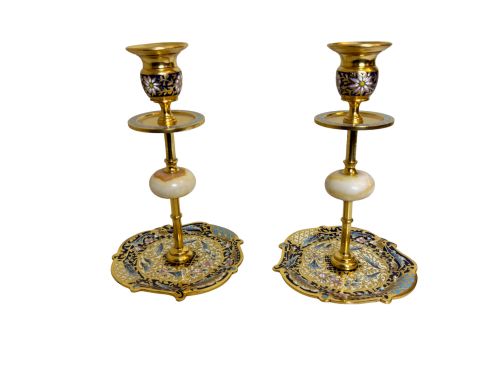
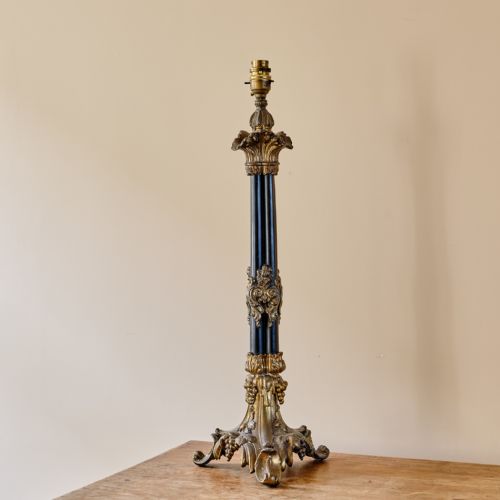
The selection ranges from restrained Empire and Regency designs to ornate Rococo Revival and Champleve pieces. Many examples incorporate multi-branch configurations or marble plinths, while others show later conversions into table lamps.
How They Were Made
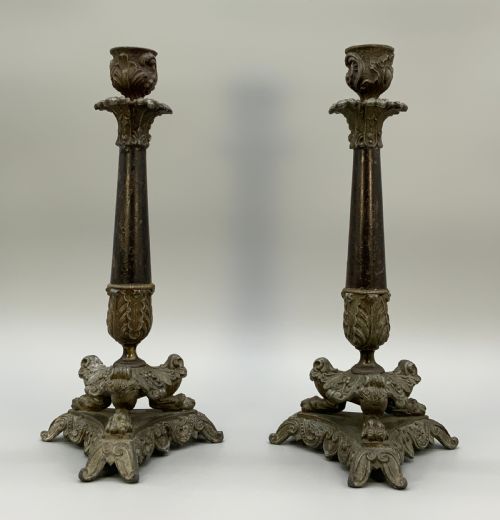
Foundry workers utilised bronze, brass, and cast metal, often applying fire-gilding to create ormolu surfaces alongside patinated dark bronze. These metallic elements were cast in sections, chased by hand to sharpen details, and assembled with threaded screws or pins.
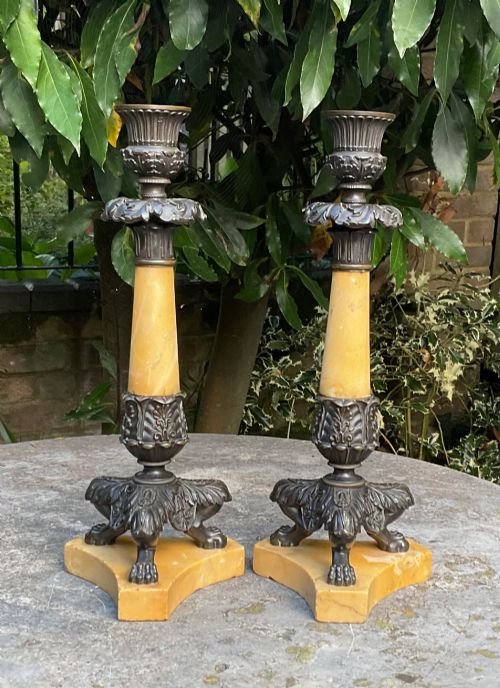
Marble and onyx formed heavy supportive bases, frequently turned on a lathe and mounted with bronze bezels or feet. Stonework and glass shades added textural contrast to the polished and gilded metalwork.
Listings feature materials such as champleve, onyx, marble, and patinated bronze across 19th-century French production.
What Varies in Quality
Material selection dictates overall heft and prestige, with dense marbles and heavy patinated bronze marking superior production. The structural integrity of multi-part assemblies and original matching components also separate standard production from exceptional pieces.
Henri Picard
The French 19th Century Candlesticks Glossary
- Ormolu
- Gilded bronze produced by applying a mercury and gold amalgam to a bronze base and heating it. This technique creates a durable, warm golden finish characteristic of luxury French metalwork.
- Patinated bronze
- Darkened metallic surface achieved through chemical treatment or natural ageing. It provides a stark contrast against bright ormolu mountings.
- Champleve
- Enamelling technique where troughs are dug into a metal surface and filled with vitreous paste before firing. It creates colourful decorative patterns across the body of the object.
- Retour d'Egypte
- Design style popular in early 19th-century France influenced by Napoleonic campaigns. It incorporates motifs such as sphinxes, pharaohs, and lotus leaves.
- Candelabra
- Branched lighting fixture designed to hold multiple candles simultaneously. They often share the same decorative vocabulary as single candlesticks from the same period.
French 19th Century Candlesticks: Frequently Asked Questions
How do I identify French Empire style?
French Empire pieces rely on strict symmetry, classical architectural motifs, and military symbols derived from antiquity. They often feature dark patinated bronze paired with bright ormolu mounts.
Footed columns, sphinxes, and laurel wreaths dominate this aesthetic, reflecting the neoclassical tastes of the early 19th century.
Were these candlesticks converted to lamps?
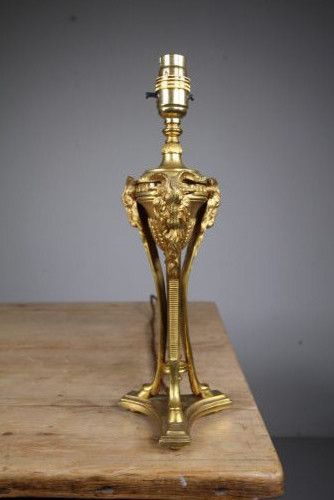
Many surviving examples have undergone conversion to electricity by having cords threaded through the central stem or burner. This adaptation allowed antique bronze and ormolu bodies to serve modern lighting needs.
Converted pieces retain their original sculptural bases and decorative motifs while accommodating modern wiring.
What is the difference between ormolu and brass?
Ormolu consists of mercury-gilded bronze, showing a deep golden lustre and substantial weight. Brass is a copper and zinc alloy that presents a brighter yellow tone throughout its entire structure.
Cast brass lacks the applied gold surface layer found on genuine ormolu pieces from the 19th century.
How should I clean antique ormolu?
Maintenance requires only gentle dusting with a soft, dry cloth to protect the fragile historic gilding. Moisture and abrasive cleaners strip away the gold layer and expose the underlying bronze.
Preserving the original surface sheen maintains the historical integrity of the piece.