




Antique Marble Candle Stands
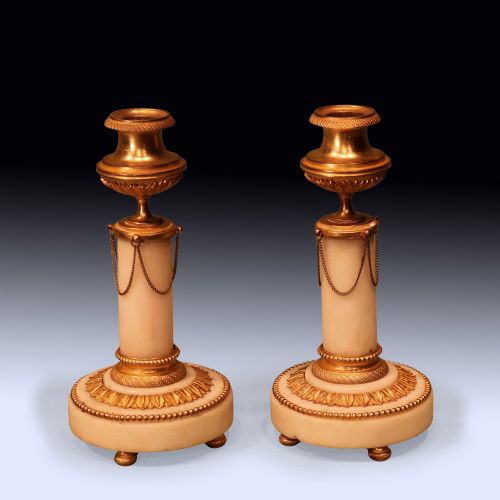
These antique marble candle stands combine heavy stone bases with cast metalwork, bringing structural weight and classical proportion to a room.
Antique Marble Candle Stands
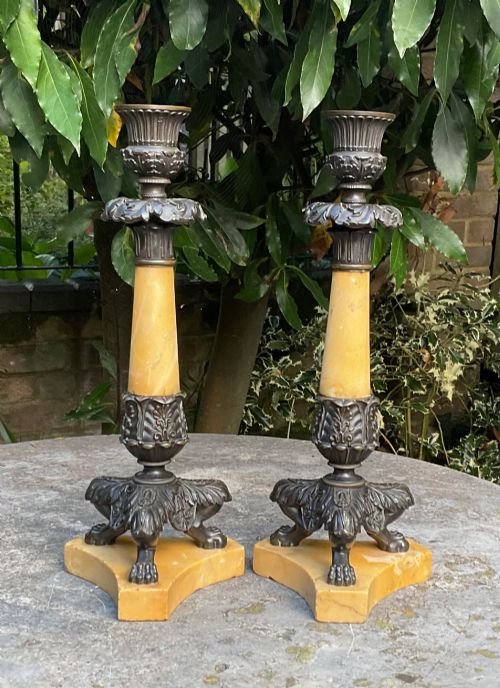
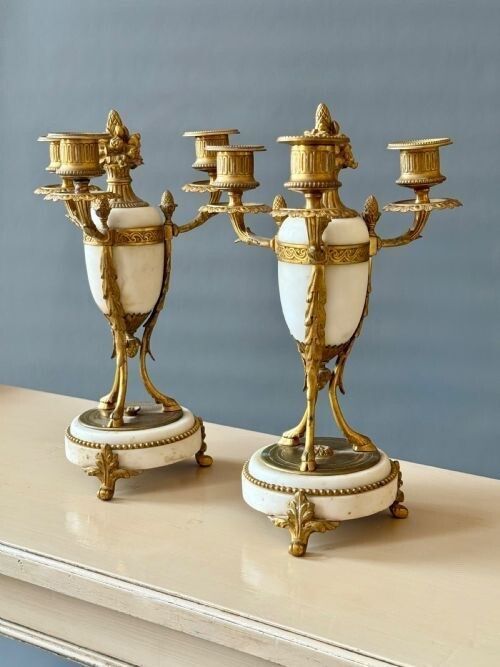
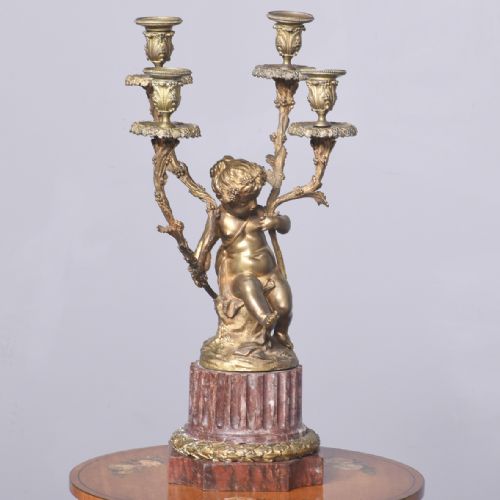
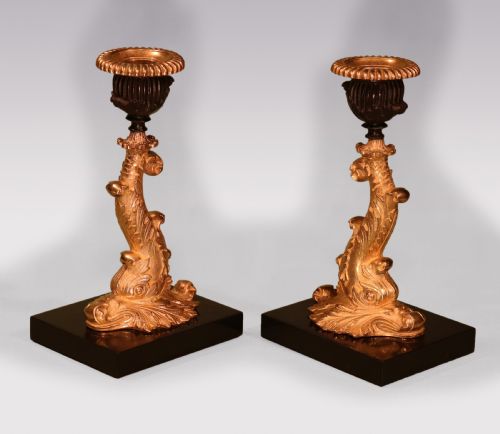
Antique marble candle stands appear in forms ranging from single candlesticks to multi-arm candelabra, frequently offered in matched pairs. The selection centres heavily on nineteenth century examples, spanning the Regency, Victorian, and Georgian periods alongside French Empire and Louis XVI styles.
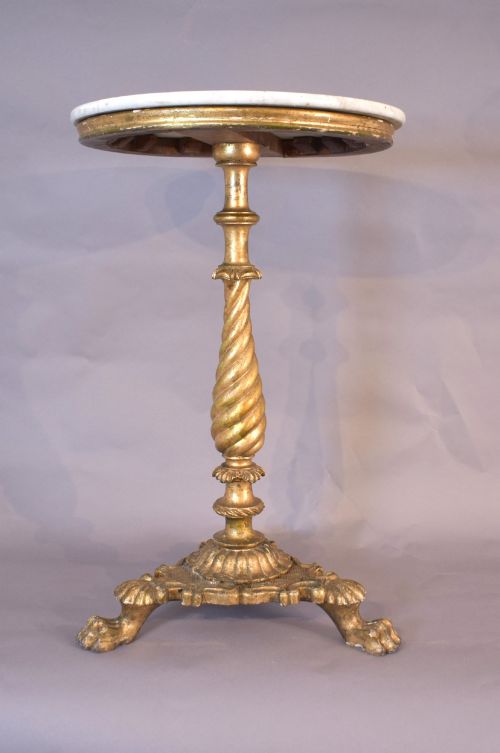
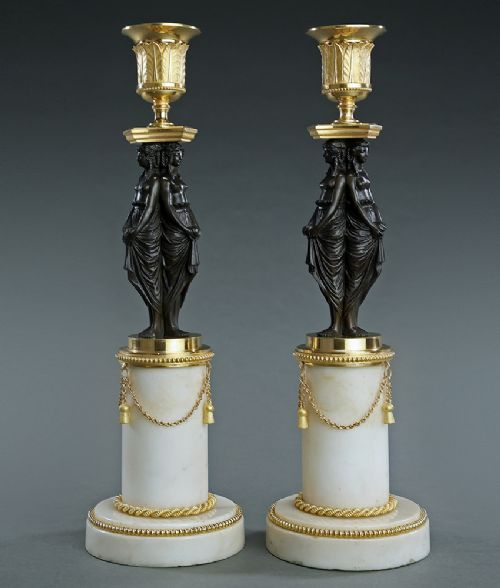
Most pieces combine white marble or porphyry bases with patinated bronze, gilt bronze, or ormolu mounts, though variants with Ashford marble also occur. Alongside standard candle holders, the inventory encompasses related stone-topped occasional and side tables which share the same neoclassical design vocabulary.
Materials and construction
Foundries shaped the metal components through bronze casting and brass work, frequently applying fire gilding or ormolu to create contrasting metallic surfaces against dark patinated bronze. Stone bases were turned and polished, while figures and decorative elements like putti, caryatids, and dolphins were chased by hand.
Makers combined these cast metal figures and candle sockets directly with turned marble columns and plinths, securing them with internal threaded rods. The resulting assemblies unite cold, polished mineral surfaces with warm, detailed metalwork.
Evaluating quality and execution
The choice of marble and the precision of its turning also set pieces apart, with unblemished mineral figures and rich ormolu finishes marking the upper tier of production.
The Antique Marble Candle Stands Glossary
- Ormolu
- Gilt bronze produced by applying a mercury-gilding amalgam to cast bronze, creating a durable golden surface. This technique was widely used in French Empire and nineteenth-century decorative metalwork.
- Porphyry
- An igneous rock with large crystals embedded in a fine-grained groundmass, prized for its deep purple or red colour. It provides an exceptionally hard, decorative base for high-status candelabra.
- Caryatid
- A sculpted female figure serving as an architectural support in place of a column. These figures frequently appear supporting the candle nozzles on neoclassical stands.
- Ashford marble
- A polished black limestone inlaid with coloured mineral specimens to create floral or geometric patterns. It originates from Derbyshire and characterises specific Victorian decorative pieces.
Antique Marble Candle Stands: Frequently Asked Questions
How do I clean antique marble bases?
Dust the stone gently with a dry, soft cloth to prevent scratching the polished surface. Avoid abrasive cleaners and harsh chemicals, which strip the natural finish.
For stubborn marks, use a damp cloth with mild soap, then dry the marble immediately with a clean towel.
Are these stands suitable for everyday use?
These pieces function well with modern tapers, provided the candles fit securely into the metal sockets. Metal drip pans catch wax before it reaches the stone base.
Due to their weight and historic nature, place them on stable surfaces away from high-traffic areas.
How can I tell Regency from Victorian pieces?
Regency items generally display strict neoclassical proportions, restrained use of ormolu, and patinated bronze figures inspired by ancient models. They often date from the early nineteenth century.
Victorian pieces tend toward more ornate casting, varied metal combinations including brass, and sometimes incorporate regional stones like Ashford marble.
Why are most candle stands sold in pairs?
Makers originally designed these items to flank mantelpieces, sideboards, or mirrors in symmetrical room schemes. Surviving pairs retain their matching decorative program and proportions.
Single stands do appear, but matched pairs represent the standard domestic arrangement of the period.