



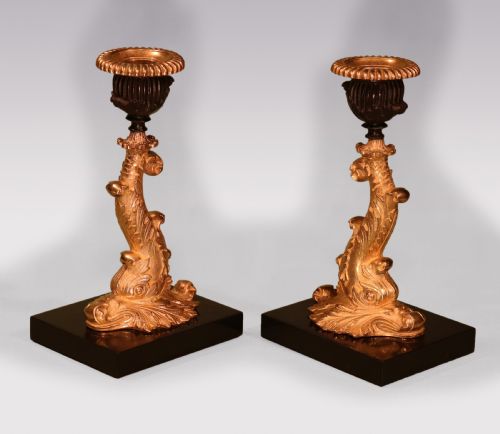


Classical Marble Candle Holders
Classical marble candle holders bring architectural gravity to a room, pairing cold stone with warm cast metal in forms drawn from antiquity.
Classical Marble Candle Holders
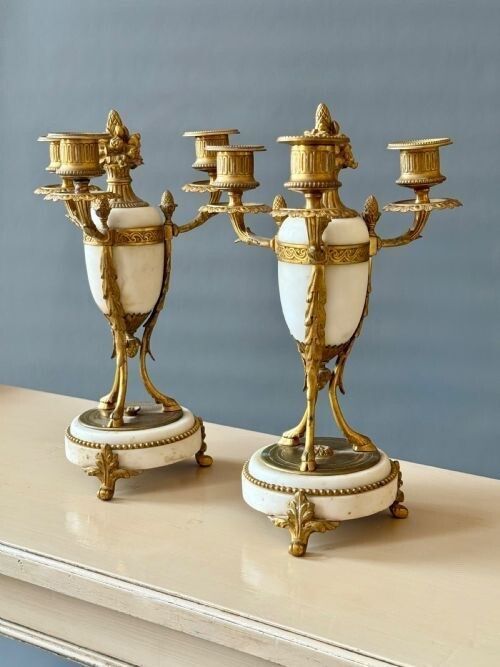
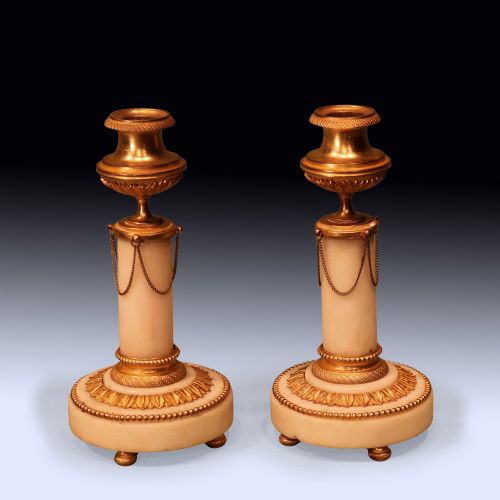
Classical marble candle holders combine heavy stone bases with cast metal stems and sconces, taking the form of candlesticks and multi-branched candelabras. These pieces draw heavily on Regency, French Empire, and Louis XVI styles, incorporating Neoclassical motifs into domestic lighting.
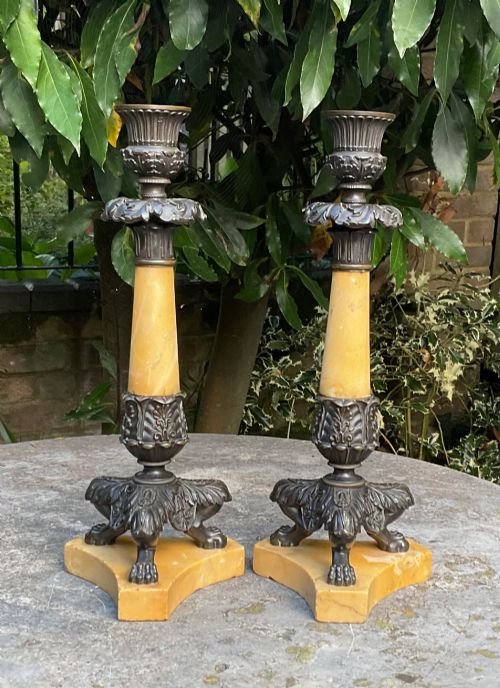
The objects on this page span the 19th century, featuring Georgian and Victorian interpretations alongside French 19th-century workshop output. Buyers will frequently encounter pairs resting on white marble or patinated stone, often decorated with figural bronzes.
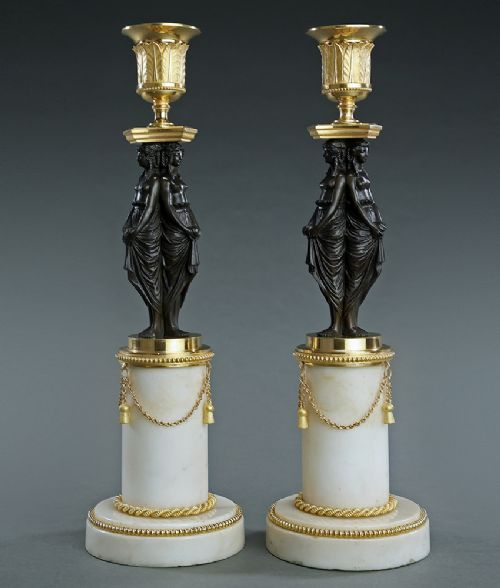
Many examples utilise mythological figures, puttis, cherubs, or caryatids to support the candle sockets above circular or square marble plinths. The visual weight relies entirely on the contrast between pale marble and dark patinated bronze or bright ormolu.
How they were made
The stone components were turned on lathes or carved by hand to create smooth columns, plinths, and urn shapes from solid white marble. These stone bodies provide the substantial weight required to balance tall metal branches.
Metal elements such as bronze, brass, and gilt bronze were produced using lost-wax or sand-casting methods, then chased with fine detail. Artisans applied fire gilding or ormolu finishes to the bronze, creating rich contrasting highlights against the cool marble.
Dolphin bases and winged cherubs ensure your dining room lighting comes with a side of mythological mythology.
What varies in quality
The selection and turning of the marble itself reveals differences in workshop standards, with superior examples utilising uniform stone free of heavy internal fractures. The integration between the metal mounts and the stone base also shows the maker's hand, requiring tight, secure mechanical joints without visible gaps.
Dugourc·Thomas Hope
The Classical Marble Candle Holders Glossary
- Ormolu
- Gilt bronze produced by applying a mercury and gold amalgam to a bronze casting and heating it to drive off the mercury. This technique creates a durable, golden surface frequently seen on Regency and French Empire lighting.
- Patinated bronze
- Bronze that has been chemically treated to alter its surface colour, usually resulting in rich dark browns or near-black tones. This dark finish provides a stark visual contrast against white marble bases.
- Caryatid
- A sculpted female figure serving as an architectural support in place of a column. These figures frequently appear on the stems of Neoclassical and Louis XVI style candlesticks.
- Candelabra
- A branched candlestick designed to hold multiple candles simultaneously. These larger fixtures often incorporate central figures or ornate arms extending from a main marble pedestal.
Classical Marble Candle Holders: Frequently Asked Questions
How do I clean marble and bronze candle holders?
Dust the surfaces gently with a soft, dry brush to prevent dirt accumulation in the carved details of the stone and metal. Avoid using harsh chemical cleaners or water on gilt and patinated bronze, as moisture can strip historic finishes.
Marble can be wiped down with a barely damp cloth and dried immediately. Take care around porous stone and applied gilding during maintenance.
Where should I place these in a room?
These pieces suit mantelpieces, sideboards, and console tables where their vertical height and reflective metal surfaces can catch the light. Placing a pair symmetrically creates a strong focal point on a fireplace or chest.
Keep them away from direct heat sources and high-traffic areas where they might get knocked, due to the heavy weight of the stone bases.
Are these pieces functional for daily use?
Many historical candle holders remain entirely functional for standard taper candles, provided the sockets are clean and stable. Modern users often place them on dining tables or sideboards for evening ambiance.
Ensure any candle used fits securely within the metal cup to prevent wax dripping onto the delicate bronze or marble below.