

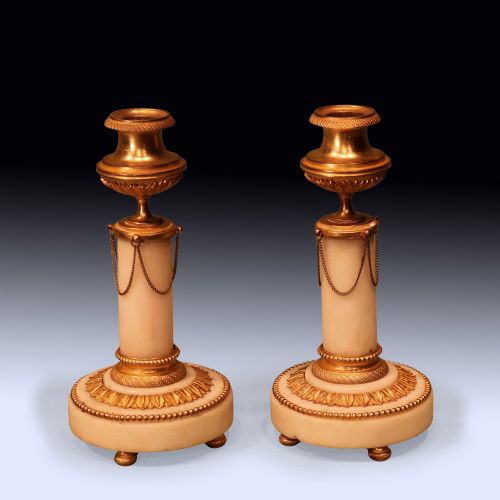


Brass Marble Candlestick Pair
These brass marble candlestick pair examples combine cast metal and carved stone to light a room with classical weight.
Brass Marble Candlestick Pair
A brass marble candlestick pair brings together heavy metalwork and polished stone bases across domestic interiors. These matched items serve both as functional lighting devices and as decorative objects for mantels and side tables.
The versions most commonly met on this page date from the nineteenth century, including Georgian, Victorian, and French periods. They frequently incorporate styles such as Louis XVI, Neoclassical, and French Empire alongside simpler Victorian brass designs.
How they were made
Metal components were cast in brass, bronze, or ormolu, sometimes employing parcel gilding or patination to create surface contrast. These metal sections are mounted directly onto bases formed from white marble, green marble, or green onyx.
Many examples integrate multi-branch candelabra formats or figural elements like cherubs alongside the primary stone and metal structures. The combination relies on secure mechanical joinery to attach the heavy metal sconces and stems to the stone plinths below.
Brass Marble Candlestick Pair Retail Price Guide 2026
Typical asking prices for brass marble candlestick pair among the pieces listed under this phrase on Sellingantiques today, from the lower quarter to the upper quarter. They describe what is for sale here now, not the wider market.
Several nineteenth-century pairs include small bronze cherubs perched atop marble bases, holding aloft multi-branch candle arms with cheerful domestic presence.
What varies in quality
The refinement of the casting dictates the visual success of the piece, where crisply chased details on bronze or ormolu elements separate superior work from softer production. Heavier, more deeply carved marble bases provide better physical stability and denser mineral grain than simpler alternatives.
Proportion and the harmony between the metalwork and the stone plinth define the distinction across the range. Pieces that retain their original mercury gilding or purposeful patination demonstrate a higher tier of historic manufacture.
The Brass Marble Candlestick Pair Glossary
- Ormolu
- A gilded bronze technique utilising an amalgam of gold and mercury applied to cast bronze. This finish produces a deep, warm metallic lustre characteristic of nineteenth-century French luxury goods.
- Candelabra
- A branched candlestick holding multiple candles on a single base. These larger lighting pieces often feature removable upper branches to convert into simpler candlesticks.
- White Marble
- A fine-grained metamorphic rock quarried for classical sculpture and architectural mounts. It provides a bright, reflective base that contrasts with dark bronze or brass metalwork.
- Louis XVI Style
- A neoclassical design vocabulary characterised by straight lines, symmetry, and classical motifs such as urns and foliage. This aesthetic heavily influenced nineteenth-century French metalwork.
Brass Marble Candlestick Pair: Frequently Asked Questions
Are these wired for electricity?
Many pairs retain their original configuration for wax candles, while some listings note conversions into table lamps. The presence of electrical fittings depends entirely on past alterations rather than original manufacture.
Buyers should inspect the specific descriptions to determine whether the pieces remain set up for candles or if wiring has been introduced through the central stem.
How do I clean marble bases?
Marble requires gentle maintenance using a soft, dry cloth to remove dust without scratching the polished surface. Water and chemical cleaners should be avoided because they can stain porous stone varieties.
For the metal components, a dry microfibre cloth prevents the accumulation of grime without disturbing historic patination or delicate gilding.
What is the difference between brass and ormolu?
Brass is an alloy of copper and zinc cast into solid forms and polished to a bright yellow finish. Ormolu consists of bronze coated with a gold amalgam layer, yielding a richer, deeper golden tone associated with high-end nineteenth-century objects.
While brass tends to be heavier and more utilitarian, ormolu functions primarily as a decorative surface treatment on French decorative items.
How do I date these pieces?
Dating relies on stylistic clues, casting methods, and the specific type of marble used in the base. Nineteenth-century pieces often reflect revival movements like Louis XVI or French Empire aesthetics.
Examining the construction of the fixings underneath the stone base also provides evidence regarding the period of assembly.