


Freestanding Vanity Table
A freestanding vanity table offers dedicated personal grooming space with adjustable mirrors and fitted surfaces.
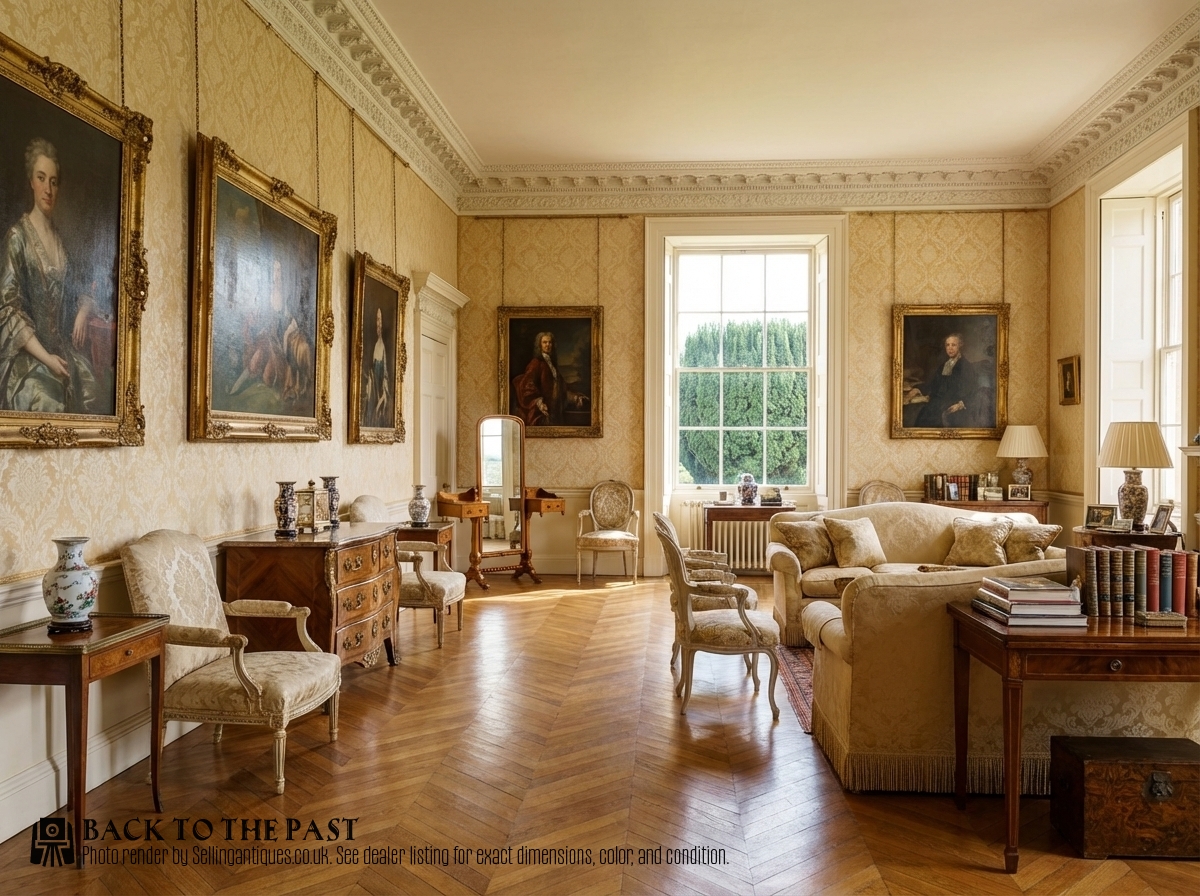
Freestanding Vanity Table
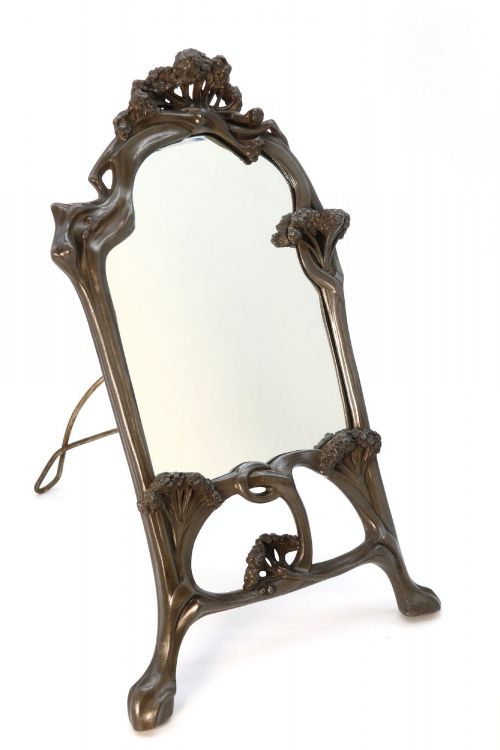
A freestanding vanity table or associated dressing mirror brings functional elegance to personal grooming spaces. Buyers seeking a freestanding vanity table encounter Victorian, Edwardian, and Art Deco designs that utilise timber frames and pivoting glass.
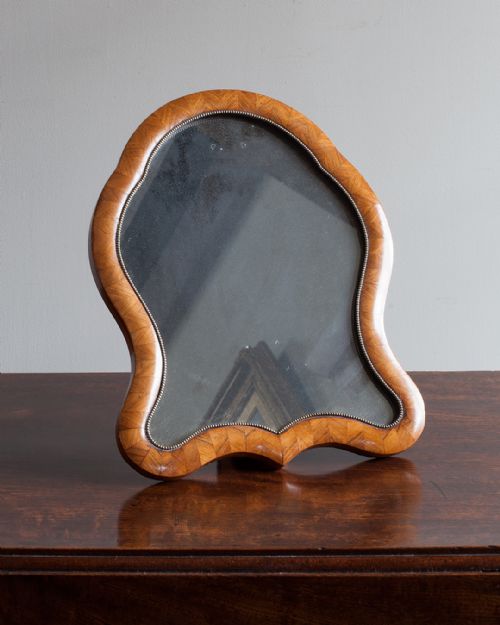
The selection ranges from compact table top mirrors to tall shaving stands and kidney shaped desks. Mahogany and walnut appear frequently alongside oak and satinwood, spanning the nineteenth and early twentieth centuries.
Materials and Construction
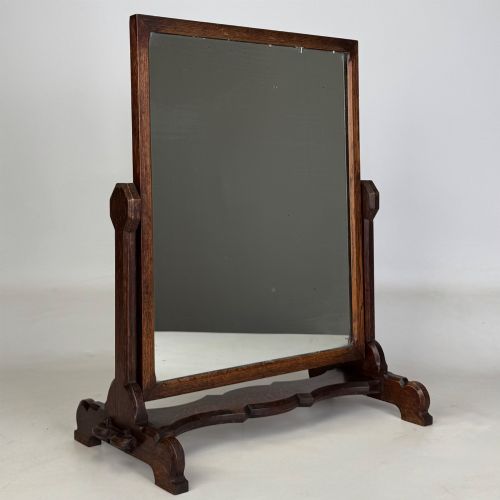
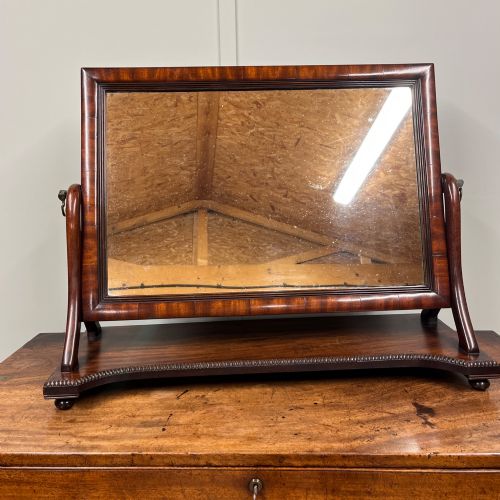
Cabinetmakers constructed these pieces using solid hardwoods such as mahogany, walnut, and oak, often enhanced with brass fittings and adjustable mechanisms. Glass mirror plates swing on pivots or slide within telescopic brass rods to suit the user.
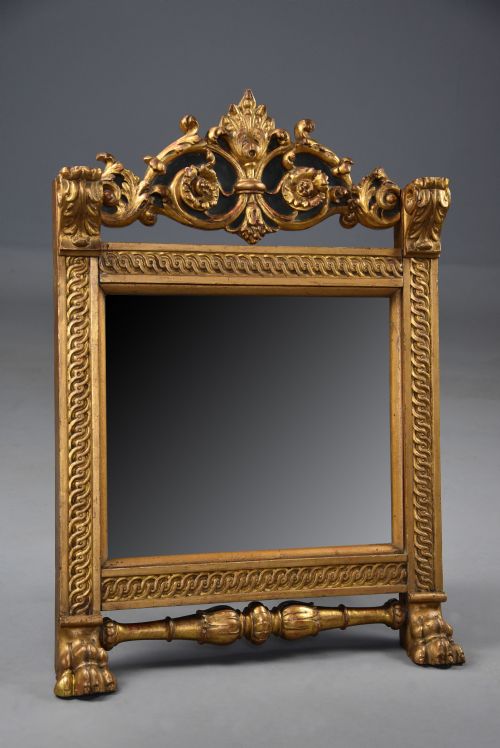
Carved gesso, inlaid wood, and silver plating provide decorative detail on frames from the Victorian and Edwardian eras. Metal finishes also include chrome and pewter, particularly in later Art Deco and Art Nouveau examples.
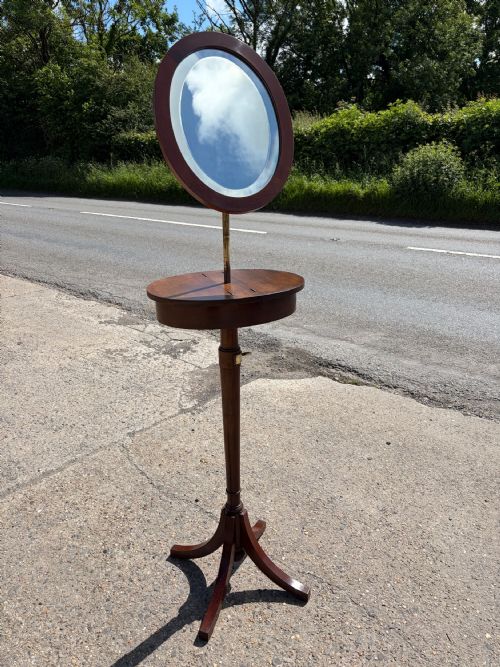
Gentlemen required telescopic brass rods to ensure their morning shave caught the exact angle of the rising sun.
Assessing Quality and Execution
Quality rests in the precision of the joinery and the integrity of the timber framing. Superior pieces exhibit crisp carving, stable pivot mechanisms, and heavy cast brass hardware that holds position securely.
The clarity of the mirror glass and the depth of the wood polish differentiate standard utility items from finely finished specimens. Weight and balance in tripod bases or easel backs indicate careful workshop construction.
Louis Auguste Moreau·WMF·Henry Matthews·Whytock & Reid
The Freestanding Vanity Table Glossary
- Cheval glass
- A tall mirror that swings within a vertical frame, allowing the user to view their entire figure. It typically stands on four feet or floor supports.
- Shaving stand
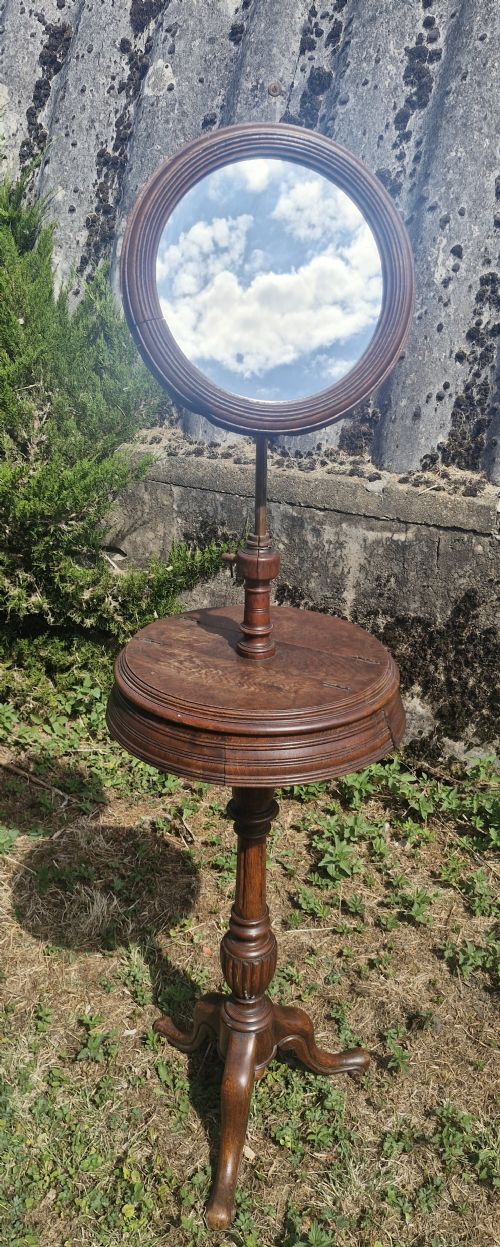
- A specialised piece designed for grooming, combining an adjustable mirror with small shelves or drawers for razors and soap. These often feature tripod or pillar bases.
- Toilet mirror
- A smaller mirror mounted on a box base or small drawers, intended to sit upon a chest of drawers or dressing table. The glass plate tilts on brass screw knobs.
- Triptych
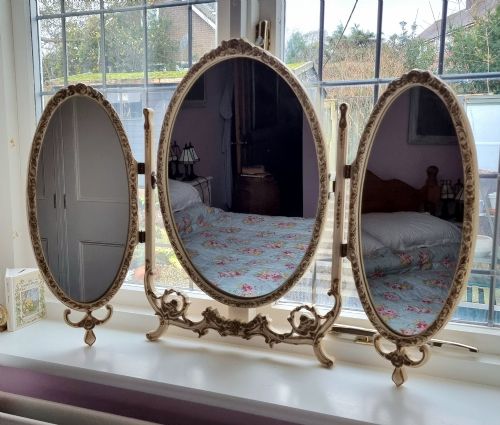
- A three-panel mirror where the outer wings hinge inward to adjust the angle of reflection. This format appears in Edwardian and Art Deco designs.
- Gesso
- A plaster mixture applied to wood surfaces and carved or moulded before gilding or painting. It provides relief ornamentation on decorative frames.
Freestanding Vanity Table: Frequently Asked Questions
What is a freestanding vanity table?
A freestanding vanity table is a movable piece of furniture designed for personal grooming, typically incorporating a mirror and surface space.
Such pieces range from compact tabletop toilet mirrors to large shaving stands on tripod bases.
How do I date a vanity table?
Dating relies on identifying the prevailing timber choices, hardware styles, and decorative motifs used in different eras. Victorian examples often utilise heavy mahogany and walnut, whereas Edwardian pieces introduce lighter satinwood and inlay.
Later items from the 1930s utilise chrome framing and streamlined Art Deco geometries.
How were shaving stands used?
Shaving stands served as dedicated personal grooming stations for gentlemen in the nineteenth and early twentieth centuries. They provided an adjustable mirror paired with small platforms for shaving mugs, brushes, and razors.
Many designs incorporated telescopic height adjustments or pivoted frames to catch optimal light.
Where should I place a table mirror?
Table mirrors sit securely on top of chests of drawers, sideboards, or dedicated dressing tables to create a functional grooming area. They require a stable surface near natural light for best visibility.
Freestanding variations with tripod bases operate independently on the floor or low ledges.