
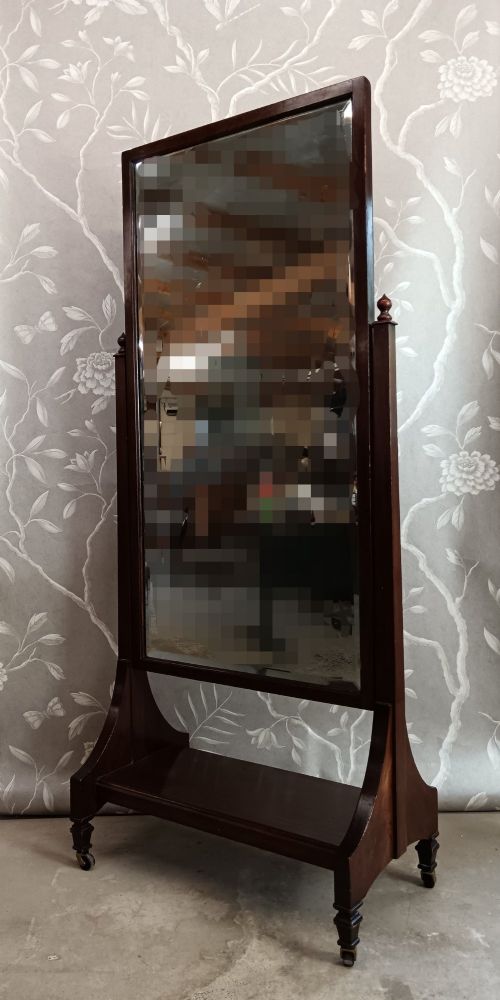


Victorian Standing Dressing Glass
A victorian standing dressing glass provides a full-length reflection in a heavy frame designed to tilt on vertical pivots.
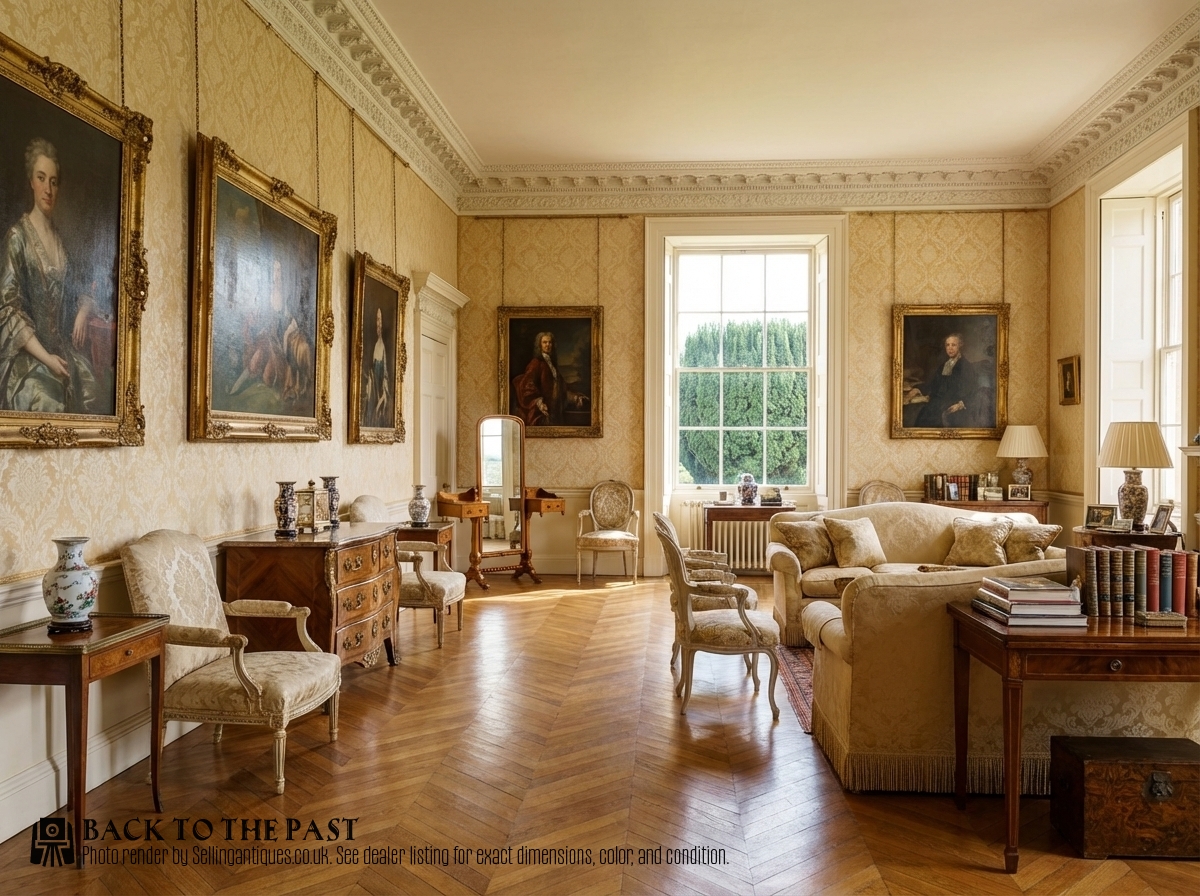
Victorian Standing Dressing Glass
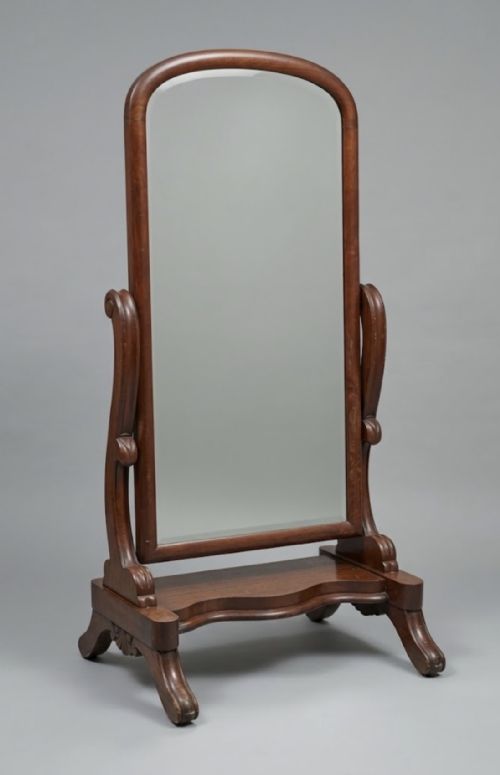
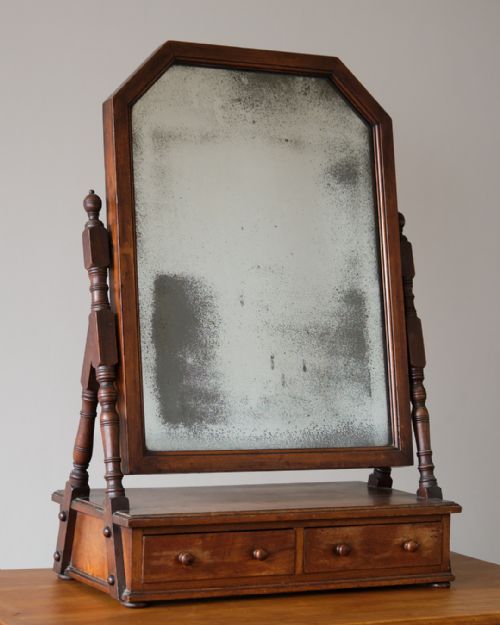
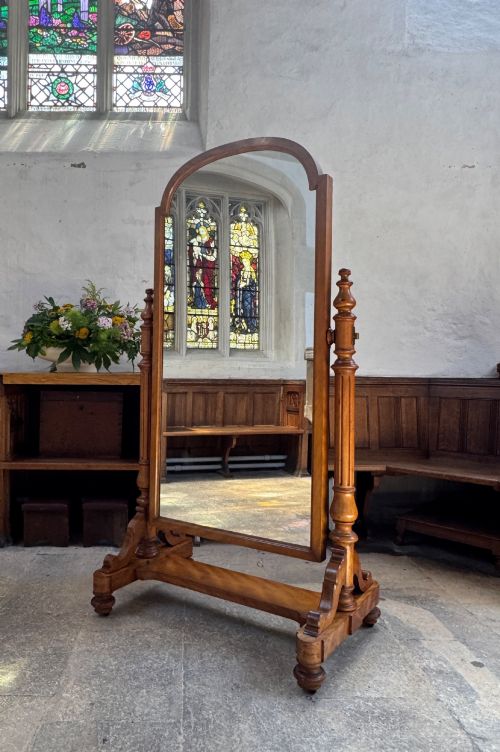
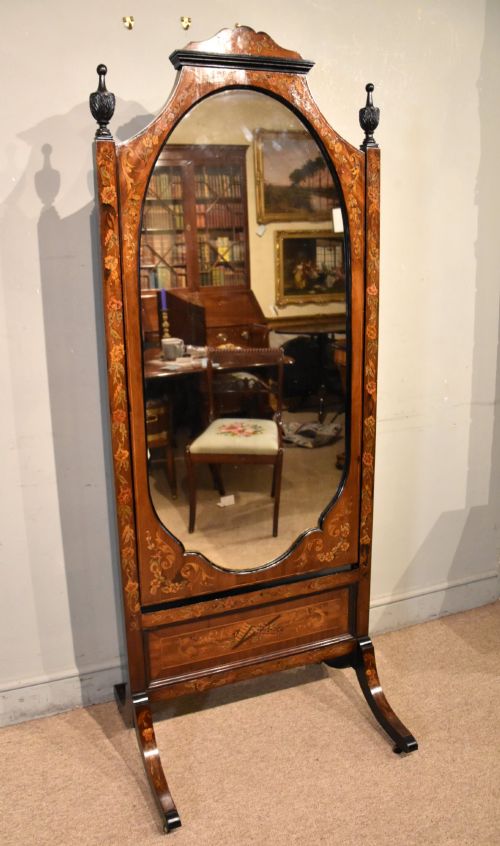
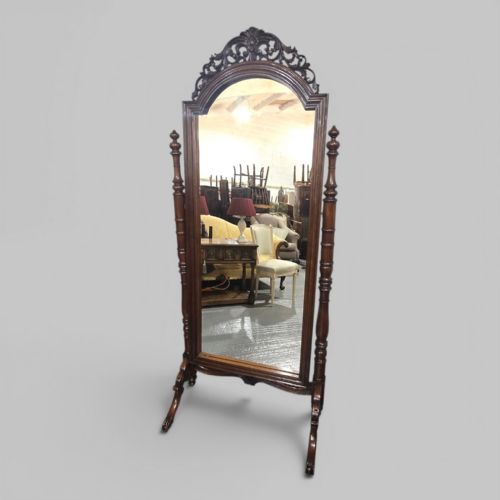
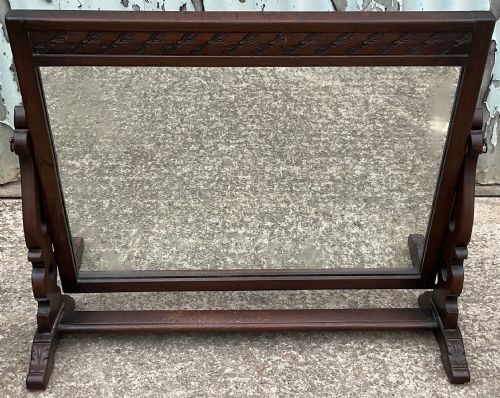
When you search for a victorian standing dressing glass, you are looking at large floor-standing mirrors designed to swivel within a supportive frame. These pieces enable a complete view of attire in bedroom or dressing room settings. The selection ranges from substantial architectural floor mirrors to smaller table-top versions.
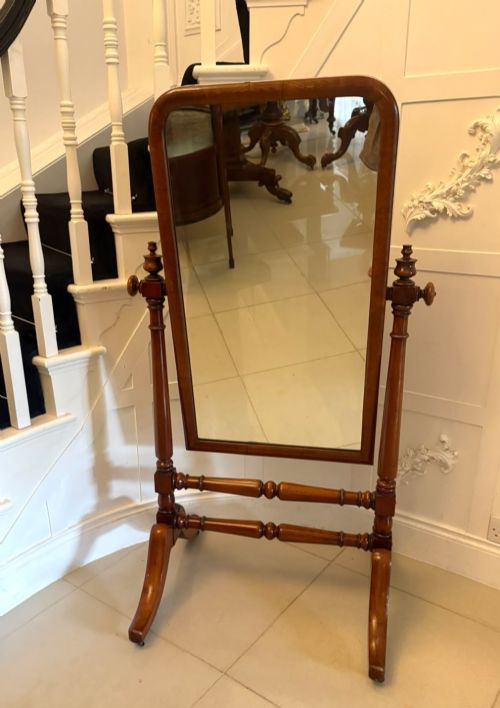
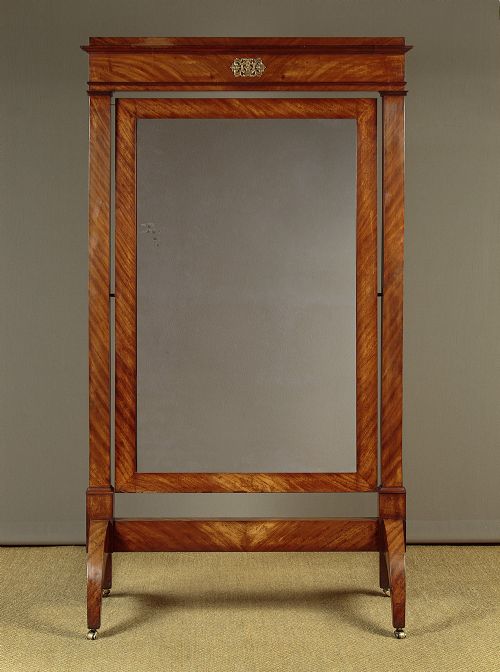
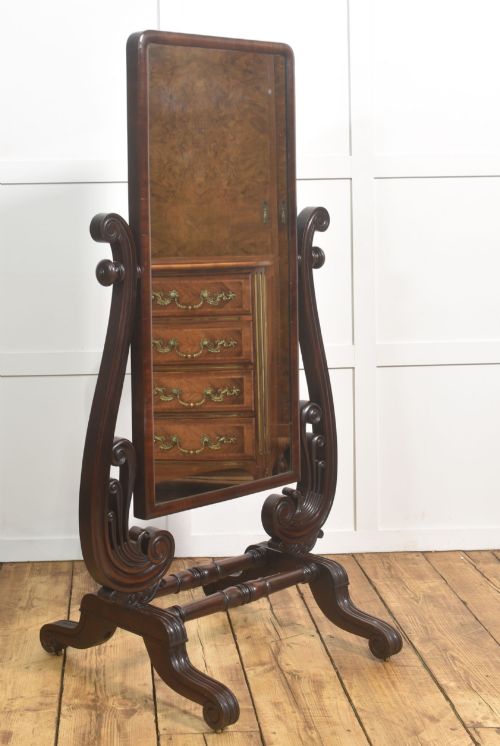
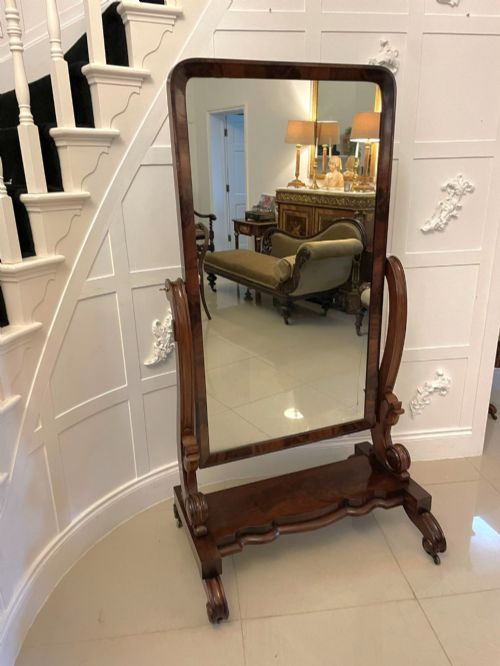
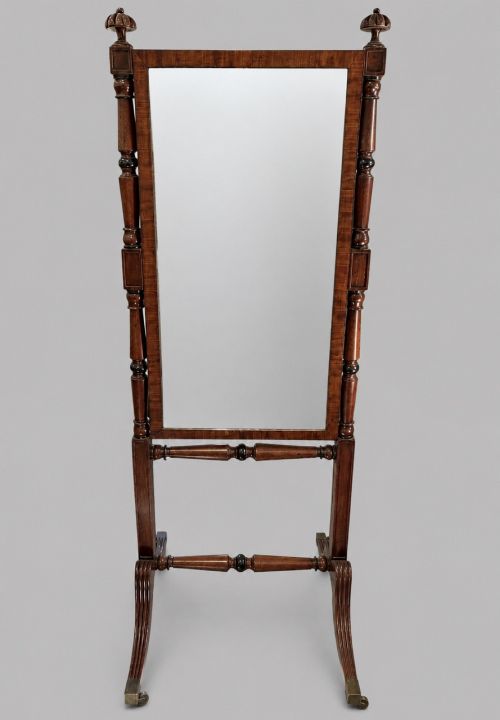
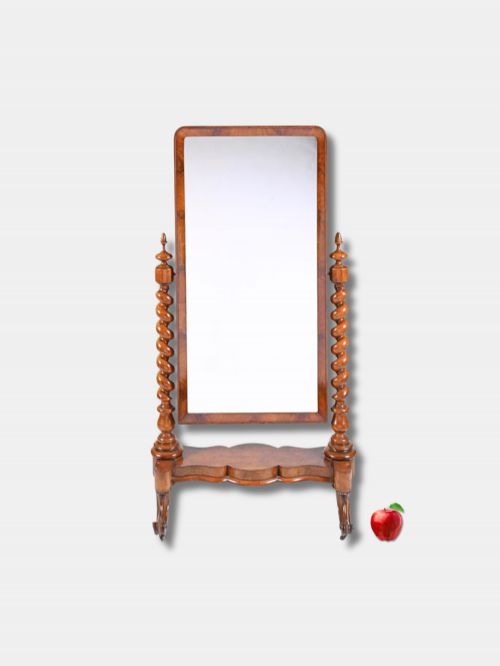
The most common form on this page is the cheval mirror, constructed in mahogany, flame mahogany, or walnut. These tall swinging glasses sit between two upright supports mounted on stable feet or trestle bases. Many examples utilise brass pivots or articulated candle holders to direct both the glass angle and the room illumination.
Materials and construction
Cabinet makers built these frames using dense timbers like mahogany, satin birch, and oak, often selecting flame mahogany veneers for rich grain figures. The wood was joined using traditional methods to support the significant weight of a large swinging plate. Giltwood and cast bronze also appear, providing ornate decorative frames for specific styles.
The mirror plates themselves comprise heavy glass held securely within the adjustable wooden or metal frame. Brass hardware, including adjustable candle arms, decorative screw caps, and sturdy floor castors, was integrated to ensure functional mobility. Barley twist supports and inlaid details demonstrate the detailed joinery utilised during the period.
One gentleman's outfitters mirror stands at an imposing six feet and five inches tall.
Separating top quality from standard pieces
Quality in a dressing glass rests upon the selection of timber veneers and the crispness of the carved details on the uprights and feet. Superior examples display carefully matched flame mahogany grains and robust structural joinery that prevents the heavy frame from sagging over time. Lesser pieces may show simpler construction with plain timber stocks and less refined turning.
The finish of the metal fittings and the clarity of the mirror glass further distinguish the range. High-grade items retain original cast brass hardware and heavy, bevelled mirror plates that reflect light evenly. Replacements or inferior secondary woods indicate a lower tier of craftsmanship.
Heal & Sons·W M F
The Victorian Standing Dressing Glass Glossary
- Cheval mirror
- A large floor-standing dressing mirror that swings within a vertical frame. This form allows the user to view their entire outfit at once.
- Flame mahogany
- A distinctive wood veneer showing a flickering, flame-like grain pattern. Cabinet makers used this to create highly decorative surfaces on premium furniture.
- Barley twist
- A carved spiral column resembling a twisted rope. This turning style appears frequently on the vertical supports of nineteenth-century frames.
- Tilt mechanism
- The set of pivots or screws connecting the mirror frame to its uprights. It allows the glass to angle forward or backward.
- Satin birch
- A pale, golden hardwood with a lustrous, silky sheen. Makers utilised this timber in the later nineteenth century for lighter bedroom furnishings.
Victorian Standing Dressing Glass: Frequently Asked Questions
Where were standing dressing glasses placed?
These tall mirrors stood primarily in bedrooms, dressing rooms, or gentlemen's outfitters to provide a full-length reflection for checking attire. Their substantial bases allowed them to rest directly on the floor without wall fixings.
Because they feature adjustable pivots, users could tilt the glass to catch the best light from windows or nearby candles. This made them central items in domestic daily routines before fitted wardrobes with built-in mirrors became common.
How do I adjust a cheval mirror?
Adjustment relies on the brass screw caps or pivot pins situated on either side of the frame. Loosening these fittings allows the heavy glass to tilt freely to the desired angle.
Tightening the hardware secures the mirror in place so it remains steady during use. Checking that both sides are adjusted equally prevents undue strain on the wooden uprights.
What is the difference between a cheval mirror and a toilet mirror?
A cheval mirror is a full-length standing glass designed to rest upon the floor. It supports a complete view of a person from head to toe.
In contrast, a toilet mirror is a smaller glass built to sit upon a dressing table or desk surface. These smaller versions typically focus on upper-body and facial reflections.
How can I date a nineteenth-century dressing glass?
Dating relies on observing the timber choices, turning styles, and hardware construction methods. Earlier Regency and William IV pieces often display heavier architectural forms and bolder mahogany grains, while later Victorian examples may incorporate barley twist supports or satin birch.
The type of mirror glass, the style of the brass screw fittings, and the presence of makers' marks also offer clear indicators of the manufacturing decade.