


Freestanding Brass Mirror
A freestanding brass mirror brings the gleam of polished metal and practical adjustment to any room, offering versatile reflection where wall mounting simply will not do.

Freestanding Brass Mirror
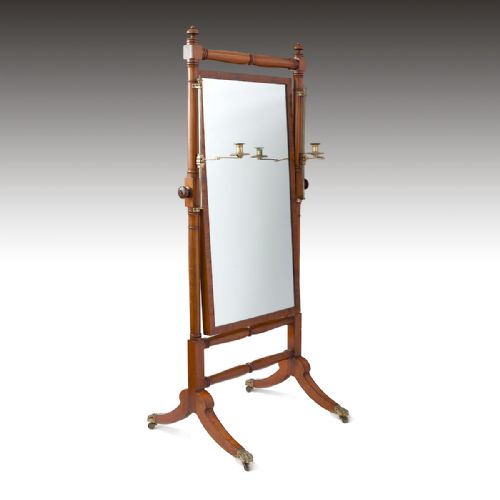
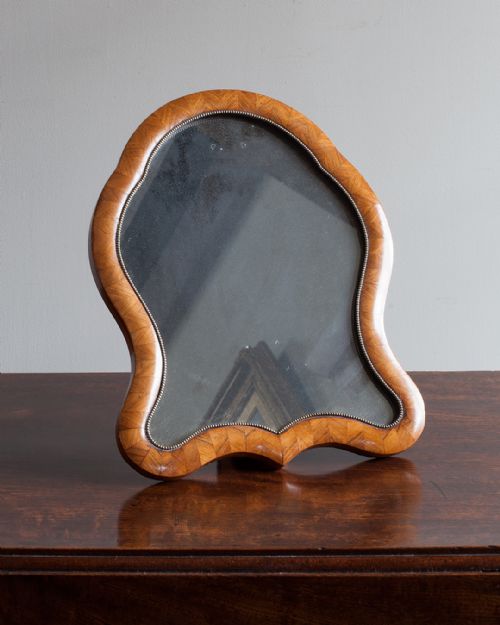
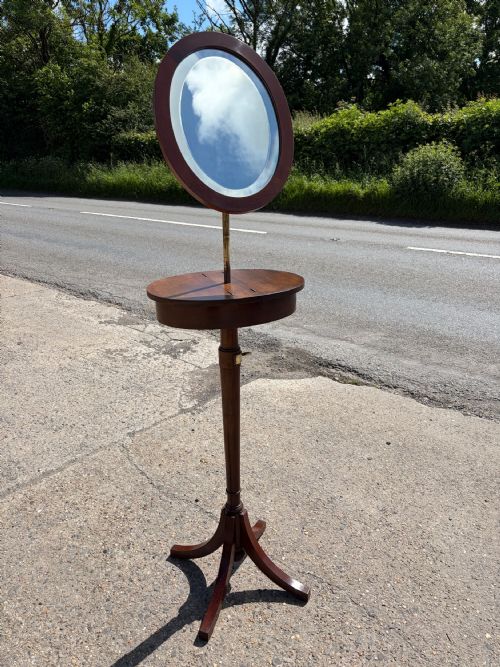
The assortment spans large floor-standing dressing mirrors supported on sabre legs or tripod bases, smaller vanity tables, and pivoting table glasses. Many incorporate brass candle holders, telescopic mechanisms, or adjustable frames that tilt to catch the light from multiple angles.
Origins vary across English country house workshops, French Empire period designs, and later Arts and Crafts or Art Nouveau interpretations. Whether taking the form of a fireplace screen with mirrored glass or a gentleman's shaving stand, each piece serves a dual purpose of utility and decorative presence.
Materials and construction
Makers built the primary structures from dense timbers such as mahogany, walnut, kingwood, and flame mahogany, mounting them securely onto brass feet, sabots, castors, and tripod bases. Brass serves both a structural and ornamental role, forming adjustable pivots, candle arms, telescopic columns, and decorative mounts.
Glass mirrors are set within secure frames, occasionally double-sided or backed with panelled wood, while metal variants utilise painted iron and brass. Joinery relies on traditional cabinet-making techniques to support the weight of pivoting glass plates without straining the upright supports.
Several mirrors include articulated brass candle holders so gentlemen could illuminate their reflections during dim Victorian mornings.
Judging quality and craftsmanship
Quality rests in the weight and thickness of the cast brass components, the precision of the pivoting and telescopic mechanisms, and the richness of the timber grain. Better examples feature solid brass fittings that retain their original threaded screws and smooth swivel action rather than loose or replacement hardware.
The integration of secondary materials, such as finely turned mahogany stands, crisp brass sabots, and articulated candle holders, separates standard workshop output from exceptional country house pieces. Proportions remain balanced, ensuring that taller cheval frames stand firmly on their castors without excessive wobble.
The Freestanding Brass Mirror Glossary
- Cheval mirror
- A large standing mirror supported in a frame that allows it to swing. This tall form permits full-length reflection and typically stands on four legs or a heavy chassis.
- Telescopic mirror
- A glass mounted on a vertical shaft that adjusts in height. This mechanism uses a sliding rod secured by a thumb screw.
- Sabot
- A metal sleeve fitted to the foot of a furniture leg. Brass versions protect the base of wooden legs and often incorporate castors.
- Shaving stand
- A specialised piece featuring an adjustable mirror combined with a small table or drawers. These were designed for morning grooming routines.
- Fire screen
- A decorative panel placed before an unlit hearth that occasionally incorporates a mirrored glass plate. They deflect radiant heat when positioned near a fire.
Freestanding Brass Mirror: Frequently Asked Questions
Where should I place a freestanding brass mirror?
These pieces suit bedrooms, dressing rooms, and hallways where they catch natural light and bounce it around the space. Because they stand independently, you can easily reposition them as room layouts change.
Ensure the floor is reasonably level, particularly with tall cheval frames or telescopic designs, to keep the weight balanced on its base.
How do I adjust a pivoting mirror?
Most pivoting glasses rely on tension screws or thumb nuts fitted into the side supports. Tightening these brass fixings holds the mirror plate at your chosen angle.
Avoid forcing the glass beyond its intended tilt range to protect the pivot pins and wooden side arms from undue stress.
What is the difference between a cheval and a table mirror?
Cheval mirrors are floor-standing pieces designed for full-length viewing, often supported by sabre legs, tripod bases, or substantial side pillars. Table mirrors are scaled down for placement on dressing tables, chests of drawers, or vanity stands.
Both types use brass hardware to allow tilt adjustment, but their proportions and placement requirements differ entirely.
How do I care for the brass and wood?
Dust the wooden frame regularly with a dry cloth and feed the timber periodically with appropriate polish. Clean the brass gently with a soft cloth to preserve its finish without harsh chemical abrasives.
Keep mirrored glass free of moisture buildup around the edges where silvering can deteriorate over time.