


Framed Rose Artwork
Framed rose artwork brings together centuries of floral painting, from oil canvases to delicate watercolours held within period surrounds.
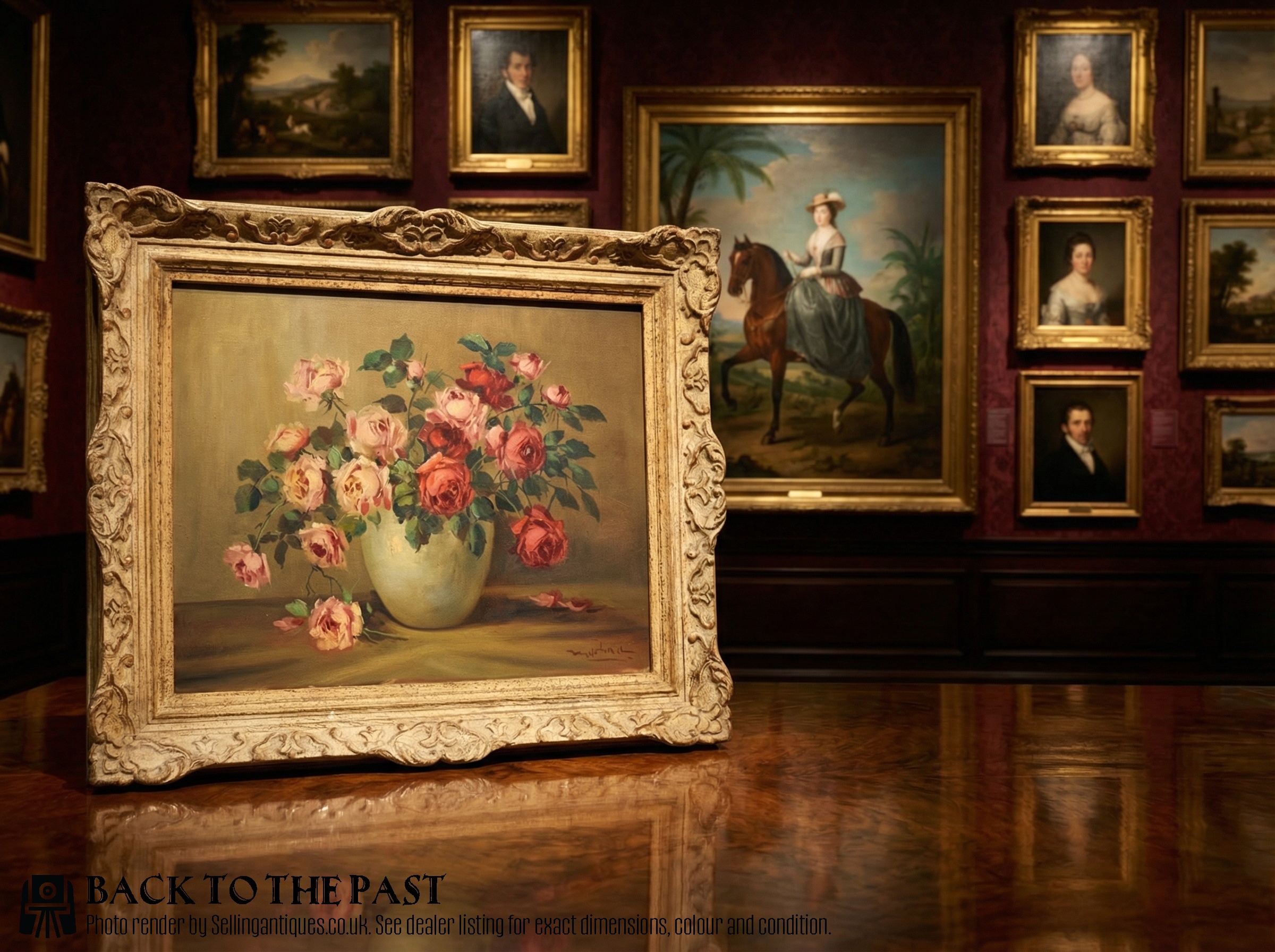
Framed Rose Artwork
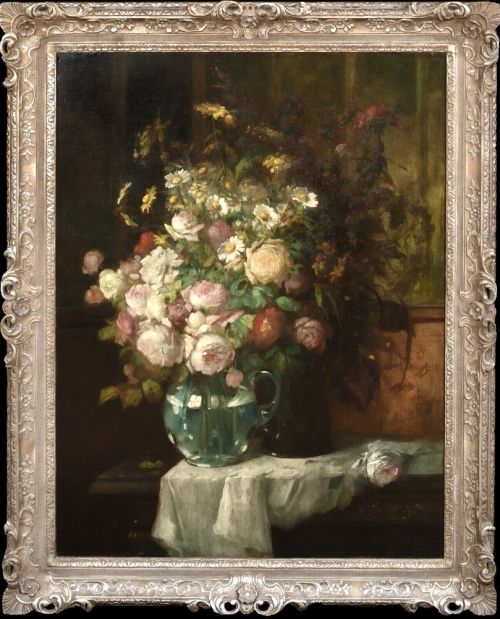
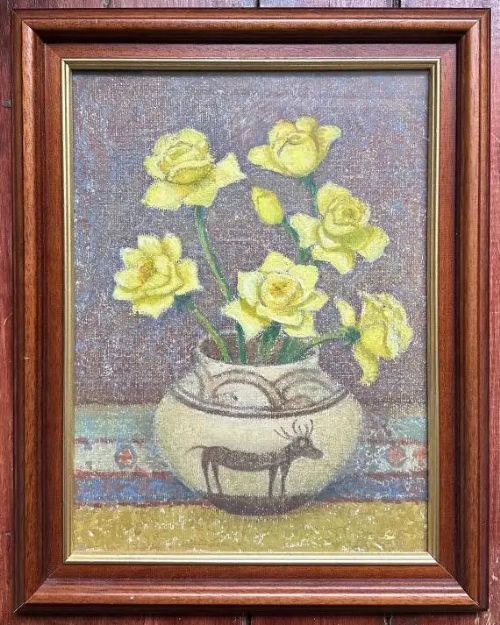
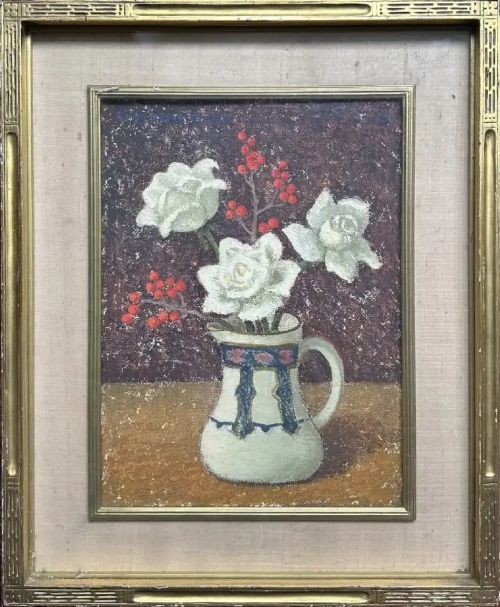
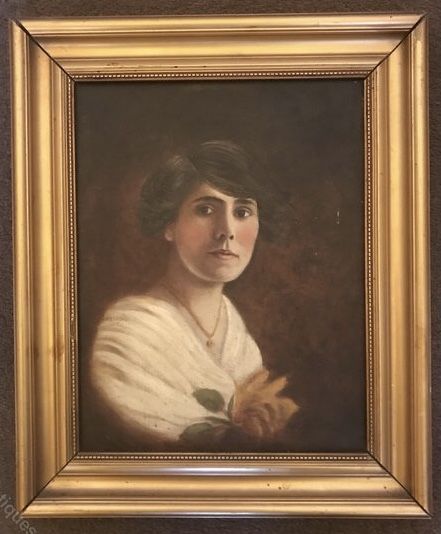
Buyers seeking framed rose artwork encounter a wide array of floral studies, still lifes and portraits rendered across the nineteenth and twentieth centuries. These pieces typically capture botanical subjects in oil or watercolour, preserved within wooden or gilded surrounds that complement the canvas or paper.
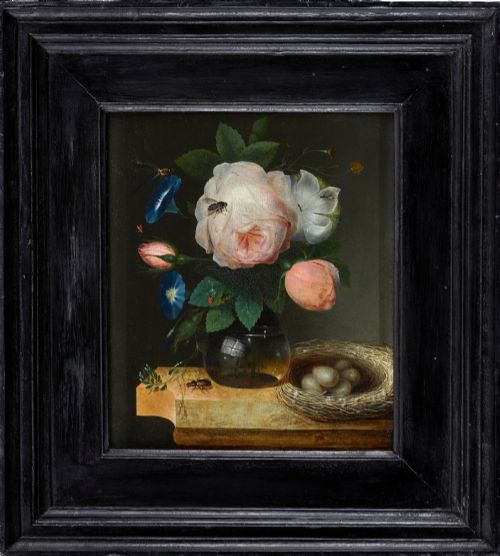
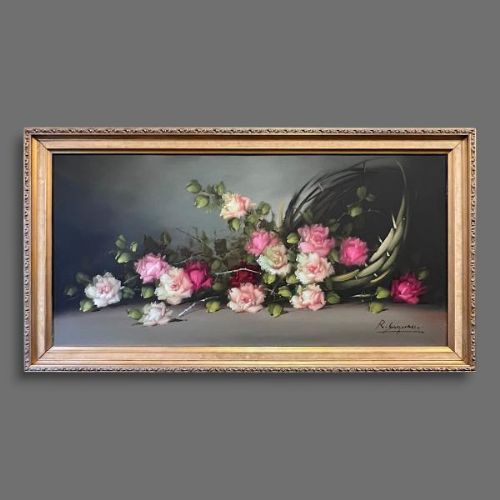
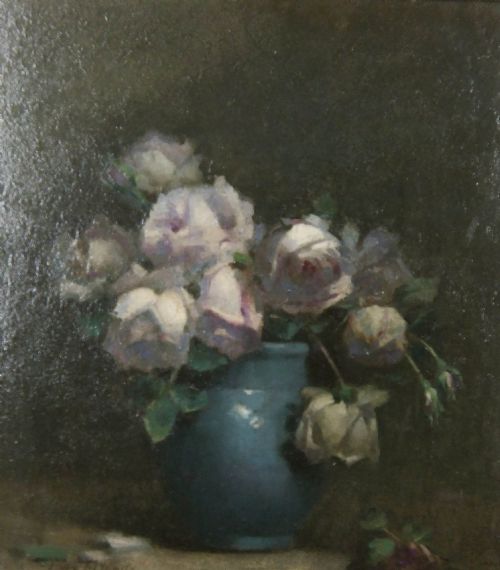
The selections available range from seventeenth-century Flemish compositions to mid-century modern interpretations. Works span detailed Victorian realism and impressionist treatments, showing roses in glass vases, wicker baskets or garden settings.
Materials and Construction
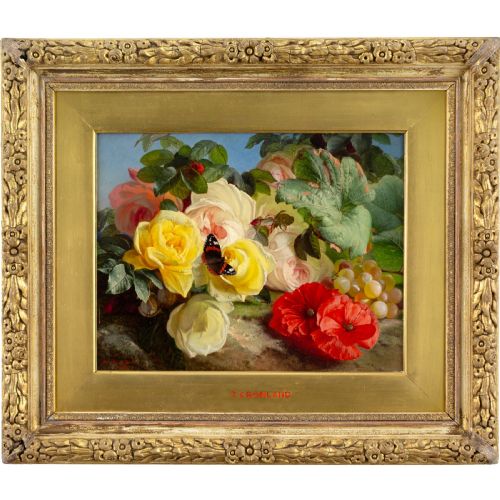
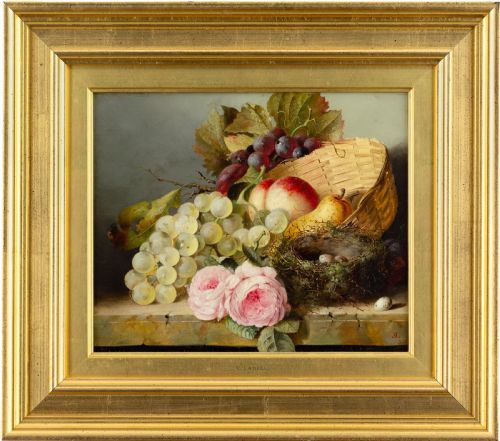
Painters relied primarily on oil on canvas or watercolour on paper, building rich textures through layered brushwork and pigment application. Canvases are frequently housed in wooden frames finished with gesso and gold leaf or giltwood accents.
Surrounds often incorporate carved ornamentation or reverse-painted glass elements, providing structural support while framing the visual space of the floral subject.
Several roses share canvas space with unexpected companions, including wicker baskets, peaches, grapes, a wicker nest and even a butterfly.
Distinguishing Quality
Quality rests in the precision of the brushwork and the handling of light, shadow and colour within the petals and foliage. Superior examples demonstrate a confident control of tone and spatial depth that brings immediacy to the floral subject.
The integrity of the frame also influences the overall standard, with period mouldings, original gilding and undamaged gesso adding significant context and visual harmony to the artwork.
Theude Grönland·John Rose Miles·Konstantin Stoitzner·Edward Ladell·Emma Fordyce MacRae·Gaspar Peeter Verbruggen·William Thomas Wood·Stuart Armfield·Lena M Alexander·James Stuart Park·Ambrious Benson·Ernest Higgins Rigg·Alfred Seifert
The Framed Rose Artwork Glossary
- Canvas
- A heavy woven fabric used as a surface for oil painting. It is typically stretched across a wooden frame before application of pigment.
- Gesso
- A plaster-like mixture applied to wood or canvas to prepare a smooth surface for painting or gilding. It provides a durable base for decorative frames.
- Giltwood
- Wood that has been treated with gold leaf or gold paint for decorative effect. It is commonly found on antique picture frames.
- Impressionism
- A nineteenth-century painting style characterised by relatively small, thin yet visible brush strokes and an emphasis on accurate depiction of light.
Framed Rose Artwork: Frequently Asked Questions
How do I date a framed rose painting?
Dating relies on stylistic clues, materials such as canvas or paper, and the construction methods of the frame. Signatures, inscriptions and historical artist records provide the most reliable chronological markers.
Changes in pigment use and painting techniques across the nineteenth and twentieth centuries also help narrow the period of creation.
What is the difference between oil and watercolour rose art?
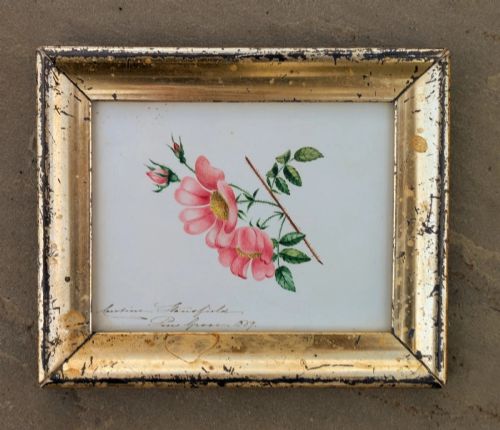
Oil paintings utilise thick pigments on canvas or board, allowing for rich textures, blending and deep colour saturation. Watercolours apply translucent pigments to paper, resulting in lighter, more delicate botanical studies.
Watercolour pieces are typically displayed behind protective glass to prevent moisture damage to the paper.
How should I hang antique rose art?
Antique paintings require stable wall environments away from direct sunlight and excessive humidity. Proper hanging hardware matched to the weight of the wooden or giltwood frame ensures safety.
Maintaining a consistent indoor climate protects both the canvas and the original frame from warping or cracking over time.
Are these pieces original works?
The selection includes original hand-painted oils and watercolours created directly by artists rather than modern mass-produced prints. Each piece displays unique brushstrokes and individual artistic interpretation.
Documentation, signatures and period framing further establish the authenticity of these historical artworks.