



Oil Painting of Roses
An oil painting of roses captures floral still life and botanical portraiture across centuries of British and European canvas work.
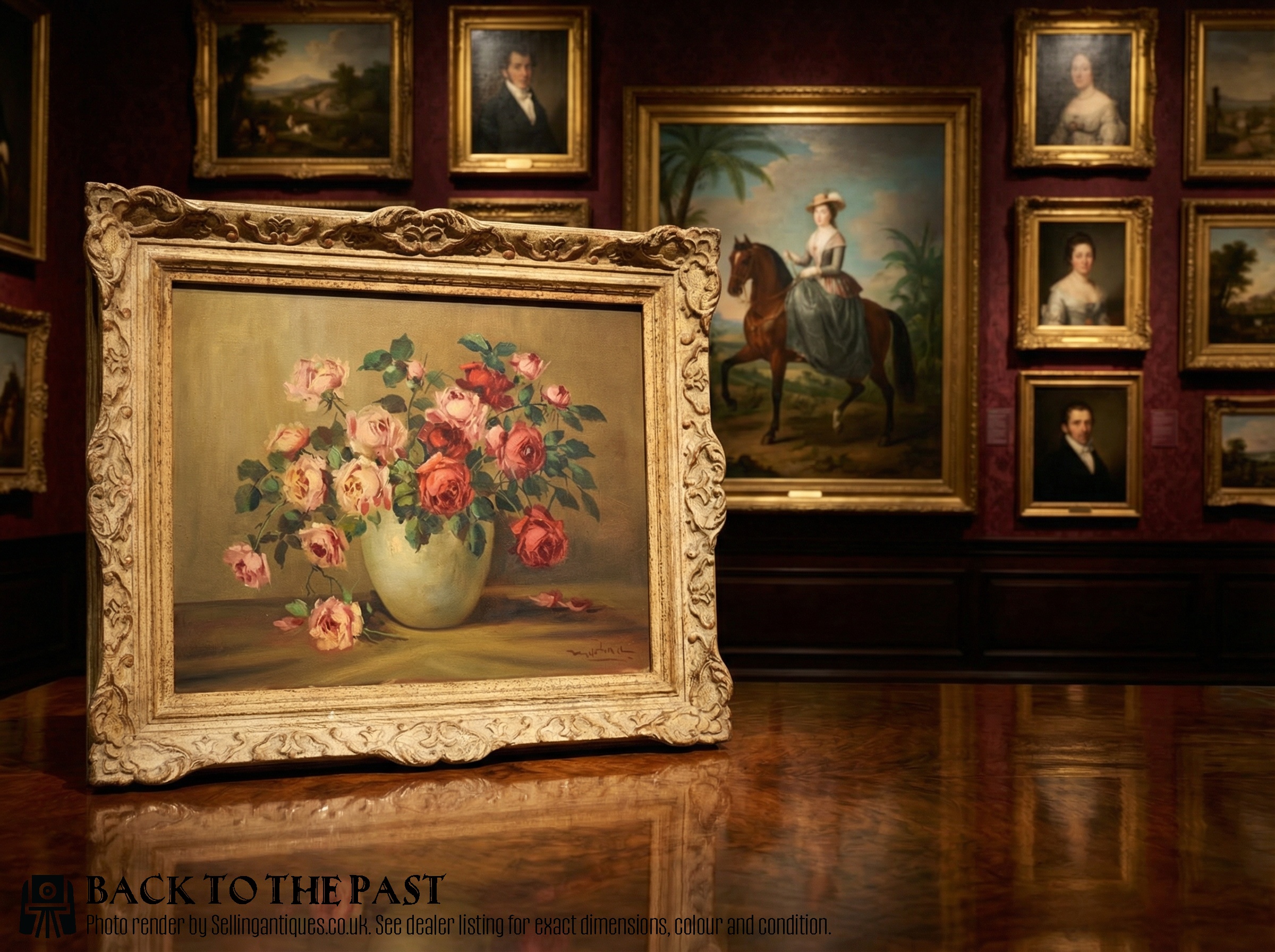
Oil Painting of Roses
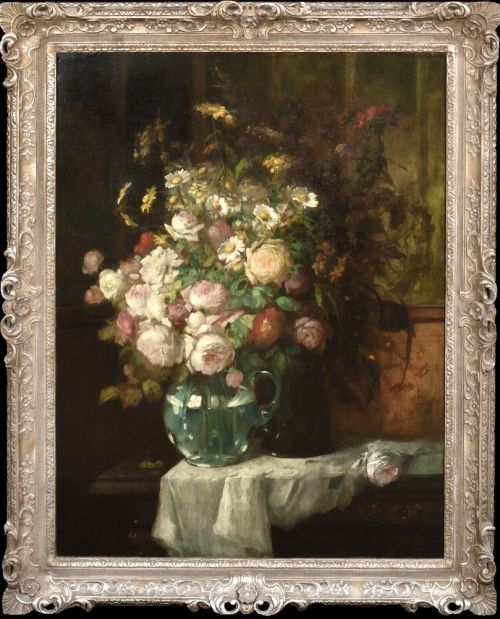
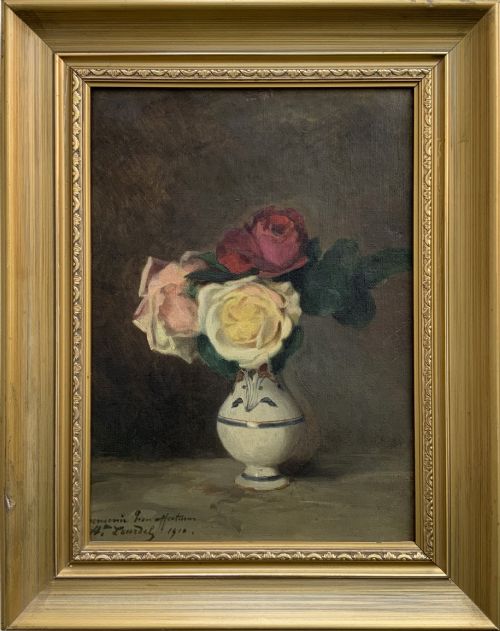
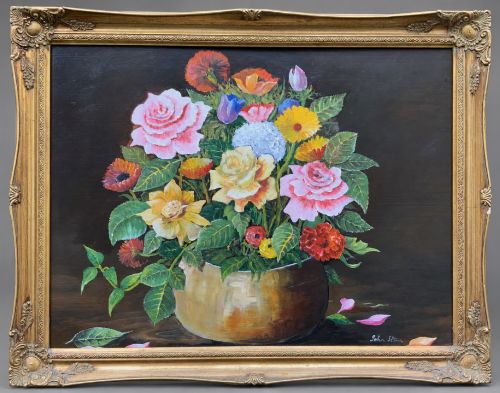
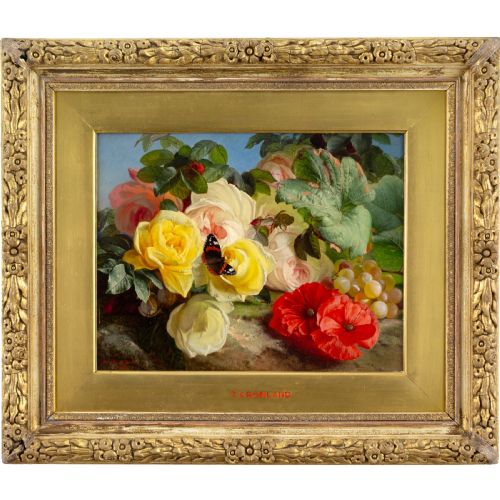
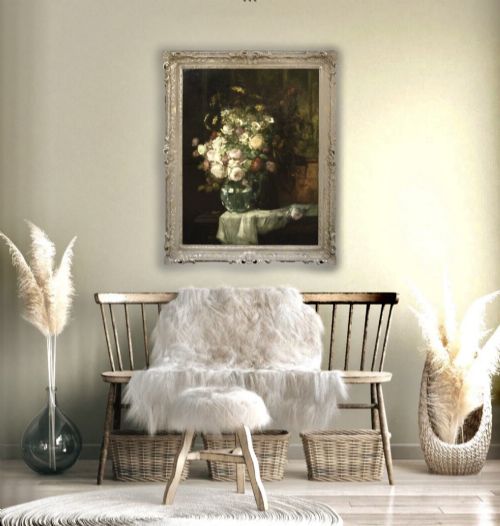
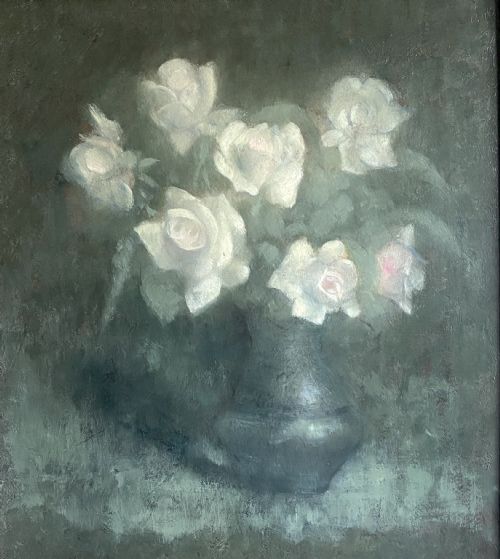
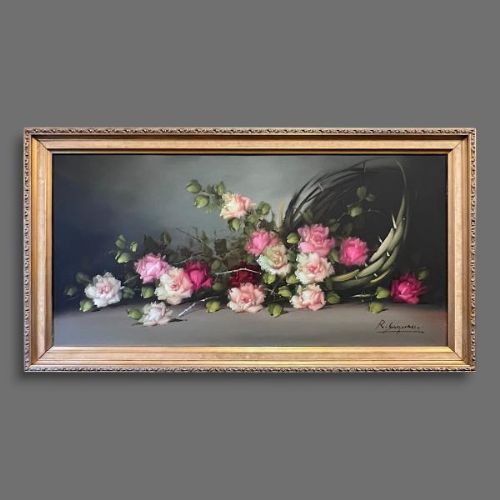
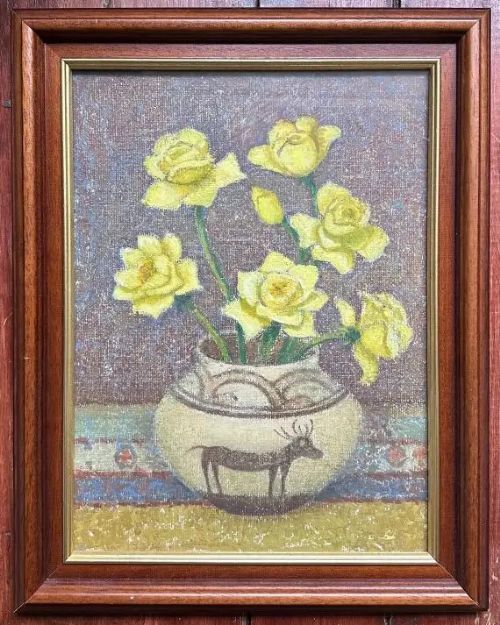
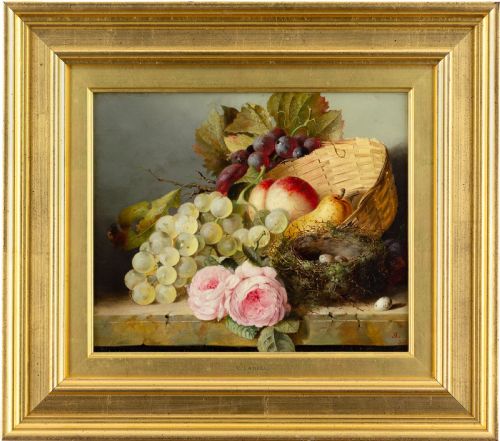
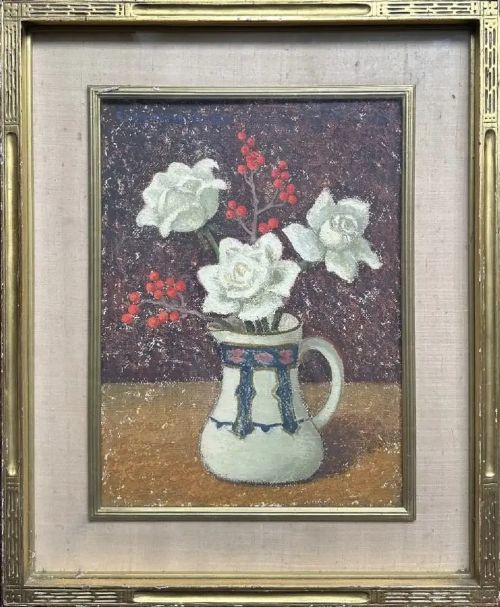
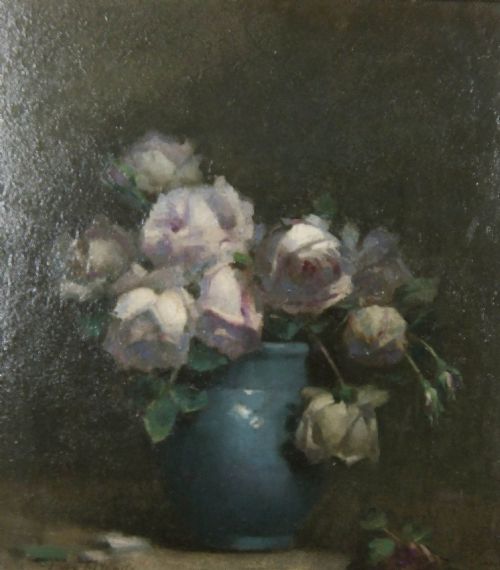
An oil painting of roses primarily takes the form of floral still life compositions, depicting blooms arranged in glass vases, wicker baskets, or ceramic bowls. These works span from Victorian realism to mid-century impressionism, reflecting changing botanical trends and artistic methods.
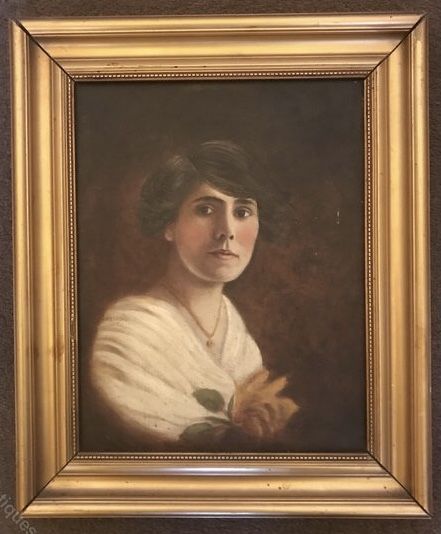
Beyond pure still life, roses frequently appear within portraiture, held by subjects or placed beside plinths in nineteenth-century and earlier works. The examples gathered here include both intimate panels and large-scale canvases originating from British, European, and American hands.
Materials and Technique
Artists painted primarily using oil paint on canvas, wood panel, or board, sometimes building thick impasto layers to give physical depth to the petals. Supports often incorporated gesso preparation over wood or stretched linen, framed in gilded wood mouldings utilising gold leaf.
Earlier nineteenth-century works rely on fine glazes to build luminous depth in the flower heads, whereas mid-century examples lean towards direct application with visible brushstrokes. Original frames frequently employ moulded gesso details finished in giltwood.
Oil Painting of Roses Retail Price Guide 2026
Typical asking prices for oil painting of roses among the pieces listed under this phrase on Sellingantiques today, from the lower quarter to the upper quarter. They describe what is for sale here now, not the wider market.
Listings span from the seventeenth century to the mid-twentieth century, recording works on canvas, wood panel, and board.
Quality and Execution
The distinction between ordinary decorative flower studies and superior works rests upon the artist's handling of light, shadow, and botanical structure within the rose heads. Stronger pieces convey the tactile delicacy of layered petals and natural tonal shifts without relying on rigid outlines.
Compositional balance and the rendering of secondary elements, such as glass vessels, foliage, or draped textiles, further separate accomplished painters from formulaic workshop output. The integration of the subject with its background determines the overall visual weight of the canvas.
Theude Grönland·Edward Ladell·Emma Fordyce MacRae·William Thomas Wood·James Stuart Park·Ernest Higgins Rigg·Alfred Seifert
The Oil Painting of Roses Glossary
- Impasto
- Paint applied thickly to a canvas or board, standing out in relief from the surface. This technique allows artists to capture the physical texture and highlights of individual rose petals.
- Gesso
- A plaster-like mixture applied to wood panels or canvases as a base before painting. It provides a smooth, stable surface for oil pigments.
- Still life
- An artwork depicting inanimate subject matter, typically commonplace objects such as flowers, fruit, or vessels. Floral arrangements form a major category within this tradition.
- Giltwood
- Wood carved and treated with gold leaf or metallic powder for decorative effect. Many antique frames use this finish to complement the warmth of oil paintings.
Oil Painting of Roses: Frequently Asked Questions
How are these paintings cleaned?
Surface dust is gently removed with a soft, dry brush by specialists, avoiding moisture or household solvents that can damage aged varnish layers. Professional conservation is required for deep cleaning or repairing canvas tears.
Untrained cleaning attempts risk removing original glazes or altering the pigment stability built up over decades of drying.
Are original frames important?
Period frames contribute significantly to the historical context and visual completeness of antique canvases. Matching giltwood or moulded frames from the same era help protect the edges of the stretched fabric.
Replacing historical frames with modern mouldings can alter the balance and presentation intended by the artist.
How do I date a floral oil painting?
Dating relies on stylistic markers, framing methods, canvas preparation techniques, and stretcher construction. Pigment analysis and signatures provide further chronological anchors when legible.
Victorian works often display heavier ornamentation in their frames and tighter botanical realism compared to looser mid-century approaches.
Where should I hang an oil painting?
These works require stable indoor environments away from direct sunlight, high humidity, and rapid temperature fluctuations. Placing canvases away from direct heat sources prevents cracking in the oil paint and wood warping.
Proper wall placement ensures the surface remains protected from moisture while receiving even, indirect daylight.