
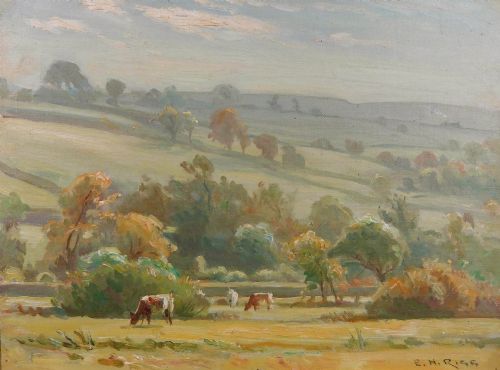
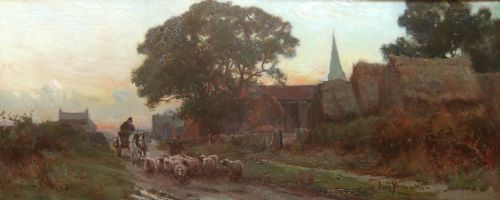


Staithes Group Art
Staithes group art captures the distinct coastal and rural life of Yorkshire through the lens of British Impressionism and plein air observation.
Staithes Group Art
When you search for staithes group art, you encounter paintings created by artists who recorded northern fishing villages, rolling moorlands, and quiet country gardens. These works typically date from the late Victorian period through the early twentieth century, spanning decades of dedication to local scenery.
You are most likely to meet oil paintings on canvas and panel alongside detailed watercolours on paper. The subjects range from bustling Yorkshire harbours and agricultural labourers to intimate domestic studies and sunlit floral still lifes.
Many pieces reflect the direct influence of continental Impressionism applied to traditional British landscapes. Painters settled in or visited coastal locations like Staithes to record the changing light on cliffs, boats, and village streets.
Materials and techniques
Artists utilised oil paint on stretched canvas or wooden panels to build rich textures that captured outdoor light and atmosphere. These oil mediums allowed painters to work rapidly in the open air, recording transient weather conditions along the Yorkshire coast.
Watercolour pigment on paper served as an essential medium for swift topographical studies and finished compositions alike. Painters employed fluid washes alongside deliberate brushwork to render coastal moisture and open skies.
Staithes Group Art Retail Price Guide 2026
Typical asking prices for staithes group art among the pieces listed under this phrase on Sellingantiques today, from the lower quarter to the upper quarter. They describe what is for sale here now, not the wider market.
Listings feature oil paintings and watercolours spanning from the Victorian era through the 1940s, executed on canvas, panel, and paper.
Quality variations
The distinction between standard works and masterworks rests upon the handling of light and the confidence of the brushwork. Superior examples demonstrate a liberated application of pigment that conveys genuine atmosphere rather than mere topographical recording.
Compositional strength and the treatment of shadow differentiate exceptional canvases from routine student or lesser regional output. Stronger pieces maintain tonal harmony across complex outdoor scenes without losing the vitality of the initial sketch.
Ernest Higgins Rigg·Owen Bowen·Ernest Dade·Arthur Tucker·James William Booth·Florence Hess·James Watson·Frederick W. Jackson·Rowland Henry Hill·Frederick Mayor
The Staithes Group Art Glossary
- British Impressionism
- A style adopted by British painters who embraced loose brushwork and a focus on natural light, heavily influenced by French techniques. Practitioners applied these methods to domestic landscapes and coastal scenes.
- Plein air
- Painting executed outdoors in direct contact with the subject and changing environment. This practice allowed artists to capture immediate effects of sunlight and weather.
- Watercolour
- A paint consisting of colour pigment suspended in a water-soluble binder applied to paper. Artists used this medium for both rapid field sketches and finished exhibition pieces.
- Canvas
- Heavy woven fabric stretched across a wooden frame to serve as a foundation for oil painting. It provides a flexible and textured surface for layered brushwork.
- Panel
- A flat wooden board used as a rigid support for oil or mixed media paintings. Painters frequently favoured panels for smaller outdoor studies.
Staithes Group Art: Frequently Asked Questions
What is staithes group art?
Staithes group art comprises paintings and watercolours produced by members and associates of an art colony in North Yorkshire. These artists focused primarily on local fishing communities, coastal topography, and rural landscapes.
Working outdoors, they adapted continental Impressionist techniques to document the distinctive light and daily life of northern England during the late nineteenth and early twentieth centuries.
Where were these paintings created?
The works originated primarily in and around the fishing village of Staithes, along with neighbouring coastal and inland locations in Yorkshire. Artists travelled through Whitby, Hinderwell, Swaledale, and surrounding farming valleys to paint local scenery.
Many practitioners maintained connections to northern industrial and rural centres while returning regularly to the Yorkshire coast for inspiration.
How do I date staithes group art?
Dating relies upon stylistic markers, artist biographies, signatures, and occasional contemporary exhibition records. Most surviving pieces date from the 1890s through the 1940s, reflecting the peak activity of the colony and its individual members.
Early works often display traditional Victorian realism, whereas later examples embrace a brighter palette and looser impressionistic brushwork.
How should I display these paintings?
These works require placement away from direct sunlight and excessive humidity to protect fragile watercolours and oil surfaces. Traditional gilt or simple wooden frames complement the period aesthetic of early twentieth-century British art.
Stable indoor environments ensure that canvas supports and paper bases remain preserved for long-term enjoyment.