
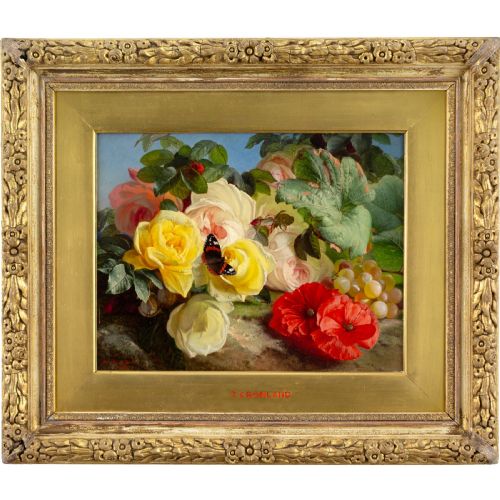
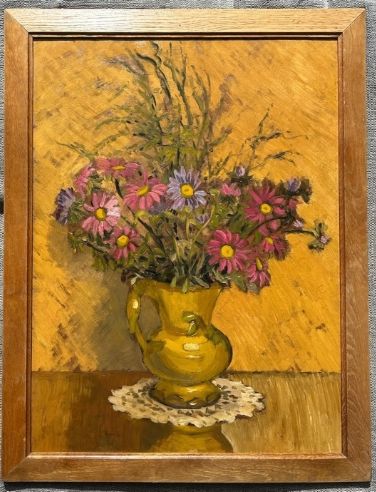
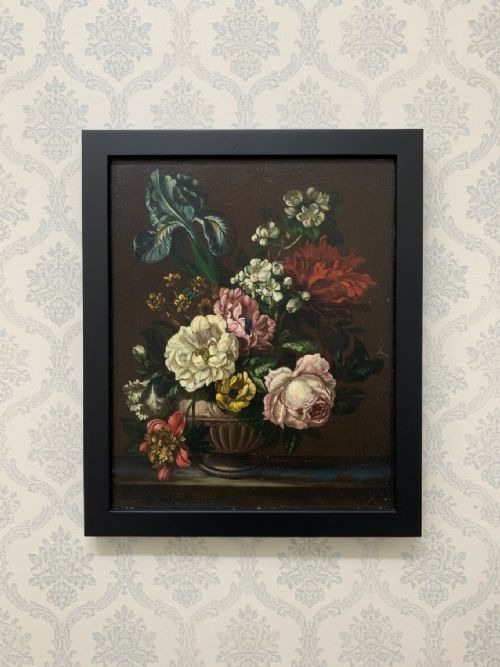
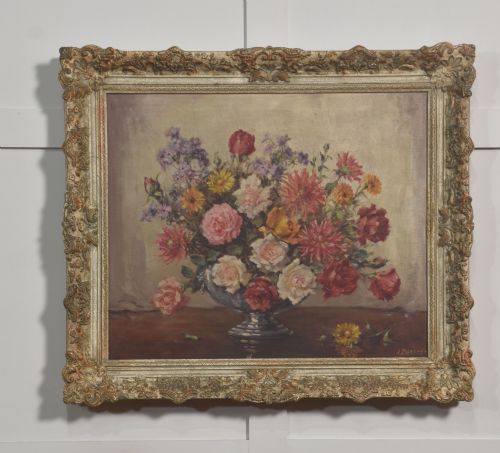
Framed Flower Painting
A framed flower painting brings the quiet weight of the garden indoors through oils, watercolours and gilt gesso surrounds.
Framed Flower Painting
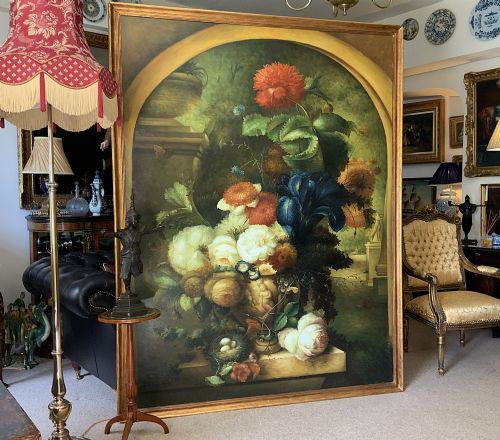
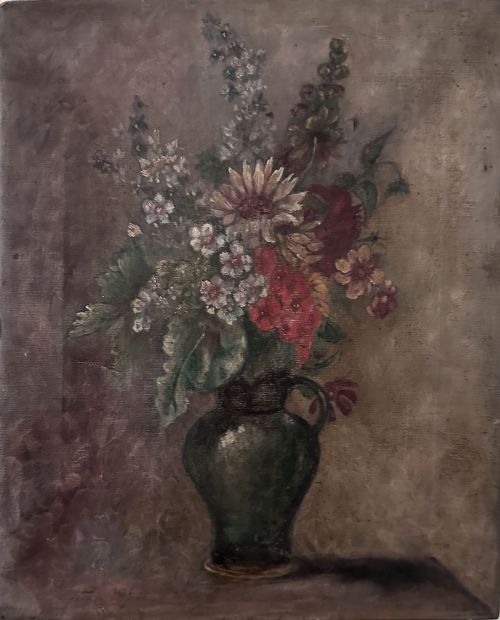
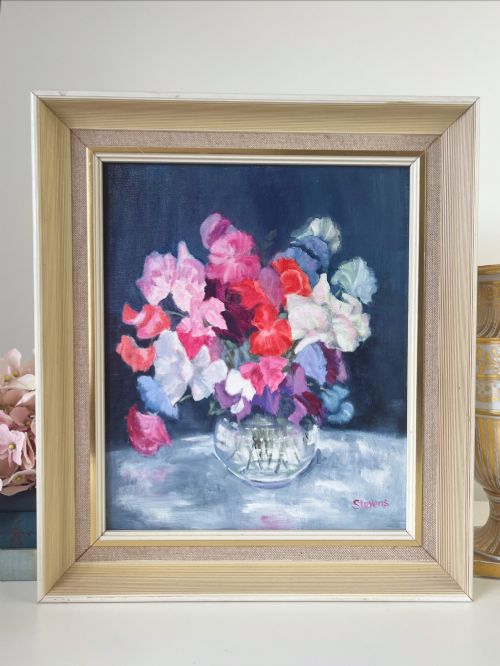
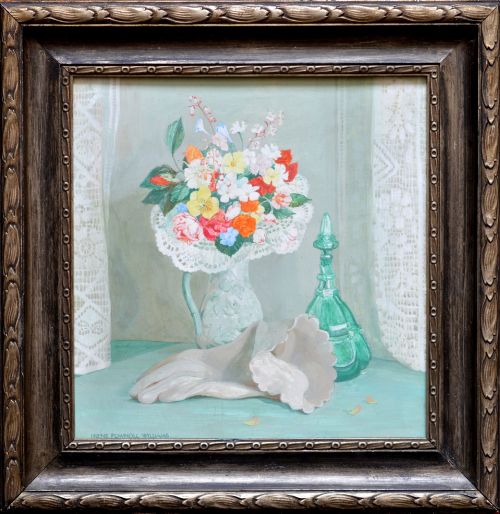
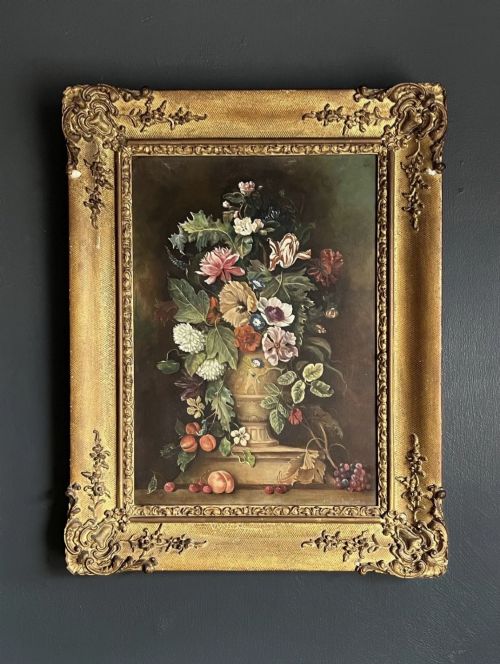
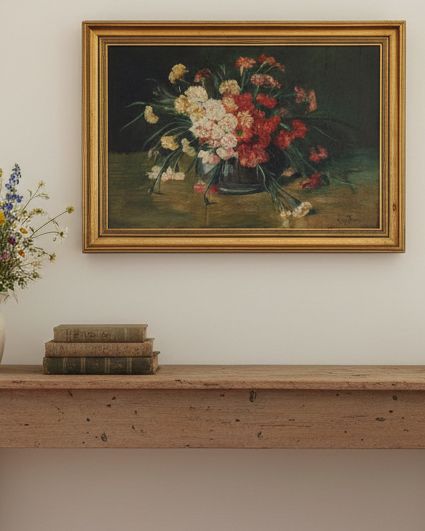
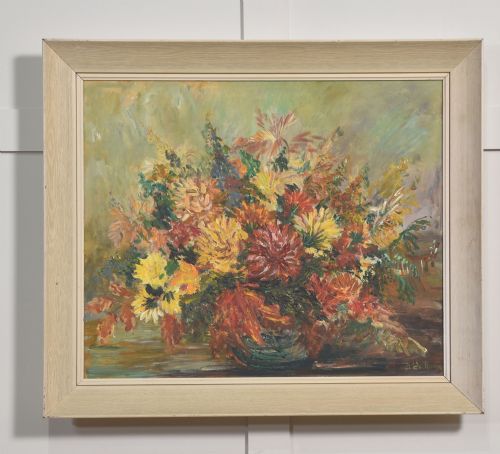
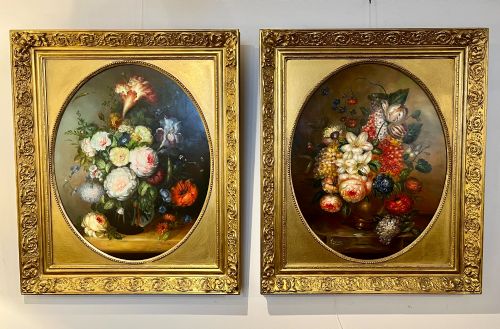
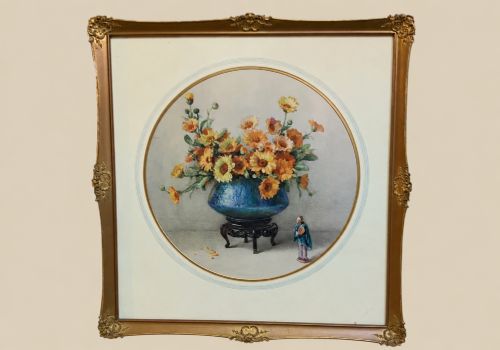
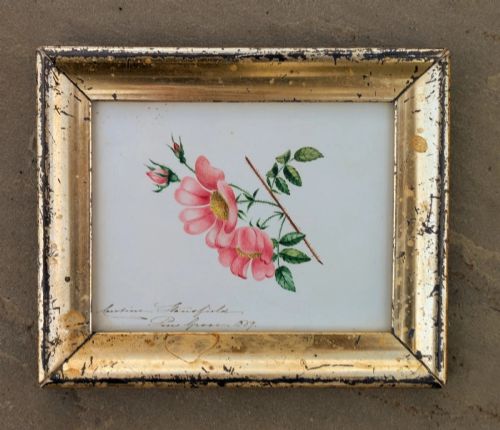
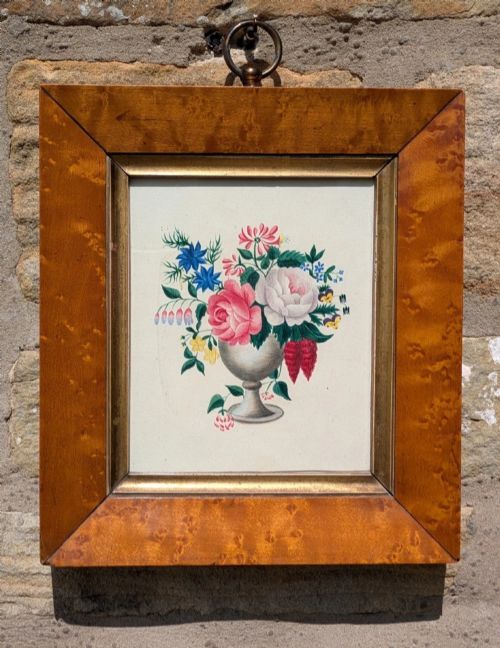
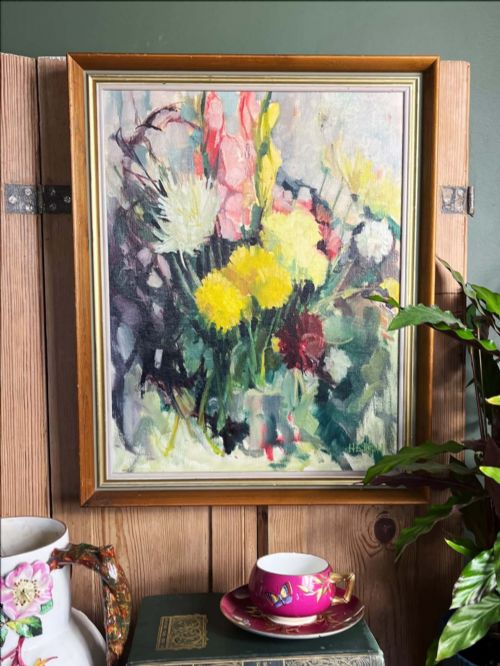
A framed flower painting captures botanical specimens, garden bouquets and still life arrangements across centuries of artistic tradition. When exploring this selection, buyers frequently encounter works executed in oil paint on canvas or panel, alongside delicate paper watercolours.
The assortment spans traditional nineteenth-century realism and Dutch Golden Age interpretations up to mid-century impressionism. These pieces primarily take the form of wall art housed in period wood and gold leaf frames.
How they were made
Artists built these compositions using oil paint, tempera or watercolour upon stretched canvas, wooden panels and heavy paper. Painters applied pigments with brushes or palette knives to capture the textures of petals and foliage.
Surviving works are completed with wooden framing, frequently incorporating moulded gesso and gold leaf gilding to complement the subject matter.
Current listings incorporate works spanning from the nineteenth century through to the mid-twentieth century, utilising oil, watercolour and tempera.
What varies in quality
The distinction between standard decorative pieces and finer works rests in the dexterity of brushwork and the naturalism of light upon the subject. Superior examples render botanical forms with distinct depth and tonal variation rather than flat colouration.
The integrity of the accompanying frame also influences the overall piece, with hand-carved or heavily moulded gesso surrounds contributing to the historical weight of the artwork.
Theude Grönland·Edwin Steele·Owen Bowen·James Tower·Emma Fordyce MacRae
The Framed Flower Painting Glossary
- Oil paint
- A slow-drying medium consisting of pigments suspended in a drying oil, usually linseed. It allows for rich colour blending and textured impasto surfaces.
- Gesso
- A plaster-like mixture applied to wood or canvas as a base for paint or gilding. In framing, it is often moulded into decorative relief patterns.
- Panel
- A flat piece of wood used as a rigid support for painting instead of stretched canvas. Panels are common in earlier European traditions.
- Watercolour
- A paint method where coloured pigments are suspended in a water-based solution. It produces translucent washes upon paper supports.
Framed Flower Painting: Frequently Asked Questions
How do I date a framed flower painting?
Dating relies on stylistic clues, framing materials and the medium used by the artist. Mid-century works often favour brighter boards, whilst nineteenth-century pieces commonly employ heavier gilt gesso frames.
Examining the reverse of the canvas or panel frequently reveals artist signatures, exhibition labels or stamps that narrow down the period of creation.
Where should I hang a botanical painting?
These works suit drawing rooms, dining spaces and hallways where natural light complements the floral subject matter. Pairing them with traditional or mid-century interiors helps anchor the historical context of the piece.
Avoid placing original watercolours or oils in direct sunlight to prevent fading of the pigments and degradation of the paper or canvas supports.
What is the difference between oil and watercolour florals?
Oil paintings feature heavier textures and deeper pigment saturation on canvas or wooden panels. They offer a robust surface that has historically suited formal still life compositions.
Watercolours on paper present a lighter, translucent quality with softer edges. They are traditionally protected behind glass within their frames to prevent moisture damage.
Are original frames important for value?
Original frames provide historical context and aesthetic harmony that match the period of the artwork. Gilt gesso and carved wood surrounds specifically designed for the canvas enhance the integrity of the piece.
Whilst paintings can be reframed over time, matching an artwork to a period-appropriate frame helps preserve its visual balance.