
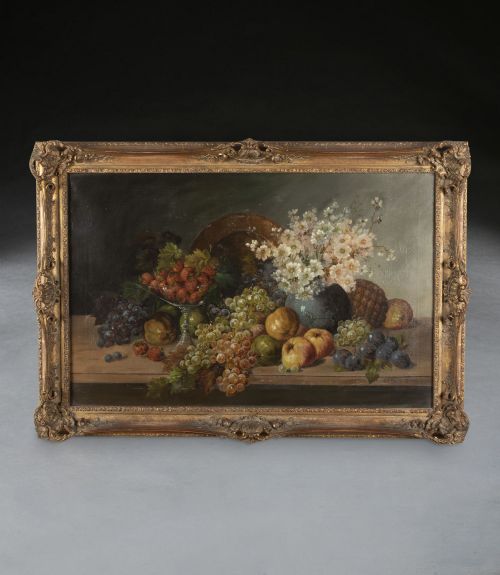


Dark Background Floral Art
Dark background floral art captures dramatic blooms against shadowed depths, offering rich contrast and historic elegance for any interior.
Dark Background Floral Art
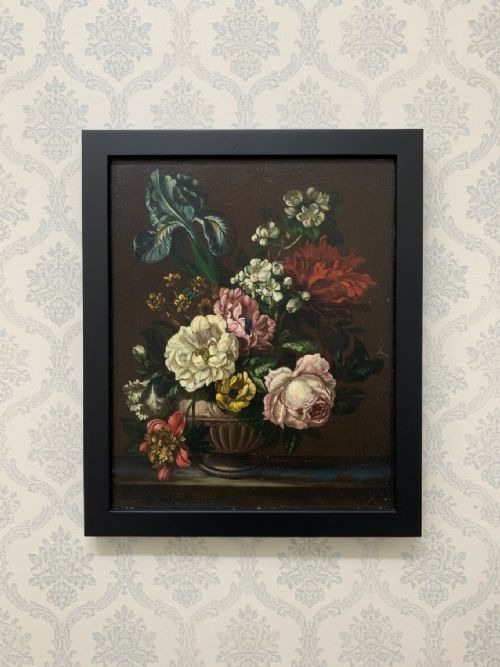
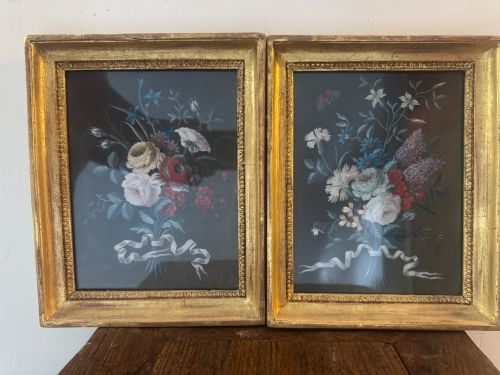
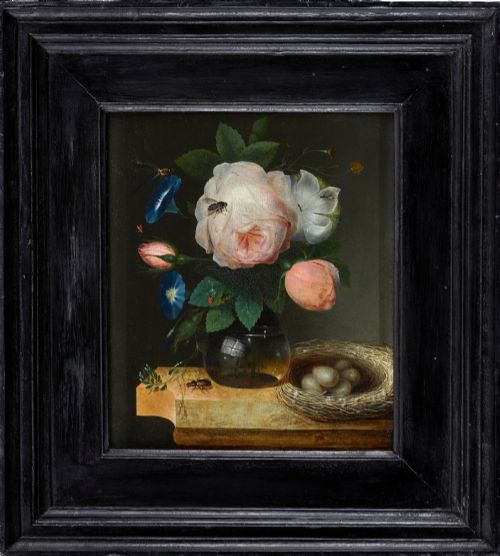
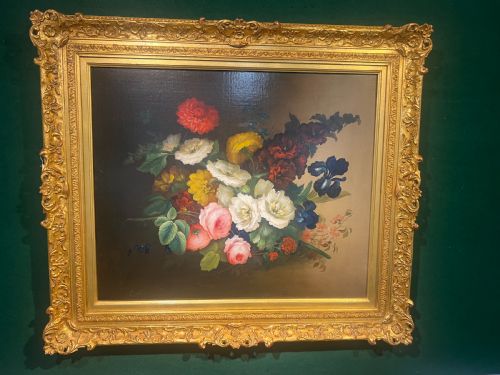
Dark background floral art encompasses painted botanical and still life compositions where vibrant blossoms emerge from deep, shadowed recesses. These works draw heavily upon historical European traditions, particularly Dutch Golden Age and Baroque sensibilities where light catches petals and foliage against obsidian or muted grounds. On this page, buyers encounter everything from early oil paintings on panel to gouache studies and Victorian canvas works.
The periods represented span several centuries, reaching from the seventeenth century through the eighteenth and nineteenth centuries into early twentieth-century interpretations. Formats include single cabinet paintings and balanced pairs depicting roses, mixed floral arrangements, and fruit compositions. Such pieces serve as striking focal points, bringing traditional depth and mood to contemporary and period rooms alike.
How they were made
Makers utilised traditional mediums such as oil paint and gouache applied to prepared canvas, wood panel, or paper supports. Oil paint allowed artists to build rich, luminous layers of pigment, creating the characteristic translucent quality of petals against deep shadows. Gouache provided finer, opaque detail for botanical precision in works on paper.
Framing played an integral role in presentation, with period pieces housed in timber frames, frequently enhanced with gold leaf. These surrounds defined the boundary between the shadowed interior of the painting and the surrounding wall, focusing the viewer's attention entirely on the floral subject.
A delicate white spider lily shares canvas space with an observant butterfly, frozen in permanent contrast.
What varies in quality
Quality in dark background floral art rests primarily on the handling of light and shadow, known as chiaroscuro, which creates the illusion of three-dimensional depth. Superior examples demonstrate confident brushwork and botanical accuracy in the rendering of individual stems, leaves, and petals. Lesser works may rely on rigid symmetry or flat backgrounds lacking atmospheric resonance.
The condition of the support, whether canvas or wood panel, alongside the preservation of the original pigment layers, dictates the integrity of the piece. Finer panels and canvases retain their tension and stability, whilst the application of gold leaf on period timber frames adds an authentic layer of craftsmanship that elevates the complete artwork.
Gaspar Peeter Verbruggen·Edwin Steele·James Stuart Park·Margaret Evangeline Wilson·Owen Bowen
The Dark Background Floral Art Glossary
- Chiaroscuro
- The strong contrast between light and dark used to give the subjects a three-dimensional volume. This technique defines the dramatic aesthetic characteristic of dark background floral art.
- Oil on Panel
- A painting executed on a wooden board rather than stretched canvas. This rigid support was favoured by earlier European schools for fine detail work.
- Gouache
- An opaque water-based medium containing pigment and a binding agent. It dries to a matte finish and was frequently utilised for detailed botanical studies on paper.
- Baroque
- An artistic style prevalent from the seventeenth well into the eighteenth century, characterised by drama, tension, and grand scale. In floral art, it translates to exuberant, asymmetrical arrangements bursting from deep shadows.
Dark Background Floral Art: Frequently Asked Questions
What periods do these paintings come from?
The selection spans from the seventeenth century through the Victorian era and into the early twentieth century. This timeline covers various stylistic revivals and traditional painting methods.
Buyers find everything from seventeenth-century Baroque interpretations to twentieth-century English and Scottish still life works.
How should I hang dark background floral art?
These pieces benefit from placement on walls with neutral or darker tones to let the illuminated floral subjects stand out. Adequate lighting, such as a picture light, helps reveal the subtle details in the shadowed areas.
Consider pairing smaller cabinet paintings together or hanging a single large canvas as a focal point in a reception room.
What is the difference between oil and gouache pieces?
Oil paintings utilise pigment suspended in drying oils on canvas or wood panel, offering deep, rich tones and visible brush texture. Gouache works are created with opaque water-based paint on paper, presenting a smooth, matte finish.
Both mediums achieve striking dark backgrounds, though gouache pieces typically require protective glass framing.
Are these paintings usually framed?
Most pieces come within their period timber frames, some featuring original gold leaf gilding. These frames complement the artwork and protect the edges of the canvas or panel.
Review individual descriptions to confirm whether a specific piece retains its historical frame.
How do I identify a Dutch Golden Age style work?
Dutch style works typically feature intense chiaroscuro, where luminous flowers emerge dramatically from pitch-dark backgrounds. They often include meticulous botanical details alongside insects or fallen petals.
This aesthetic prioritises realistic observation and emotional mood over mere decoration.