


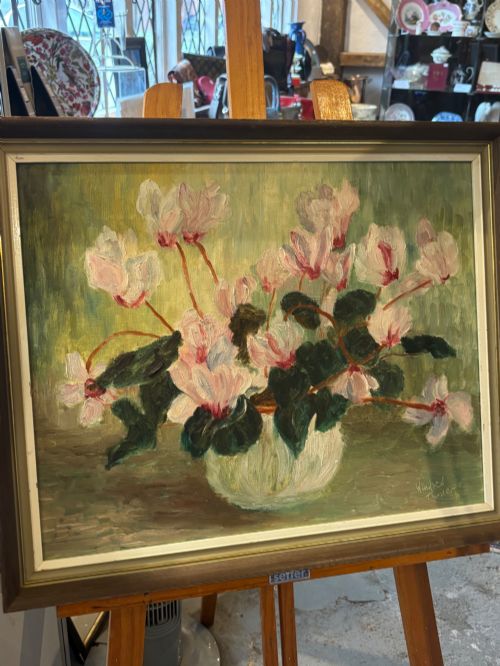


Mid Century Floral Artwork
Mid century floral artwork brings botanical subjects into interior spaces through paintings and panels created across the middle decades of the twentieth century.
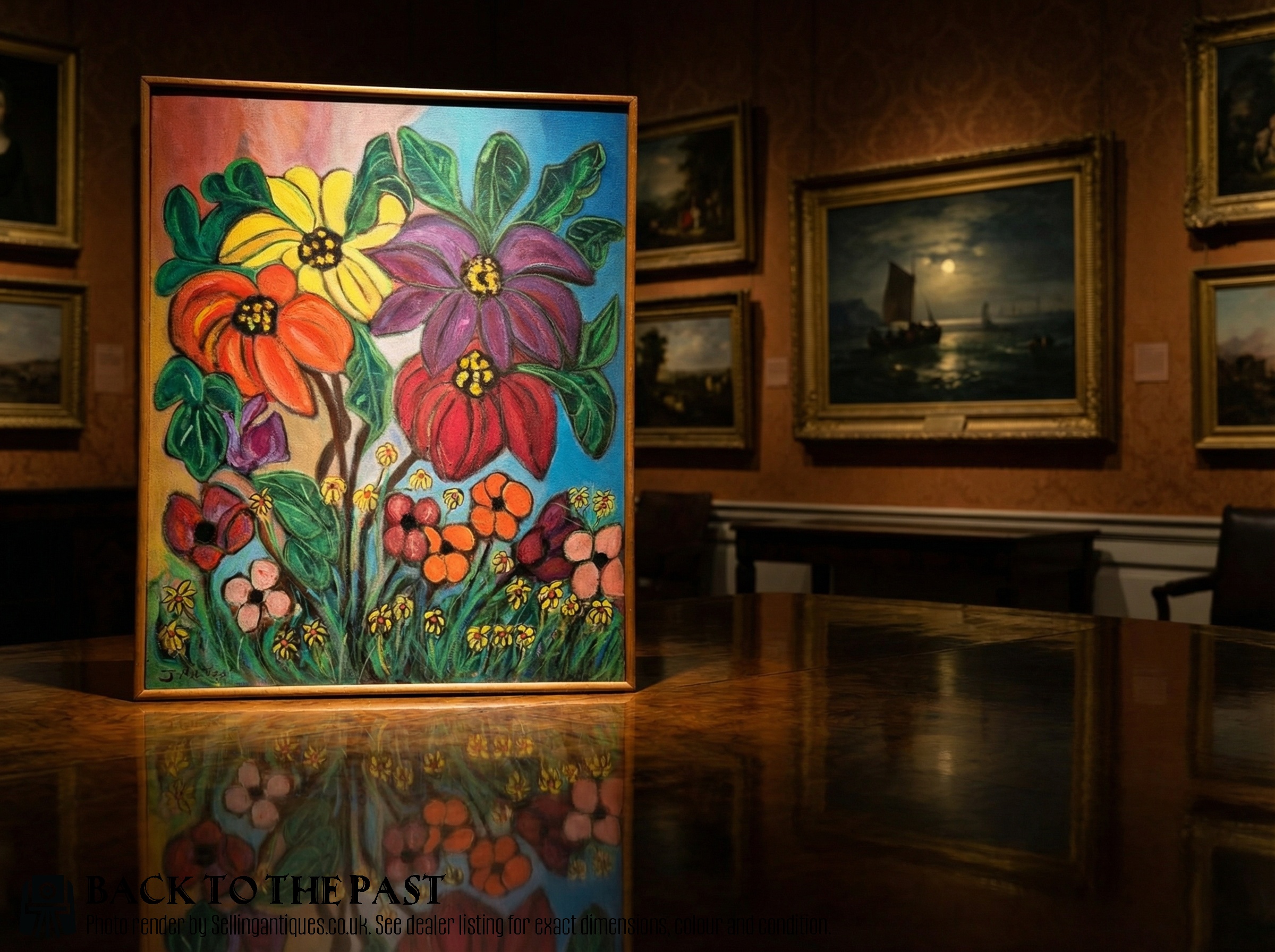
Mid Century Floral Artwork
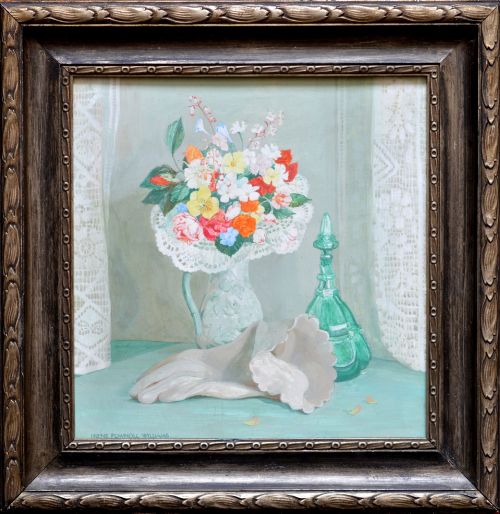
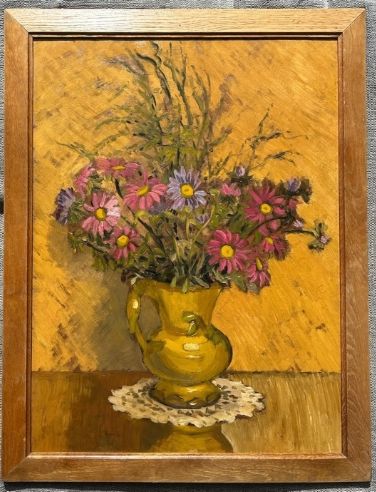
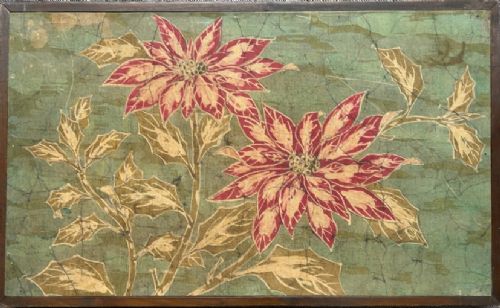
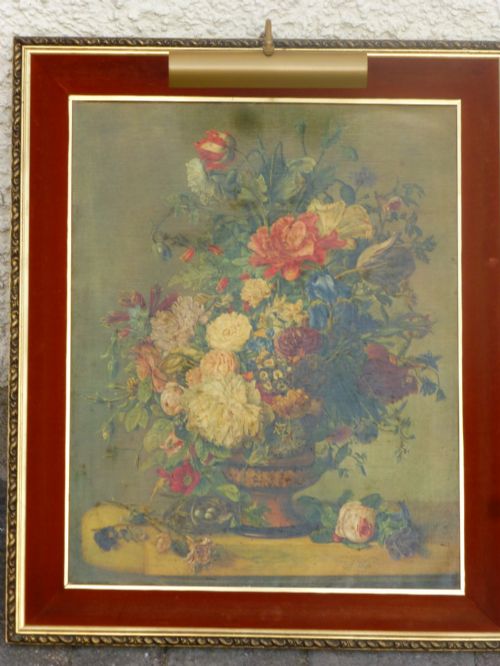
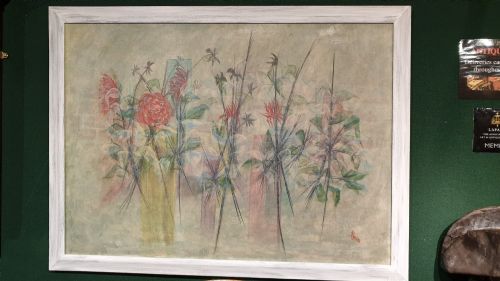
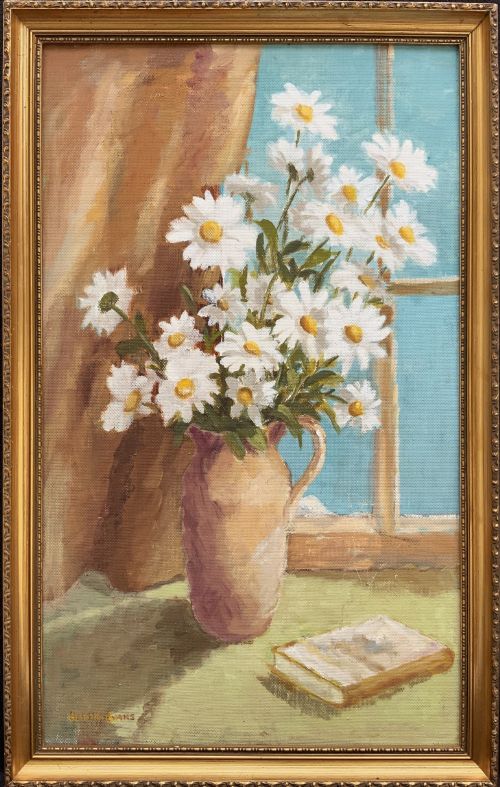
Mid century floral artwork encompasses oil paintings, watercolours, tempera, pastels and batik textile panels depicting botanical subjects such as vases of spring flowers, cut blooms, and garden scenes. These pieces frequently take the form of still life compositions featuring flowers in jugs, bowls or vases alongside fruit.
The selections span from the 1920s through to the 1960s, drawing upon traditional still life genres, impressionism, modern British painting and French modernist approaches. Works originate from British, French, Belgian and Hungarian hands, reflecting diverse regional interpretations of floral subjects during the era.
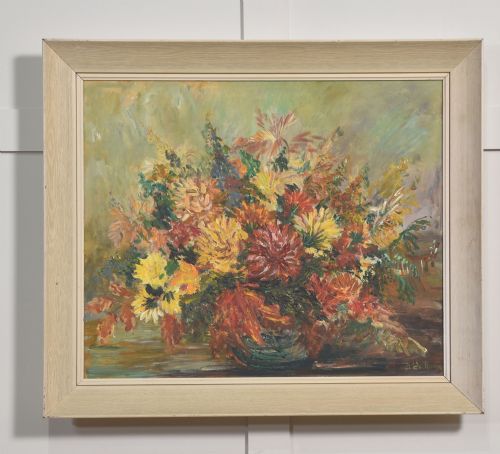
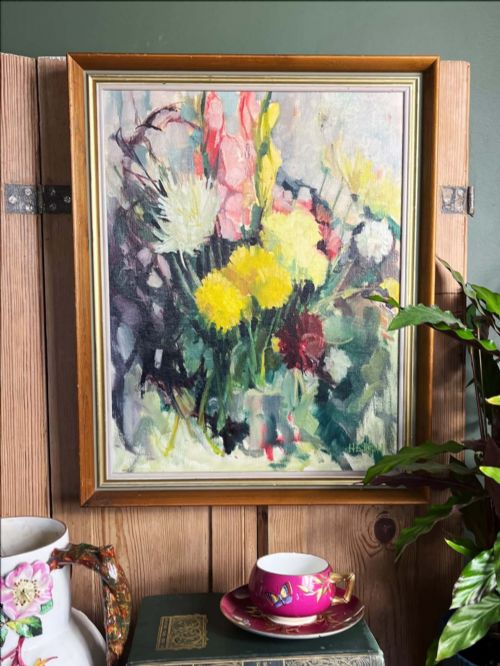
Buyers encountering this phrase will frequently find oil on canvas or oil on board paintings dated to the 1950s and 1960s, alongside wartime watercolours and tempera panels. These works capture floral displays through varied lenses ranging from impasto textures to lightly cubist abstractions.
Distinctions in Quality
Quality reveals itself in the handling of light, colour harmony, and the confidence of the brushwork across the botanical subject. Works where the artist achieves depth through tonal variation and assured composition stand apart from more mechanical reproductions or derivative studies.
The integrity of the original support, the preservation of the paint surface without extensive craquelure or pigment loss, and the suitability of the period frame contribute to the standing of an individual piece.
Mid Century Floral Artwork Retail Price Guide 2026
Typical asking prices for mid century floral artwork among the pieces listed under this phrase on Sellingantiques today, from the lower quarter to the upper quarter. They describe what is for sale here now, not the wider market.
Styles range from traditional still life and impressionism to modern British and French modernist approaches.
Irene Christobelle Pownoll Williams·Kenneth Cozens·James Tower·Winifred Turner·Amile Coppieters·A. Nikolokov·J. Milton·Sir Matthew Smith·Bela Balogh·Terence Loudon·Robin MacKertich·Horst·Stuart Armfield·Margaret Laing·Phyllis I Hibbert·Lena M Alexander
The Mid Century Floral Artwork Glossary
- Impasto
- Paint applied thickly to a canvas or panel so that it stands out from the surface. This technique lets brush marks and knife strokes retain a tactile three-dimensional quality.
- Tempera
- A permanent, fast-drying painting medium consisting of coloured pigment mixed with a water-soluble binder entity, often egg yolk. It produces a durable matte finish on panel or board.
- Oleograph
- A mechanical colour print on canvas made to imitate an oil painting. These pieces replicate the texture and appearance of brush-applied pigments through lithographic processes.
- Batik
- A wax-resist dyeing technique applied to cloth. In textile art panels, molten wax blocks areas of fabric before dyeing to create distinct patterns and floral motifs.
Mid Century Floral Artwork: Frequently Asked Questions
What periods do these floral works date from?
The pieces span the twentieth century, with a heavy concentration in the 1940s, 1950s and 1960s. Earlier examples stretch back through the 1920s and 1930s.
Occasionally, nineteenth-century or Victorian works also appear alongside mid-century modernist interpretations.
How should I care for an oil painting on canvas?
Keep the artwork away from direct sunlight and steady temperature fluctuations to prevent the canvas and paint from degrading. Dust the surface gently with a dry, soft cloth.
Avoid using water or chemical cleaners on the paint layer.
What is the difference between oil on canvas and oil on board?
Oil on canvas involves stretched fabric fixed to a wooden stretcher frame, offering slight give and a woven texture beneath the paint. Oil on board uses a rigid wooden or composite backing material.
Both employ oil-based pigments but provide distinct physical supports for the artist.