



Mid Century Floral Canvas
Mid century floral canvas paintings bring colour and texture into a room, spanning impressionist still lifes and modernist arrangements.
Mid Century Floral Canvas
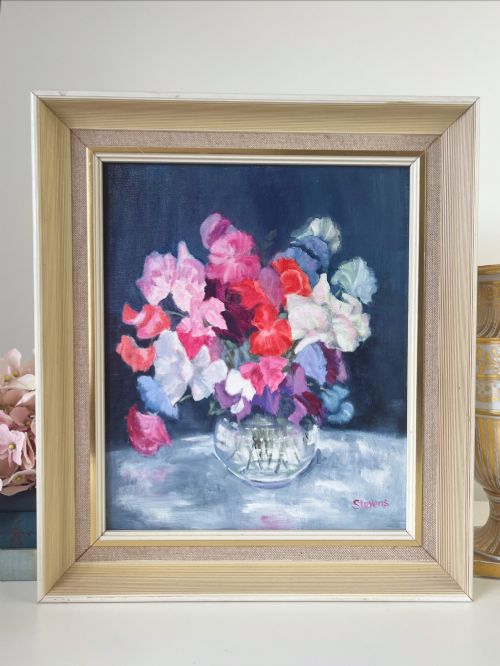
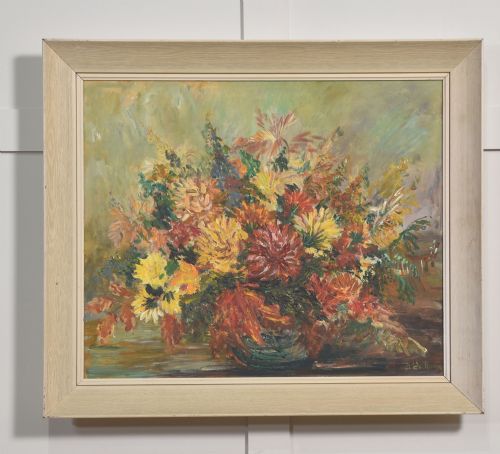
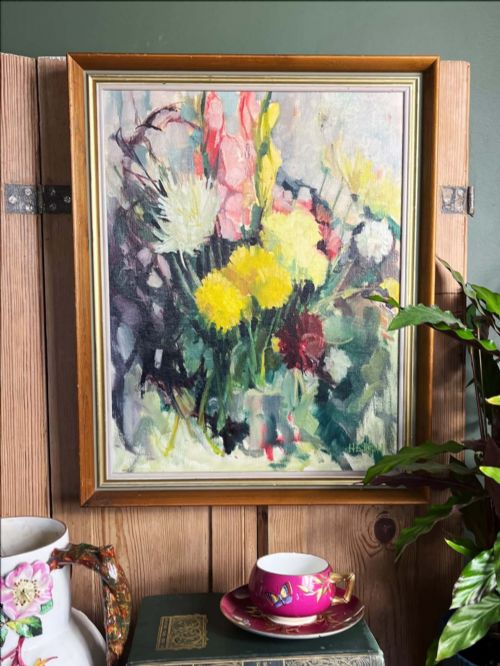
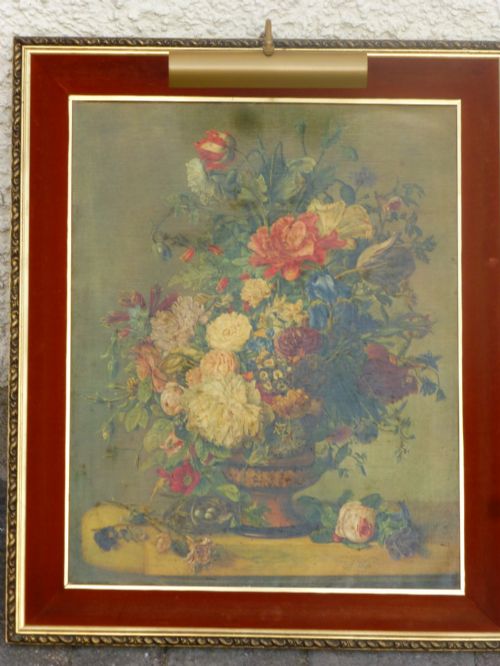
Mid century floral canvas paintings capture botanical subjects across decades from the nineteen twenties to the nineteen sixties, leaning heavily toward mid-century production. These works appear primarily as oil paintings on canvas or board, framed for wall display as fine art.
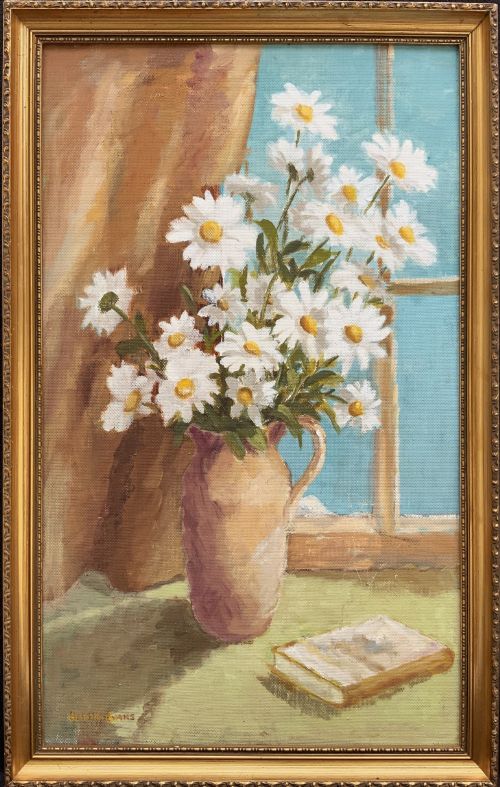
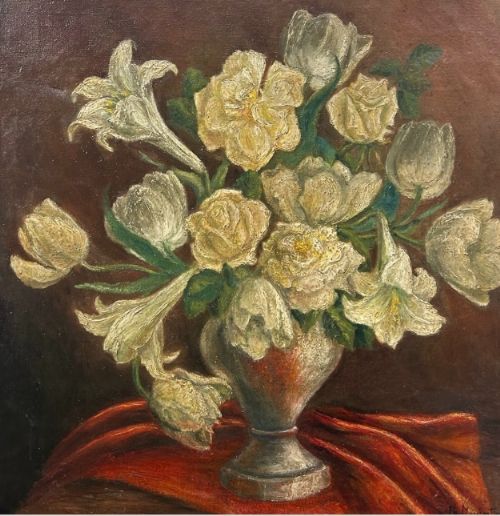
Buyers encounter various stylistic approaches within this category, ranging from impressionist still lifes of daisies and roses to French modernist and abstract interpretations. The pieces celebrate floral displays in vases, bowls and pots, sometimes accompanied by fruit or domestic objects.
Origin points span Britain, France, Belgium, Hungary and wider continental Europe, reflecting diverse regional painterly traditions of the post-war era. Most extant examples measure medium to large scale, designed to anchor a room as original wall art.
Materials and technique
Artists painted primarily with oil paint upon stretched canvas or wooden board, occasionally utilising tempera or impasto techniques to build thick surface texture. Canvases received priming layers before the application of pigments, while frames utilised wood and gilt finishes to house the completed works.
Brushwork varies from tight, realistic renderings of petals and foliage to loose, impressionistic strokes and lightly cubist abstraction. Signatures, dates and inscriptions often appear directly in the wet paint or upon the reverse of the stretcher bars and frames.
Several floral canvases double as lucky charms, including one dedicated specifically to lily of the valley.
What varies in quality
The distinction between ordinary and superior works rests upon the confidence of the brushwork and the harmony of the palette. Stronger pieces display deliberate control over light and shadow within the floral arrangement, whereas weaker examples rely on mechanical repetition and muddy colour mixing.
Original condition of the paint surface and the presence of a sympathetic period frame heavily influence the standing of a piece. Signed works by documented painters carry greater artistic weight than anonymous studio pieces produced in quantity.
D. L. Williams·Anton Weiss·Mark Ingram·Amile Coppieters·A. Nikolokov·J.Milton·Sir Matthew Smith·Bela Balogh·Terence Loudon·Robin MacKertich·Stuart Armfield·Bertoldo Taubert
The Mid Century Floral Canvas Glossary
- Impasto
- Paint applied thickly to a canvas, standing out in relief from the plane. This technique adds tactile dimension to petals and leaves.
- Still life
- A work depicting inanimate subject matter, typically commonplace objects or natural items such as flowers and fruit. These compositions focus on arrangement and lighting.
- Tempera
- A permanent, fast-drying painting medium consisting of coloured pigment mixed with a water-binder agent. It creates a matte, opaque finish.
- Oleograph
- A mechanical colour lithograph textured to imitate an oil painting. These prints mimic the appearance of canvas brushwork.
- Stretcher
- The wooden frame upon which a canvas is stretched tight before painting. Antique stretchers often show wedge keys in the corners.
Mid Century Floral Canvas: Frequently Asked Questions
How do I hang a heavy framed canvas?
Heavy framed paintings require secure wall fixings suited to the specific wall construction, such as solid masonry plugs or plasterboard anchors.
Utilising picture wire rated above the weight of the piece helps ensure stability against the wall surface.
Can I clean an oil painting safely?
Dust removal should happen gently with a soft, dry brush, avoiding any moisture or household cleaning products on the paint surface.
Professional conservators handle deep cleaning and varnish removal to prevent accidental damage to the original pigments.
What frames suit mid century art?
Simple wooden mouldings, gilt frames and tray frames match the aesthetic of post-war modernist and impressionist canvases.
Original frames often accompany the painting and provide historical context for the piece.
How do I date an unsigned painting?
Dating relies upon examining the canvas weave, stretcher construction, framing materials and the stylistic clues within the brushwork.
Comparable works by known peers often offer a reliable window of creation.