
Floral Still Life Art
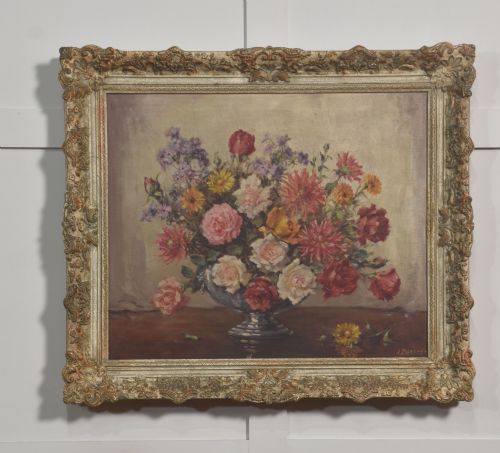
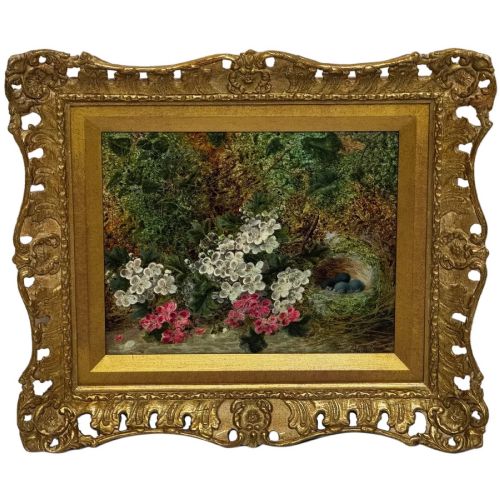
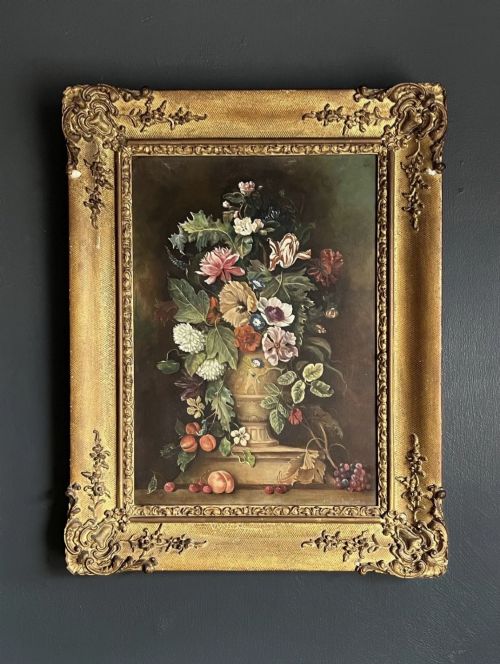
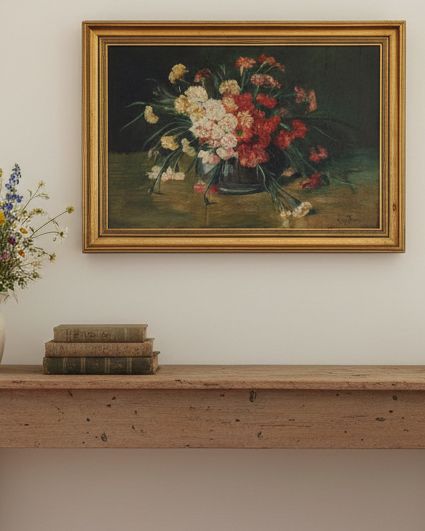
Floral still life art brings botanical compositions into interior spaces through centuries of painted canvases, panels and watercolours.
Floral Still Life Art
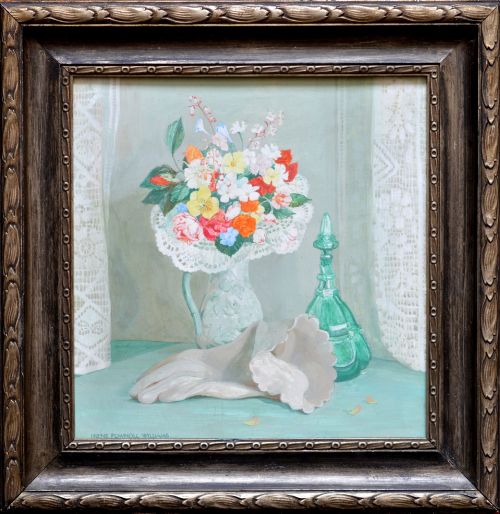
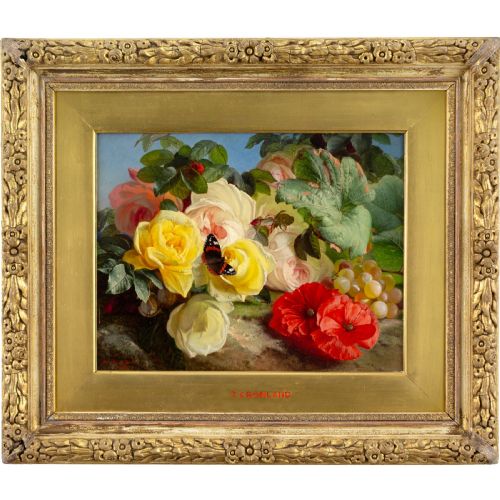
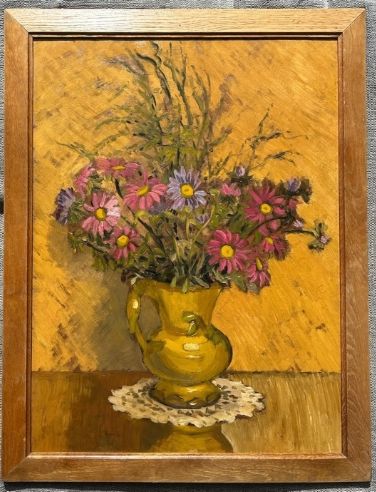
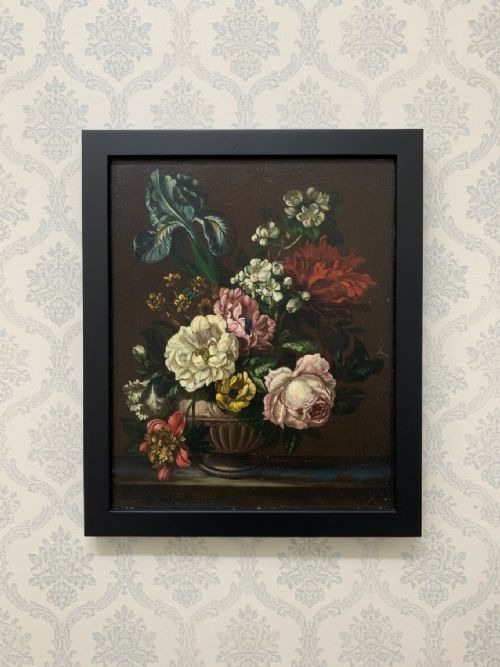
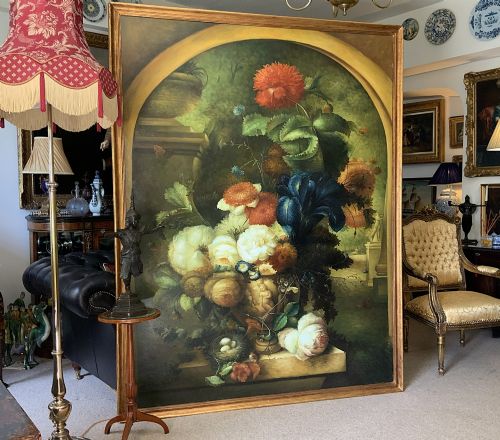
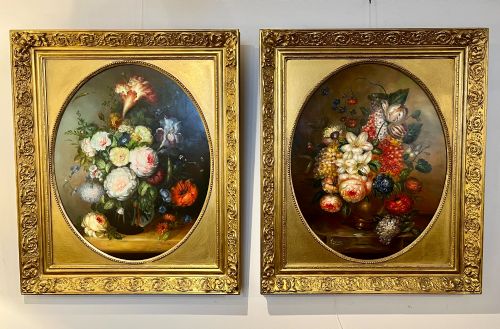
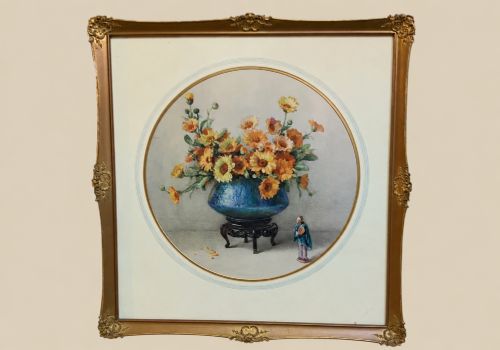
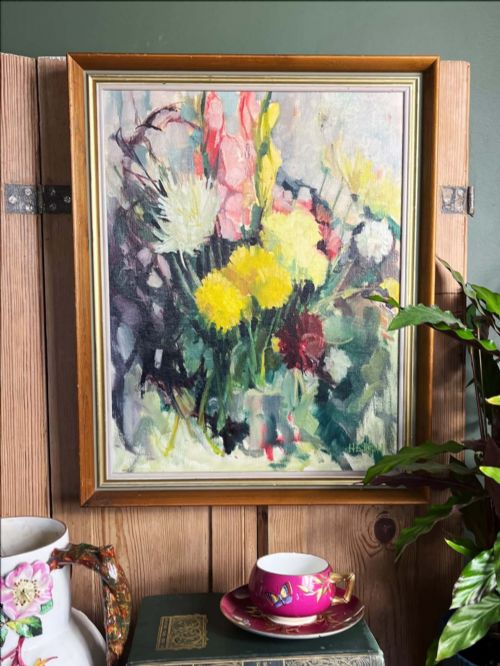
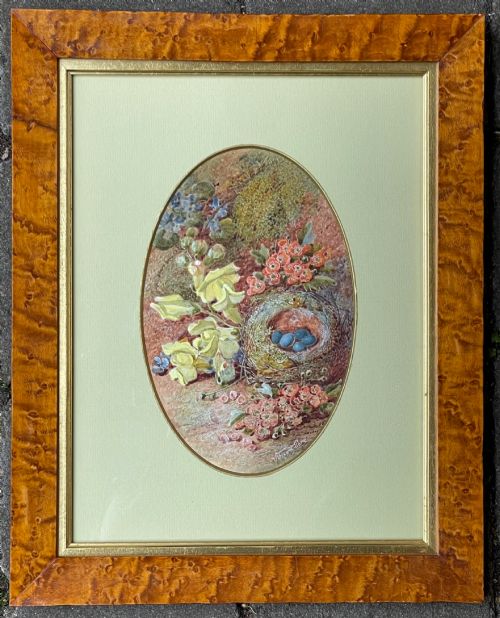
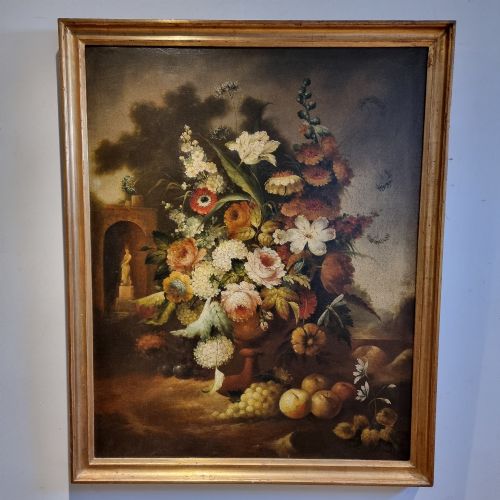
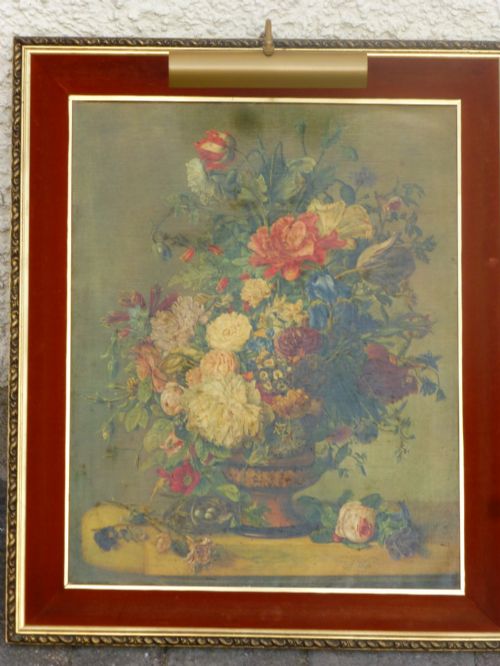
Floral still life art captures arranged blooms, vases and baskets across periods spanning the seventeenth century to the mid-twentieth century.
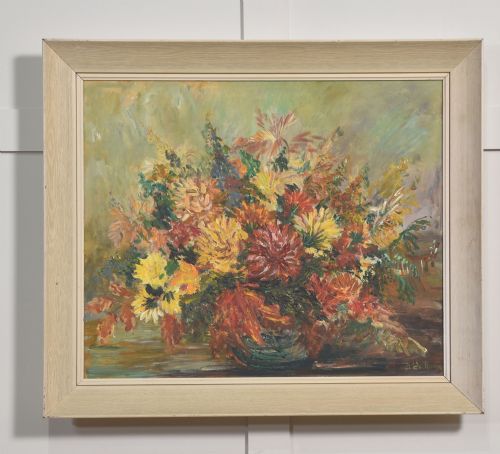
Compositions range from monumental Dutch style arrangements to intimate impressionist studies of garden flowers.
Works appear on canvas, wood, paper and board, often retained in period frames of gilt wood or gesso.
Materials and methods
Painters applied oil and watercolour pigments onto stretched canvas, wooden panels and thick paper supports.
Frames incorporated carved wood and applied gold leaf or gilt finishes to complement the painted imagery.
The listings span multiple centuries, utilising oil paint, canvas, wood, paper and gold leaf across diverse artistic movements.
Quality differences
Handling of light, shadow and botanical detail distinguishes individual works, from loose impressionist brushwork to precise academic realism.
The integrity of the original surface and the proportion of the frame influence the overall presentation of each piece.
Oliver Clare·Edward Ladell·Edwin Steele·Owen Bowen·Gaspar Peeter Verbruggen
The Floral Still Life Art Glossary
- Oil on canvas
- Pigment suspended in drying oil applied to a woven fabric support stretched over a wooden frame. This method allows for rich colour blending and textured brushwork.
- Gilt gesso
- A plaster mixture applied to wood frames and coated with gold leaf. It provides a reflective surface that frames the artwork.
- Impressionism
- A style of painting focusing on light and spontaneous brushstrokes rather than meticulous detail. It emerged in the nineteenth century and influenced later artists.
- Oil on panel
- Pigment applied to a wooden board rather than canvas. Panels offer a rigid support that preserves fine details over centuries.
- Watercolour
- A paint consisting of colour pigments suspended in a water-soluble vehicle. It is typically applied to paper to create luminous compositions.
Floral Still Life Art: Frequently Asked Questions
How do I date a floral still life painting?
Dating relies on stylistic clues, framing techniques, and the materials used for the support such as canvas or wood panel.
Comparison with documented works by known artists also helps establish the likely period of creation.
Where should I hang a floral still life?
These pieces suit living rooms, dining spaces, or hallways where natural light complements the painted tones.
Keeping paintings away from direct sunlight preserves the pigments on canvas and paper over time.
Are original frames important?
Original gilt or wood frames provide context and protect the edges of the canvas or panel.
Matching a period frame enhances the historical presentation of the artwork.
What is the difference between oil and watercolour?
Oil paint utilises a drying oil binder that permits thick impasto and rich colour depth on canvas or board.
Watercolour uses water-soluble binders on paper to produce lighter, translucent botanical studies.