


Blue Floral Oil Painting
A blue floral oil painting brings botanical warmth to a room through layered brushwork and enduring canvas.
Blue Floral Oil Painting
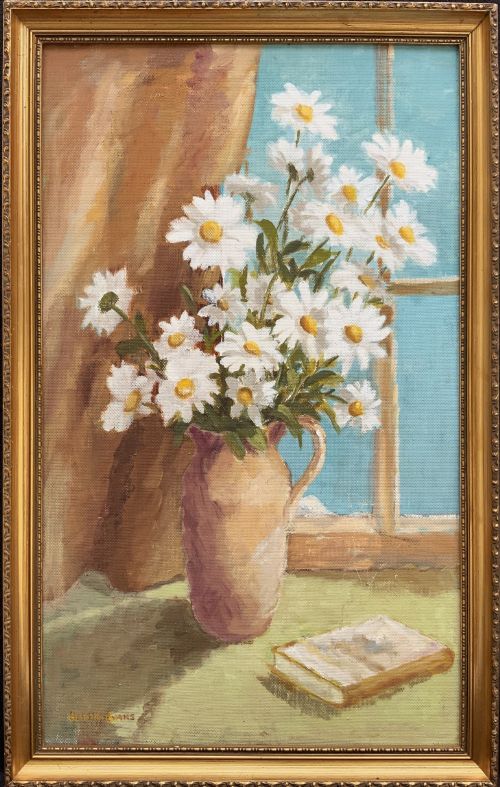
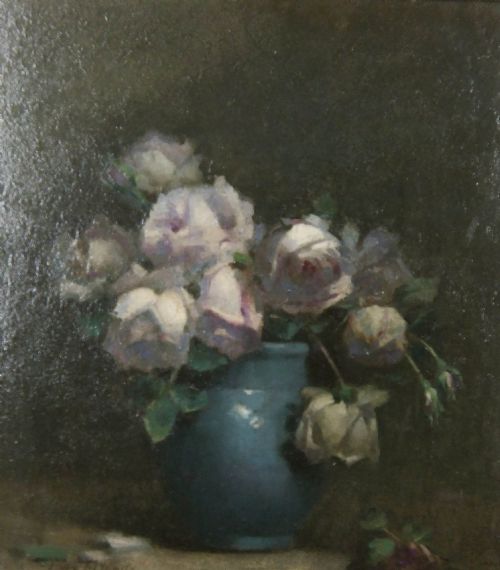
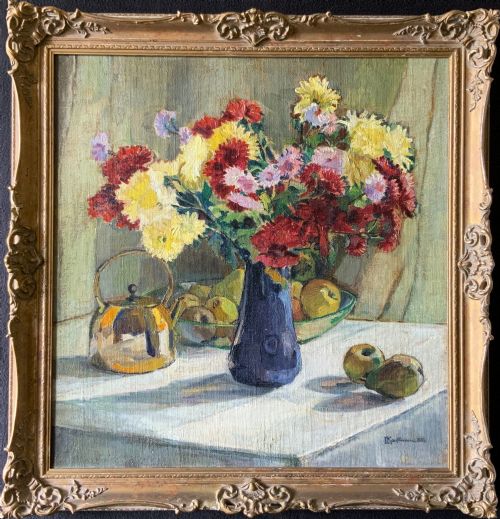
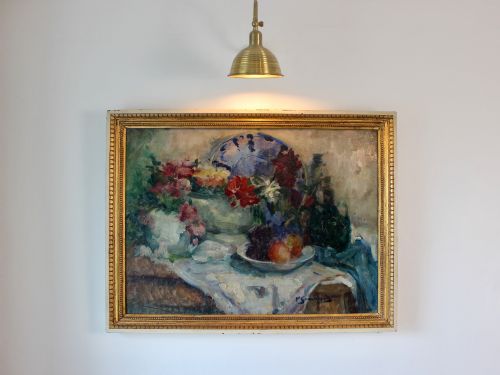
A blue floral oil painting typically takes the form of a still life study or an impressionist garden scene depicting subjects such as roses, daisies, anemones, and water lilies. These works capture botanical subjects using rich pigments, often set within period frames made of gilt wood and gesso.
The pieces available span from the Victorian era through the Art Deco period and into mid-century impressionism. Buyers encounter works produced by British, French, and Belgian artists working on canvas, board, or wood supports.
Materials and construction
These works rely primarily on oil paint applied to prepared canvas, board, or wood supports, utilising the slow-drying nature of the medium to blend tones and build texture. Artists layered pigments to create depth within petals, interiors, and lake water scenes.
Many examples are housed in decorative gilt wood and gesso frames that complement the composition. The combination of oil paint and textured frames defines the physical structure of these artworks.
Listings span from the Victorian era through the 1960s, featuring oil paint on canvas, board, and wood.
Factors of quality
Quality rests in the handling of brushwork and the confidence of the composition, distinguishing swiftly executed decorative pieces from deeply observed studies. The interplay of light and shadow across the blue floral elements reveals the hand of a more accomplished painter.
The preservation of the original surface and the harmony between the painting and its period gilt or wood frame also influence the overall standard. Works with clear provenance or signed by noted artists command stronger interest.
William Thomas Wood·Victor Simonin·Owen Bowen·Stuart Armfield·Margaret Evangeline Wilson
The Blue Floral Oil Painting Glossary
- Oil paint
- A slow-drying paint made by mixing pigments with oils such as linseed. This medium allows artists to blend colours seamlessly and build rich surface textures.
- Gesso
- A plaster-like mixture applied to wood or canvas to prepare a smooth surface for painting or moulding. In frames, it provides the base for decorative gilt details.
- Impressionism
- A style of painting that focuses on capturing the visual impression of a moment, using shifting light and visible brush strokes. It frequently depicts outdoor scenes and informal domestic interiors.
- Still life
- A work of art depicting mostly inanimate subject matter, typically everyday objects or botanical specimens like cut flowers. These compositions allow artists to explore form, colour, and light in a controlled setting.
- Gilt wood
- Wood coated with a thin layer of gold leaf or gold-coloured metallic paint. It was commonly used for framing paintings from the Victorian period through the mid-century.
Blue Floral Oil Painting: Frequently Asked Questions
How do I date a floral oil painting?
Dating relies on stylistic clues, materials, and framing techniques. Victorian works often feature darker palettes and ornate frames, whereas mid-century pieces display looser brushwork.
Signatures, stretcher construction, and canvas stamps also help narrow down the decade of creation.
Where should I hang a floral oil painting?
These paintings suit living rooms, studies, and hallways where natural light can illuminate the brushwork. Placing them away from direct sunlight protects the oil pigments over time.
Pairing the canvas with a traditional or eclectic interior highlights the painted botanical details.
Are these paintings original works?
The pieces recorded here are original hand-painted works rather than prints or reproductions. Artists applied oil paint directly to canvas, board, or wood supports.
Signatures and visible paint texture confirm the unique nature of each individual study.
How do I care for an oil painting?
Keep the canvas away from extreme temperature fluctuations and damp environments to prevent cracking in the paint layer. Dust the surface gently with a soft, dry brush.
Avoid using water or chemical cleaners directly on the painted canvas or gilt frame.