


1930s Still Life Painting
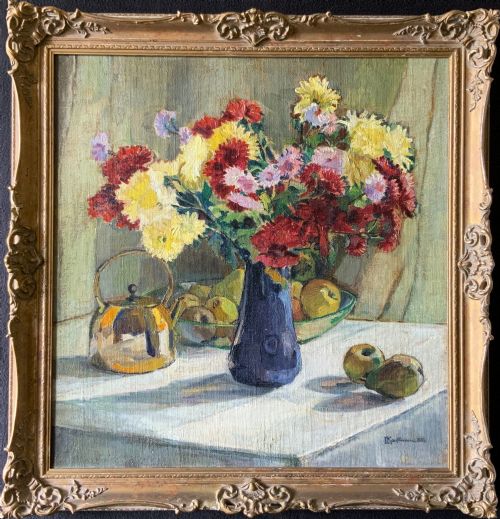
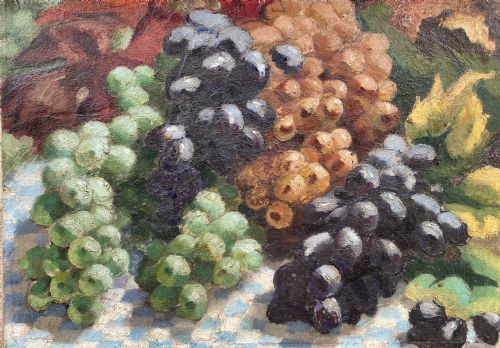
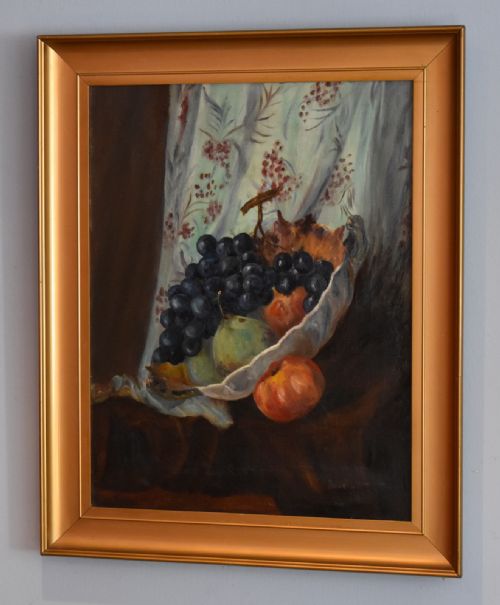
These 1930s still life painting examples capture domestic interiors and intimate arrangements through the lens of early twentieth-century modernism.
1930s Still Life Painting
A 1930s still life painting represents inanimate subject matter such as floral arrangements, fruit, and studio interiors created during the interwar period. These works frequently reflect artistic movements of the decade including Art Deco, Surrealism, and Post-Impressionism.
The pieces available here lean towards British and French origins, showing the distinct modernist sensibilities of artists working in those regions during the 1930s and into the early 1940s. Floral studies and tabletop scenes form the predominant visual subjects across the selection.
Collectors encounter both oil paintings and works on paper, capturing domestic spaces, windowsills, and carefully composed objects. The aesthetic ranges from precise realism to looser pointillist and impressionist interpretations of everyday items.
Materials and Construction
Artists of this period primarily utilised oil paint applied to canvas or wooden board, creating durable surfaces that hold pigment stability over decades. Gouache on board also appears as a medium for works requiring flatter, more opaque colour application.
Support materials include stretched canvas secured to wooden frames alongside rigid board and paper supports. Many canvases remain paired with period frames, often finished in gilt or plain wood matching the modernist aesthetic of the era.
The documented styles include Surrealism, Art Deco, Post-Impressionism, and twentieth-century realism by British and European artists.
Assessing Artistic Merit
Quality in these works rests upon the confidence of brushwork, compositional balance, and the artist's command of light and shadow within a confined interior space. Stronger examples demonstrate a distinct personal style rather than generic execution.
The preservation of the pigment layer and the stability of the original support material also influence the standard of a piece. Works retaining their original period framing often present a more unified historical object.
Sir Matthew Smith·Rowland Henry Hill·Harold Edward Conway·Victor Simonin
The 1930s Still Life Painting Glossary
- Still life painting
- A work of art depicting mostly inanimate subject matter, typically commonplace objects which may be either natural or man-made.
- Post-Impressionism
- A predominantly French art movement that developed from about 1886 to 1905, extending Impressionism while rejecting its limitations. Artists painted with vivid colours and distinct brushstrokes.
- Art Deco
- A style of visual arts, design and architecture that first appeared in France just before World War I, influencing design well into the 1930s with streamlined forms and clean lines.
- Gouache
- An opaque water-based paint consisting of pigment, water, and a binding agent such as gum arabic, producing a flat and dense surface appearance.
- Pointillism
- A technique of painting in which small, distinct dots of colour are applied in patterns to form an image, seen in certain modernist floral studies.
1930s Still Life Painting: Frequently Asked Questions
What subjects appear in 1930s still life paintings?
These works typically depict domestic tabletop arrangements, including bowls of fruit, wine bottles, and potted plants placed near windows or within artist studios. Floral studies, particularly featuring anemones, dahlias, and summer flowers, are especially common.
Interiors often incorporate objects like globes or patterned tablecloths, reflecting the personal spaces and decorative tastes of artists working during the 1930s and early 1940s.
How do I care for an oil painting on canvas?
Keep the painting away from direct sunlight, extreme temperature fluctuations, and high humidity to protect both the canvas support and the oil pigment layer. Dust the surface gently with a soft, dry brush without applying pressure.
Avoid using water, chemical cleaners, or damp cloths on the painted surface or the frame. Professional conservation should be sought if the canvas requires cleaning or structural repair.
How can I tell an Art Deco still life apart?
Art Deco period still lifes often feature stylised geometry, simplified forms, and clean compositions that reflect the design sensibilities of the interwar decades. The objects chosen, such as modern vessels or distinct glassware, frequently align with the decorative arts of the era.
Colour palettes in these pieces can be bold or subtly tonal, but the overarching structural arrangement emphasises order and modern aesthetic balance.
Where were most of these paintings produced?
The pieces originate primarily from British and French artistic circles, reflecting the thriving modernist art scenes in London and Paris during the interwar years. Artists working in these hubs participated in contemporary exhibitions and regional art movements.
Continental European influences also appear, capturing the diverse stylistic approaches adopted by painters responding to the changing artistic landscape of the 1930s.