
Botanical Still Life Painting
A botanical still life painting brings the quiet study of cut blooms and gathered fruit straight onto the wall.
Botanical Still Life Painting
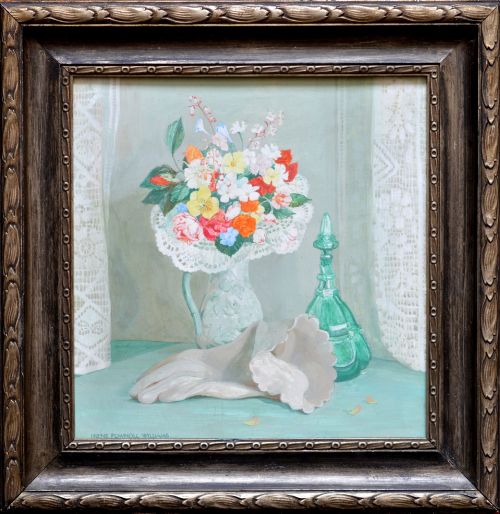
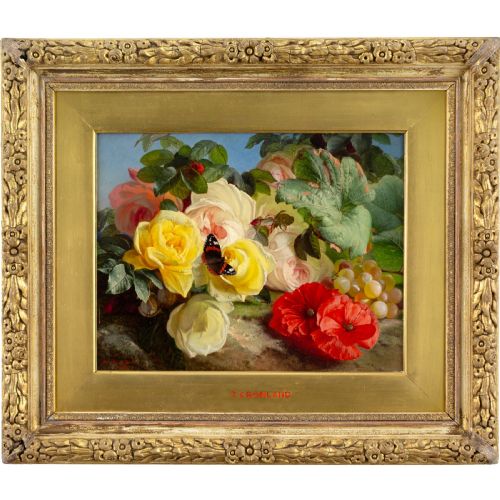
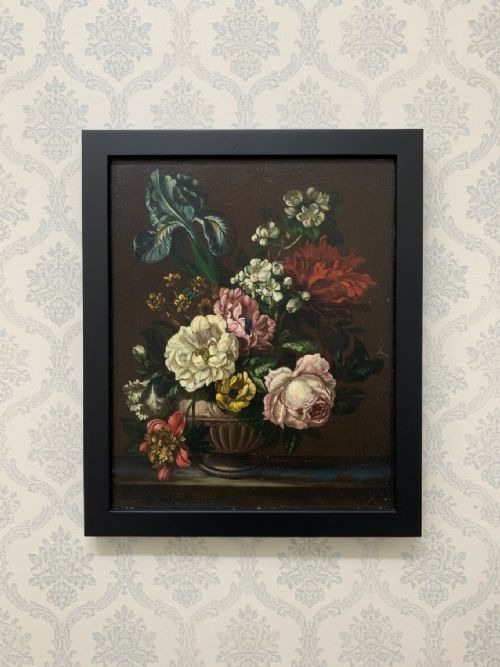
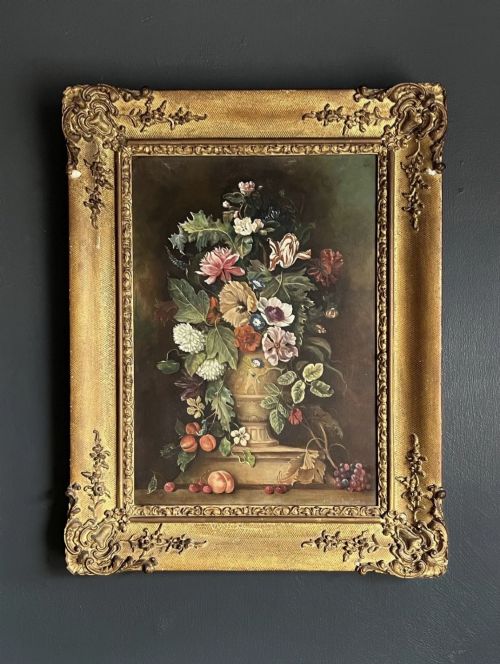
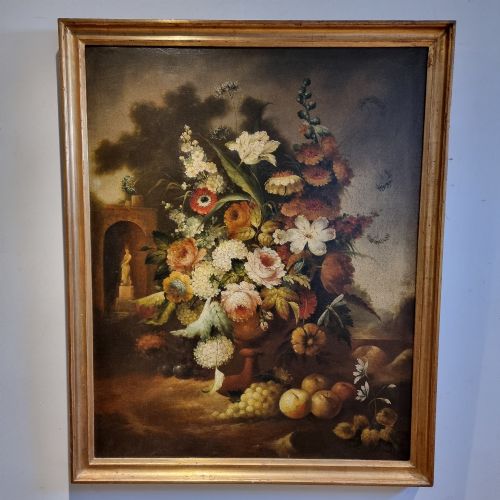
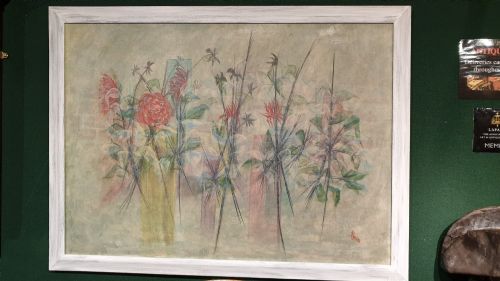
A botanical still life painting captures the careful arrangement of flowers, fruit, and vessels, drawn from centuries of observation. These works range from small nineteenth-century watercolours to large twentieth-century oils on canvas and board.
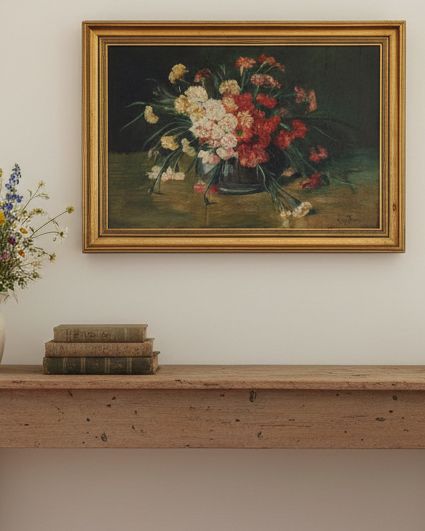
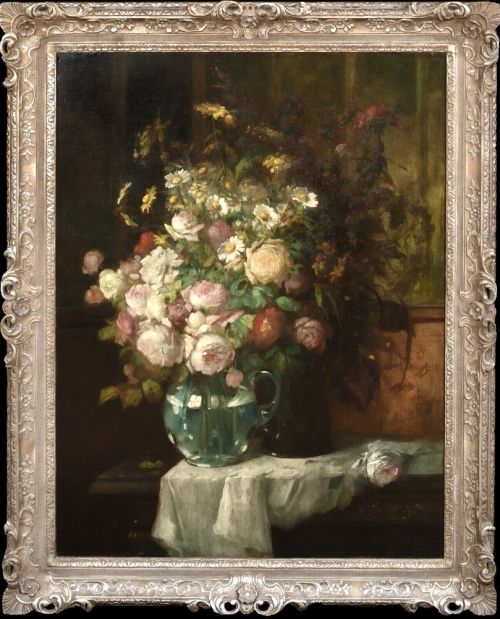
The pieces appearing most frequently lean toward mid-century interpretations and nineteenth-century academic studies. Common compositions place roses, carnations, and summer blossoms inside ceramic jugs, glass vases, or wicker baskets.
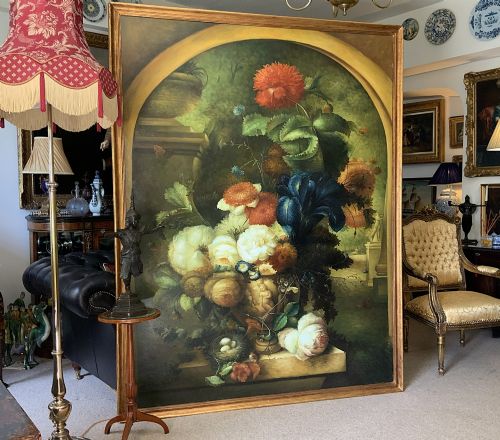
Originating from traditions across Britain, Europe, and America, these paintings vary from intimate domestic watercolours to monumental decorative canvases.
How they were made
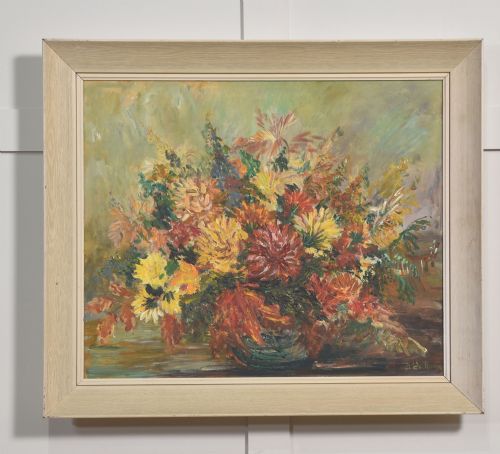
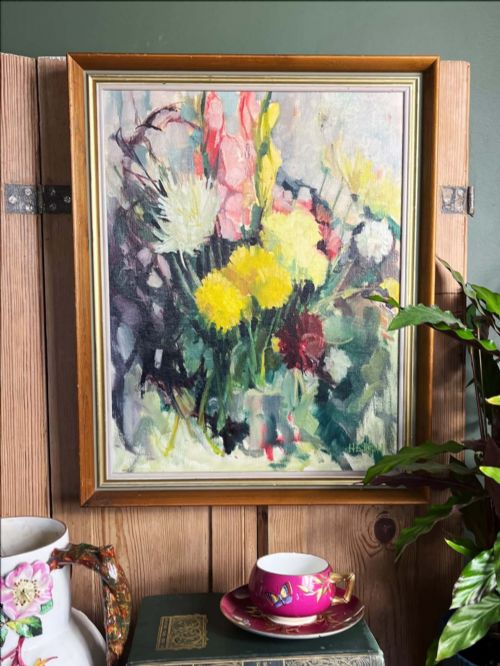
Painters worked primarily with oil paint on canvas, wood panels, or rigid board, while others utilised watercolour, gouache, and pastel on paper. The application ranges from tight, controlled nineteenth-century academic realism to looser twentieth-century impressionist brushwork.
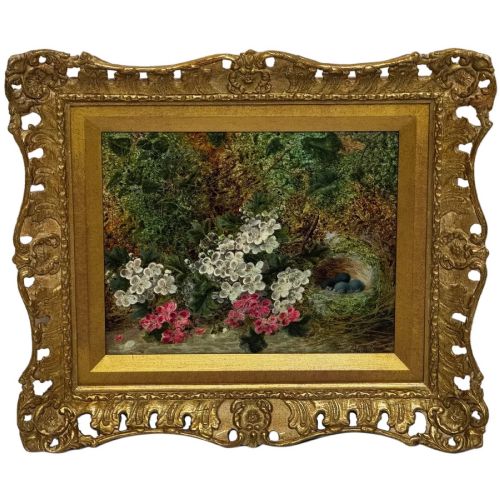
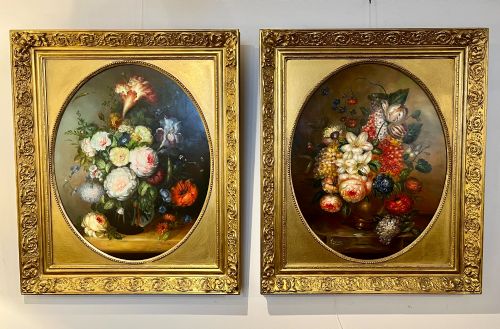
Many works retain their original housing, including wooden frames finished with gilded gesso or gold leaf.
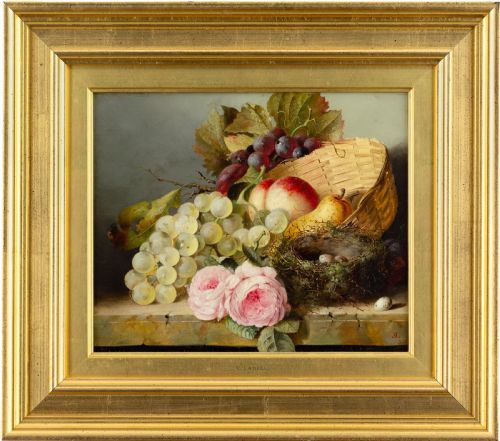
Birds' nests tucked beneath clusters of summer fruit remain a remarkably popular feature in nineteenth-century floral arrangements.
What varies in quality
The strength of a botanical still life painting rests upon the draughtsmanship in the petals and stems, alongside the handling of light across fruit and ceramic surfaces. Stronger examples display confident brushwork and balanced composition that grant depth to the arrangement.
Condition plays a part, particularly the stability of the paint layer on canvas or panel and the preservation of the original gilt frame.
Irene Christobelle Pownoll Williams·Oliver Clare·D. L. Williams·Mark Ingram·Konstantin Stoitzner·Edward Ladell·Emma Fordyce MacRae·Gaspar Peeter Verbruggen·Ian Parker·Harold Clayton·Edwin Steele·D. Hardy·Manuela Bonati·William Thomas Wood·John Sherrin·Owen Bowen·James Tower
The Botanical Still Life Painting Glossary
- Gesso
- A plaster-like mixture applied to wooden frames before gilding. It provides a smooth base that accepts intricate moulding and gold leaf.
- Oil on panel
- A painting technique where oil pigments are applied to a flat wooden support rather than fabric. This method offers a rigid ground that prevents canvas slackening.
- Impressionism
- A style of painting focused on transient effects of light and spontaneous brushstrokes rather than microscopic detail. It emerged in the nineteenth century and influenced floral studies well into the twentieth.
- Gouache
- An opaque water-based medium that dries to a matte finish. Artists use it on paper to build solid blocks of colour and crisp botanical lines.
- Tempera
- A permanent, fast-drying painting medium consisting of coloured pigments mixed with a water-soluble binder such as egg yolk. It produces a durable surface with a subtle, non-reflective sheen.
Botanical Still Life Painting: Frequently Asked Questions
How do I date a floral painting?
Dating relies on the substrate, pigments, frame style, and the artist's recorded working period. Canvas supports and gesso frames often match the prevailing aesthetic of their decade of creation.
Signatures, exhibition labels on the reverse, and stylistic clues such as the looser brushwork of mid-century pieces also narrow down the era.
Are these paintings usually framed?
Many arrive in period frames, frequently featuring moulded gesso or gilding that complements the artwork. Original frames are valued for maintaining the historical integrity of the piece.
Some works appear on unmounted panels or board, requiring careful framing to protect the edges.
Where should I hang a botanical painting?
These works suit dining rooms, libraries, and hallways where natural light enhances the rich tones of oils and watercolours. They pair effectively with traditional interiors as well as mid-century modern spaces.
Keep them away from direct sunlight and damp walls to protect the paint layer and paper supports.
What is the difference between oil and watercolour still lifes?
Oil paintings utilise slow-drying pigments on canvas, wood, or board, allowing for rich texture and deep colour layering. Watercolours use transparent pigments on paper, creating a lighter, more luminous finish.
Watercolours generally require protective glass framing, whereas oil paintings on canvas remain open to the air.