

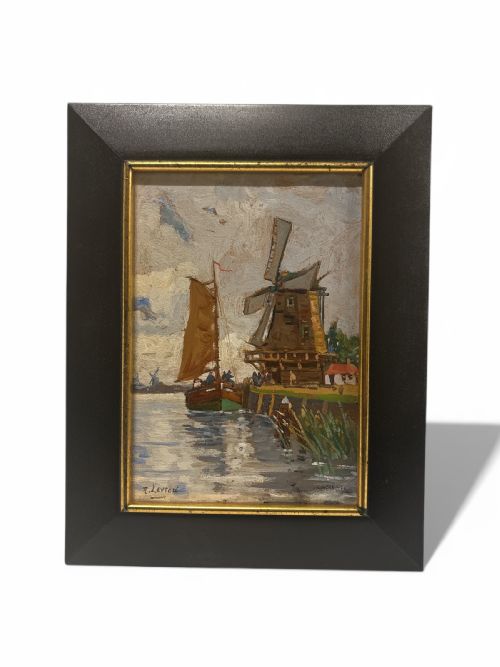
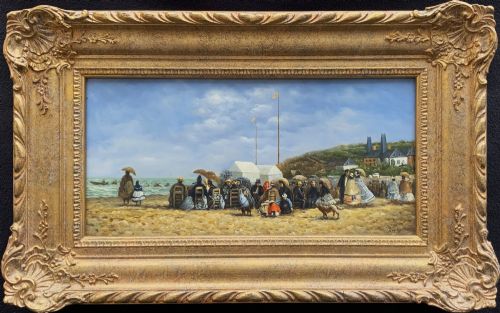


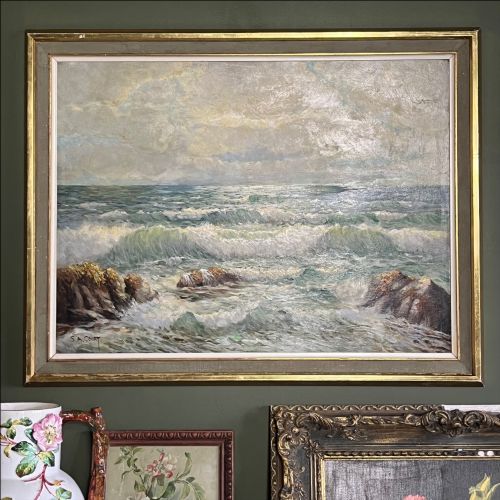
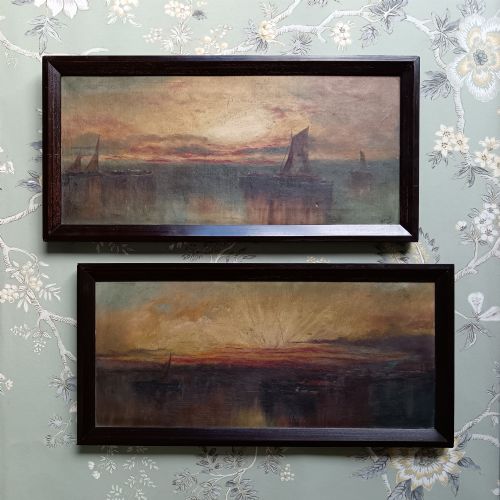




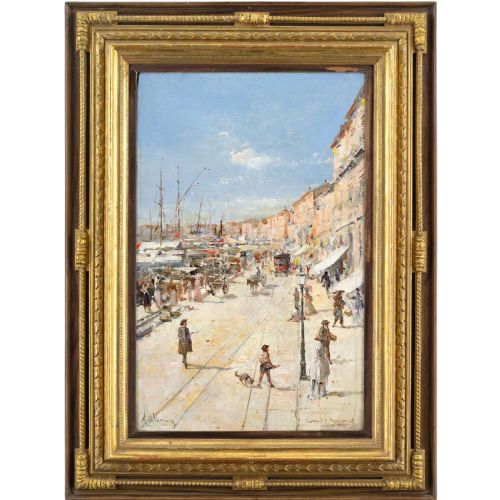


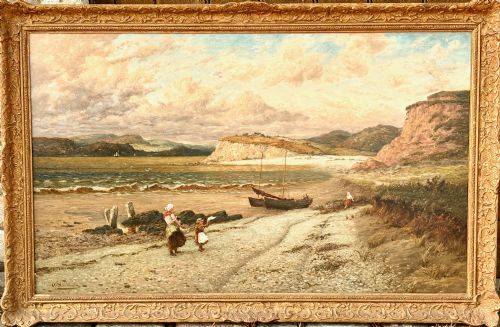
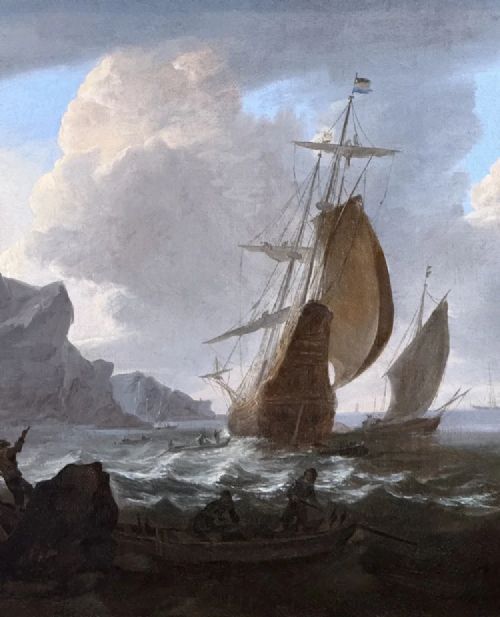
Framed Coastal Landscape Painting
A framed coastal landscape painting brings the salt air, shifting tides and historic harbours of the shore directly into a room.
Framed Coastal Landscape Painting
A framed coastal landscape painting captures the sea, cliffs, harbours and shorelines of Britain and Europe through the centuries. These works record maritime activity, fishing boats, and coastal villages from the nineteenth century onwards.
The most common versions met on this page span the Victorian era through the mid-twentieth century, encompassing British Impressionism, Post-Impressionism and traditional watercolour or oil mediums.
Many of these pieces feature identifiable locations such as St Ives, Whitby, Brighton and Cornwall, alongside continental harbours in Sicily and France.
Materials and Techniques
Painters worked in oil and watercolour, applying pigment onto canvas, prepared board or heavy paper. Canvas supports often required wooden stretcher frames, while watercolours relied on paper mounted behind glass.
Makers housed these watercolours and oils in timber surrounds, frequently utilising gilt wood frames that enhanced the marine light and added a formal architectural boundary to the view.
Framed Coastal Landscape Painting Retail Price Guide 2026
Typical asking prices for framed coastal landscape painting among the pieces listed under this phrase on Sellingantiques today, from the lower quarter to the upper quarter. They describe what is for sale here now, not the wider market.
The listings span from the seventeenth century through to works created after 1960, employing oil, watercolour, and canvas.
Distinctions in Quality
Execution of light and atmospheric movement separates standard topographical records from masterly works. The finest artists capture the specific weight of sea mist, the texture of breaking waves, and the play of sunlight on wet sand with assured brushwork.
The integration of the picture and its housing matters significantly. Original gilt wood frames designed for the specific canvas contribute historical coherence and visual depth that later replacements lack.
James Orrock·R Leyton·Clifford Hanney·Sidney A Court·B Nash·Edward Mills·John E Aitken·William Banks Fortescue·Augusto Alberici·Lucy Pratt·Clive Browne·Peter Brannan·Paul Bret·Bernard Benedict Hemy·Thomas Creswick·James Fry·Ethel Sands·Thomas Maidment·Donald McIntyre·Cecil Allan Mould·Charles Euphraisie Kuasseg·John Wilson Carmichael·Abraham Cooper·Joseph Farquharson·Erich Mercker
The Framed Coastal Landscape Painting Glossary
- Watercolour
- A paint consisting of colour suspended in a water-soluble binder, traditionally applied to paper to achieve translucent washes of light.
- Gilt Wood
- Timber carved and coated with a thin layer of gold leaf or metallic gilt, commonly used for period picture frames.
- En plein air
- A French expression describing the act of painting outdoors, capturing natural light and transient weather directly from the subject.
- Canvas
- Heavy woven fabric stretched across a wooden frame to serve as a durable support for oil painting.
- Maritime
- Pertaining to the sea, shipping and coastal life, frequently featuring vessels, harbours and naval scenes.
Framed Coastal Landscape Painting: Frequently Asked Questions
How do I hang a heavy framed oil painting?
Heavy oil paintings require sturdy picture wire or D-rings attached directly to the wooden stretcher or frame back. Secure the hanging fixture into wall studs or utilise appropriate wall anchors to support the combined weight of the canvas and timber moulding.
Position the centre of the canvas at standard eye level, roughly sixty inches from the floor, to ensure comfortable viewing. Allow adequate space away from direct heat sources to protect the paint surface and wooden frame from warping.
Were these watercolours originally framed?
Nineteenth and early twentieth-century watercolours were almost invariably framed behind glass upon completion to protect the delicate paper surface from dust, moisture and atmospheric pollutants. The original mounts and glazing often remained with the painting for decades.
When acquiring a watercolour, check the backing and mount for age indicators such as historic paper toning or maker stamps. Retaining the original period frame preserves the historical integrity of the piece.
How do I identify a Victorian coastal scene?
Victorian coastal scenes typically feature traditional sailing vessels, paddle steamers, and fisherfolk in period dress working along the shore. The palette often relies on earthy tones combined with dramatic stormy skies or muted maritime light.
Signatures, artist registry records, and style markers help date the work accurately to the nineteenth century. The construction of the stretcher frame and the type of canvas backing also provide clues to the period of origin.
Can I clean the gilt frame?
Gilt wood frames accumulate dust within the carved recesses over time. Gently remove loose particles using a very soft, dry artist brush or a feather duster.
Avoid applying water, chemical cleaners, or damp cloths to gilt surfaces, as moisture strips the gold leaf and damages the gesso base beneath. Professional conservation is recommended for deep cleaning or repairing flaking areas.