



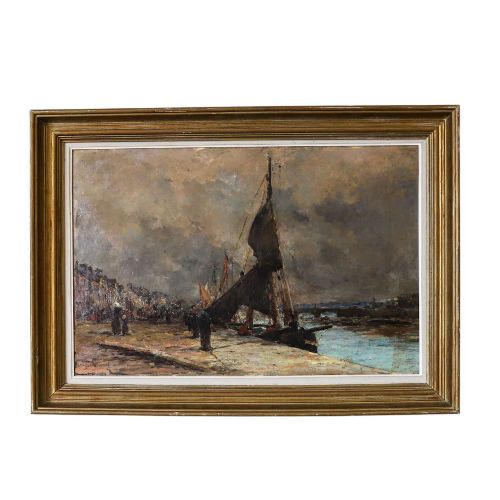
Harbour Scene Artwork
Harbour scene artwork captures the enduring industrial and coastal rhythms of maritime life through painted records of docks, quays and shipping.
Harbour Scene Artwork
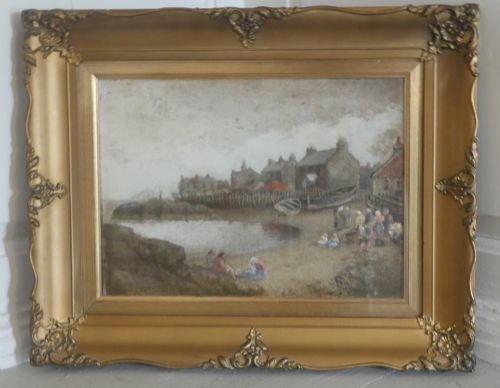
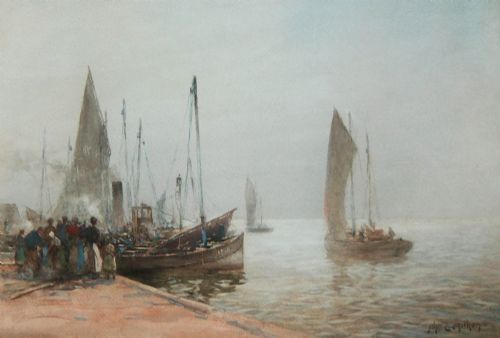
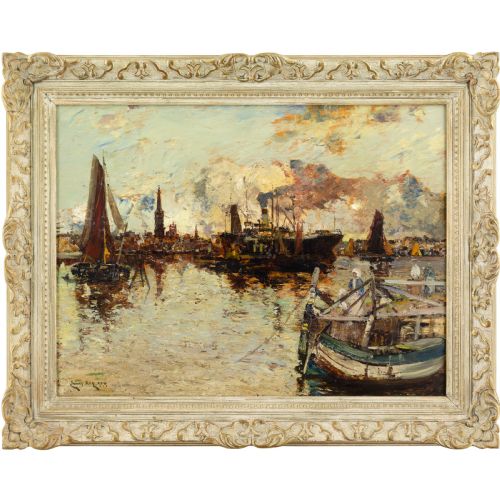
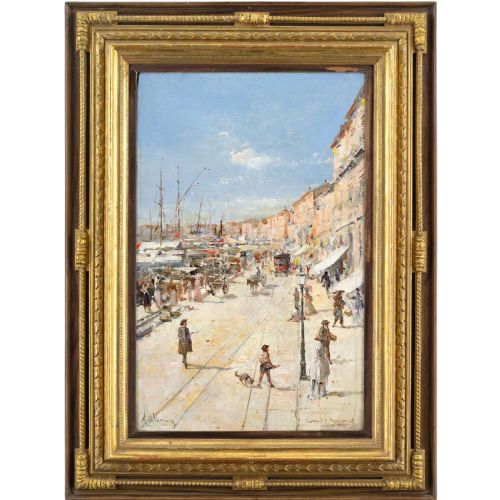
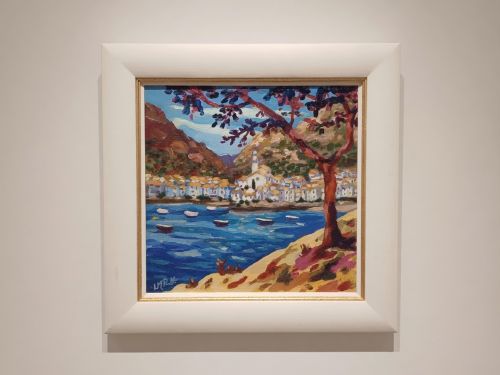
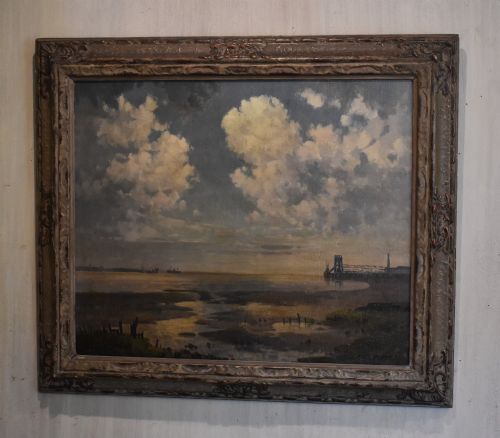
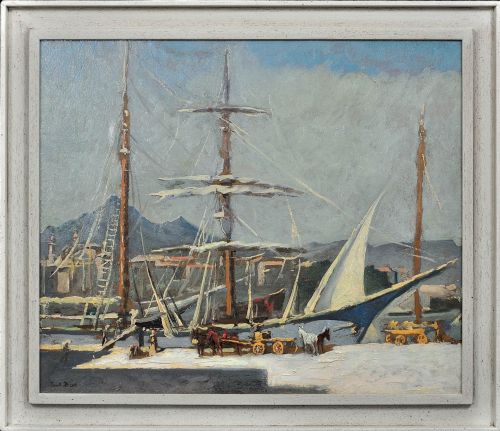
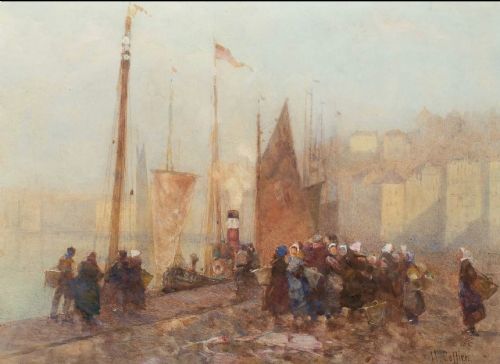
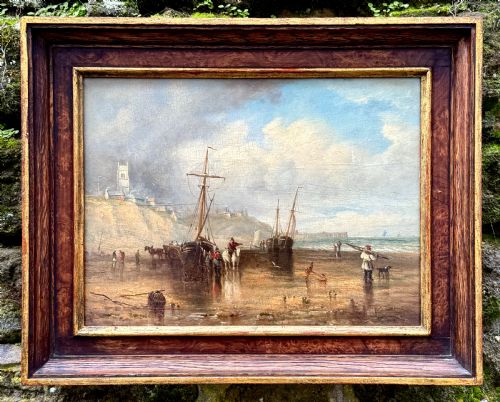
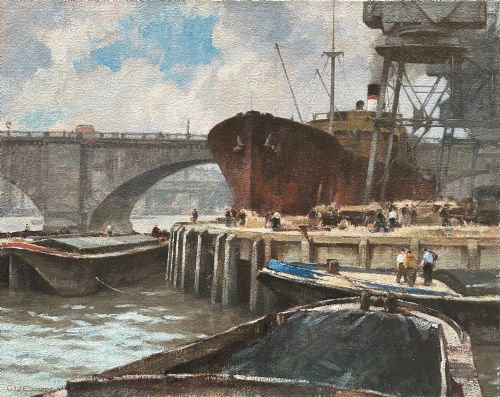
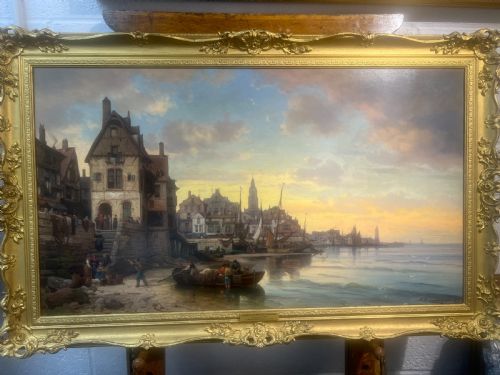
A buyer seeking harbour scene artwork encounters depictions of coastal inlets, fishing ports and busy loading docks spanning from the nineteenth century into the mid-twentieth century.
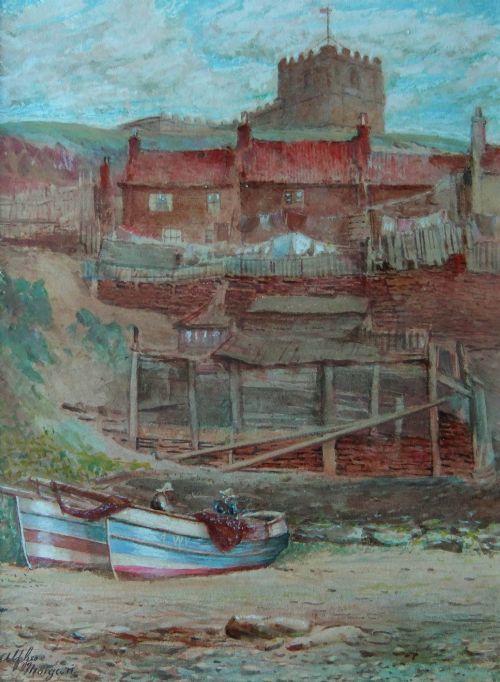
The most common examples on this page are traditional British watercolours and oils on canvas or board, frequently recording specific locations such as St Ives, Whitby and northern English rivers.
These pieces range from detailed Victorian maritime documents to broader Impressionist and mid-century interpretations of European and domestic anchorages.
Materials and technique
Artists relied primarily on oil paint applied to canvas, panel or board, alongside watercolours worked on paper, creating varied textures from smooth maritime calms to thick impasto waves.
Supports often include traditional wooden frames, sometimes retaining gilt finishes that complement the maritime subjects.
Harbour Scene Artwork Retail Price Guide 2026
Typical asking prices for harbour scene artwork among the pieces listed under this phrase on Sellingantiques today, from the lower quarter to the upper quarter. They describe what is for sale here now, not the wider market.
Listings feature works executed in oil on canvas, oil on board, and watercolour on paper across various nineteenth and twentieth-century periods.
Assessing quality in maritime paintings
Quality rests upon the artist's handling of light upon water and the structural accuracy of rigging, hulls and masonry against changing coastal skies.
Stronger compositions demonstrate confident brushwork or wash control that captures atmospheric movement rather than mere topographical recording.
James E. Aitken·Augusto Alberici·Hector Caffieri·Thomas Creswick·Paul Delvaux·William Lee Hankey·James Kay·Donald McIntyre·Alfred G. Morgan·George F Pennington·Raymond Picque·Gyrth Russell·William Edward Webb
The Harbour Scene Artwork Glossary
- Watercolour
- A painting method where fine pigment is suspended in a water-soluble binder and applied to paper. This medium allows for transparent washes of light and colour.
- Impasto
- Paint applied thickly to a canvas or panel so that it stands out from the surface. This technique gives visible texture to elements like churning water or thick clouds.
- Provenance
- The documented history of ownership of a work of art. It establishes authenticity and traces the path of the piece from its creation to the present collection.
Harbour Scene Artwork: Frequently Asked Questions
What periods do these paintings cover?
The selection spans from early nineteenth-century maritime records to mid-twentieth-century abstract and impressionist interpretations.
Most examples cluster around the late Victorian and Edwardian eras when coastal painting flourished.
Are these works signed by the artists?
Many pieces feature visible signatures or studio attributions left by the original hand on the front or reverse.
Others remain attributed through stylistic comparison and period framing conventions.
How should I frame an antique watercolour?
Watercolours require conservation mounting behind glass to protect the paper from humidity and direct ultraviolet exposure.
Acid-free mounts prevent yellowing and preserve the delicate pigment washes over decades.
Where were most of these scenes painted?
Locations range widely across British fishing ports in Cornwall, Yorkshire and Scotland, alongside European coastal harbours.
Artists frequently travelled to working docks to capture daily maritime labour and shipping.