


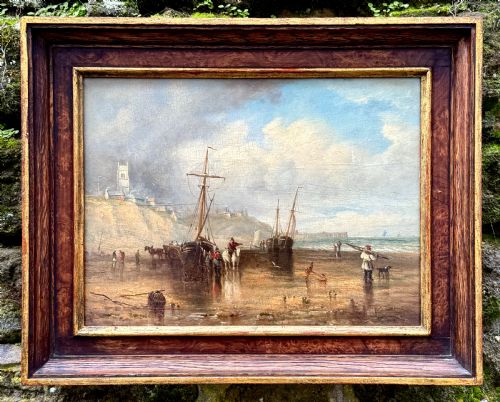
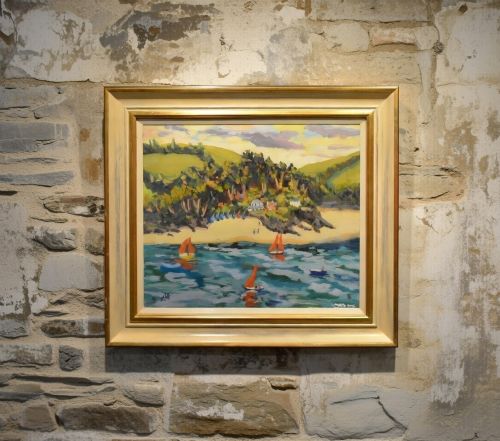
Framed Coastal Canvas
A framed coastal canvas brings the movement of the sea and the light of the shore into a room through oil paint applied to woven fabric.
Framed Coastal Canvas
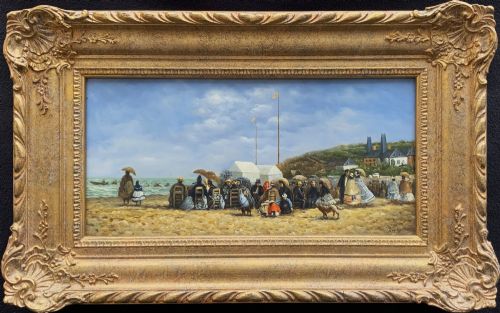
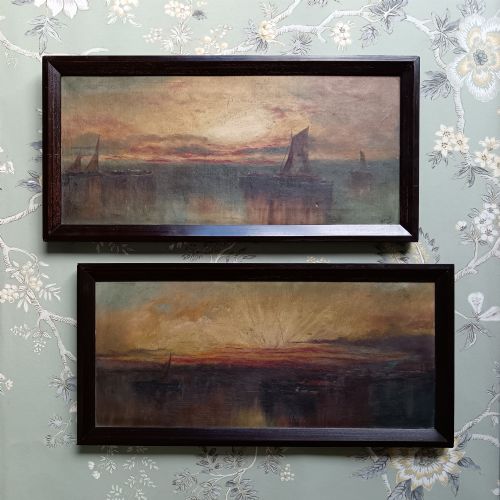
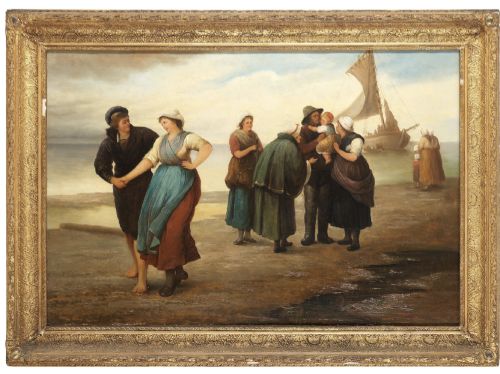
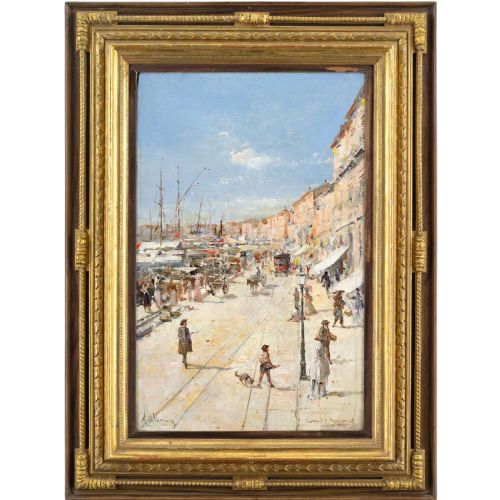
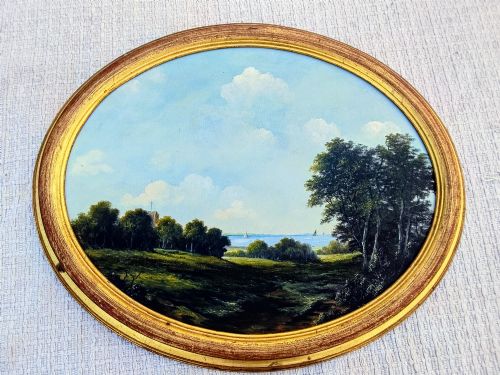
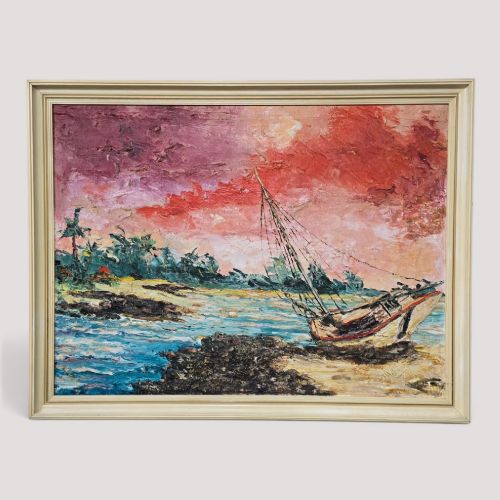
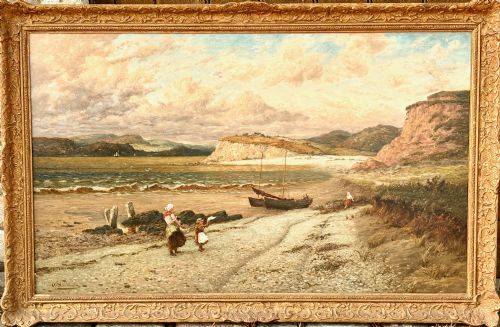
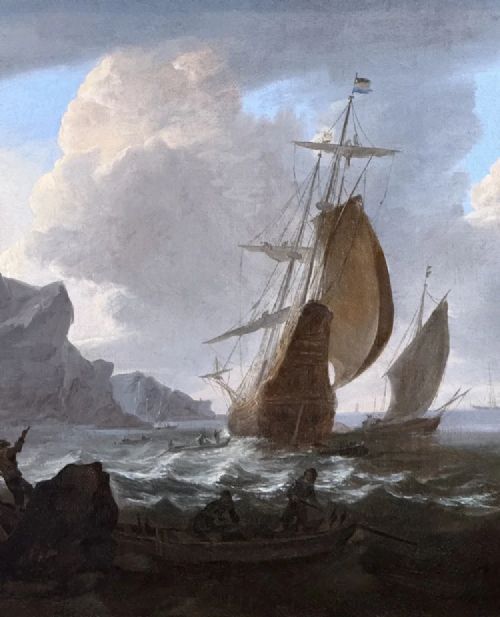
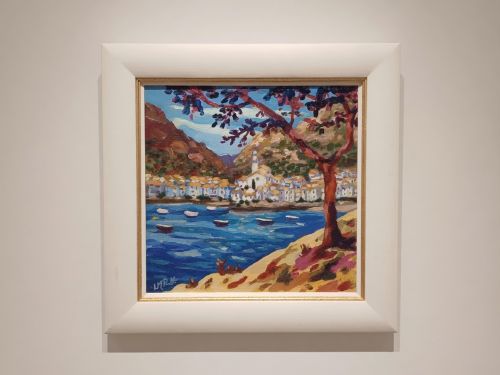
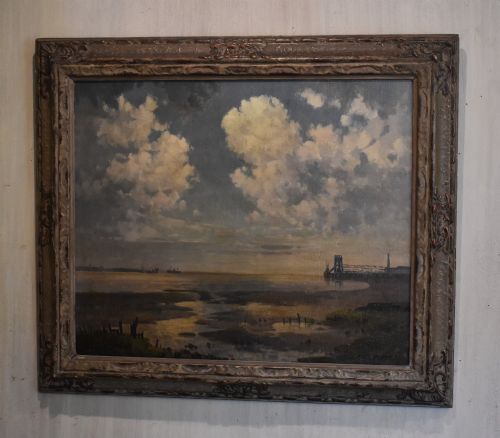
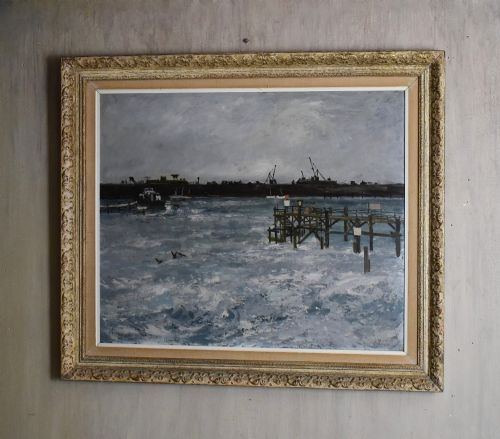
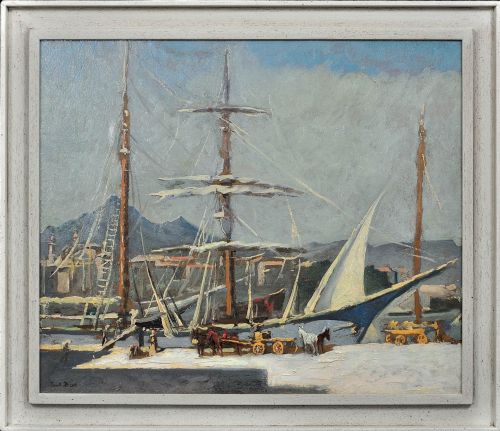
A framed coastal canvas represents maritime scenes, harbour views, and seaside gatherings executed in oil paint across the nineteenth and twentieth centuries. These artworks capture marine landscapes, ships at sea, and coastal paths from Victorian, Edwardian, and mid-century periods.
The most common examples on this page are oil paintings on canvas housed in wooden or giltwood frames, ranging from intimate sea views to large scale depictions of British and European harbours.
Works originate from various British and continental schools, including Victorian marine art and mid-century impressionism, reflecting changing approaches to painting light on water.
How they were made
Artists applied oil paint using brushes and palette knives onto stretched canvas substrates, building up layers of pigment to capture texture in water, sky, and sand. Paint formulations utilised natural oils that dried slowly, allowing painters to blend tones and achieve atmospheric effects of weather and light.
The finished canvases were secured within wooden frames, frequently finished in giltwood or carved ornamentation suited to the aesthetic of the period.
Listings span periods from the seventeenth century through the 1960s, executed primarily in oil paint on canvas within wood and giltwood frames.
What varies in quality
The depth of handling in the oil paint distinguishes masterworks from standard studio production, particularly in how light reflects on waves and clouds. Brushwork that conveys atmosphere and movement with economy of mark separates superior compositions from mechanical reproductions.
The integration between the canvas and its frame also matters, as period giltwood frames chosen or matched to the artwork enhance the visual weight and historical integrity of the piece.
Clifford Hanney·B. Nash·Augusto Alberici·Bonaventura Peeters·Lucy Pratt·Clive Browne·Peter Brannan·Paul Bret·Bernard Benedict Hemy·Thomas Creswick·Ethel Sands·Donald McIntyre·Cecil Allan Mould·Charles Euphraisie Kuasseg·John Wilson Carmichael·Abraham Cooper·Joseph Farquharson·William Henry Williamson·John Holland·Walter Goodin·Abraham Hulk I·Raymond Moritz·Joseph Edward Hennah·William Edward Webb·Edward Matthew Elliott
The Framed Coastal Canvas Glossary
- Canvas
- A heavy woven fabric stretched across a wooden stretcher frame to serve as a support for oil painting. It provides the tensile strength needed for large maritime landscapes.
- Giltwood
- Wood carved and coated with gold leaf or gold paint to create a reflective decorative frame. These frames were standard for presenting important nineteenth-century oil paintings.
- Post-Impressionism
- An art movement extending beyond impressionism that focused on expressive forms and symbolic use of colour. Works in this style often show bolder brushstrokes in coastal scenes.
- Seascape
- A painting or other work of art that depicts the sea. These subjects formed a major category in maritime art across the Victorian and Edwardian eras.
Framed Coastal Canvas: Frequently Asked Questions
How do I date a framed coastal canvas?
Dating relies on stylistic clues, framing techniques, and the canvas stretcher construction typical of specific decades. Victorian and Edwardian works often feature handwritten inscriptions or artist signatures on the reverse.
Examining the type of nails or staples used on the back provides additional chronological indicators for pieces from the nineteenth and twentieth centuries.
Where should I hang a coastal oil painting?
These artworks suit rooms with stable humidity and indirect natural light to protect the oil paint and canvas from degradation. Placing them away from direct heat sources prevents warping of the wooden stretcher.
A wall with balanced ambient illumination allows the textures of the paint and the details of the frame to show clearly without glare.
How do I clean an old oil painting?
Surface dust should be removed gently using a soft, dry brush without applying pressure to the canvas. Liquid cleaners or household products damage the historical varnish layers on oil paintings.
Professional conservators should handle deeper cleaning or removal of discoloured varnish to avoid disturbing the underlying pigment.
What is the difference between marine art and a seascape?
Marine art primarily focuses on ships, harbour life, and human activity on the water, often recording specific vessels or maritime events. Seascapes concentrate more broadly on the natural elements of the sea, coastline, and weather conditions.
Many period canvases combine both genres by placing sailing vessels within a wide coastal landscape.