


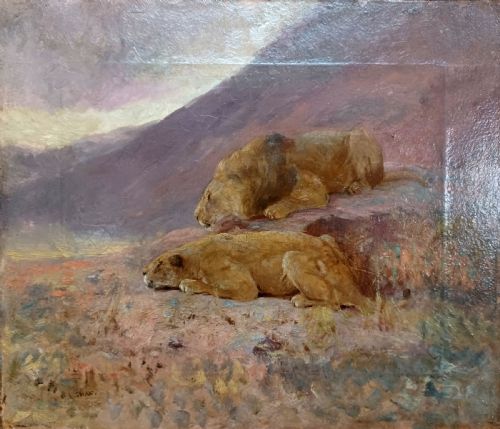


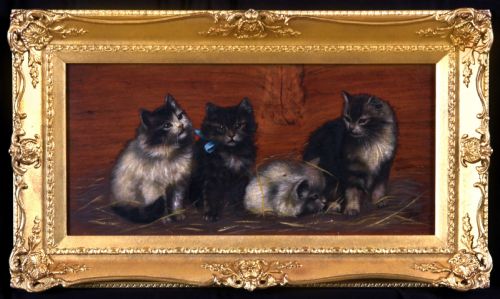

Framed Cat Canvas Artwork
These framed cat canvas artwork pieces bring nineteenth-century animalier studies and domestic feline portraits straight onto your wall.
Framed Cat Canvas Artwork
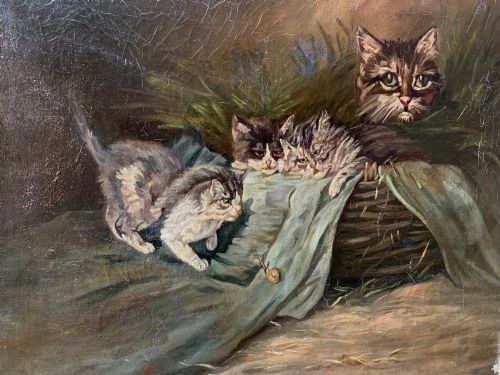
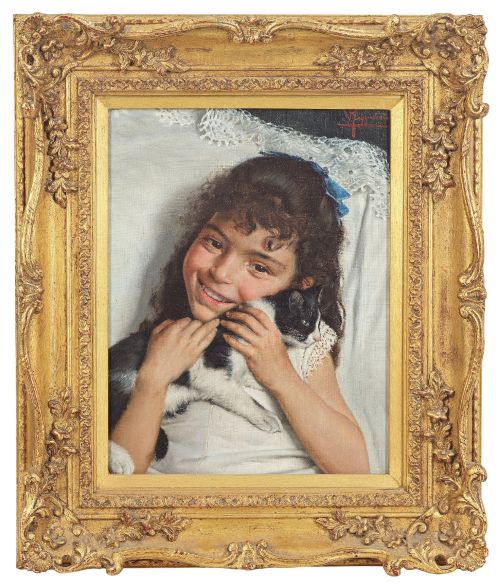
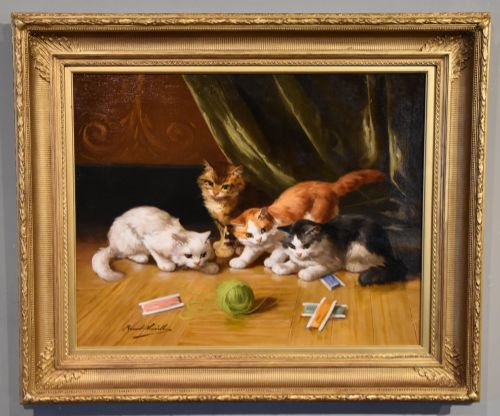
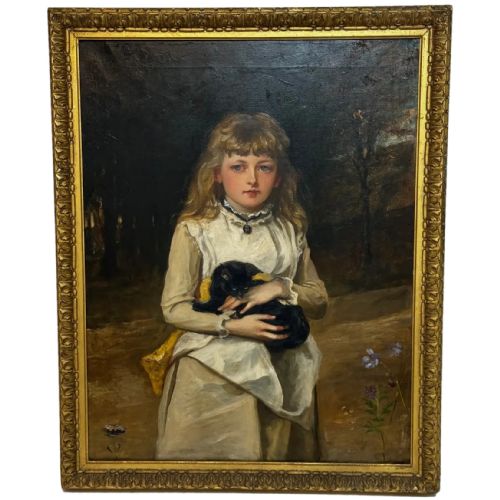
When you search for framed cat canvas artwork, you encounter oil paintings on canvas stretched across wooden supports and housed in gilt wood or gesso frames. These works span from the Victorian period through to the mid-twentieth century, capturing everything from playful kittens to big cats.
The domestic subjects dominate the selection, featuring Persian kittens at play, tea parties, and cats with fish rendered by regional and continental artists. Alongside domestic pets, nineteenth-century animalier compositions depict lions and leopards in the style of the French school.
Most examples hail from the nineteenth century or the early decades of the twentieth century, presenting traditional oil paint techniques applied to canvas. You will find both signed compositions by listed painters and provincial school works that record domestic animal life.
What varies in quality
The articulation of the animal's form and fur texture distinguishes finer painting from simpler provincial efforts. Master painters rendered feline anatomy and expression with precise brushwork that brings movement and life to the canvas.
The construction and original pairing of the gilt wood or gesso frame also influence the overall standard. A frame that retains its original gilding and proportions enhances the visual balance of the oil painting.
Vittorio Reggianini·Alfred Arthur Brunel de Neuville·Agnes Augusta Talboys·Henry Weigall·Cuthbert Edmund Swan·Horatio Henry Couldery·Raymond Arthur Roadnight·Geza Vastagh·Bessie Bamber
The Framed Cat Canvas Artwork Glossary
- Oil on Canvas
- Pigments bound in a drying oil medium applied to a woven fabric support. This combination provides durability and allows for subtle blending of tones.
- Giltwood
- Timber carved and coated with gold leaf or a metallic gilding preparation. It provides a reflective, ornate border for traditional artworks.
- Gesso
- A paint mixture consisting of a binder mixed with chalk, gypsum, or pigment. It was applied to timber frames to create a smooth surface for gilding.
- Animalier
- Artworks that realistically depict animals, particularly predators and domestic pets. The genre flourished during the nineteenth century across European schools.
- Victorian Genre
- Painting styles focusing on scenes of everyday domestic life and animals. These works often captured sentimental or narrative moments in a household setting.
Framed Cat Canvas Artwork: Frequently Asked Questions
How do I date a framed cat canvas?
You look at the style of the timber stretcher, the canvas preparation, and the framing techniques used. Victorian pieces often display distinct gesso moulding styles.
Signatures, artist records, and the costume or domestic setting within the painting also help narrow down the period of creation.
What is animalier art?
Animalier art refers to nineteenth-century works that focus on realistic depictions of animals, ranging from domestic cats to wild big cats. Artists studied anatomy closely to capture movement and behaviour.
This tradition includes both gentle domestic portraits and dramatic wildlife scenes from French and British schools.
Are these works oil on canvas?
The pieces recorded here utilise oil paint applied to a canvas support. This traditional medium allowed artists to build rich layers and texture for fur and backgrounds.
Some works are executed on canvas laid down onto board for additional structural support.
How should I hang an oil painting?
Hang your framed canvas away from direct sunlight and sudden temperature fluctuations to protect both the oil paint and the timber frame. Ensure the wall fixing is secure enough to bear the weight of the giltwood surround.
Keep the painting in a stable indoor environment to preserve the canvas tension and prevent cracking in the gesso.